

A new QR code requirement at Vietnam's busiest gateway
Foreign visitors arriving at Tan Son Nhat International Airport in Ho Chi Minh City must now complete a digital declaration before clearing immigration. Introduced on April 15, 2026, the requirement collects passport, entry document and travel details online, then generates a QR code for immigration officers to scan.
Contents
- A new QR code requirement at Vietnam's busiest gateway
- Who needs a declaration?
- When and where to submit the form
- Passport and entry documents come first
- Flight, address and health information
- Verification produces the QR code
- What happens at immigration?
- Airline checks vary during the rollout
- Business travel checklists are changing
- Vietnam joins a regional digital shift
- Expansion is possible, with no firm timetable
- The Bottom Line
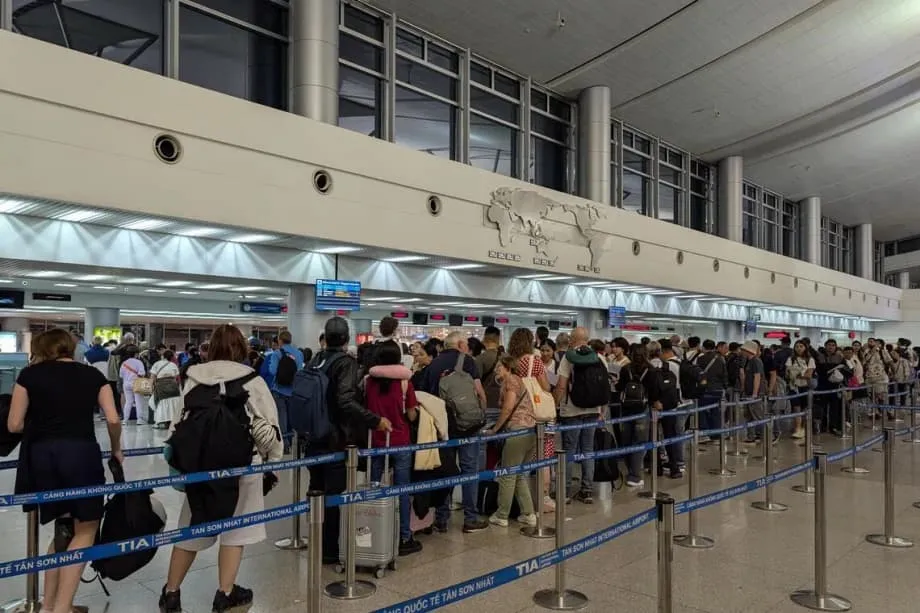
The change targets a crowded gateway that handled more than 42.4 million passengers last year, including 17.8 million international visitors. Daily arrivals occasionally exceed 48,000 travelers, above the terminal's design capacity. During busy afternoon and evening periods, immigration waits regularly stretch beyond one or two hours. Anecdotal accounts of evening peaks describe queues of more than 500 people.
Officials estimate that retrieving information through a QR code could save approximately 30 seconds per passenger by reducing manual data entry at the immigration desk. Across thousands of arrivals, those small individual savings could reduce the workload facing officers and help queues move faster.
As of April 20, 2026, the pilot applies only to Tan Son Nhat. Visitors arriving directly at other Vietnamese airports are outside the current requirement. Travelers entering internationally through Ho Chi Minh City before taking a domestic connection must complete it, even when their final destination is elsewhere in Vietnam.
The rollout has also brought uneven communication and checks among airlines. Passengers should prepare their declarations independently, rather than wait for a reminder at check-in. The form is free, must be submitted within 72 hours of scheduled arrival and produces a code that travelers present alongside their passport and visa documents.
- April 15, 2026: The mandatory digital declaration began at Tan Son Nhat International Airport.
- April 20, 2026: The requirement remains limited to this airport, with airline communication and enforcement varying during the initial rollout.
- Later in 2026: Authorities have hinted at possible expansion to Hanoi and Da Nang, depending on testing and system stability.
Who needs a declaration?
Foreign nationals entering Vietnam through Tan Son Nhat must complete the declaration regardless of their visa status. The requirement covers electronic visas, traditional paper visas, approvals for visas issued on arrival, and entry under bilateral or unilateral visa exemptions.
Citizens of the United Kingdom, Japan, South Korea, Germany and France are among the travelers who may benefit from visa exemptions but still need the digital declaration. An exemption from obtaining a visa leaves this arrival requirement in place.
Overseas Vietnamese traveling on foreign passports with valid visas must also complete the form. Overseas Vietnamese using visa exemption certificates or temporary residence cards fall within the mandate as well. Vietnamese citizens entering on Vietnamese passports are exempt.
Transit passengers are exempt when they remain airside and do not pass through immigration. For example, someone flying from Singapore to London through Ho Chi Minh City can remain outside the declaration requirement if they hold both boarding passes, have baggage checked through and stay within the airport's transit area.
Children need individual declarations linked to their own passport numbers. Families can enter accompanying travelers during the same online session, but each person, including every minor, needs a separate QR code.
Travelers with dual citizenship must use the details of the passport they will present when entering Vietnam. For people born in Vietnam who now hold foreign passports, the entry document matters: a foreign passport with a visa, exemption certificate or temporary residence card brings them within the requirement, while a retained Vietnamese passport used for entry keeps them exempt.
When and where to submit the form
Vietnam's official immigration portal handles the declaration. The system accepts submissions only for arrivals scheduled within the next 72 hours, so travelers cannot complete it weeks before a trip.
The timing resembles airline check-in: it is a task to complete shortly before departure. The submission window helps keep flight and accommodation information current while preventing the system from receiving large numbers of declarations too far in advance.
Travelers should aim to complete the form 24 to 48 hours before departure, provided their scheduled arrival falls within the permitted 72 hours. That leaves time to check details and reduces exposure to server slowdowns immediately before a flight.
An individual declaration typically takes less than three minutes. A family may need longer because every accompanying traveler requires their own details and code, even when the information is entered in one session.
The declaration service is completely free. Unofficial websites have begun charging to complete the form, sometimes copying government designs to look legitimate. Those services are unnecessary and provide no advantage over the official channel. Bookmarking the government address helps travelers avoid paid alternatives in search results.
Passport and entry documents come first
The four-step process begins with passenger information. Travelers enter their full name exactly as it appears on their passport, date of birth, gender, nationality, passport number and passport expiration date. An optional passport photo upload can populate some fields automatically.
A phone number and email address are also required. The email address is especially important because the system uses it to send a verification code before the declaration can be completed.
The next stage asks for visa or entry document information. Available categories include electronic visas, visa exemption certificates, temporary residence cards and bilateral agreements. Travelers provide the corresponding document number, issue date, expiration date and place of issue for the category selected.
People uncertain about their status should check their documents before departure. Overseas Vietnamese and people with more than one nationality need particular care because their declaration must match the passport and entry permission they actually use at the border.
Passport accuracy also matters for names with several parts, middle names or special characters. The spelling and order should match the passport's machine readable zone, the standardized section used to read document information electronically. Checking that section can help travelers avoid entering a familiar everyday name that differs from the travel document.
Flight, address and health information
The third section collects travel information, including the country of departure, purpose of the visit and mode of transport. Tourism, business, study and work are among the purposes listed. The form offers air, land and sea transport options, although the current mandate applies only to arrivals at Tan Son Nhat.
Air passengers must enter their flight number. The form also provides fields for vehicle identification details for travel by land or sea, reflecting a broader design than the airport pilot now in operation.
Accommodation details must be specific. Travelers need to provide the province, city, district and exact street address where they will stay, along with the hotel name or details of a private residence. Entering only a city name is insufficient.
The declaration also asks for workplace information and the planned departure date from Vietnam. Retired travelers should enter "retired" in the occupation field rather than leave it blank, since incomplete information may lead to additional questions at immigration.
A health self-declaration covers the traveler's current condition and recent exposure history. The questions focus on immediate symptoms and exposure rather than vaccination status. This part of the process follows regional practices introduced after recent global health concerns.
Collecting these details before arrival gives authorities an opportunity to review accommodation and travel plans in advance. It can help identify discrepancies or security concerns before a passenger reaches an immigration counter, while reducing the paperwork handled there.
Verification produces the QR code
Travelers review their entries before submitting the declaration. The system sends a six-digit verification code to the registered email address, confirming that the address works and adding a security step to the process.
Once verification is complete, the system generates a confirmation message, a unique file number and a downloadable QR code. A confirmation email also contains the code and file number.
The QR code links the declaration to the passport information entered online. Even a small mismatch, such as a mistyped passport number or a name that differs from the document, can invalidate the code and force manual processing. Travelers should check every detail before final submission.
Authorities recommend keeping the code in several accessible formats. Downloading a PDF, saving a phone screenshot and printing a backup make it easier to present the declaration without relying on an internet connection.
A paper copy also protects against a depleted phone battery or device failure during the journey. Mobile signals can be unreliable inside the terminal, so a code stored only in an online inbox may be harder to retrieve when it is needed.
What happens at immigration?
Passengers who have completed the declaration proceed to immigration counters as usual after landing at Tan Son Nhat. They present their QR code with their passport and visa documents, allowing an officer to retrieve the submitted information electronically.
The expected saving of approximately 30 seconds per person comes from reducing the need to enter information manually at the desk. The system is intended to ease a process that becomes especially slow when large numbers of flights arrive during the busiest afternoon and evening periods.
Passengers who arrive without a completed declaration can still fill it in by scanning QR codes displayed in the immigration arrivals area. Completing it there can add substantial delays during crowded periods, particularly when travelers also need to find their documents or accommodation address.
Accounts of manual processing during evening peaks describe waits exceeding an hour. For travelers continuing to other Vietnamese cities, that additional time can put an onward domestic connection at risk.
The Hong Kong Trade Development Council has warned business travelers that non-compliance could lead to extended processing times and possible administrative fines. During the initial rollout, delays appear to be the main consequence rather than entry denial or financial penalties.
Preparing the declaration before departure removes one task from an already busy arrivals process. Travelers still need their usual passport and entry documents, with the QR code joining those items at the immigration counter.
Airline checks vary during the rollout
Vietnamese authorities have instructed airlines, travel agencies and relevant transport providers to inform passengers about the requirement before flights. Airlines operating into Tan Son Nhat have also received instructions to verify that passengers possess their QR code before boarding.
Some carriers have reportedly refused boarding when passengers could not show proof of completion at check-in. Enforcement varies, however, and some major airlines have yet to introduce systematic checks.
Emirates and VietJet have issued proactive advisories to ticketed passengers. Singapore Airlines, Scoot and Vietnam Airlines had not broadly communicated the requirement during the initial rollout, while some carriers appeared to have been caught off guard by its sudden introduction.
Passengers should monitor official channels and complete the form themselves. A lack of questions from airline staff does not remove the declaration requirement at Tan Son Nhat.
The Singapore connection makes consistent communication especially useful. The route between Changi and Tan Son Nhat is one of the busiest regional sectors, with more than 80 weekly flights operated by four carriers: Scoot, Singapore Airlines, VietJet and Vietnam Airlines.
Regional airlines have begun updating their travel advisories to explain the present geographic limit. For now, the requirement is for international entry through Ho Chi Minh City, rather than every flight into Vietnam.
Business travel checklists are changing
Corporate travel managers have begun adding QR code confirmation to preparation lists alongside electronic visas and financial proof letters. This is particularly relevant for companies sending staff from major investment sources such as Hong Kong, Vietnam's sixth-largest foreign investor.
The Hong Kong Trade Development Council has specifically alerted exhibitors preparing to attend the Vietnam International Sourcing Expo. Its warning covers both longer immigration processing and possible administrative fines for failing to comply.
Multinational employers should update travel policy intranets and brief travel agencies so that reminders reach employees when tickets are booked. A reminder at that stage can be followed by submission shortly before departure, within the allowed arrival window.
For individual business travelers, the recommended approach remains the same as for holiday visitors: complete the form 24 to 48 hours before departure, check that arrival is within 72 hours and keep the confirmation available without internet access.
Families and business groups also need to allow for the number of passengers traveling. Entering several people in one session saves switching between separate sessions, but every traveler still requires an individual declaration tied to the correct passport.
Vietnam joins a regional digital shift
Singapore, Thailand, Indonesia and Taiwan already use comparable systems to collect arrival information electronically instead of relying on traditional paper landing cards. Several Asian destinations have introduced digital arrival cards over the past year.
Singapore's SG Arrival Card has operated for several years, collecting health and travel details through a mobile application or web portal before arrival. Thailand moved its TM6 immigration form to a digital platform, while Indonesia and Taiwan introduced similar collection of passenger information before entry.
India, China and South Korea have also moved substantial parts of their entry procedures online. India requires foreigners to submit immigration details through its e-Visa portal before travel. China uses health and customs declaration systems integrated with mobile applications.
These procedures share a practical purpose: less physical paperwork and earlier checks on incoming travelers. Collecting details electronically allows immigration authorities to assess risks before a passenger reaches the border and helps improve accuracy in their records.
Airports across Southeast Asia face capacity pressures as international visitor numbers rebound strongly after the pandemic. Vietnam's declaration follows the same regional approach, using information submitted before arrival to reduce work at the counter and identify potential problems earlier.
At Tan Son Nhat, the potential benefit is tied to the scale of its queues. Saving roughly half a minute on individual processing may seem modest to one traveler, but the same task repeated across thousands of daily arrivals takes substantial officer time.
Expansion is possible, with no firm timetable
The declaration form includes multiple transport modes and points of entry beyond Ho Chi Minh City. Its design suggests that authorities built the infrastructure with wider use in mind, although the present obligation remains limited to Tan Son Nhat.
Authorities have hinted that Noi Bai International Airport in Hanoi and Da Nang International Airport could introduce the requirement later in 2026, depending on system stability and testing results. No official timetable has been announced for expansion to land crossings or seaports.
The land and sea options suggest possible future use at crossings from Cambodia and Laos, as well as cruise arrivals at ports such as Ha Long Bay or Da Nang. Such a change would affect backpackers entering overland and cruise passengers who currently face simpler arrival procedures.
Land crossings present practical difficulties involving internet connectivity and access to mobile devices. Those factors may slow implementation outside airports, where travelers would still need a way to submit their information and retrieve the resulting confirmation.
Visitors flying directly into Hanoi, Da Nang or other Vietnamese airports do not currently need this declaration. Those connecting through Ho Chi Minh City to a domestic destination must complete it for their first international arrival at Tan Son Nhat.
The immediate preparation is therefore specific: check the airport where immigration clearance will happen, confirm the passport and entry document being used, and submit accurate information within the 72 hours before arrival. Keeping the resulting code accessible helps avoid having to complete the same task in a crowded immigration hall.
The Bottom Line
- The mandatory digital declaration began on April 15, 2026, at Tan Son Nhat International Airport in Ho Chi Minh City.
- Foreign nationals and overseas Vietnamese entering on foreign passports with the relevant entry documents must complete it. Vietnamese passport holders and transit passengers remaining airside are exempt.
- The free form accepts submissions within 72 hours of scheduled arrival. Completing it 24 to 48 hours before departure is recommended when arrival falls within that window.
- Every traveler, including children, needs an individual QR code matched to their passport.
- Travelers must provide passport, entry document, flight, accommodation and health information, then verify their email using a six-digit code.
- Officials estimate that electronic retrieval could save approximately 30 seconds of processing per passenger.
- Completion after landing is possible, but can add delays. Airline checks vary, and some carriers have reportedly refused boarding without confirmation.
- As of April 20, the mandate applies only at Tan Son Nhat. Expansion to Hanoi and Da Nang has been suggested for later in 2026.
- Use the free government portal, check every passport detail and save the QR code as a download, screenshot or printed backup.