Nearly Two Months of War Shake the Gulf's Security Model
Hundreds of missiles and drones, attacks on all six Gulf Cooperation Council members, and damage to refineries, airports, hotels and gas facilities have forced Gulf governments to reconsider two foundations of their prosperity: confidence that their countries are safe places to do business, and reliance on the United States for military protection.
Contents
- Nearly Two Months of War Shake the Gulf's Security Model
- Attacks Reach Energy Facilities and Business Hubs
- Earlier Shocks Explain Doubts About Washington
- China's Economic Scale Makes It a Natural Partner
- New Payment Systems and Trade Corridors Offer Options
- Beijing Protects Its Relationships With Both Sides
- Economic Influence Has Limits During a War
- American Forces Still Anchor Gulf Defense
- Gulf Governments Respond in Different Ways
- More Partners, Greater Freedom to Decide
- The Relationship With Iran Still Needs New Terms
- Key Points
As of April 20, 2026, nearly two months of war that erupted in February have brought China into sharper focus as an economic and diplomatic partner. China and the Gulf Cooperation Council (GCC) traded approximately $300 billion last year, while Chinese firms have accumulated roughly $270 billion in investment and construction projects across the Middle East over the past two decades.
Those connections give Gulf capitals options as they reassess Washington's reliability. Their leaders did not want hostilities against Iran to resume and were not consulted by the United States beforehand. Iranian strikes subsequently hit both American military assets and civilian infrastructure across the region.
The reassessment reaches beyond defense. Gulf economies have attracted companies, investors and visitors through tax exemptions, flexible regulations, growing startup communities and a reputation for stability. Their security arrangements have rested on an exchange often described as oil for security, supported by American bases and military equipment. The war has weakened confidence in both arrangements.
China offers trade, technology, finance and diplomatic engagement, but no replacement for the American military presence. Gulf governments are seeking more room to make their own decisions while retaining defenses built around US systems. Their choices during the conflict also show that the six GCC members are responding differently to the same regional danger.
Attacks Reach Energy Facilities and Business Hubs
The United Arab Emirates has borne the brunt of hundreds of Iranian drones and missiles despite pledging that its airspace would not be used against Iran. Its defenses have intercepted hundreds of ballistic missiles and nearly 2,000 drone attacks, but the assaults have still caused casualties and damage.
Dubai's reputation as a stable international business center is especially valuable to the UAE, where more than three quarters of gross domestic product comes from sectors outside oil. Gross domestic product measures the value of goods and services produced in an economy. Damage to major airports and well known tourist destinations threatens activities that the country spent decades developing.
Iranian drones have been harder to repel than missiles. Their attacks have exposed weaknesses in the protection of civilian sites and created lasting concerns about the region's reputation as a business hub.
Qatar, which has traditionally mediated with Iran, suffered devastating attacks on its Ras Laffan liquefied natural gas production facility, the world's largest. Liquefied natural gas, or LNG, is gas cooled into liquid form so that ships can transport it. Saudi Arabia's Eastern Province, home to critical oil refineries, also faced Iranian barrages.
Oman maintained a neutral approach yet was attacked as well. Its experience shows the pressure facing countries trying to stay outside the confrontation: neutrality has offered little protection from the fighting, while the conflict increasingly pushes regional governments to choose a side.
Earlier Shocks Explain Doubts About Washington
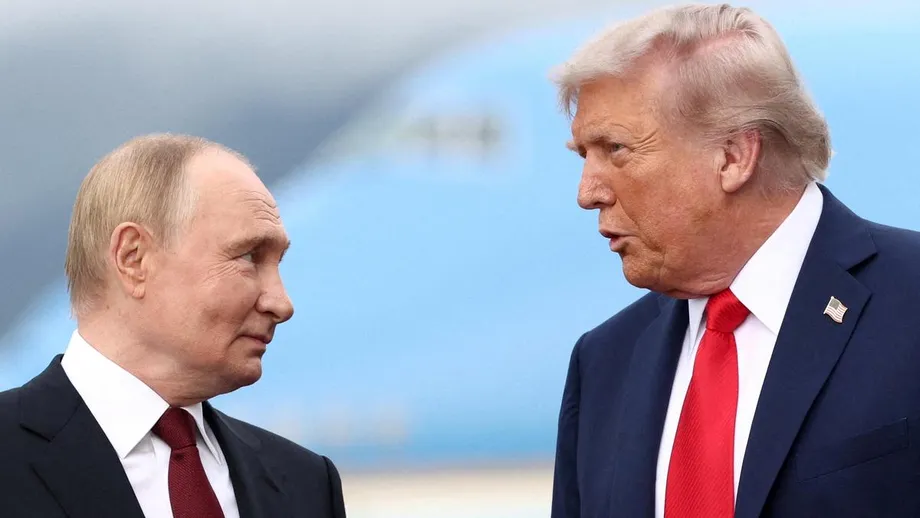
US President Donald Trump described Iran's attacks on Gulf countries as the biggest surprise of the conflict so far. He said those countries had been expected to have very little involvement, but now insisted on being involved.
Gulf doubts about American protection predate this war. Washington did not respond with military retaliation after the 2019 attack on Saudi Aramco's Abqaiq facility. That episode strengthened concerns that the presence of American forces would not necessarily bring an American military response when Gulf infrastructure came under attack.
An Israeli strike on Hamas personnel in Doha in August 2025 added to those concerns. Qatar's designation as a major non-NATO ally of the United States had not shielded its territory from attack. NATO is the North Atlantic Treaty Organization; Qatar's separate US designation is part of its relationship with Washington.
Several events now form the backdrop to the Gulf's reassessment:
- 2019: The attack on Saudi Aramco's Abqaiq facility was followed by no US military retaliation.
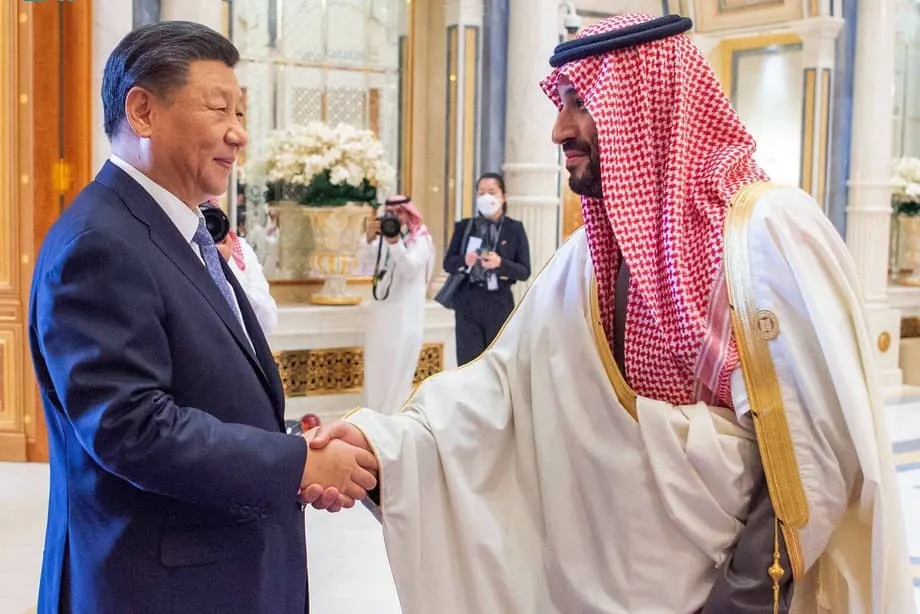
- 2023: Xi Jinping's visit to Riyadh for the GCC Summit helped advance comprehensive strategic alignment with China. Beijing also brokered a Saudi-Iran security agreement that stabilized relations until the current war.
- August 2025: Israel struck Hamas personnel in Doha, deepening concerns about Qatar's security.
- February 2026: The Iran war erupted, followed by attacks on all six GCC members.
- April 20, 2026: Nearly two months of conflict have left Gulf governments reconsidering their economic and security partnerships.
China's Economic Scale Makes It a Natural Partner
China's position as the Gulf's primary trading partner gives the relationship weight beyond diplomatic statements. Approximately $300 billion in multilateral trade with the GCC last year sits alongside roughly $270 billion in Chinese investment and construction projects across the wider Middle East over two decades.
Xi Jinping's landmark 2023 visit to Riyadh for the GCC Summit helped turn expanding commercial ties into comprehensive strategic alignment. Gulf governments now have stronger reasons to deepen those links as they plan for the period after the war.
Green energy is one major area of cooperation. China controls more than 80% of global solar manufacturing capacity, its wind turbine exports rose approximately 50% in 2025, and its electric vehicle production accounts for 70% of global output. Those figures make Chinese companies major potential suppliers for Gulf plans to reduce reliance on hydrocarbons, the fuels that include oil and natural gas.
Brands including BYD, Geely and Changan are changing regional transportation sectors. Cooperation with Chinese firms also reaches power grids, where Gulf countries need technology to support changes in how electricity is generated and distributed.
For Gulf governments, this is a relationship involving infrastructure as well as purchases. Access to solar equipment, wind technology and electric vehicles connects their economic diversification plans with China's manufacturing strengths. The aim is to develop industries and services beyond the oil revenues that have long supported their economies.
New Payment Systems and Trade Corridors Offer Options
Financial cooperation is another part of the relationship. Expanded BRICS+ frameworks provide platforms through which Gulf states can reduce dependence on Western financial systems while keeping their existing connections. BRICS+ brings together an expanded group of economies seeking greater cooperation.
A complete move to trade conducted in China's yuan remains difficult because of the dominance of the petrodollar, the use of US dollars in oil commerce. Gulf governments are nevertheless testing additional ways to make payments.
The mBridge project involves the central banks of China and the UAE and experiments with digital currency platforms for payments across borders without Western intermediary banks. An intermediary bank helps move money between institutions that do not settle directly with each other. A different route for settlement gives participating countries another way to manage financial risk.
Transport links offer a third area of cooperation. The China-Pakistan Economic Corridor (CPEC), representing roughly $62 billion in investment, creates opportunities to connect maritime routes with land corridors into Central Asia. UAE investments in CPEC and Gwadar Port could support agreements linking its shipping routes to those inland connections.
Such arrangements could help Gulf states bypass traditional chokepoints and become central nodes in a trade network involving several major powers. The energy relationship already gives those connections substantial importance: China imported 42% of its crude oil from the Middle East in 2025, with Saudi Arabia supplying 14% and the UAE 7%.
Saudi Arabia and the UAE therefore supplied a combined 21% of China's crude imports, using those figures. That equals half of the 42% supplied by the Middle East, showing how important these two Gulf partners are within China's regional energy trade.
Beijing Protects Its Relationships With Both Sides
China maintains strategic partnerships with Iran and Gulf states, leaving it to manage relationships with governments now confronting each other. When the conflict erupted, Beijing condemned US-Israeli strikes on Iran and called for immediate ceasefires, while stopping short of providing military support to Tehran.
Chinese Foreign Ministry spokespersons dismissed reports that China had supplied military equipment to Iran, saying Beijing acts prudently and responsibly in export controls. Evidence nevertheless suggests Chinese firms have supplied components with civilian and military uses that feed Iran's ballistic missile and drone programs, along with BeiDou satellite navigation support that improves strike accuracy.
China purchases approximately 90% of Iran's oil exports, often at steep discounts. Those sales give the sanctioned Iranian government a crucial source of income. Beijing has also helped build shipping and financial arrangements designed to reduce the effect of American sanctions, including shadow fleets of aging tankers and settlement in yuan outside traditional Western banking channels.
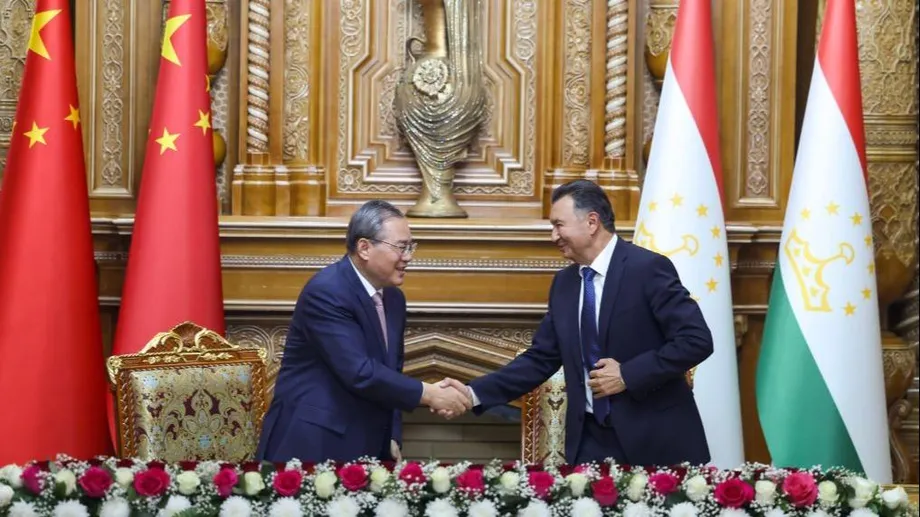
Iran receives a dependable export market and diplomatic backing from a permanent member of the UN Security Council. China, meanwhile, continues to court Gulf partners. Sheikh Khaled bin Mohamed, Crown Prince of Abu Dhabi, recently traveled to China to witness the signing of 24 agreements strengthening trade and investment.
Chinese special envoy Zhai Jun described the physical dangers involved in maintaining diplomatic engagement during the fighting. His account included travel by road after airspace closures disrupted flights:
Airspace closures in some of the countries we visited led to flight cancellations, forcing us to travel by car. Along the way, we heard air raid sirens and witnessed missile interceptions.
Zhai's experience illustrates Beijing's determination to preserve contact with both sides. Continued attacks on Gulf countries, however, make China's support for Iran increasingly difficult to balance with its economic relationships across the Gulf.
Economic Influence Has Limits During a War
Ali Wyne, a senior adviser at the International Crisis Group, observed that a country fighting for survival may answer outside calls for restraint by arguing that its back is against the wall. That helps explain why China's close economic relationship with Iran does not automatically translate into rapid changes in Iranian military decisions.
Andrea Ghiselli, a China expert at Exeter University, said economic pressure on Iran would take time to work. Iran's immediate priority, he observed, is resolving the problem directly in front of it rather than considering what China might do one or two months later.
Erica Downs, a senior research scholar at Columbia University, said China wants good relations with both Iran and Gulf states, but sees the Gulf states as more important because of economic ties that include renewable energy projects.
Beijing consequently faces competing demands. Its purchases help sustain Iran's economy, while its investments, trade and energy projects connect it closely to countries being attacked by Iran. The longer the war continues, the greater the strain on those Gulf partnerships.
American Forces Still Anchor Gulf Defense
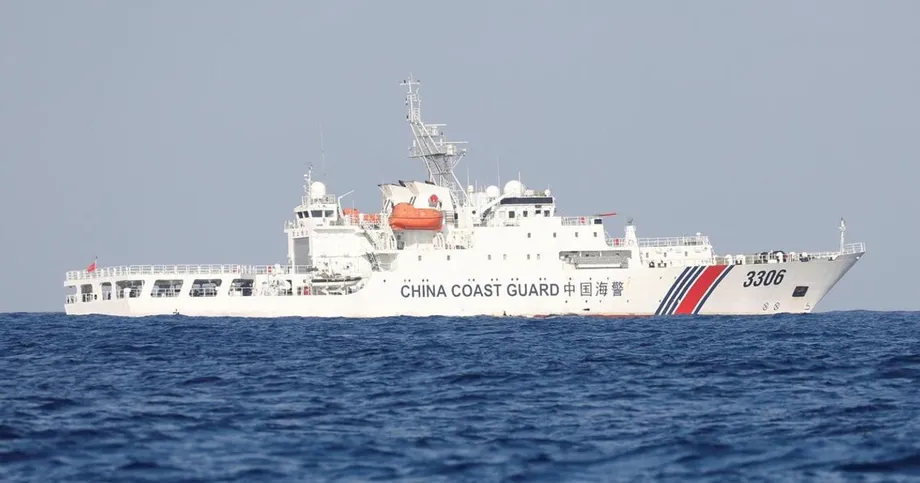
The United States maintains approximately 40,000 to 50,000 military personnel across roughly ten countries in the region. Al Udeid Air Base in Qatar alone hosts more than 10,000 troops. China's military presence, by comparison, is confined to a single logistical support base in Djibouti, consistent with Beijing's traditional policy of non-interference.
Arms transfers show a similarly large gap. According to the Stockholm International Peace Research Institute (SIPRI), the United States supplied 54% of all arms imports to the Middle East between 2021 and 2025. Saudi Arabia was Washington's largest recipient worldwide.
Over that period, Chinese arms exports to the region totaled approximately 732 million TIV, compared with the US figure of $19.5 billion TIV. TIV means Trend-Indicator Value, SIPRI's measure for comparing the volume of weapons transfers rather than their purchase prices.
Chinese drones attract interest because they come with fewer political conditions. Gulf militaries, however, have spent decades organizing their forces around American equipment. US systems include critical interceptors used to repel recent Iranian attacks, and Chinese equipment does not yet provide the same integrated air defense network.
An integrated network connects detection, command systems and weapons so that forces can identify and respond to incoming threats together. Replacing that structure would involve far more than buying different drones or missiles. The scale of American deployments and existing equipment therefore sets practical limits on how far Gulf security ties can shift toward Beijing.
Gulf Governments Respond in Different Ways
Saudi Arabia and the UAE initially refused to allow their territory or airspace to support offensive operations. As the costs of Iranian attacks mounted, both reversed their stance. Saudi Arabia opened King Fahd Air Base to American forces in response to escalating attacks.
Saudi Crown Prince Mohammed bin Salman has recently changed his view of the campaign and now sees it as a historic opportunity to eliminate Iran as a threat. The UAE is cracking down on Iranian financial networks that have long provided an economic lifeline to the heavily sanctioned government in Tehran.
Qatar is taking a different approach, strengthening its call for an end to the conflict without conditions. Its position reflects the range of responses inside the GCC, even though all six members have faced attacks.
Hardliners in Iran are pressing for a new arrangement in the Persian Gulf that would expel American forces and impose transit fees on vessels passing through the Strait of Hormuz. Those ambitions give Gulf governments further reasons to retain strong defenses, which currently depend mainly on American systems.
The UAE and Bahrain also face a reassessment of the Abraham Accords, their agreements normalizing relations with Israel. Those agreements have been insufficient to protect them from Iranian aggression, adding to the pressure to broaden their partnerships.
More Partners, Greater Freedom to Decide
Gulf governments are pursuing strategic autonomy, meaning greater freedom to make decisions without relying too heavily on one outside power. China is part of that effort, rather than a direct substitute for the United States. The aim is to spread economic and security risks across several relationships.
Similar approaches exist elsewhere. American allies in Europe confronted comparable dilemmas after the Ukraine war, encouraging discussion of European Strategic Autonomy. Countries in East Asia have preserved security relationships with Washington while deepening economic ties with Beijing.
Gulf states have substantial resources for this approach. Their sovereign wealth funds, investment funds owned by governments, manage more than $4 trillion. Their geography places them beside vital maritime corridors through which 30% of global seaborne oil trade passes. They also have diplomatic experience from mediating conflicts involving Afghanistan and Yemen.
They are increasingly coordinating with other middle powers, including Turkey, Pakistan and Indonesia, on regional security positions. Middle powers are countries able to influence international affairs even though they do not have the global reach of the largest powers.
Gulf governments are also developing independent cyber capabilities, investing in defensive artificial intelligence and establishing national cybersecurity authorities to protect critical infrastructure. These efforts widen their defense plans beyond intercepting missiles. Power networks, airports and energy facilities also need protection against threats involving computers and other technologies.
China benefits from these expanding relationships without taking on equivalent military responsibilities. Beijing points to its mediation of the 2023 Saudi-Iran security agreement and presents itself as a responsible international actor. Xi Jinping opposes the law of the jungle, contrasting that position with American military actions, and welcomes foreign dignitaries with remarks about standing on the right side of history.
The Relationship With Iran Still Needs New Terms
China has little appetite for military involvement that could put it at odds with either Tehran or its Gulf partners. It offers no security guarantees comparable to those of NATO and maintains a formal treaty alliance only with North Korea. Its growing commercial influence therefore coexists with a security structure that remains mainly American.
Gulf leaders are also too pragmatic to replace one dependency with another. Their current decisions combine closer economic ties with China, continued use of American defenses and efforts to build capabilities of their own.
The war was still shaping those choices on April 20, and no conclusion date was given. Once it ends, Gulf governments will need to define new terms for relations with Iran. Geography keeps them close to Tehran, while their economic priorities make regional stability essential.
The outcome of the fighting and the nature of Iran's leadership afterward will influence how Gulf countries judge the threat and whether they can renew engagement. They fear two extremes: a hostile and capable Iranian government seeking control over Gulf waterways, or a collapse of the government that leaves a security vacuum and widespread instability.
Managed coexistence with Iran will consequently remain a central concern. China can contribute markets, technology, investment and diplomacy, while the United States continues to provide the larger military structure. The Gulf's emerging approach is to widen its choices while working through the damage this war has inflicted on confidence, infrastructure and regional relationships.
Key Points
- Nearly two months of war have brought Iranian attacks to all six GCC members and weakened confidence in the Gulf's established economic and security arrangements.
- China-GCC trade reached approximately $300 billion last year, with cooperation expanding in green energy, payments and transport connections.
- China buys approximately 90% of Iran's oil exports while pursuing major trade and investment relationships with Gulf states.
- The United States maintains approximately 40,000 to 50,000 regional troops and supplied 54% of Middle Eastern arms imports between 2021 and 2025.
- Saudi Arabia and the UAE have moved toward greater support for American operations, while Qatar continues to call for an unconditional end to the conflict.
- Gulf governments seek greater freedom of action through additional partners, independent defense capabilities and continued American security ties.
- China offers economic and diplomatic support but no NATO-style security guarantee. Relations with Iran after the war will depend on its outcome and leadership.