
207 School Corporations Face Financial Trouble
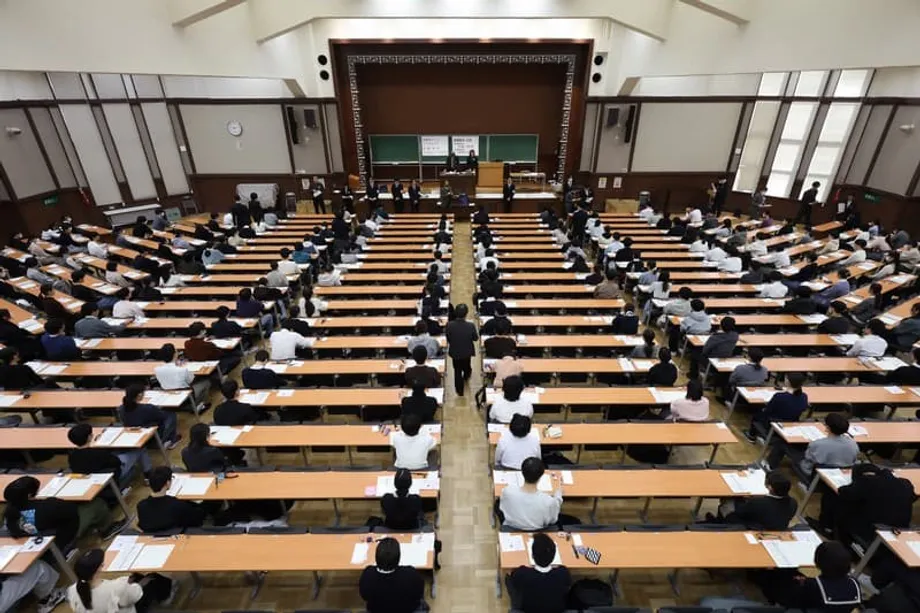
Japan's private education sector is approaching a financial tipping point, with 207 educational corporations struggling financially and a sharp decline in future student numbers threatening to deepen the pressure. Estimates released April 13 by the Promotion and Mutual Aid Corporation for Private Schools of Japan (PMAC), based on fiscal 2024 figures, put roughly 30% of the 662 corporations assessed in financial difficulty.
Contents
- 207 School Corporations Face Financial Trouble
- Rising Costs Are Driving the Immediate Squeeze
- A Smaller Generation Is Approaching University Age
- Closures and Mergers Extend Beyond Japan
- Tuition Increases Bring a Difficult Tradeoff
- Slow Decisions Can Make Adjustment Harder
- Foreign Student Demand Meets Capacity Limits
- What the Banking Crisis Offers as a Comparison
- Public Hospitals Show the Pressure on Regional Services
- The Ministry Wants Decisions Before Quality Suffers
- At a Glance
The number of troubled corporations rose by 33 from the previous year. These organisations run private universities, junior colleges and other schools nationwide, making the findings relevant to a broad part of Japan's education system.
PMAC placed 181 corporations in its yellow zone for financial difficulty, an increase of 26, and 26 in its red zone for severe distress, an increase of seven. Both categories reached their highest levels in a decade. Another 176 corporations were in the stage before a warning, down six, while 279 were rated normal, down 26.
The assessment covers educational corporations receiving ordinary public subsidies. It uses eight financial indicators, including income and expenditure from educational activities, external debt and asset management, to divide their financial health into four levels.
The figures describe the finances of the organisations operating schools, rather than a count of individual university campuses. For students and staff, the concern is practical: prolonged financial strain could affect teaching conditions, faculty workloads and the learning environment.
Private universities educate roughly 80% of Japan's college students. They also train people for child care, welfare and other services needed by an aging society. Financial trouble across this sector therefore reaches beyond university budgets into the future supply of workers and the availability of education in different regions.
Rising Costs Are Driving the Immediate Squeeze
PMAC's assessment points to higher operating expenses as the immediate cause of worsening finances. Utilities and labor cost more, while institutions face additional pressure from materials and other everyday expenses.
A PMAC official explained that the current deterioration was occurring during a temporary pause in the demographic decline:
The decline in Japan's population of 18-year-olds 'has temporarily leveled off,' suggesting that rising expenses, rather than demographic changes, are driving the deterioration. Higher utility and labor costs continue to worsen overall finances.
Personnel costs have risen following wage recommendations for educational staff. Universities must also meet utility and material bills amid wider inflationary pressure. An institution can therefore find its finances weakening even before a further fall in its intake.
PMAC's red zone points to institutions facing especially difficult prospects for recovery without substantial intervention. The growing yellow zone shows that pressure is spreading across a much larger group, reducing the room institutions have to prepare for the next demographic decline.
A Smaller Generation Is Approaching University Age
Japan's population of 18-year-olds is projected to begin a steep decline in 2035. The temporary pause offers universities some breathing space, but the longer outlook points to fewer potential applicants competing for places.
An education ministry expert panel forecast in February 2026 that the number of college entrants would fall to about 460,000 by 2040, nearly 30% below the 2021 level. For institutions dependent on tuition, fewer entrants mean a smaller pool of students from which to collect the income needed to pay staff and maintain courses.
The panel described the likely consequences for the sector:
A considerable number of institutions will inevitably be forced to scale down or exit (the sector).
The main dates show how immediate financial trouble and longer demographic change are converging:
- Fiscal 2024: The financial results underlying PMAC's latest assessment were recorded.
- February 2026: An education ministry expert panel projected about 460,000 college entrants in 2040 and warned of institutions shrinking or leaving the sector.
- April 13, 2026: PMAC released estimates showing 207 educational corporations in financial difficulty.
- 2035: A steep decline in the population of 18-year-olds is projected to begin.
- 2040: College entry is projected to be nearly 30% below its 2021 level.
For university leaders, the task is to manage today's rising costs while preparing for a future with substantially fewer students. The window for changes made voluntarily is narrowing.
Closures and Mergers Extend Beyond Japan
Japan has seen 33 universities close and another 29 merge with other institutions over the past few years. Those numbers are expected to grow as demographic pressure increases.
South Korea and Taiwan face similar difficulties. Like Japan, they have large majorities of students attending private universities, leaving much of their higher education provision exposed to changes in enrollment. In South Korea, institutions described as zombie universities have continued operating with government funding despite failing to attract enough students.
The pattern sits alongside growth in higher education worldwide. More than 254 million students are enrolled globally, yet closures and mergers are looming in many developed countries. Expanding demand across the world can coexist with shrinking demand in particular countries and regions.
Demographic decline is one source of pressure. Others include doubts about whether a university degree justifies its cost, shifts in government funding away from higher education, technological disruption and the growth of online learning.
Private institutions are especially vulnerable. Warning signs can include falling admissions, cuts to academic programs and problems with governance, meaning the way an institution is directed and held accountable.
In the United States, approximately 79 universities have closed in the past five years, with at least another 80 facing imminent danger. Most of those closures involve private institutions in rural areas where populations are declining. The geographic pattern matters for Japan, where the loss of a provincial institution could also reduce access to education and training locally.
Tuition Increases Bring a Difficult Tradeoff
The University of Tokyo has faced student opposition over its consideration of higher tuition fees. A fee increase at Japan's most prestigious university would likely influence other national and private institutions confronting similar cost pressures.
Japan restructured national universities into corporations in 2004. Since those reforms, each institution has set tuition under a ministerial ordinance, a rule issued by the responsible ministry. The debate now concerns how universities can meet rising costs while keeping education within reach.
South Korea offers an example of the financial strain associated with prolonged tuition restraint. A freeze introduced in 2009 left both national and private institutions facing mounting difficulties. Financial penalties for institutions that did not comply effectively enforced the freeze and increased dependence on government support.
By 2023, the real value of tuition fees for degrees lasting four years had fallen 23% compared with 2008. Real value accounts for inflation: the same payment buys less when wages, utilities and other prices rise. Private universities faced revenue shortfalls of up to 2.1 trillion won.
Critics of higher tuition argue that it can widen inequality and restrict access for families with lower incomes. Supporters argue that institutions need additional revenue to maintain educational quality and competitiveness. Japan's rising personnel, utility and material costs make that balance increasingly difficult.
Slow Decisions Can Make Adjustment Harder
Japan's experience during the financial crisis of the 1990s offers a warning about delayed reform. Research on that period describes institutional rigidity when the country encountered unfamiliar policy problems.
The Ministry of Finance maintained complex relationships with private institutions and bodies connected to government. Those relationships encouraged forbearance, allowing troubled organisations more time before requiring difficult adjustments.
Higher education now faces its own difficulty adapting to demographic change. A culture that values consensus and gradual decisions may make rapid consolidation harder when student numbers are falling. Universities also face populist skepticism about academic value, disruption from artificial intelligence and changes in the labor market.
The pressure is therefore broader than filling next year's classes. Institutions must make decisions about their size, courses and finances while the value and form of university education are also being challenged.
Similar constraints are visible in other Japanese public institutions. Public hospitals, often the last source of essential regional health care, face financial trouble driven by rising expenses and limited room to increase revenue. Their experience offers a useful comparison for education, particularly where an institution supplies services that a community cannot easily replace.
Foreign Student Demand Meets Capacity Limits
Some educational institutions are looking to international students as a partial buffer against declining domestic enrollment. Recent experience in Osaka Prefecture shows both the demand for places and the resources needed to accommodate students arriving from overseas.
Applications for a special high school entrance exam for students from overseas doubled this spring. More than 100 students were left without placement slots. The eight designated schools participating in the exam provide extensive Japanese language instruction, but the system has reached capacity.
At Osaka Wakaba High School, 43 students competed for 20 places. Principal Shoichi Takashina described the difficulty of matching staffing to demand:
Every year, we have more incoming students than we have spots for, and it is difficult to adequately prepare, such as by securing teachers for Japanese language instruction.
Private high schools have begun taking students to fill gaps in provision. Osaka Kunei Jogakuin Senior High School introduced a new entrance track for international students this spring, and all 16 Chinese applicants passed its exam.
YMCA Gakuin High School established a translingual course six years ago. Teacher Rika Shibahara explained that language support creates additional expenses:
Hiring new staff and creating multilingual materials is costly, and the reality is that we have no choice but to reflect that in the tuition fees.
These high school experiences suggest a possible source of enrollment for universities seeking students from overseas. They also show the investment involved. Recruiting students requires sufficient teaching capacity, Japanese language support and materials that students and their families can understand. Universities seeking to expand such provision would need to fund that infrastructure.
What the Banking Crisis Offers as a Comparison
Japan's response to troubled financial institutions in the late 1990s provides a possible model for intervention. The government injected cash into the economy and temporarily took responsibility for institutions in difficulty.
The Long-Term Credit Bank was nationalized and later sold, becoming today's Shinsei Bank. The approach combined supplying liquidity, taking control of operations and managing either rehabilitation or liquidation. Liquidity means having the cash needed to meet immediate payments; liquidation means closing an organisation and dealing with its assets and obligations.
Akihiro Wani, a senior counselor specializing in capital markets, explained the principle behind the response:
The basic idea was that, in a financial crisis, the government should supply liquidity, take over the company, control it, and if necessary liquidate it.
Wani said this mechanism influenced the American response to the financial crisis of 2008. In education, a similar philosophy could be considered for institutions regarded as essential to regional stability or national interests.
The scale of the education problem differs from the banking failures of the 1990s. Hundreds of institutions could be affected, making selective assistance based on regional importance or specialized training capabilities more likely than support for every troubled organisation. No program to apply that banking model to universities was specified.
Public Hospitals Show the Pressure on Regional Services
Roughly 90% of Japan's public hospitals operated at a deficit in fiscal 2024, compared with fewer than 30% in fiscal 2022. A deficit means that expenditure exceeds income, leaving an organisation needing reserves, support or changes to its operations.
Hospitals and educational institutions face rising personnel costs following National Personnel Authority wage recommendations, alongside inflation in supplies, utilities and contracted services. Revenue constraints also limit their responses. Public hospitals work under national fee schedules, while universities operate within the tuition and funding arrangements governing their sector.
Public hospitals face additional limits on how quickly they can change. Management decisions often need approval from local assemblies, while compensation systems based on seniority push personnel costs upward. Hospitals must also provide services required by public policy even when those services lose money, reducing the scope to make financial performance their main priority.
Consolidation has become a central response. Small and medium public hospitals have partially closed wards, reduced bed numbers or converted to clinics providing outpatient care only. Municipal hospitals in Yamanashi, Akita, Fukui and other prefectures have taken such steps.
The education ministry similarly anticipates substantial merger activity among universities, especially in provincial areas where population decline is most apparent. In both sectors, local leaders must manage discussions about access to services, employment and the needs of communities. A smaller institution may cost less to operate, but decisions about where services remain available directly affect residents.
The Ministry Wants Decisions Before Quality Suffers
The education ministry expert panel urged early action in February 2026. Institutions unable to guarantee educational quality should consider winding down before the demographic decline accelerates in 2035, rather than trying to continue until financial pressure becomes overwhelming.
An orderly withdrawal would give institutions time to protect current students and arrange transitions while limiting the buildup of unsustainable debt. Waiting could leave fewer resources and fewer options for students and staff.
Private universities provide training in child care, welfare and other fields essential to Japan's aging population. Their closure could create regional shortages of skilled workers even as the total student population declines. Decisions about mergers or withdrawal therefore need to consider which courses and services communities still require.
The immediate figures are already severe: 26 educational corporations are in PMAC's red zone and another 181 are in the yellow zone. Government subsidies may offer temporary relief, but rising expenses and the prospect of nearly 30% fewer college entrants by 2040 are pressing institutions toward structural change.
The central choice is how to preserve educational quality and necessary regional training with fewer students and tighter finances. The ministry panel's recommendation puts earlier decisions ahead of maintaining the number of institutions at the expense of the education they can provide.
At a Glance
- PMAC's April 13 estimates put 207 of 662 private educational corporations in financial difficulty, up 33 from the previous year.
- The yellow zone contains 181 corporations and the red zone 26, both the highest totals in a decade.
- Rising personnel and utility costs are driving immediate pressure while the population of 18-year-olds temporarily levels off.
- A steep demographic decline is projected from 2035, with college entrants falling to about 460,000 by 2040, nearly 30% below 2021.
- Japan has seen 33 university closures and 29 mergers in recent years.
- International student recruitment offers partial relief but requires spending on staffing, language instruction and materials.
- Private universities educate roughly 80% of Japan's college students and train workers for essential regional services.
- The education ministry panel urges institutions unable to guarantee quality to consider an early, orderly withdrawal.