
A Proposed Contract Puts Worker Protection to the Test
Malaysia is considering a foreign worker recruitment system that would give Bestinet Sdn Bhd a contract lasting 12 years and allow it to charge employers US$1,000 per application, plus a fee equal to one month's salary for each worker. The proposal comes as Bangladesh seeks the extradition of the company's founder, Aminul Islam Abdul Nor, over allegations that a recruitment network "fraudulently extorted" money from migrants.
Contents
- A Proposed Contract Puts Worker Protection to the Test
- How Bestinet Became Central to Recruitment
- What Turap Would Change, and What It Would Cost
- Why the Minister's Statements Matter
- The Recruitment Bills Workers Carry
- Investigations Reach Across the Recruitment Network
- Bangladesh's Extradition Request and Malaysia's Reputation
- Questions About Procurement and Informal Brokers
- A Worker Who Waited 147 Days for a Job
- The Scale of Missing Jobs and Forced Labor Concerns
- Dates Behind the Recruitment Debate
- Key Points
The Universal Recruitment Advanced Platform (Turap) is presented as a way for companies to hire directly, removing intermediaries who charge workers excessive fees. Yet labor advocates, former officials and international bodies accuse Bestinet of helping sustain a network that has exploited hundreds of thousands of Bangladeshis. The central issue is whether a new digital platform can change who controls recruitment and who ultimately pays for it.
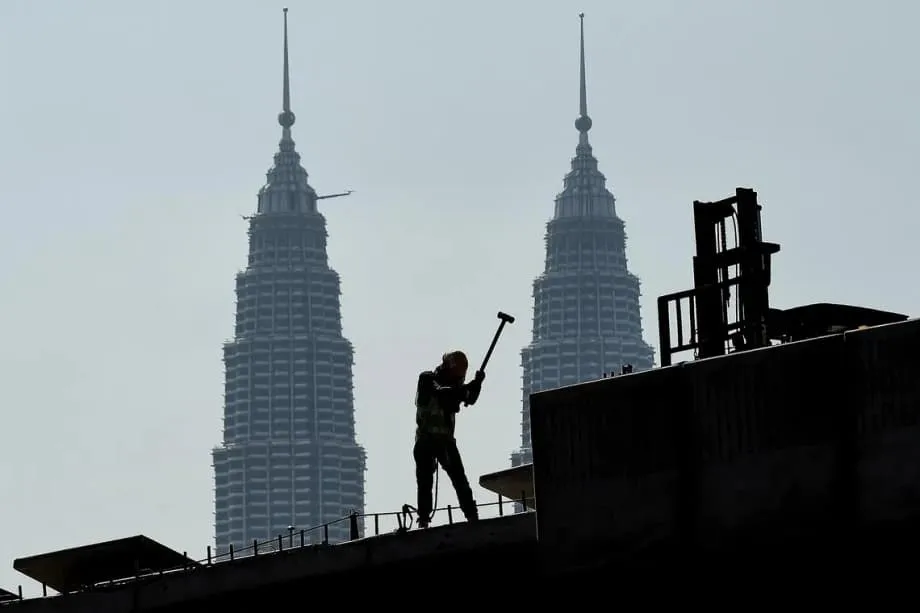
Malaysia had 2.1 million registered foreign workers in jobs requiring few formal skills as of August. That workforce makes the proposed contract a substantial commercial opportunity. Aminul's companies generated more than US$100 million in profits over the past decade, according to corporate filings, while many workers borrowed heavily to obtain jobs and became trapped by those debts.
Human Resources Minister R. Ramanan, also known as Ramanan Ramakrishnan, initially rejected reports about the proposed system as "unverified and inaccurate." Days later, he said his ministry saw no issue with Bestinet developing it. As of April 16, 2026, discussions remain underway, with agreement from the Ministry of Home Affairs and Cabinet approval still required.
The decision tests Prime Minister Anwar Ibrahim's campaign against corruption. Critics argue that giving Aminul greater control would strengthen the same recruitment arrangements that the United Nations has described as enabling widespread labor exploitation.
How Bestinet Became Central to Recruitment
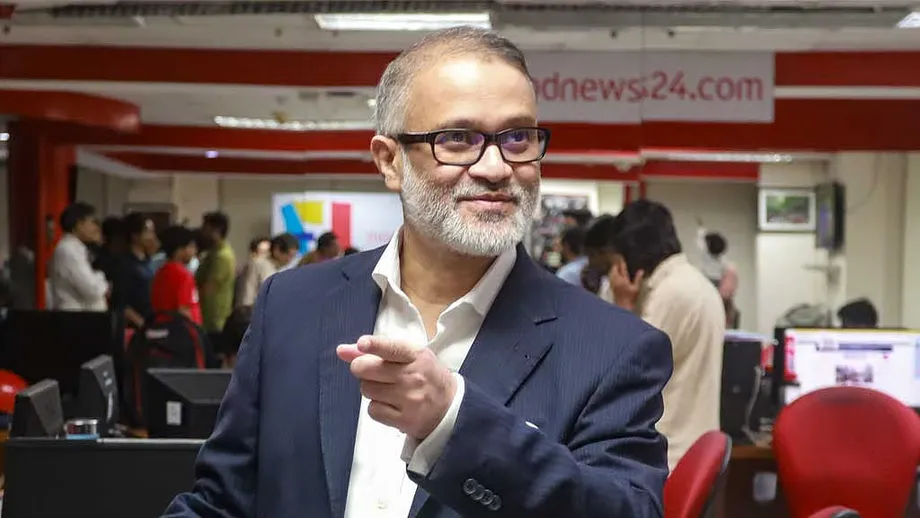
Aminul, a naturalized Malaysian citizen originally from Bangladesh, arrived in Malaysia in 1988 at age 21. He initially provided housing and transportation for migrant workers before becoming one of the country's most influential labor contractors. He founded Bestinet in 2008.
Bestinet has operated the Foreign Workers Centralised Management System (FWCMS) since 2011. The platform manages visa applications involving 15 countries that supply workers to Malaysia, with modules covering health checks, insurance verification and biometric data collection. Biometrics are identifying physical information used to check a person's identity.
Company materials describe FWCMS as a way to replace manual procedures and reduce opportunities for corruption by limiting physical contact between applicants and officials. The International Labour Organization (ILO), however, reviewed the system in 2013 and found that it was not "fool-proof in protecting migrants from excessive fees."
Malaysia adopted the platform in 2015, during Ahmad Zahid Hamidi's tenure as home affairs minister. Zahid now serves as deputy prime minister. That same year, Malaysia announced plans to recruit up to 1.5 million Bangladeshi workers, but required recruitment orders to pass through only 10 of Bangladesh's more than 1,000 recruitment agencies. The restriction effectively ended open competition for that business.
Aminul gave his first interview with international media in July. He compared his system to a highway, arguing that its operator cannot control how people drive. He said he could not be held responsible when officials approve fraudulent applications or when agents charge workers too much.
What Turap Would Change, and What It Would Cost
Turap would replace recruitment through licensed agents with a digital portal where employers register directly to find workers from Bangladesh and other countries. Aminul has promoted the proposal as a way to remove agents and lower recruitment costs.
People familiar with the discussions described a proposed contract lasting 12 years, under which Bestinet would receive US$1,000 for each foreign worker application and another fee equal to one month's salary per worker. Malaysia's dependence on migrant labor could make that arrangement worth hundreds of millions of dollars.
Three people familiar with the discussions said several current and former government officials had reservations about the contract's value, duration and the additional influence it would give Aminul. Steven Sim, whom Ramanan replaced as human resources minister in a December reshuffle, had questioned the proposal because of concerns about concentrating more power in Aminul's hands.
Three officials briefed on the matter also questioned how direct recruitment would work for large companies seeking thousands of workers at once. They warned that removing licensed agents could push recruitment underground and make supervision harder. Middlemen could continue operating in countries supplying workers, where Malaysian authorities have limited enforcement powers.
Aminul connected his proposal to an even larger ambition, suggesting that it could make Anwar a contender for the 2027 Nobel Peace Prize. During his July interview, while showing a presentation of the system, the Bestinet founder said:
Our target, within 36 months from now, is the Nobel Prize. This is our target. And we'll get it.
Aminul declined to confirm whether Anwar had seen the presentation, saying only that "this is the proposal that we have done."
Why the Minister's Statements Matter
Ramanan described a new recruitment system using technology in an interview in early February and said Malaysia hoped to adopt it by the middle of 2026. He did not disclose Bestinet's involvement.
When an April report described plans to adopt Bestinet's system, Ramanan rejected the account. Speaking at a Concorde Club dialogue session at Wisma Bernama, the human resources minister said:
It is shocking to me that they seem to know more about the proposed system than I do. I have not tabled anything to the Cabinet, yet they are able to explain it in detail.
Ramanan called the report "irresponsible and unethical" and said the reported fee of US$1,000 per worker was "totally false." He also stated his commitment to "zero migration cost" for workers, meaning workers would not bear the cost of moving abroad for employment.
Days later, Ramanan said his ministry saw no issue with appointing Bestinet, citing its track record over 15 years. Explaining the status of the discussions, he said:
We are still in discussion. After that, I will table a paper to the cabinet. At the moment, I see no issues with adopting Bestinet as the system developer.
Ramanan defended FWCMS by saying it had withstood cyberattacks during the COVID-19 pandemic and had received a United Nations award. His statements leave a difference between the contract terms described by people familiar with the proposal and the fees he has publicly rejected. No final contract terms or Cabinet decision have been announced.
The Recruitment Bills Workers Carry
Bangladeshi workers have paid recruitment fees reaching US$6,600 each, according to recruitment agents and a 2024 memorandum prepared for Anwar by the Madani Research Centre. That is more than twice what Indonesian and Nepali workers pay.
The fees can amount to 15 months of Malaysia's minimum wage. A worker who borrows that money must spend a long period repaying the recruitment bill before earnings can support a family. When debt prevents someone from leaving an abusive employer, the situation becomes debt bondage.
The International Migrants Alliance Asia Pacific described Bestinet as "deeply entangled" in the exploitation network. In a statement earlier this year, the organization accused both governments of enabling "trafficking networks, corrupt agencies, and state-backed syndicates that profit from the labor and suffering of the poor."
The alliance demanded an immediate end to the exploitation and a joint compensation task force for more than 500,000 stranded and exploited Bangladeshi workers. Its demand connects reform of future recruitment with compensation for people already harmed.
Labor advocates describe a recruitment environment in which everyone profits except the workers. A digital application may simplify paperwork, but the financial burden also depends on payments collected before workers reach Malaysia, including fees taken by informal brokers outside official channels.
Investigations Reach Across the Recruitment Network
More than a dozen current and former officials described recruitment irregularities in a January investigation. They suggested that figures in Malaysia's ruling elite knew about the problems but failed to act because recruitment fees benefited several parties.
Bangladeshi police arrested dozens of selected recruitment agents in 2024 during an investigation into money laundering and extortion. Police alleged that Ruhul Amin, the owner of Catharsis International, collected "syndicate fees" of about US$1,350 per worker and amassed more than US$1 billion over a decade.
Bangladesh's Interpol office wrote to Malaysian authorities seeking Aminul's extradition. It accused him of playing a central role in recruitment arrangements that subjected workers to "physical and mental torture." Aminul Islam Abdul Nor, the Bestinet founder, and Ruhul Amin, the agency owner, are two different people named in the allegations.
Latheefa Koya, a former chief of the Malaysian Anti-Corruption Commission, described the arrangements as institutional corruption in which "everyone gets a cut, and the workers pay." She said extreme cases amounted to human trafficking.
Latheefa pointed to workers who arrive to find that their promised jobs do not exist. They then face a choice between deportation and entering Malaysia's undocumented economy, where the absence of valid immigration status makes them more vulnerable to exploitation.
Bangladesh's Extradition Request and Malaysia's Reputation
Malaysia's Ministry of Human Resources sent a letter in April 2025 to Bangladesh's Ministry of Expatriates' Welfare asking Dhaka to review and withdraw "unsubstantiated allegations" of wrongdoing. The request was intended to help improve Malaysia's standing in the United States Trafficking in Persons (TIP) Report.
Azman Mohd Yusof, the Malaysian ministry's secretary-general, wrote that allegations of human trafficking and money laundering had "impacted the Malaysian reputation." He also requested that Bangladesh prevent "the revival of dismissed cases through a formal mechanism."
The letter came weeks before meetings involving Malaysian Home Affairs Minister Saifuddin Nasution Ismail and Bangladeshi counterparts about reopening labor recruitment. Malaysia had halted recruitment in May 2024 following reports of an oversupply of workers and corruption.
Bangladeshi authorities have not withdrawn their extradition request for Aminul. Saifuddin said in October that Malaysian police remained in contact with Bangladeshi police. No charges had been filed against Aminul in either country.
Bangladesh is Malaysia's primary source of workers in jobs requiring few formal skills, making recruitment both a labor issue and a diplomatic concern. Negotiations over access to jobs are taking place alongside police inquiries and disagreement over how allegations should be handled.
Malaysia is currently on Tier 2 in the US TIP Report, a ranking with substantial consequences for trade. Andy Hall, a labor activist based in Nepal who has extensively documented migrant labor conditions in Malaysia, argued that the country's "systemic inability to meaningfully combat labour trafficking" warranted an immediate downgrade to Tier 3. That lower ranking could trigger sanctions.
Questions About Procurement and Informal Brokers
Former Klang MP Charles Santiago and public policy analyst V. Aishwarya issued a joint statement challenging the idea that a recruitment platform driven by artificial intelligence could resolve failures of oversight that have lasted for decades. They said:
An AI label doesn't automatically fix governance failure. What safeguards will prevent this new platform from suffering the same fate?
Santiago and Aishwarya said FWCMS had originally been awarded without a proper open tender and had operated for six years without a contract. They asked whether the proposed platform would undergo transparent public procurement or be awarded through direct negotiation. An open tender allows potential suppliers to compete for a government contract.
The pair also asked how the platform would monitor informal brokers in rural Bangladeshi villages who collect fees outside official channels. Removing licensed agencies from a Malaysian portal would still leave the task of tracking money collected where recruitment begins.
The International Migrants Alliance called on both governments to remove "unnecessary recruitment fees" and dismantle what it described as the monopoly held by the Bangladesh Association of International Recruiting Agencies (BAIRA). The organization argued that abuses would continue while partnerships with private agencies and syndicates remained in place.
Former prime minister Mahathir Mohamad, who had previously tried to reform migrant recruitment, acknowledged how difficult change becomes when many people benefit financially. Describing the interests involved, he said:
This involves so many layers of people.
Mahathir added:
Even ministers.
A Worker Who Waited 147 Days for a Job
Shofiqul Islam, a Bangladeshi farmhand aged 34, borrowed US$4,400 to obtain a construction job in Malaysia. Relative to local wages, that expense was comparable to an American paying US$140,000 to secure a job.
A representative of his employer, Petrazehra Bhd., collected him at the airport and took him to a dilapidated building outside Kuala Lumpur. The accommodation had worn mattresses, minimal sanitation and no work for the men who had paid to come.
On February 4, 2024, Shofiqul spoke to his wife by video call after waiting 147 days for employment. Hiding his desperation, he told her:
Don't worry. The job will come very soon.
His visa expired while his employer remained silent. The following morning, he gasped for air and went into convulsions. He died among roommates who had also paid for jobs that did not exist. An ambulance removed his body while his widow and children remained unaware of the circumstances.
Petrazehra had been approved to recruit 1,500 Bangladeshis despite recording no revenue for two years. Shofiqul's experience illustrates the exploitation described by the United Nations: a worker pays heavily for a promised job, arrives without employment and loses the ability to recover the money through wages.
The Scale of Missing Jobs and Forced Labor Concerns
Bangladeshi authorities estimate that at least 8,000 workers never received the jobs promised to them in recent years. Malaysian officials suggest that the actual number reaches tens of thousands.
Workers whose jobs fail to materialize face more than a lost recruitment fee. Seeking help can put them at risk of deportation, and many enter Malaysia's undocumented economy instead. Without valid status or the promised employer's support, their exposure to exploitation grows.
US authorities have sanctioned eight Malaysian companies since 2019 over alleged forced labor involving debt bondage and intimidation. Malaysian suppliers to major global corporations have faced similar scrutiny. Bangladeshi workers carrying recruitment debts they cannot escape are a recurring feature of these cases.
Ramanan's promise of zero migration costs addresses the burden at the center of these experiences. The proposed Bestinet arrangement, however, still involves disputes over charges, the company's role and the strength of safeguards. Officials must settle those issues while Bangladesh continues to seek Aminul's extradition and workers seek compensation for earlier losses.
Dates Behind the Recruitment Debate
Malaysia's current deliberations follow years of changes to recruitment rules, warnings about fees and investigations into alleged abuse. The principal events include:
- 1988: Aminul arrived in Malaysia from Bangladesh at age 21.
- 2008: Aminul founded Bestinet.
- 2011: Bestinet began operating FWCMS.
- 2013: The ILO reviewed the platform and warned about protection against excessive fees.
- 2015: Malaysia adopted FWCMS and announced plans for up to 1.5 million Bangladeshi workers, with recruitment routed through 10 agencies.
- February 4, 2024: Shofiqul reassured his wife after waiting 147 days for work. He died the next morning.
- May 2024: Malaysia halted recruitment following reports of worker oversupply and corruption. Bangladeshi police arrested dozens of recruitment agents during 2024.
- April 2025: Malaysia asked Bangladesh to review and withdraw allegations ahead of talks on reopening recruitment.
- Early February 2026: Ramanan said Malaysia hoped to adopt a new recruitment system by the middle of the year.
- April 2026: Ramanan rejected claims about the Bestinet proposal, then said discussions continued and he saw no issue with the company developing the system.
The government's stated target is adoption by the middle of 2026. The immediate decisions concern agreement between ministries, a Cabinet paper and approval of any final arrangement.
Key Points
- Malaysia is considering Turap, a direct recruitment platform developed by Bestinet.
- The proposed contract would last 12 years and charge employers US$1,000 per application plus one month's salary per worker. Ramanan has rejected the reported US$1,000 fee.
- Bangladesh seeks the extradition of Bestinet founder Aminul Islam Abdul Nor over alleged recruitment abuses. No charges have been filed against him in either country.
- Bangladeshi workers have paid recruitment fees reaching US$6,600, equivalent to 15 months of Malaysia's minimum wage.
- Bangladeshi authorities estimate at least 8,000 workers missed out on promised jobs; Malaysian officials suggest tens of thousands.
- Labor advocates are calling for transparent procurement, controls on informal fees and compensation for exploited workers.
- The proposal still requires Home Affairs Ministry agreement and Cabinet approval, with adoption targeted for the middle of 2026.