A New County Near Three Sensitive Borders
China established Cenling County in the Xinjiang Uygur Autonomous Region in March 2026, creating a new administrative unit near the Karakoram mountain range and the meeting point of China, Afghanistan and the disputed territory of Kashmir administered by Pakistan. Carved out of Taxkorgan Tajik Autonomous County, Cenling comes under Kashgar prefecture, the historic Silk Road hub that serves as the starting point for the $60 billion China Pakistan Economic Corridor.
Contents
- A New County Near Three Sensitive Borders
- Why Local Administration Matters to Beijing
- How the Wakhan Road Reached This Point
- What Cenling Could Do for a Future Crossing
- Security Is the Central Test
- Afghanistan's Wider Transport Ambitions
- Trade Growth Meets a Large Export Gap
- India's Objections Add Diplomatic Pressure
- A Mountain Route With Demanding Conditions
- Key Points
Cenling is the third new county created in Xinjiang in just over a year. It follows He'an and Hekang, established in December 2024 in areas bordering or including parts of Aksai Chin, a territory disputed by China and India. The sequence brings greater administrative attention to remote frontier areas that are becoming more important to Beijing's security and development planning.
Beijing presents the creation of Cenling as routine consolidation of local government. Regional analysts see a wider strategic signal: stronger institutions near a sensitive border could help China manage security, allocate development resources and prepare for future trade links with Afghanistan.
The county's proximity to the Wakhan Corridor gives that possibility particular weight. The narrow, 74 kilometer strip of Afghan territory reaches China's westernmost point and provides the only direct land border between the two countries. A proposed road through this rugged passage could connect Central Asia and South Asia in new ways, while exposing both countries to difficult security and engineering demands.
As of April 24, 2026, no formal agreement for the Wakhan Road had been announced, and the route remained years from completion. Cenling's immediate importance lies in the government structure China is putting in place beside a border where a much larger transport project has been discussed for decades.
Why Local Administration Matters to Beijing
Cenling's creation fits a broader effort to strengthen China's government presence along its western frontier. Counties provide a local structure through which authorities can direct resources, oversee development and coordinate security. In a remote border region, that structure could also become responsible for managing the movement of goods and people if a crossing eventually opens.
Lin Minwang, a professor at the Institute of International Studies at Fudan University in Shanghai, linked the decision to the importance Beijing now assigns to these areas.
At a broader level, the decision signals China's emphasis on its borderlands.
Lin's assessment places Cenling within a larger change in how China views its frontier. Areas once treated as distant geopolitical edges are becoming more central to plans for regional transport, investment and security. A permanent local administration gives Beijing a framework for handling those responsibilities.
Yun Sun, a senior fellow at the Stimson Centre in Washington, described the new county as part of a drive toward stronger local government for effective governance and control. She connected that administrative effort directly to security concerns.
It helps to strengthen the stabilisation efforts by the government in the frontier region, which is traditionally more subject to ethnic turbulence and potential infiltration of foreign militants from Central Asia.
China's approach embeds state institutions more deeply in remote territories that have historically operated with considerable autonomy. For Cenling, the potential tasks range from supporting construction and allocating development funds to regulating border traffic and coordinating measures against militant activity.
How the Wakhan Road Reached This Point
Afghanistan and China have discussed reconnecting through the Wakhan Corridor for decades. The passage through the Pamir Mountains has remained largely dormant as a trade route for nearly a century. Its remoteness, difficult terrain and security risks have repeatedly slowed efforts to turn the idea into a usable road.
In 2009, the Afghan government requested Beijing's permission to construct a road through the corridor, reportedly at the behest of the United States. The proposal sought a safer trade route that would bypass the volatile border between Pakistan and Afghanistan. Chinese officials agreed to conduct a feasibility study, but the project stalled amid concerns about regional instability.
The Taliban's return to power in Afghanistan in 2021 brought renewed attention to the route. The government elevated the Wakhan Road to a national priority and promoted it as a potential connection between China and the Middle East, with economic benefits for landlocked Afghanistan.
Afghan officials in Badakhshan province, where the corridor is located, have said that China's ambassador assured them the Chinese government would approve the project. Their statements describe the expectations on the Afghan side as the proposal awaits a formal agreement.
The main developments span several years:
- 2009: Afghanistan requested permission for a Wakhan road, and China agreed to a feasibility study before the proposal stalled.
- 2021: After returning to power, the Taliban made the road a national priority.
- December 2024: China established He'an and Hekang counties in Xinjiang.
- March 2025: Kyrgyzstan, Uzbekistan and Tajikistan finalized border delimitation agreements and elevated bilateral relationships.
- March 2026: China established Cenling County under Kashgar prefecture.
- April 24, 2026: The Wakhan Road remained a proposed connection without an announced formal agreement.
A completed road would create the first direct land connection between Afghanistan and China in nearly a century. Cenling could become an administrative hub for a border that has historically handled very little official traffic.
What Cenling Could Do for a Future Crossing
Cenling gives China a local government framework near the proposed route. That could help authorities oversee future construction, organize border security and regulate the movement of goods and people. These are practical requirements for turning a remote mountain passage into a functioning international transport link.
The decision is interpreted as preparation for the Wakhan project after years in which discussion produced limited movement toward construction. Within China's broader Belt and Road Initiative, a road through the corridor would extend the network of transport connections intended to support trade and investment across borders.
Afghanistan would gain direct access to Chinese markets, while China would gain an alternative overland route. Such a connection could reduce reliance on potential choke points in Pakistan and offer another option alongside routes exposed to maritime vulnerabilities in the Persian Gulf and Red Sea.
Beijing's administrative move also serves a more immediate purpose. Even while the road remains a proposal, stronger local institutions can expand China's reach into a sensitive frontier region. The same government structure could support development if conditions improve and tighter security if threats persist.
China is therefore proceeding incrementally. Establishing a county signals attention and commitment to the area while leaving the much larger decision about opening a road dependent on security conditions and coordination with neighboring states.
Security Is the Central Test
Chinese officials have consistently expressed concern that the East Turkestan Islamic Movement and other militant groups could use the Wakhan Corridor to enter Xinjiang from Afghanistan. The passage's rugged terrain and high elevation offer hiding places and possible infiltration routes that are difficult to monitor, even with sophisticated surveillance systems.
Islamic State Khorasan Province presents another threat, alongside drug trafficking networks operating in Afghanistan. Attacks on Chinese targets in Afghanistan, Tajikistan and Pakistan have demonstrated the vulnerability of Belt and Road projects to violence by armed groups.
Afghan authorities have made substantial progress in curbing opium cultivation. However, shifts in cultivation toward Badakhshan province have raised concern about trafficking near the proposed corridor. A road intended to carry legitimate commerce would also require controls against the movement of illicit goods.
Beijing has consistently described security as the foundation and prerequisite of development. Chinese calls for joint patrols and expanded counterterrorism cooperation in the Wakhan Corridor reflect that position. Afghanistan would need to demonstrate a sustained ability to confront militant and criminal threats and protect foreign investment.
Construction itself would create security demands. Armed groups could target crews, disrupt supply chains or use the route to move weapons and personnel. The protection of workers and cargo would therefore matter throughout the project, rather than only after a border crossing begins operating.
The Shanghai Cooperation Organization and the Collective Security Treaty Organization offer frameworks for regional counterterrorism cooperation. The Moscow Format Consultations remain the only regular institutionalized regional mechanism that consistently includes the Taliban government, giving it a particular role in discussions involving Afghanistan's authorities.
Afghanistan's Wider Transport Ambitions
Central Asian governments increasingly view stability in Afghanistan as closely connected to their own security and economic development. Their interest in transport links provides a wider setting for the Wakhan proposal: Afghanistan could become a transit point between regions rather than a barrier separating them.
In March 2025, Kyrgyzstan, Uzbekistan and Tajikistan finalized border delimitation agreements and elevated bilateral relationships. Those steps reduced barriers to cooperation that had persisted since the collapse of the Soviet Union and supported broader efforts to improve regional connections.
Uzbekistan's President Shavket Mirziyoyev has argued that Afghanistan's transport network is important to Central Asia's development.
For sustainable development in Central Asia, it is important to restore Afghanistan's internal transport links and expand its transit capabilities.
The Trans Afghan railway, the TAPI gas pipeline and the CASA 1000 energy project are part of that shift. Each addresses a different need: moving goods, transporting gas or transmitting electricity. Together, they point toward a larger role for Afghanistan in regional trade and energy networks.
The TAPI pipeline had extended 25 kilometers into Afghan territory, with plans to reach Herat by the end of 2026. CASA 1000 was expected to become operational by summer 2027. Those dates provide nearer milestones for regional infrastructure alongside the longer prospect of a road through Wakhan.
Uzbekistan, Kyrgyzstan and Afghanistan have also pursued trilateral initiatives to establish joint working groups on trade and transit. These efforts seek to integrate Afghanistan into regional economic networks despite the Taliban government's unrecognized diplomatic status.
Trade Growth Meets a Large Export Gap
Trade between Afghanistan and Central Asian states reached approximately $2.7 billion in 2025. Afghan ambitions call for expanding that figure to $10 billion within three to four years. Reaching the target would mean increasing trade to roughly 3.7 times the 2025 level.
Afghanistan's challenge is also the balance of that trade. The country buys far more than it sells in some regional relationships, making access to additional export routes and markets an important part of its transport ambitions.
Kazakhstan illustrates the gap. Trade with Afghanistan totaled $565 million, but only $55 million consisted of Afghan exports. That left roughly $510 million flowing in the other direction. The imbalance was described as approximately 10 to 1, while Afghan exports accounted for less than one tenth of the total trade volume.
A direct road to China would give Afghanistan another route to a major market. For a landlocked country, access depends heavily on roads and transit arrangements through neighboring states. The Wakhan proposal offers a direct connection across Afghanistan's own border with China.
China's interest combines commercial opportunity with the value of having alternative routes. Kashgar already anchors the China Pakistan Economic Corridor. A connection through Wakhan would place another possible transport link near that hub, while giving Afghanistan a role in a wider network connecting Central Asia, South Asia and the Middle East.
Security and transport reliability would shape how useful that access becomes. Traders need goods to move safely and consistently, and investment in a mountain road would have to be matched by arrangements for protecting cargo and managing the crossing.
India's Objections Add Diplomatic Pressure
India formally protested to China after the creation of He'an and Hekang counties in December 2024. New Delhi asserted that parts of their jurisdictions lie within India's Union Territory of Ladakh. He'an includes portions of the disputed Aksai Chin plateau.
Aksai Chin has remained under Chinese control since the 1962 war between China and India. It continues to be a focal point of their border dispute, making administrative changes there sensitive for both nuclear armed neighbors.
Cenling's proximity to Kashmir administered by Pakistan adds another diplomatic complication. The China Pakistan Economic Corridor passes through that disputed territory and has drawn consistent Indian opposition. India regards projects in the area as violations of its sovereignty.
China's creation of new administrative units near contested areas strengthens its local institutions while also consolidating its territorial claims. Those institutions provide a framework for future development projects, bringing questions of government authority and investment into the same sensitive geography.
Central Asian states have generally welcomed greater Chinese engagement with Afghanistan. Their position reflects the view that sustainable regional security and development depend on stability there. The result is a region pursuing closer economic connections while territorial disputes continue to complicate parts of the network.
A Mountain Route With Demanding Conditions
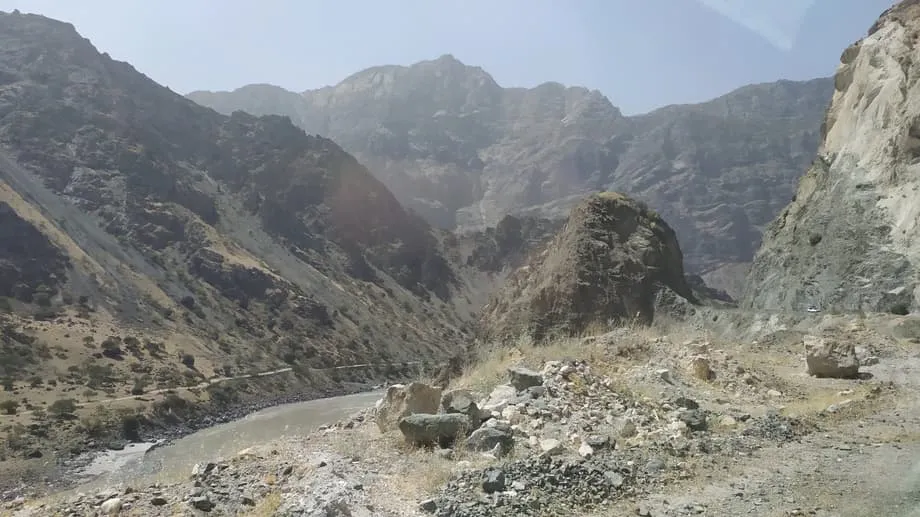
The Wakhan Corridor's extreme elevation, harsh weather and remote location present major engineering challenges. Building a usable road would require substantial investment and technical expertise, with difficult conditions affecting construction and the movement of supplies.
Afghanistan's security situation remains volatile despite Taliban assertions of control. A functioning crossing would depend on sustained coordination among Afghanistan, China, Pakistan and other Central Asian states, particularly on the protection of infrastructure and the management of border movement.
China's cautious approach reflects those demands. Cenling provides an administrative base from which Beijing could support future development while strengthening control over its frontier. The potential economic gains are substantial, but preventing instability from spilling into Xinjiang remains its overriding priority.
The county's creation places government institutions ahead of a possible change in regional transport. Whether the Wakhan Road becomes operational will depend on turning long discussed plans into coordinated construction and security arrangements. For now, Cenling brings China's administrative reach closer to a passage that Afghanistan hopes will become a major route for commerce.
Key Points
- China established Cenling County in March 2026, separating it from Taxkorgan Tajik Autonomous County and placing it under Kashgar prefecture.
- Cenling is Xinjiang's third new county in just over a year, following He'an and Hekang in December 2024.
- The county lies near the Wakhan Corridor, the only direct land border between Afghanistan and China.
- The Taliban made the Wakhan Road a national priority after returning to power in 2021. No formal agreement had been announced by April 24, 2026.
- Militant activity, drug trafficking, difficult terrain and harsh weather remain central concerns for a future crossing.
- Afghanistan's trade with Central Asian states reached about $2.7 billion in 2025, with ambitions to reach $10 billion within three to four years.
- The TAPI pipeline was planned to reach Herat by the end of 2026, while CASA 1000 was expected to operate by summer 2027.
- India protested the creation of He'an and Hekang over its claims in Ladakh and continues to oppose the China Pakistan Economic Corridor through disputed Kashmir.