Japan chooses safeguards over a blanket ban
Japan's Ministry of Internal Affairs and Communications presented a draft policy framework to an expert advisory panel on April 22, 2026, proposing stronger age verification, compulsory risk disclosures and content filtering for young social media users. The plan would tighten protections while keeping services accessible, setting Japan apart from countries that have chosen to shut children out below a fixed age.
Contents
- Japan chooses safeguards over a blanket ban
- Content filters would start switched on
- Platforms would have to explain their risks
- Age checks could move beyond entered birth dates
- My Number Cards provide another technical route
- Why Japan wants to preserve access
- European governments pursue different age limits
- The United States and Malaysia test other approaches
- Courts and AI investigations add pressure
- The timetable runs from summer 2026 to possible rules in 2027
- The Essentials
The proposal centers on three measures: making content filters active by default, requiring platforms to assess and publish the risks of their services, and replacing easily falsified birth dates with more reliable age checks. Mobile carriers and smartphone operating system providers are among the possible partners for verification.
The ministry rejected the blanket approach taken by Australia, whose ban on social media access for children under 16 took effect in December 2025, and Indonesia, which implemented a similar restriction in March 2026. Japanese officials acknowledged addiction, cyberbullying and exposure to harmful material, while stressing that social media also provides communication, support networks and social connection.
A final report is expected in summer 2026. The Children and Families Agency will then decide on concrete measures and whether legal changes are needed, with regulations potentially taking effect as early as 2027. As of April 24, the framework remains a proposal, with the ages covered by filters, enforcement arrangements and detailed verification standards still unsettled.
Japan's central choice is to make the online environment safer through restrictions tailored to age and clearer information about risk. Instead of closing the door entirely, the ministry wants platforms to take greater responsibility for what young people encounter once they enter.
Content filters would start switched on
Social media operators would be required to enable content filtering based on age automatically. Currently, most platforms leave such controls disabled unless a parent or guardian activates them, placing much of the responsibility for protection on families.
Under the draft framework, filtering would become the starting setting. A young user would enter a service with protective controls already operating, rather than depend on an adult finding and changing the relevant options. The proposal shifts responsibility toward the platform while retaining access to its service.
The ministry has not selected the age thresholds. Possible approaches include the age of 13 commonly used by platforms, limits of 15 or 16 similar to those being considered in Europe, or different levels of access for different ages. Those choices would determine which users receive which protections.
Platforms would have to explain their risks
Platform operators would also face duties to evaluate addiction risks, exposure to harmful content and other dangers linked to the way their services work. They would have to make those assessments public and explain the restriction methods available to users and parents.
The idea resembles a nutritional label for a digital service: a clear account of what a user is entering and which controls are available. Features relevant to that assessment include infinite scrolling, algorithmic amplification and settings that limit time spent on an app.
Infinite scrolling lets new material continue appearing without a natural stopping point. Algorithmic amplification refers to systems that select and promote content to users. By requiring companies to describe risks attached to such features, the proposal would make service design part of the child protection discussion, alongside the content people post.
Parents would gain information about a platform's particular risks rather than receive only a general warning about social media. Companies would be responsible for assessing their own products, publishing the results and explaining the protective measures they offer.
Age checks could move beyond entered birth dates
Japan's proposed verification framework would address a weakness in current registration systems: young users can often enter a false birth date to get past an age restriction. Millions of young users currently bypass restrictions through these declarations, and a child can claim to be 13 without a technical check.
Mobile carriers offer one possible alternative because Japanese telecommunications providers already confirm customer identities when devices are purchased and contracts are signed. The ministry is exploring whether that existing identity information could support checks for social media access.
A platform could ask a carrier to confirm a user's age through a secure application programming interface, or API. An API is a connection that allows computer systems to exchange information. In this model, the platform could obtain confirmation of age without handling the customer's original identity documents.
Smartphone operating system providers represent another possible route. Verification at the device level could supply age credentials to services, reducing the need for families to submit identification repeatedly and limiting the amount of sensitive information social media companies would hold.
The practical aim is to replace an honor system with a trusted check. The ministry's proposed approach draws on identity infrastructure Japan already has, while leaving the precise arrangements for carriers, devices and platforms to be worked out.
My Number Cards provide another technical route
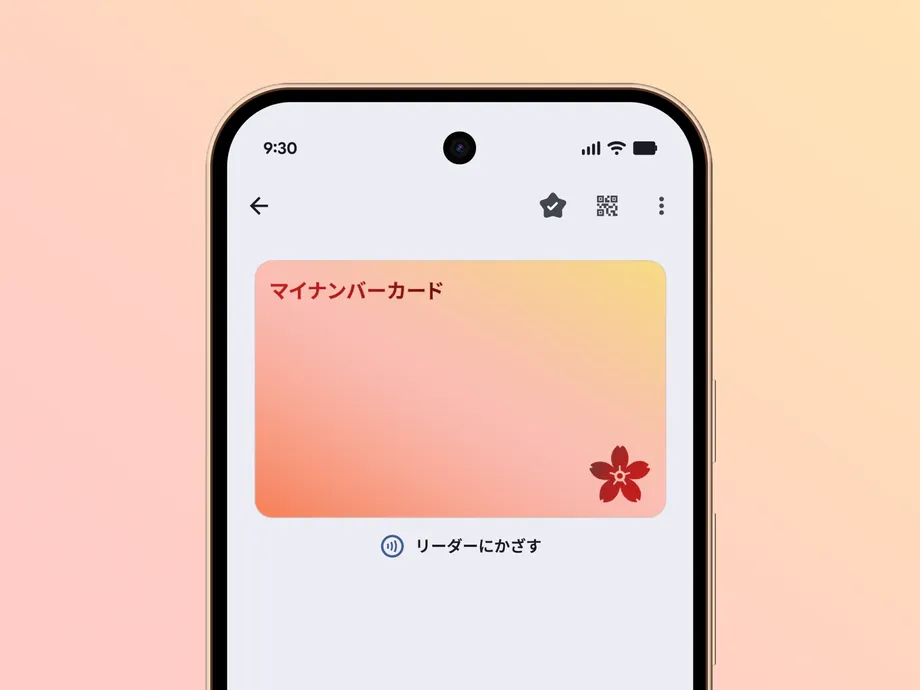
Japan's My Number Card system, the national identification program, has recently expanded its digital wallet capabilities to private sector applications. Toshiba was named as the first implementer in March 2026.
The cards contain integrated circuit chips that can authenticate identities. Their expanded use could allow smartphone operating systems to verify age credentials at the device level without passing the underlying personal information to social media companies.
An expansion of the Android My Number Card wallet announced earlier in April adds another piece of the device level identity infrastructure being considered by the expert panel. Alongside carrier records, it offers a potential foundation for stronger age assurance, meaning a process for checking whether someone falls within a particular age group.
Japan's proposal therefore has two related technical routes: using identity information already held by telecommunications providers, or using credentials verified through a device and the My Number Card system. Both aim to reduce reliance on users typing their own dates of birth.
The privacy challenge remains substantial. A system checking age across digital services must balance child protection with concerns about tracking and surveillance. The approach will likely require confirmation of age eligibility without retention of detailed identity data, potentially through cryptographic proofs or tokens that confirm eligibility without storing birth dates.
Why Japan wants to preserve access
Japanese officials regard social media as a major part of modern communication, particularly for marginalized young people who use online communities for mental health support, academic help or contact with peers who share their interests.
A blanket ban could isolate those users. It could also push children toward alternative platforms with fewer safety resources than major services such as Instagram, TikTok and X. The ministry's preference is to reduce specific harms while keeping young people within environments where protective measures can operate.
Australia chose a different model. Its prohibition covers social media access for children under 16, and platforms that fail to comply face penalties reaching A$49.5 million. Indonesia's March restrictions involved the deactivation of accounts for approximately 70 million minors.
Australia's early experience included technical attempts to get around the ban through virtual private networks, or VPNs, and alternative apps. A VPN can change the apparent location of an internet connection. Use of workarounds reportedly peaked shortly after implementation and then declined.
Tony Allen, director of the Age Check Certification Scheme and supervisor of Australia's 2025 Age Assurance Technology Trial, described the role of the network effect. This means that a service becomes more useful when the people someone wants to contact also use it. Allen said:
There isn't evidence of a major shift to unregulated alternatives. Some of these may have been tried initially, but they lack the network effect of mainstream social media, so they lack the utility for young people.
Allen's assessment points to a practical reason mainstream platforms retain their appeal: an alternative app offers less value to a teenager when friends and communities remain elsewhere. Japan's plan focuses on making those widely used environments safer while preserving their communication role.
European governments pursue different age limits
Spain has announced plans to block social media for children under 16. Prime Minister Pedro Sanchez said platforms must put in place real barriers that work, rather than rely on check boxes.
France has moved to accelerate legislation banning social media for children under 15. President Emmanuel Macron said children's brains are not for sale to either American platforms or Chinese networks, placing the commercial incentives of technology companies at the center of his argument.
Greece will implement its ban for children under 15 on January 1, 2027. Denmark, Portugal, Slovenia and Norway have also announced restrictions, with proposed age limits ranging from 13 to 16.
The European Parliament has proposed a resolution supporting a minimum age of 16 for social media access across the bloc. The resolution is nonbinding, meaning it sets out a position rather than itself creating an enforceable rule.
These measures create a patchwork of age limits. Japan's draft takes a different approach by concentrating on filtering, disclosure and verification instead of selecting a single age below which access would be prohibited.
The United States and Malaysia test other approaches
Nebraska enacted laws effective January 1, 2026, requiring parental consent and biometric age verification for social media access. Biometric verification uses physical characteristics to help establish a person's age or identity.
Utah's Minor Protection in Social Media Act faces continuing litigation from NetChoice, a trade association representing major technology companies. In the United States, First Amendment concerns have historically blocked restrictions of this kind because they affect access to protected expression.
Malaysia is preparing digital safety regulations for 2026 that connect identity verification technology with its national MyDigital ID system. Its approach represents an intermediate model closer to Japan's proposed direction, using stronger identity checks without an outright ban.
Malaysian officials describe the planned checks as potentially the world's most rigorous age verification system. Japan is likewise examining how existing identity infrastructure could support online protection, although its draft still leaves the operating rules to later decisions.
Courts and AI investigations add pressure
Social media companies face pressure beyond new legislation. Courts in the United States have awarded millions of dollars in damages to plaintiffs alleging that platforms such as Meta and YouTube designed addictive features, including infinite scrolling and algorithmic amplification, specifically to exploit developing brains.
Those civil cases give companies a financial reason to consider stronger protections and age verification even where governments have yet to settle their rules. Civil liability means a company may have to pay damages when a court finds it responsible for harm.
AI chatbots have brought another child safety concern into focus. Reports that Grok, the AI assistant integrated into X, responded to prompts to generate sexualized images of children prompted a raid on X's Paris offices by French cyber crime units and a formal investigation by the United Kingdom's Information Commissioner's Office.
The Grok incidents show why child protection measures must address how platforms generate and distribute material, as well as how they moderate posts. AI systems can introduce routes for harmful content that bypass traditional moderation practices.
Industry opposition to age verification requirements remains strong. NetChoice filed ten new lawsuits in 2025 challenging laws enacted by American states, arguing that the measures impose unconstitutional restrictions on protected expression.
The association recently secured a permanent injunction against Louisiana's age verification law and continues to contest Utah's regulations. A permanent injunction is a court order preventing enforcement of the challenged law. These cases illustrate the legal disputes surrounding restrictions on young people's access and the checks needed to enforce them.
The timetable runs from summer 2026 to possible rules in 2027
The communications ministry's expert panel is expected to complete its report in summer 2026. The Children and Families Agency will then decide whether existing law can support the measures or whether new legislation is required.
The main dates show how Japan's deliberations fit into the wider sequence of restrictions and identity developments:
- December 2025: Australia's social media ban for children under 16 took effect.
- January 1, 2026: Nebraska's parental consent and biometric age verification laws became effective.
- March 2026: Indonesia implemented its restrictions, while Toshiba was named as the first implementer of Japan's expanded My Number Card digital wallet capabilities for private sector applications.
- April 2026: Japan announced an expansion of the Android My Number Card wallet.
- April 22, 2026: Japan's communications ministry presented its draft framework to an expert advisory panel.
- Summer 2026: Japan's expert panel is expected to finalize its report.
- January 1, 2027: Greece's social media ban for children under 15 is scheduled to begin.
- 2027: Japan's regulations could take effect as early as this year if the necessary decisions and legal changes are completed.
Japan's next decisions concern who receives protection, what platforms must disclose, how age checks operate and how compliance is enforced. Those details will determine how the proposed shift from voluntary parental settings to platform duties works in practice.
The draft combines access with protection: children would retain communication channels, while platforms would face stronger requirements to check age, limit harmful exposure and explain risks. Its success will depend on turning those proposed duties into workable rules that also protect personal information.
The Essentials
- Japan proposed stronger social media age verification on April 22, 2026, while rejecting blanket bans on young users.
- The draft calls for content filters enabled by default, public platform risk assessments and more reliable age checks.
- Mobile carriers, smartphone operating systems and My Number Card infrastructure are possible foundations for verification.
- Japanese officials want to preserve access to communication, peer communities, academic help and mental health support.
- Australia bans access for children under 16, while Indonesia's restrictions involved approximately 70 million minors.
- European countries are pursuing age limits ranging from 13 to 16, and Greece's ban begins January 1, 2027.
- Japan's final report is expected in summer 2026, with regulations potentially taking effect as early as 2027.
- Age thresholds, enforcement details and privacy protections still require decisions.