A School Laptop Programme Becomes a Corruption Case
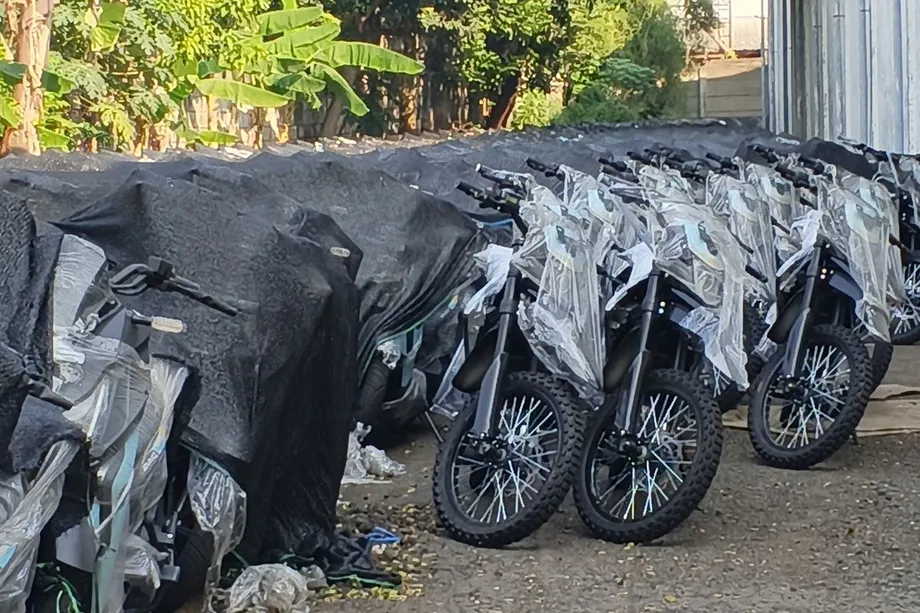
Indonesia bought 1.2 million Chromebook laptops for schools between 2020 and 2022 under a digitalisation programme with an estimated budget of 10 trillion rupiah ($740 million). By April 24, 2026, that programme had become the centre of a corruption trial against former education minister and Gojek co-founder Nadiem Makarim, with prosecutors alleging more than 2.18 trillion rupiah ($125 million) in state losses.
Contents
- A School Laptop Programme Becomes a Corruption Case
- What Prosecutors Say Went Wrong
- The Meetings at the Centre of the Allegations
- Why Google's Investment Is Part of the Case
- Former Google Executives Reject the Financial Link
- Could the Laptops Work in Remote Schools?
- Nadiem Says the Programme Saved Money
- Health Concerns and the Trial Calendar
- Why the Technology Industry Is Watching
- The Bottom Line
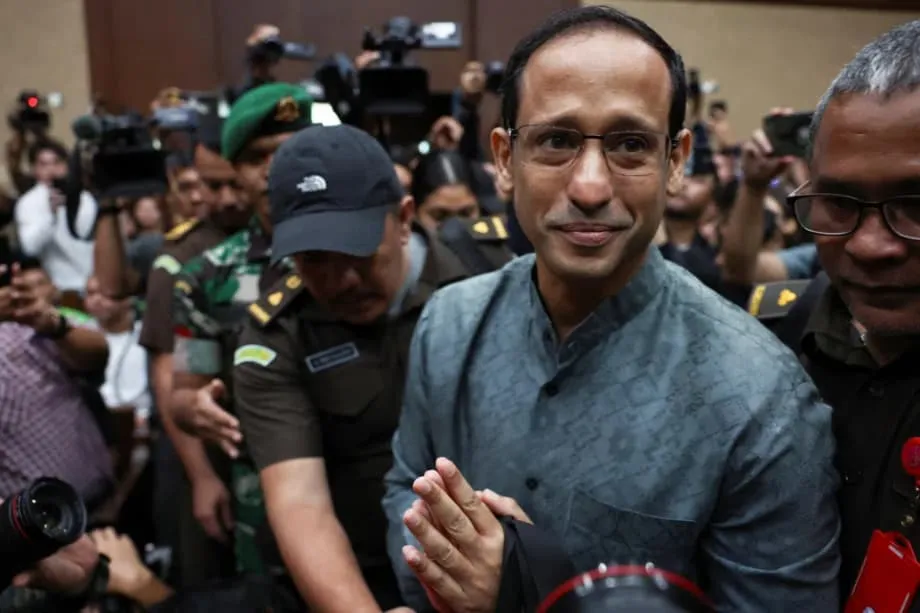
Nadiem, a 41-year-old Harvard graduate who entered the cabinet under former president Joko Widodo, denies all charges. He faces potential life imprisonment if convicted of the abuse of power and corruption charges. His trial began in January 2026 after months of investigation and two postponements because of illness. A verdict is expected in May 2026.
Prosecutors accuse Nadiem of steering procurement specifications towards Google's ChromeOS operating system despite earlier ministry findings that Chromebooks were unsuitable for schools with unreliable internet access. They also allege that he benefited financially through investment flows connected to the technology company he helped build.
Three former Google executives testified in April, denying a connection between Google's investments and the ministry's purchases. Nadiem argues that technical teams handled procurement, that the government paid less than market prices and that his personal wealth fell during his time as minister.
The proceedings have drawn attention beyond Jakarta because they bring together three concerns: whether public money was misused, whether schools received equipment they could use, and how criminal liability is assigned when a government technology policy goes wrong. For Indonesia's technology industry, the case also touches on the risks faced by entrepreneurs who move into public service.
What Prosecutors Say Went Wrong
The Education Ministry launched the programme during the COVID-19 pandemic, when school closures forced students into remote learning. The aim was to accelerate technology use in classrooms across Indonesia's vast archipelago by distributing laptops to institutions nationwide.
Ministry technical teams originally favoured devices running Microsoft Windows, according to the indictment read in court. Their reasoning centred on greater offline functionality, an important consideration for schools where an internet connection could be unreliable or unavailable.
A ministry review in 2018 had already concluded that Chromebooks were ineffective for Indonesian schools, particularly in remote regions. Prosecutors say Nadiem nevertheless pushed procurement towards ChromeOS through meetings and directives, turning a disputed technology choice into what they allege was a deliberate scheme to benefit particular vendors and himself.
The Attorney General's Office alleges that inflated prices and equipment poorly suited to its intended environment caused losses exceeding 2.18 trillion rupiah. Its calculations include 1.56 trillion rupiah connected to the digitalisation programme and another $44 million associated with Chrome Device Management licences that prosecutors consider unnecessary. Those licences are used to manage devices within Google's system.
Other defendants include Ibrahim Arief, a former vice-president at the ecommerce platform Bukalapak who worked as a ministry consultant, and former ministry directors Sri Wahyuningsih and Mulyatsyah. Mulyatsyah is accused of receiving bribes totalling S$120,000 and $150,000.
Jurist Tan, identified as Nadiem's former special staffer and a key suspect, remains a fugitive. The charges against the different people involved span procurement decisions, alleged payments and the financial relationships that prosecutors say surrounded the programme.
The Meetings at the Centre of the Allegations
Prosecutors trace the planning back to August 2019, when they say Nadiem created a WhatsApp group called "Mas Menteri Core Team". The indictment describes the group as having been formed three months before his inauguration, which the account dates to October 2019. Its members included former special staffer Fiona Handayani, and prosecutors say it was used to discuss education digitalisation plans before Nadiem took office.
A Zoom meeting on May 6, 2020, is central to the prosecution's account. Nadiem allegedly instructed four associates to proceed with purchases of laptops running ChromeOS. Prosecutors say he did so knowing that the devices depended on internet connectivity that many schools, particularly in remote and underdeveloped regions, lacked.
A study supporting Chromebooks followed in June 2020, one month after the alleged instruction. The timing matters to the prosecution's argument: it says the decision to favour ChromeOS came before the study that presented the technology as the better option.
Prosecutors also allege that Nadiem placed close associates in roles as directors and beneficial owners of various entities, allowing him to retain indirect influence over company decisions after leaving his startup positions. A beneficial owner is a person who ultimately owns or controls a business, including through indirect arrangements.
The indictment describes his resignation from PT Aplikasi Karya Anak Bangsa (AKAB), Gojek's parent company, as "strategic concealment" intended to hide conflicts of interest rather than a genuine withdrawal from his business interests. Nadiem's defence says he divested from his company holdings when he took office.
Agustina Wilujeng, a former deputy chair of the House of Representatives Commission X, which oversees education, also appears in the prosecution's account. Prosecutors allege that she recommended vendors including Hendrik Tio of Bhinneka Mentari Dimensi, Michael Sugiarto of Tera Data Indonusa (Axioo), and Timothy Siddik of Zyrexindo Mandiri Buana.
Those companies allegedly earned billions of rupiah from the contracts. The vendors have denied receiving political backing in their court testimony.
Why Google's Investment Is Part of the Case
Google invested approximately $786 million through Google Asia Pacific in AKAB between 2017 and 2021. Nadiem co-founded Gojek, the ride hailing and payments company, in 2009 and led it until 2019. Prosecutors have drawn attention to the overlap between Google's investment period and the ministry's laptop procurement decisions.
The prosecution alleges that Nadiem enriched himself by 809 billion rupiah ($48.2 million) through transfers of investment funds to his interests. It also alleges that he shaped procurement specifications to make Google "the sole controller of the education ecosystem in Indonesia".
According to the indictment, Nadiem met representatives of Google Asia-Pacific and Google Indonesia in February and April 2020. Jurist Tan then allegedly proposed that Google provide 30 percent co-investment in the ministry's information and communications technology procurement. Prosecutors describe a proposed financial connection involving the technology supplier's ecosystem and the minister's former company.
The prosecution's argument extends beyond the purchase of individual laptops. Requiring ChromeOS for 1.2 million devices, it says, created a captive market for Google's education technology, tying public schools to its ecosystem and generating further revenue through device management licences and cloud services.
A technology ecosystem brings together an operating system, applications, online services and management tools. Choosing one across a large school programme affects both the initial equipment purchase and how schools manage and use that equipment afterwards.
Google has not been indicted. The company says it licenses software without setting hardware prices and has defended Chromebooks as devices designed for classroom conditions, including remote areas. It also says the machines have offline capabilities despite being optimised for cloud computing.
Former Google Executives Reject the Financial Link
Scott Beaumont, the former president of Google Asia Pacific, Caesar Sengupta, a former vice-president and general manager, and William Florence, another former Google executive, testified in April 2026. Their testimony was delivered by video conference from Singapore, with Beaumont and Sengupta leading the appearance before a panel of three judges.
Beaumont denied a connection between Google's investment activity and discussions with the ministry. He told the court:
There was no connection at all between Google's investment in GoTo and any of the conversations with the Ministry of Education,
Beaumont also said Google had never requested investment or payment from the Indonesian government in connection with the Chromebook policy.
Sengupta described Google as a minority investor in Indonesia's technology ecosystem, without control over corporate or government policy decisions. A minority investor holds a stake smaller than a controlling ownership share. He said Google's investment strategy focused on supporting the growth of Indonesia's digital economy.
Sengupta specifically rejected the allegation that 809 billion rupiah had been paid to Nadiem. He described that claim as:
not true and does not reflect what we did.
Florence supported the defence's account. Together, the executives' statements challenged the prosecution's argument connecting the investment timeline to procurement decisions. Their testimony also aligned with Nadiem's position that Google's investment in Gojek was ordinary market activity unrelated to the ministry's purchases.
Could the Laptops Work in Remote Schools?
Indonesia's more than 17,000 islands create a difficult setting for a nationwide programme built around online services. Broadband access is uneven, and schools in remote areas may have unreliable connections or none at all. Students may also lack internet access at home.
Chromebooks run ChromeOS and primarily use applications and services accessed through the internet. Cloud computing means that much of the work or data storage takes place on remote computers reached online, rather than entirely on the laptop itself. A reliable connection therefore affects how fully a school can use that arrangement.
Ministry technical staff identified those limitations in the 2018 review, two years before the mass procurement began. Testimony presented in court described findings that the devices did not match educational needs in remote regions. Prosecutors say the purchases went ahead despite those warnings, leaving equipment largely ineffective for its intended purpose.
Harli Siregar, a spokesman for the Attorney General's Office, said investigators tested approximately 1,000 of the distributed Chromebooks and found "poor performance" in actual educational settings. Investigators described the mismatch between the equipment and school infrastructure as causing "significant state losses" because the machines could not fulfil their primary educational function.
Google's response is that Chromebooks can work offline and were designed with classroom realities in mind, including conditions in remote areas. Critics argue that their usefulness is severely limited without connectivity, leaving some schools with costly devices that cannot deliver the services they need.
Prosecutors interpret the decision to continue buying the laptops despite the earlier findings as deliberate indifference to educational outcomes in favour of other motivations. Nadiem disputes the allegations and says technical teams and officials, rather than the minister personally, made procurement decisions.
Nadiem Says the Programme Saved Money
Nadiem's defence rests on his withdrawal from business holdings, the roles of procurement officials and the prices paid for equipment. He says his personal wealth declined by more than 50 percent during his ministerial tenure, challenging the prosecution's account of personal enrichment.
The former minister argues that the laptops were bought below market prices through Indonesia's e-catalogue system, which he describes as transparent and competitive. An e-catalogue is an electronic purchasing system through which government buyers can select listed products and suppliers.
Nadiem also says the software licences were provided free of charge, reducing the programme's cost. That position directly contests the prosecution's treatment of Chrome Device Management licences as part of the alleged losses. During a hearing, he said:
This program did not create losses, but instead generated budget savings because the price was lower than the market rate,
Nadiem has pointed to testimony from witnesses who admitted receiving illicit payments but, he says, did not implicate him. Speaking after a February hearing, he said many witnesses had admitted receiving gratuities while stating that they never informed him and were never instructed by him to accept money.
The competing arguments concern both financial calculations and responsibility. Prosecutors say the procurement was deliberately directed towards particular technology and commercial interests. Nadiem says the programme saved public funds and that officials handling the purchases made the relevant decisions.
Health Concerns and the Trial Calendar
Nadiem was detained in September 2025. His trial began in January 2026 after two postponements because of illness, and a verdict is expected in May, roughly eight months after his detention. No exact verdict date was given.
In April, Nadiem broke into tears after a hearing and told reporters:
I want all of this to end soon because I am very tired.
His parents and Gojek motorcycle taxi drivers have regularly attended hearings to offer moral support. His lawyer, Ari Yusuf Amir, has raised medical concerns with the court, saying doctors advised Nadiem to undergo treatment.
Ari has also said he will ask the court to dismiss the charges because, in the defence's view, the prosecution lacks strong evidence. As of April 24, the proceedings were continuing, with the allegations contested and the court's decision still pending.
The major events in the programme and case span several years:
- 2018: A ministry review found Chromebooks ineffective for schools, particularly in remote regions with limited internet access.
- August 2019: Prosecutors say Nadiem formed the Mas Menteri Core Team WhatsApp group before taking office in October.
- February and April 2020: The indictment alleges meetings with Google representatives.
- May 6, 2020: Nadiem allegedly instructed four associates during a Zoom meeting to proceed with ChromeOS procurement.
- June 2020: A study supporting Chromebooks followed the alleged instruction.
- 2020 to 2022: The programme procured 1.2 million Chromebook laptops.
- September 2025: Nadiem was detained.
- January 2026: The trial began after two postponements because of illness.
- April 2026: Three former Google executives testified, denying a connection between investments and procurement.
- May 2026: A verdict is expected.
Why the Technology Industry Is Watching
Achmad Hidayat, an economist and public policy specialist at UPN Veteran Jakarta university, says the case has unsettled parts of Indonesia's technology diaspora. He describes concern extending beyond the individual charges to how policy choices can expose people to criminal proceedings.
Hidayat explained what he believes investors and technology professionals are seeing:
What investors and technology professionals see is not merely a legal case,
They see a signal that controversial policy decisions in Indonesia can easily turn into criminal risk.
Hidayat warns that interpreting every flawed decision as a criminal matter could produce a bureaucracy paralysed by fear. His concern is that government officials working in sectors that require experimentation may become reluctant to try new approaches when outcomes are uncertain.
Leigh McKiernon, founder of advisory firm StratEx, says Indonesian laws may appear sound on paper while their interpretation can shift with political circumstances. He cites the case of Thomas Lembong, a former trade minister under Widodo, who faced corruption charges in 2024 over raw sugar import policies from 2015 to 2017 despite no evidence of personal benefit.
McKiernon described the legal uncertainty facing people who believe they have followed the rules:
While the legal framework makes sense on paper, there is a history of people believing they were operating within the law, but later finding themselves in hot water,
For foreign investors, he says that uncertainty affects decisions about where to commit capital. He advises companies working with government entities to proceed cautiously, carry out thorough checks and work with experienced local legal advisers who understand Indonesia's regulatory environment and political dynamics.
Indonesia remains one of Southeast Asia's largest and most attractive markets and is seeking to establish itself as a leading regional digital economy hub. Nadiem's case brings those ambitions into contact with the demand for accountability over public spending. Its outcome matters to the former minister, the school procurement programme and entrepreneurs weighing whether to take their experience into government.
The Bottom Line
- Nadiem Makarim denies corruption and abuse of power charges over 1.2 million Chromebooks bought for Indonesian schools between 2020 and 2022.
- Prosecutors allege more than 2.18 trillion rupiah in state losses and 809 billion rupiah in personal enrichment.
- The prosecution relies on alleged procurement directives, earlier warnings about internet access and financial links involving Google's investments.
- Google has not been indicted. Three former executives testified in April that the investments and ministry purchases were unrelated.
- Nadiem says technical officials handled procurement, prices were below market rates, licences were free and his wealth fell by more than half during his ministerial tenure.
- The trial began in January 2026. A verdict is expected in May, and Nadiem faces potential life imprisonment if convicted.