A Child’s Death in the Abandoned Mines
Chaca was only five years old when she joined her parents for a bath in an abandoned mining pond near their home in Bangka Belitung Islands Province. The water appeared calm that Saturday afternoon in January 2025, offering respite from the tropical heat. Suddenly, a saltwater crocodile seized the child from the bank and dragged her underwater. Despite extensive search efforts involving army, police, and community rescue teams, the young girl’s body was recovered the following morning floating not far from where she had been taken.
Chaca’s death came just months after Jauhari, a 40-year-old fisher, became the latest victim in western Bangka’s Menduk village, likely the 21st person killed by estuarine crocodiles in that area over the past five years. These tragedies represent entries in a growing database of horror that has made Indonesia the global epicenter of crocodile attacks. In the decade leading up to 2023, more than 1,000 attacks occurred across the archipelago, resulting in 486 deaths, according to CrocAttack, an international database tracking human-crocodile conflicts. The Bangka Belitung Islands, a tin-rich province off the southeastern coast of Sumatra, account for nearly 90 of these incidents, with the actual toll likely higher due to underreporting in remote areas.
The World’s Deadliest Reptile Meets Industrial Extraction
The saltwater crocodile (Crocodylus porosus) stands as the largest living reptile on Earth. Adult males can exceed 7 meters (23 feet) in length and weigh nearly 1,000 kilograms (2,200 pounds). These apex predators can live more than 70 years, possessing remarkable territorial loyalty and homing instincts that see them return to their native habitats even after relocation across hundreds of kilometers.
On Bangka Island, these ancient creatures once ruled the estuaries and mangrove swamps in relative isolation from human settlements. The island, smaller than Puerto Rico, holds a human population of roughly 1.5 million people, with approximately 80 percent dependent on tin mining for their livelihoods. This economic reality has transformed the landscape into what researchers describe as resembling the lunar surface, pockmarked with thousands of abandoned mining pits known locally as kulongs.
Local residents know the animals as puaka, a name reflecting ancient beliefs that these giants guarded every swamp and estuary, ruling over fish and shrimp within their territory. Traditional respect once kept humans and crocodiles separate, with villagers avoiding rivers inhabited by the beasts and crocodiles rarely entering settlements except as occasional strays. That mutual avoidance has collapsed as industrial activity reshapes the landscape.
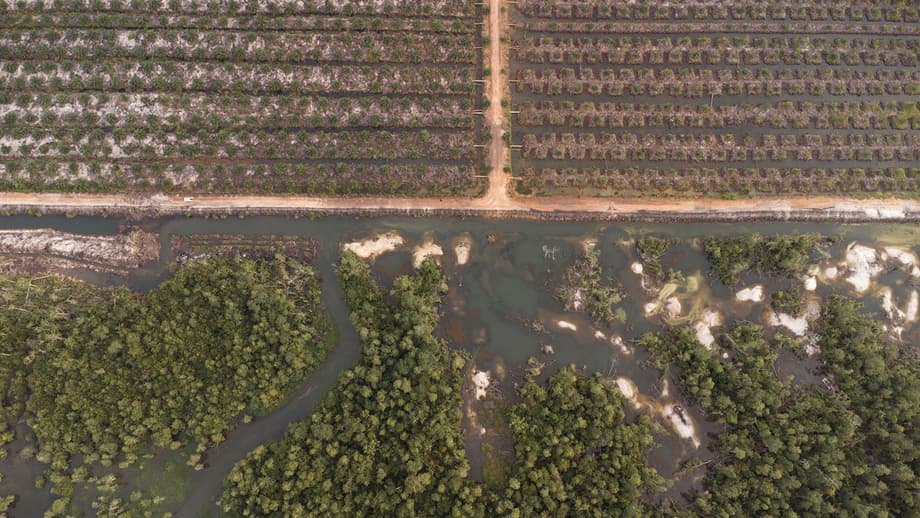
These artificial pools form when illegal miners dig for tin ore by hand or with basic machinery, then abandon the craters. Rainwater and groundwater gradually fill these holes, creating new aquatic habitats that extend far inland from natural waterways. Fish and crabs become trapped in the kulongs after floods, attracting hungry crocodiles displaced from their traditional mangrove habitats by ongoing deforestation and mining operations.
Global Supply Chains and Local Blood
The connection between distant consumer electronics and these deadly encounters in Indonesian wetlands is direct and measurable. Tin serves as a crucial component in the solder that binds circuit boards and electronic components together. Indonesia ranks as the world’s second-largest tin producer after China, with approximately 90 percent of national production originating from the Bangka Belitung Islands. Major technology brands have historically sourced tin from this region for use in smartphones and other devices.
Major brands including Apple and Samsung have faced scrutiny over tin sourcing from Bangka, with supply chain investigations revealing the metal’s path from muddy riverbanks to circuit boards. The demand for consumer electronics drives prices that make illegal mining economically irresistible despite the lethal risks.
Following Indonesia’s democratization in 1998 and the decentralization of resource governance, provincial authorities gained control over mining operations. In 2001, legislation granted citizens the right to mine tin, triggering an explosion of illegal operations. Within just three years, illegal mining sites increased four-fold, spreading into protected forests, mangrove reserves, and even the concessions of state owned enterprises.
The environmental devastation extends beyond the immediate mining scars. More than 60 percent of Bangka’s land area has been converted into mining operations, while over one-third of the island’s ancient forests disappeared in just over two decades. Oil palm plantations have replaced traditional crops and humid forests across the upper Menduk River basin, further degrading wetlands with drainage canals that provide new pathways for crocodiles to approach human settlements.
The Corruption Behind the Carnage
In 2024, Indonesian prosecutors revealed what may constitute the country’s largest corruption investigation in history. The state owned tin mining giant PT Timah allegedly facilitated widespread illegal mining across Bangka between 2015 and 2022, causing environmental damage estimated at $18 billion. Investigators claim the company leased smelters and purchased illegally extracted materials while channeling profits to senior officials through fake transactions.
This institutional corruption extends throughout the enforcement chain. In 2014, four Indonesian police officers were discovered aboard a vessel carrying 134 containers of illegally extracted tin bound for Singapore. The conspiracy has enabled mining operations to encroach into protected mangrove forests and national parks, precisely the habitats that harbor crocodile populations.
Heavy machinery and explosives used in open-pit mining generate massive waste piles that alter soil properties and hydrology. Sedimentation from mining operations has drastically reduced river flows, affecting coral reefs that serve as nurseries for fish and preventing crab and shrimp eggs from developing, further depleting the crocodiles’ natural food sources and driving them toward human settlements.
Asari, the village head of Jada Bahrin in Bangka, resigned in March citing pressure to approve illegal tin mining spreading along the Menduk River. Local residents report that forests are being cleared for oil palm cultivation, degrading wetlands and diminishing fish stocks that once provided food for both human communities and crocodile populations. The result is an ecological pressure cooker where predators and prey compete for shrinking resources in increasingly toxic waters polluted by mining runoff.
When Humans and Crocodiles Collide
The ecological transformation has fundamentally altered crocodile behavior. These reptiles possess metabolisms sensitive to temperature changes, meaning climate change may increase their activity levels as waters warm. Simultaneously, extended droughts such as the one that dried up Sariah’s well force residents to enter crocodile-occupied waters more frequently. The 2023 study published in Biological Conservation documented 665 crocodile attack cases across Indonesia in press reports from 2017 to 2019 alone, establishing the country as the world leader in such incidents.
More significantly, habitat destruction forces crocodiles into kulongs where they encounter humans engaged in bathing, washing tin ore, or fishing. Research indicates that nearly one-third of crocodile attacks in Bangka Belitung occur in current or former tin mines, with an additional 16.5 percent happening to individuals actively mining.
The human toll extends beyond immediate fatalities. Rozi, a 54-year-old religious teacher from Telak Village, was bathing in the Antan River after a day of mining in November 2020 when a crocodile attacked. The animal twisted his body and tore flesh from his left calf, leaving him unable to walk normally nearly three years later. I am traumatized by even looking at a picture of a crocodile or passing through a waterlogged ditch, he explained. Rozi now limps and cannot return to mining, yet possesses no alternative livelihood in an economy where pepper farming has become economically unviable and oil palm requires capital he does not have.
Sariah, a 54-year-old resident attacked in September 2023, survived only because she fought back when a 3-meter crocodile dragged her into a mining pit where she had gone to fetch water after her well dried up during a prolonged drought. Sometimes when I sleep, the attack comes back to me in my dreams, she reported. Five days after her attack, another miner suffered head and shoulder injuries while washing tin ore in a similar pit.
The Rescue Center at Breaking Point
The Alobi Foundation operates the only wildlife rescue and rehabilitation center on Bangka Island. Founded in 2014 and located on land reclaimed by PT Timah, the facility currently houses 34 saltwater crocodiles in an enclosure measuring roughly half the size of a tennis court. These animals arrive injured by machetes, fish hooks, or gunshot wounds inflicted by communities seeking revenge following attacks.
Langka Sani, the foundation’s founder, receives up to seven calls daily reporting crocodile sightings or conflicts. In the past, we might never hear of a crocodile attack in a year, whereas now in the last two weeks there have been dozens of reports of crocodile cases, Sani noted. The organization has reached capacity, unable to accept additional animals or release existing ones safely.
Relocation presents its own challenges. Crocodiles possess homing instincts that compel them to return to capture sites regardless of distance. In 2021, authorities transported some animals to South Sumatra, but Bangka itself offers no conflict-free estuaries for release. Releasing crocodiles on Bangka Island itself is not possible because the crocodile habitat is very damaged [as a result of human encroachment into the estuarine area] and no longer beautiful, Sani explained.
Endi R. Yusuf, manager of the rescue center, notes that the facility receives no direct government funding, relying instead on donations and occasional dead cattle from local farmers to feed the predators. We fight every day to save [the animals] or evacuate them, Yusuf stated, adding that the sanctuary is struggling to find safe release sites despite identifying intact wetlands in Central Bangka district as potential conservation zones.
Searching for Solutions Amid Institutional Failure
The Indonesian government has responded with contradictory approaches. Local authorities now allow miners to obtain licenses for previously illegal operations, requiring habitat restoration as a condition. However, weak enforcement means restoration remains largely theoretical. Amir Syahbana, a local official overseeing energy and mineral resources, acknowledges that reclamation obligations range from tree planting to waste management, yet less than 10 percent of degraded land was actually reclaimed in 2023.
In February 2024, following investigative reporting by journalists Finlan Adhitya Aldan and Bayu Asya Isminanda, provincial officials announced plans to revise a dormant task force established in 2020 to manage human-crocodile conflicts. The revised decree would add PT Timah, private mining companies, and the state research agency BRIN to the task force while allocating funding for conservation efforts. As of April 2025, this decree remained on the governor’s desk awaiting signature.
Researchers emphasize that effective conservation requires in situ habitat preservation rather than continued relocation efforts. Brandon Sideleau, a wildlife biologist who founded the CrocAttack database, notes that satellite imagery reveals potential conservation areas around the Baturusa River and Pice Dam. However, establishing these zones requires barring human activity entirely, a proposition that conflicts with the economic dependence of local communities on mining and fishing.
Jessix Amundian, director of local nonprofit Tumbek for Earth, argues that creating protected areas alone is insufficient. What is needed is not just to create or designate a conservation area for estuarine crocodiles, but to also restore the condition of the rivers, swamps and mangroves, Amundian stated. Without such comprehensive restoration, the 1,000 hectares of oil palm plantations and 250 illegal mining sites occupying the Menduk wetlands will continue generating the conditions that force crocodiles and humans into deadly encounters.
The Essentials
- Indonesia recorded over 1,000 crocodile attacks between 2013 and 2023, with 486 fatalities, making it the global epicenter of human-crocodile conflict.
- Bangka Belitung Islands account for nearly 90 documented attacks, with hotspots directly correlating to areas of intense illegal tin mining activity.
- Abandoned mining pits called kulongs create artificial habitats that draw saltwater crocodiles inland, where they encounter humans bathing, fishing, or washing tin ore.
- State owned mining giant PT Timah faces corruption allegations involving $18 billion in environmental damages and facilitation of illegal mining between 2015 and 2022.
- The Alobi Foundation rescue center has reached capacity with 34 crocodiles and cannot release animals due to lack of safe habitat, while receiving no direct government funding.
- Conservation experts recommend establishing protected in situ conservation zones and comprehensive wetland restoration rather than continued relocation efforts.
- A revised governor’s decree to revitalize the human-crocodile conflict task force remains unsigned as of April 2025, with four deaths having occurred in 2025 already.