
A vast railway network struggles to win everyday commuters
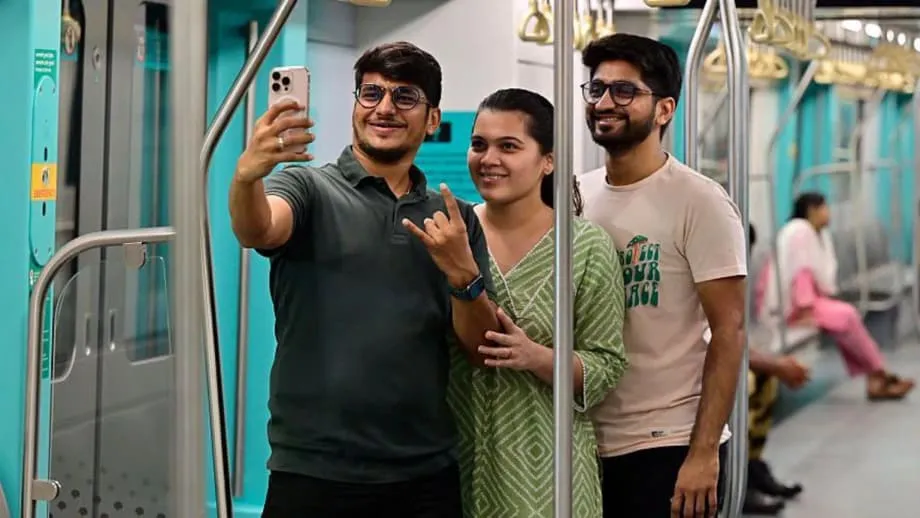
India has committed more than $26 billion to metro construction since 2014, expanding its network from under 300 kilometers to more than 1,000 kilometers by 2025. Daily passenger numbers have risen from three million to more than 11 million. Yet many systems carry only a fraction of the riders forecast when they were approved, while some busy corridors struggle with overcrowding.
Contents
- A vast railway network struggles to win everyday commuters
- How far actual demand falls below forecasts
- Coimbatore and Madurai face closer scrutiny
- Fares can make a fast train an expensive choice
- The journey outside the station can decide everything
- Private investment faces the same passenger problem
- What connected transport and station development offer
- Cleaner travel depends on passengers and electricity
- Some corridors need more room, not more passengers
- Making the full journey affordable and usable
- Key Points
Mumbai's Aqua Line captures the problem. The fully underground corridor connects the old business district with newer employment centers, including Bandra Kurla Complex, and the airport. It opened in 2025 at a cost of roughly ₹14,000 crore and was designed to carry nearly 1.5 million passengers daily. Actual use struggles to reach 150,000, roughly one passenger for every 10 anticipated.
On a weekday evening, a southbound train can empty several stops before its terminus at Cuffe Parade. The station's deserted appearance contrasts sharply with its location in India's commercial capital. A ticketing executive stationed there attributed the weak demand to fares.
Not a lot of people are using the line. It's too expensive,
The national expansion, undertaken by the Narendra Modi government across nearly two dozen cities, has roughly quadrupled the network and aggregate ridership. Those gains coexist with a difficult everyday calculation: passengers must weigh the train fare, the cost of reaching a station, waiting times and the final journey home. A fast train becomes less attractive when the complete trip is expensive or inconvenient.
As of April 20, 2026, India's metro challenge is therefore about more than building tracks. It is about making a large public investment useful enough, affordable enough and accessible enough for regular travel.
How far actual demand falls below forecasts
A 2023 report from the Indian Institute of Technology Delhi found ridership across metro corridors at just 25% to 35% of projected figures. These percentages compare actual passengers with forecasts, rather than simply describing how many seats are occupied on a particular train.
The Observer Research Foundation (ORF) documented wider differences between cities. Kanpur, described among the tier-3 cities, reached just 2% of estimated ridership. Chennai's first phase operated at 37% capacity. Figures from the Institute for Transportation and Development Policy (ITDP) placed utilization in cities including Pune and Nagpur between 20% and 50%.
Delhi stands apart. The Delhi Metro Rail Corporation (DMRC) reports usage slightly above its original projections. Aditya Rane of ITDP and Ashish Verma of the Sustainable Transportation Lab at the Indian Institute of Science caution that interchange trips may be counted as separate journeys, increasing the reported total. A passenger changing lines can therefore contribute more than once to a journey count.
Demand forecasts also depend on service assumptions. Calculations may envisage trains with nine cars arriving every 90 seconds. Indian services often operate with three to six coaches, compared with the eight or nine used in high capacity systems worldwide.
Bengaluru illustrates the gap. During peak periods, trains on its busiest line can be five minutes or more apart. On newer lines, waits can reach 25 minutes. Longer waits and smaller trains change both the number of passengers a system can carry and the appeal of using it.
Verma, a professor studying sustainable transportation, described why demand estimates can become optimistic during the approval process.
It is a complex task [to project demand], and figures are sometimes exaggerated to show the project is economically viable,
Coimbatore and Madurai face closer scrutiny
In November 2025, the Union Ministry of Housing and Urban Affairs rejected detailed project reports (DPRs) for metro systems in Coimbatore and Madurai, Tamil Nadu. A DPR sets out a project's proposed route, engineering requirements, expected passengers, construction schedule and financial case.
The ministry cited "overstated demand and underestimated engineering constraints." Coimbatore's proposal forecast 590,000 daily passengers on a network of 34 kilometers, exceeding the ridership of Chennai's established Phase I network of 55 kilometers.
Coimbatore's average journeys were only 6 to 8 kilometers, the ministry noted. For such short trips, time spent reaching a station and waiting for a train can remove the time savings that would persuade someone to leave another mode of transport.
The ministry also dismissed the proposed construction period of three years as unrealistic. Its assessment found that the economic and financial rate of return calculations departed from appraisal guidelines. These calculations consider, respectively, a project's wider benefits and its financial performance.
Madurai's own Comprehensive Mobility Plan had recommended a Bus Rapid Transit System (BRTS) instead of heavy rail. BRTS uses buses as the main rapid transit service and was identified as the alternative appropriate to the city's transport plan.
Both cities had populations below the threshold of two million specified under the 2017 Metro Rail Policy. They were advised to pursue alternatives costing less. The decisions brought demand estimates, engineering limits, construction schedules and the choice of transport technology into the same approval debate.
- Since 2014: India's metro investment exceeded $26 billion, with expansion across nearly two dozen cities.
- 2017: The Metro Rail Policy set the population thresholds and appraisal requirements relevant to new proposals.
- 2023: IIT Delhi documented ridership at 25% to 35% of projections, while research examined access problems in Delhi, Nagpur and Bengaluru.
- 2025: India's network exceeded 1,000 kilometers, and Mumbai's Aqua Line opened.
- September 2025: Larsen & Toubro announced plans to divest up to 90% of its equity stake in Hyderabad Metro.
- November 2025: The ministry rejected the Coimbatore and Madurai metro project reports.
Fares can make a fast train an expensive choice
Mumbai's Aqua Line charges between 10 and 70 rupees for a single journey. A suburban railway pass providing unlimited travel for three months costs 590 rupees. The contrast helps explain why commuters accustomed to inexpensive rail travel may hesitate to switch.
Lower income workers must consider the entire trip, including transport between their homes, stations and workplaces. Rane, the ITDP transport expert, described the burden in relation to household earnings.
In Indian metro systems, the integrated journey cost can consume 20% of income for lower-income workers, above the global benchmark of 10-15%,
Bengaluru's Namma Metro increased fares in 2025. Greenpeace data put the subsequent ridership decline at approximately 13%, showing how sensitive demand can be to the price of a regular journey.
Verma argues that reducing subsidies conflicts with the needs of a price sensitive economy. He points to the public purpose of supporting urban rail: moving people sustainably and reducing congestion.
Even the London Tube till today is heavily subsidised. Because there is a purpose. You are trying to provide sustainable mobility and decongest the city,
India's separate payment systems add another expense. Metro services, buses and auto-rickshaws operate under different authorities, with independent fares and schedules. A commuter taking a bus to a metro station pays for both legs.
New York, Paris and London offer transfers between buses and subway services within limited periods without an additional payment. Such arrangements make a connected journey easier to buy. In Indian cities, separate charges discourage the combinations of transport that many passengers need.
The journey outside the station can decide everything
A 2023 working paper by WRI India and the Toyota Mobility Foundation linked poor first and last mile connectivity to substantial underuse of more than $25 billion in transit investment. First and last mile connectivity means getting from the starting point to a station and from the arrival station to the final destination.
The paper's survey across Delhi, Nagpur and Bengaluru found that commuters were willing to spend approximately 20 minutes in total on those two parts of a journey. Beyond that combined time, their willingness to keep using transit fell sharply.
Infrequent feeder buses, expensive flat rates for short auto-rickshaw journeys, broken footpaths and encroached walking routes can quickly use up that allowance. Women also face safety concerns that may push them toward more expensive services booked through apps or private vehicles.
Chetna Yadav, a resident of north Delhi aged 40, described the difficulty of getting home after dark from a station about 15 kilometers away.
If I am coming home after sunset, I cannot rely on the metro. The station is about 15km from where I live and when I reach the final stop at night, it is next to impossible to get a cab home.
Walking and shared transport already account for more than 74% of last mile trips in the major cities examined by WRI India. Many of those journeys take place in hazardous conditions, weakening the attraction of an otherwise comfortable rail service.
Research on Shanghai's metro, published through ScienceDirect, found that variables describing last mile facilities collectively contributed 43.57% toward predicting ridership levels. Most facilities needed to reach particular thresholds before producing their strongest effect on metro use. The finding connects passenger demand to the quality of the area around stations.
Delhi's Hauz Khas station shows that time costs can also arise inside a network. Changing lines requires 15 to 20 minutes of walking through complex corridors. That transfer alone can consume as much time as commuters in the WRI survey were willing to spend accessing and leaving stations combined.
Nandan Dawda, a fellow in ORF's Urban Studies programme, described the need to connect services operationally.
there needs to be better operational integration between them.
Separate management of lines and bus networks, described as institutional disaggregation, leaves passengers navigating services that operate in silos. Coordinated schedules, fares and transfers would make the whole journey work more like a single service.
Private investment faces the same passenger problem
Hyderabad Metro, developed by L&T Metro Rail Hyderabad Ltd., is the world's largest public-private partnership (PPP) in urban transit. Its accumulated losses exceeded ₹625 crore as of the financial year 2024-25. In September 2025, Larsen & Toubro announced its intention to divest up to 90% of its equity stake, effectively exiting the project.
A PPP combines public authorities with a private company responsible for agreed parts of development or operation. Hyderabad's model depended on forecast passenger demand and commercial real estate income. Actual passenger numbers fell far short, leaving those revenue expectations unable to sustain the model.
Delhi's Airport Express experienced a similar financial problem. Developed through a partnership between DMRC and DAMEPL, a Reliance Infrastructure subsidiary, it became financially unviable when traffic missed forecasts. Fare control remained with the government through the Fare Fixation Committee, limiting the operator's ability to change ticket prices to meet costs.
After prolonged disputes, Airport Express operations returned to public management in 2013. Mumbai Metro Line 1 also saw conflicts over fare setting between Reliance Infrastructure and the Mumbai Metropolitan Region Development Authority.
These projects expose a difficult division of responsibility: private concessionaires carry construction and operating risks, while public authorities retain control over fares and revenues. High initial spending becomes harder to recover when passenger demand disappoints and income from activities other than ticket sales is insufficient.
What connected transport and station development offer
Hong Kong's MTR Corporation uses its Rail + Property model to earn income from development around stations. Land value capture means using some of the value created by better transport access to help finance the transport itself. Income from property can support operations and network expansion alongside ticket revenue.
MTR's financial picture across 2024 and the first half of 2025 included property development profits of HK$5.5 billion in the first half of 2025 alone. Property income supported major new investments, including the Northern Link project.
Singapore has prioritized Transit-Oriented Developments (TODs), placing development around public transport connections, alongside cycling infrastructure. Its plan expands cycling paths from 525 kilometers to 1,300 kilometers by 2030 so residential areas connect more easily with Mass Rapid Transit stations.
Bogotá developed 593 kilometers of bicycle lanes feeding its TransMilenio bus system. Bicycle ridership increased by 40% over four years. Both cities show how the trip to a major transport service can be planned alongside the service itself.
India's metro proposals and operating arrangements would need dependable ways to generate revenue beyond fares to make comparable financing work. Hyderabad's experience also shows why expected property income and passenger demand must be assessed realistically before private capital is committed.
Cleaner travel depends on passengers and electricity
A 2025 study of Mumbai's metro found reductions in carbon monoxide, hydrocarbon and nitrogen oxide emissions of 72.4%, 74.3% and 15.5%, respectively, among commuters who switched transport modes. Those figures describe the changes associated with shifted commuters.
The same research found that walking accounted for 63.3% of access trips and 71.5% of trips from stations to final destinations. Properly located and connected stations can therefore support a journey in which both rail travel and walking replace road transport.
Delhi's earlier metro phases presented a more complicated carbon picture. By 2011, shifts away from road transport had reduced direct road emissions by 724 tonnes daily. Indirect CO2 emissions associated with electricity consumption increased nearly 300% to 1,493 tonnes daily.
Electric trains remove exhaust from the vehicle, while power generation can still produce emissions elsewhere. The environmental result depends on how much road travel is replaced and how the electricity is generated.
The research associated a potential reduction of 63% in CO2 emissions by 2030 with both higher ridership and a transition to 44% energy from sources other than fossil fuels. Passenger growth and cleaner power are therefore linked parts of the environmental case.
Some corridors need more room, not more passengers
Bengaluru's Purple Line toward Whitefield presents the opposite of Mumbai's quiet terminal: severe overcrowding. During a period of three months between August and October, security personnel assisted nearly 130 passengers who fainted. Most were under 30.
Packed conditions, skipped breakfasts and sleeplessness were associated with those incidents. The crowded Purple Line sits within a broader system where some newer services have waits of up to 25 minutes.
India's uneven demand makes a single national diagnosis insufficient. Some corridors need more frequent trains and greater capacity, while others need fares, routes and station connections that attract more passengers. Busy services alongside nearly empty lines point toward problems in network design and service distribution rather than a universal rejection of metro travel.
Making the full journey affordable and usable
Integrated passes offer one possible response to the fare problem. Austria's KlimaTicket and Seoul's Climate Card provide models for unlimited public transport access that also encourages travel with a smaller environmental footprint.
Austria's initiative prompted 85% of users to replace driving with public transit. Seoul's program removed approximately 11,000 cars from roads daily during its first two months. Vienna's annual passes, priced at the equivalent of one euro a day, offer another affordability model.
Kolkata Metro officials studying weak ridership on the Green Line have suggested starting services earlier and ending them later. Longer operating hours could bring in shift workers and people traveling for leisure whose journeys fall outside existing schedules.
Protected pedestrian routes, dedicated bicycle lanes and frequent feeder shuttles address the access problems documented in Delhi, Nagpur and Bengaluru. Spending on these connections would match the quality of the railway with a safer and more reliable journey outside it.
Independent audits and standardized demand forecasting would also help test whether proposed routes justify their cost. The Coimbatore and Madurai decisions show closer scrutiny, while consistent application of the 2017 Metro Rail Policy's population thresholds and ridership benchmarks across states would connect investment more closely to actual demand rather than political aspirations.
India's metro expansion has already moved millions more people onto urban rail. Its next challenge is to make the complete trip work: affordable fares, dependable trains, practical transfers, safe access and forecasts grounded in the journeys residents actually make.
Key Points
- India invested more than $26 billion in metro construction since 2014, reaching more than 1,000 kilometers of network and over 11 million daily passengers by 2025.
- IIT Delhi found corridor ridership at 25% to 35% of projections; Mumbai's Aqua Line carries roughly 150,000 passengers against an anticipated 1.5 million daily.
- Coimbatore and Madurai's metro proposals were rejected in November 2025 over demand estimates, engineering concerns and policy requirements.
- Complete journeys can cost lower income workers 20% of earnings, while separate fares and poor station access discourage regular use.
- Hyderabad Metro accumulated losses exceeding ₹625 crore by 2024-25, and Larsen & Toubro announced plans to divest up to 90% of its stake.
- Bengaluru's crowded Purple Line shows that demand is uneven, with some corridors needing more capacity while others struggle to attract passengers.
- Integrated fares, better station connections, realistic forecasts and cleaner electricity are central to the solutions described.