Jakarta Chooses Its Own Cash Buffer
Indonesia has declined an International Monetary Fund credit facility worth between $25 billion and $35 billion, along with a separate World Bank Group financing proposal, as Finance Minister Purbaya Yudhi Sadewa argues that the government has enough money of its own to manage growing global uncertainty.
Contents
- Jakarta Chooses Its Own Cash Buffer
- What Indonesia Turned Down
- How the Budget Reserve Works
- Oil Prices Test the 2026 Budget
- A Dispute Over Growth and Lending
- The Deficit Ceiling Still Matters
- Critics See a Much Smaller Cushion
- China Payment Link Adds a Regional Dimension
- How the Decisions Unfolded
- At a Glance
Purbaya conveyed that position during the April 2026 IMF and World Bank Spring Meetings in Washington. On his return to Jakarta, he cited a Surplus Budget Balance, known as SAL, of approximately $27 billion, equivalent to roughly Rp420 trillion to Rp460 trillion depending on exchange rates. The value of the World Bank proposal was not disclosed.
The decision puts Indonesia's domestic financial cushion at the center of its response to the Middle East conflict, rising energy costs and possible disruptions to trade. The proposed financing would have provided additional liquidity, meaning money available to meet financial needs when conditions become difficult. Purbaya's position is that Jakarta can meet those needs without taking on the offered borrowing.
His confidence faces a competing assessment: critics estimate that withdrawals of Rp300 trillion over six months have left SAL at about Rp120 trillion. The difference between that estimate and the minister's figure is central to understanding how much room Indonesia has to absorb another economic shock.
As of April 30, 2026, Jakarta is also preparing to launch payment connectivity with China through QRIS, the Quick Response Code Indonesian Standard. Together, the financing decision and the payment initiative reflect a preference for domestic resources and closer regional financial connections, although they address different needs.
What Indonesia Turned Down
The IMF facility was presented as a precautionary source of funds against geopolitical risks. Such financing gives a country access to money that can help it manage pressure on its external payments, including the money needed to pay for imports and other obligations abroad.
The IMF and World Bank have positioned themselves as sources of support for economies facing possible balance of payments difficulties as the Middle East conflict disrupts energy markets and global trade. Indonesia's refusal contrasts with the search for external support by many emerging economies facing those pressures.
Purbaya described the choice as a response to fiscal strength rather than diplomatic posturing. In his assessment, Indonesia's existing resources are the best tools for dealing with current challenges. The government's stated SAL balance is comparable in scale to the IMF facility, giving the minister a financial basis for preferring domestic funds.
The refusal also expresses a preference for control over economic policy. Multilateral financing can carry interest costs, policy conditions and monitoring requirements. Jakarta's decision leaves the government relying on its own resources while retaining control over how it responds to changing economic conditions.
How the Budget Reserve Works
SAL consists of money left over from previous budget years. Unspent allocations accumulate into a reserve that can help the government manage cash needs when revenue falls short or spending pressures rise. Purbaya presents it as an emergency cushion rather than an ordinary spending allocation.
Using accumulated cash can reduce the need to raise new borrowing when a shock arrives. For Indonesia, that is the attraction of drawing on SAL instead of accepting the IMF offer: the money is already under government control, and using it does not create the same new interest obligations as taking a loan.
Purbaya's approach also prioritizes policy flexibility. IMF arrangements, including precautionary support, can involve closer scrutiny of fiscal policy and economic reforms. Indonesia's refusal reflects his view that the government's current course does not require that additional external oversight.
The practical strength of this approach depends on the size and availability of the reserve. A large balance gives the government more capacity to handle unexpected costs. A smaller balance leaves less room to maintain spending if higher energy prices and weaker revenue persist.
Oil Prices Test the 2026 Budget
Indonesia built its 2026 State Budget around an oil price assumption of $70 per barrel. Crude moving toward $100 creates a substantial gap between the price used to plan public spending and the prices confronting the government.
Higher oil prices threaten to increase the cost of fuel and energy subsidies. Subsidies allow the government to shoulder part of the cost that would otherwise fall on consumers. When the underlying energy price rises, maintaining that support can require more public money.
The conflict between Iran and Israel adds to the pressure. Alongside its effect on energy prices, the conflict threatens trade flows through the Strait of Hormuz, creating further uncertainty for an economy trying to protect spending and keep its finances within legal limits.
Purbaya maintains that SAL provides adequate protection against this volatility. His strategy is to use the domestic cushion while preserving fiscal discipline, rather than secure additional external financing in advance. Rising subsidy obligations make the amount of usable cash especially important.
A Dispute Over Growth and Lending
Purbaya also described friction with the institutions offering finance. He said IMF representatives showed displeasure when Indonesia declined the facility and suggested that the refusal deprived the institution of expected interest income. That explanation of their reaction came from the minister.
The IMF and World Bank operate as financial intermediaries and receive income through lending and service fees. Purbaya's account framed the disagreement partly in those financial terms, linking an offer of up to $35 billion to the earnings that lending could generate.
The World Bank relationship was already strained by its economic outlook published earlier in April. The institution projected Indonesian growth of 4.7 percent in 2026, below government targets of 5.4 percent to 6 percent. The gap is between 0.7 and 1.3 percentage points, depending on which end of the government's range is used.
Purbaya publicly challenged the projection, arguing that the World Bank had misjudged Indonesia's economic trajectory. During the Washington meetings, World Bank officials reportedly apologized for the low forecast. Purbaya said he had not asked them to revise it and instead intended to demonstrate stronger growth through actual economic performance.
The minister pointed to estimated growth of 5.5 percent to 5.6 percent in the first quarter of 2026 and resilient household consumption despite global pressures. Those estimates underpin his argument that international assessments underestimate Indonesia's economic strength.
Purbaya regarded the lower forecast as suggesting a recessionary trajectory. A projection of 4.7 percent still describes growth, while the dispute concerns how much the economy will expand and whether its momentum is weakening. His criticism and the financing refusal together express resistance to both the institutions' assessment and their proposed support.
The Deficit Ceiling Still Matters
Indonesia's fiscal strategy remains tied to the statutory ceiling limiting the national budget deficit to below 3 percent of gross domestic product. GDP measures the value of goods and services produced by the economy; the deficit is the gap when government spending exceeds revenue.
The ceiling was established to restrain the accumulation of debt that had caused difficulties in previous decades. It also serves as an anchor for investor confidence by setting a limit on how far public spending can exceed the government's income.
Purbaya reiterated that the limit remains nonnegotiable, even as global conditions deteriorate and energy subsidies become more expensive. He presents SAL as a way to manage temporary revenue shortfalls and higher spending pressures while reducing the need for emergency borrowing.
Fitch Ratings has indicated that a temporary breach of the 3 percent ceiling caused directly by the economic effects of war would not trigger an immediate downgrade. That gives Jakarta some potential breathing room in the rating agency's assessment, although the government remains determined to avoid testing it.
Domestic reserves allow the government to control the timing and scale of its response. Purbaya's approach leaves Jakarta deciding how to balance subsidy support, infrastructure expenditure and social programs as conditions change. In countries using IMF programs, fiscal targets can become part of negotiations with the lender.
Critics See a Much Smaller Cushion
Critics offer a sharply different picture of SAL. Their assessment puts withdrawals at Rp300 trillion, approximately $17.65 billion, over six months. The government reportedly transferred Rp200 trillion into the banking system, followed by another Rp100 trillion, to increase liquidity and encourage lending and economic activity.
Those transfers form the basis of the estimate that only Rp120 trillion remains, compared with the Rp420 trillion to Rp460 trillion cited in the minister's account. Critics calculate that the smaller amount would cover only one to three months of routine expenses, including civil servant salaries, interest on debt and basic government operations.
The disagreement leaves the amount of SAL still available for emergency spending unresolved. Purbaya presents a reserve sufficient to manage external shocks, while critics describe a much shorter financial runway after large transfers intended to support the economy.
The critical assessment also alleges delays to some debt repayments and declining tax revenue as economic activity slows. It describes pressure from rising subsidies, stagnant industrial production and weakening investment flows, all of which would make a smaller cash reserve harder to stretch.
Capital outflows in the first quarter reportedly reached $1.7 billion. Bank Indonesia responded by issuing securities with short maturities and high yields to help stabilize the currency. Those instruments offer investors a return over a relatively brief period and are part of the central bank's effort to manage pressure on the rupiah.
Critics interpret these signs as evidence of liquidity stress behind the government's confident position. Purbaya's assessment is the opposite: Indonesia has sufficient resources to decline the financing. The strength of the decision therefore depends heavily on the disputed cash position and the course of revenue and spending.
China Payment Link Adds a Regional Dimension
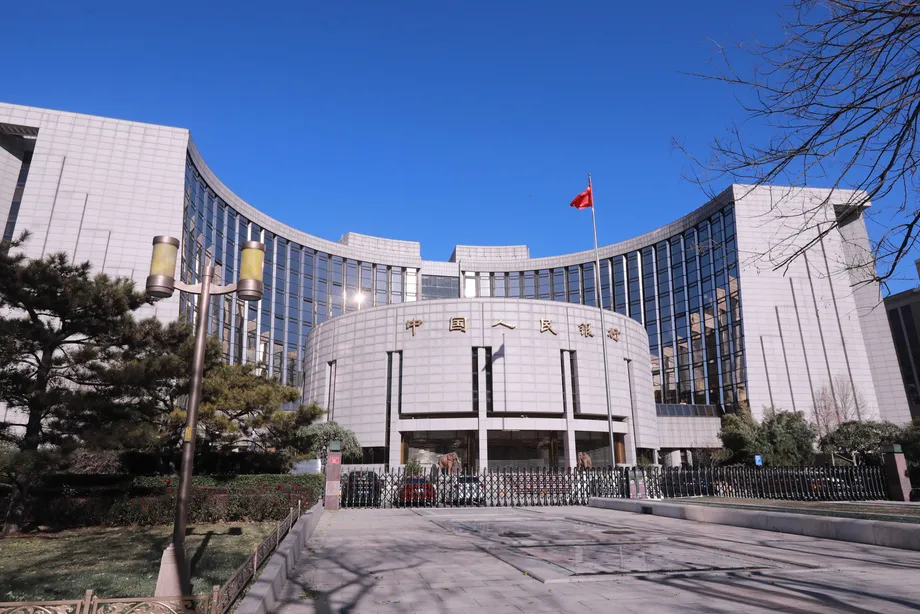
Bank Indonesia announced that QRIS payment connectivity with China was scheduled to launch on April 30, 2026, just days after the Washington meetings. The connection is intended to allow Indonesian travelers to pay in China using QRIS and Chinese visitors to use compatible payment systems in Indonesia.
The trial phase recorded 1.64 million transactions worth Rp556 billion, approximately $32 million. Participation by 24 Indonesian institutions and 19 Chinese counterparts gives the initiative a network on both sides of the relationship.
The system provides a payment route outside traditional dollar clearing mechanisms. That makes it part of Indonesia's effort to reduce reliance on dollar based financial channels and expand alternatives for commerce with regional partners.
The broader policy interest in reducing dollar dependence reflects concerns about currency volatility and the use of financial infrastructure as an instrument of political pressure. The QRIS connection creates another channel for payments and reduces exposure to traditional Western financial systems.
Indonesia's financing refusal and its China payment initiative point toward the same preference for greater financial autonomy. One concerns whether the government takes on multilateral borrowing; the other concerns how people make payments across borders. Together, they show Jakarta diversifying its financial relationships while prioritizing domestic cash and regional connections.
How the Decisions Unfolded
April brought a series of connected developments: a disputed economic forecast, financing discussions in Washington, renewed commitments on public spending and a scheduled expansion of payments with China. The sequence helps explain why the borrowing decision became part of a wider debate about Indonesia's financial independence.
- Earlier in April 2026, the World Bank published an outlook projecting Indonesian growth of 4.7 percent for the year, drawing public criticism from Purbaya.
- During the April 2026 IMF and World Bank Spring Meetings in Washington, Purbaya declined an IMF facility of $25 billion to $35 billion and a World Bank financing proposal of undisclosed value.
- After returning to Jakarta, Purbaya cited approximately $27 billion in SAL and reiterated the government's commitment to keep the deficit below 3 percent of GDP.
- April 30, 2026, was the scheduled launch date for QRIS payment connectivity between Indonesia and China.
Jakarta's immediate challenge is to keep those commitments compatible as oil prices, subsidies and cash needs change. Purbaya is relying on domestic financial capacity and stronger growth than the World Bank expects. Critics are focused on how much reserve money remains after the banking transfers.
The decision gives Indonesia control over its response, while leaving it responsible for meeting pressures from its own resources. The government's economic performance, subsidy costs and usable cash balance are central to whether that approach can sustain the confidence expressed in Washington.
At a Glance
- Purbaya Yudhi Sadewa declined an IMF credit facility worth $25 billion to $35 billion and a separate World Bank financing proposal.
- The minister cited SAL of approximately $27 billion, or roughly Rp420 trillion to Rp460 trillion; critics estimate Rp120 trillion remains after Rp300 trillion in withdrawals.
- The 2026 budget assumed oil at $70 per barrel, while crude moving toward $100 threatens higher fuel and energy subsidy costs.
- The World Bank forecast growth of 4.7 percent, below government targets of 5.4 percent to 6 percent and estimated first quarter growth of 5.5 percent to 5.6 percent.
- Indonesia remains committed to a deficit below 3 percent of GDP. Fitch indicated that a temporary breach caused by war would not prompt an immediate downgrade.
- First quarter capital outflows reportedly reached $1.7 billion, adding pressure on the currency.
- QRIS connectivity with China was scheduled for April 30, following a trial with 1.64 million transactions worth Rp556 billion.