China’s Stern Warning to Brussels
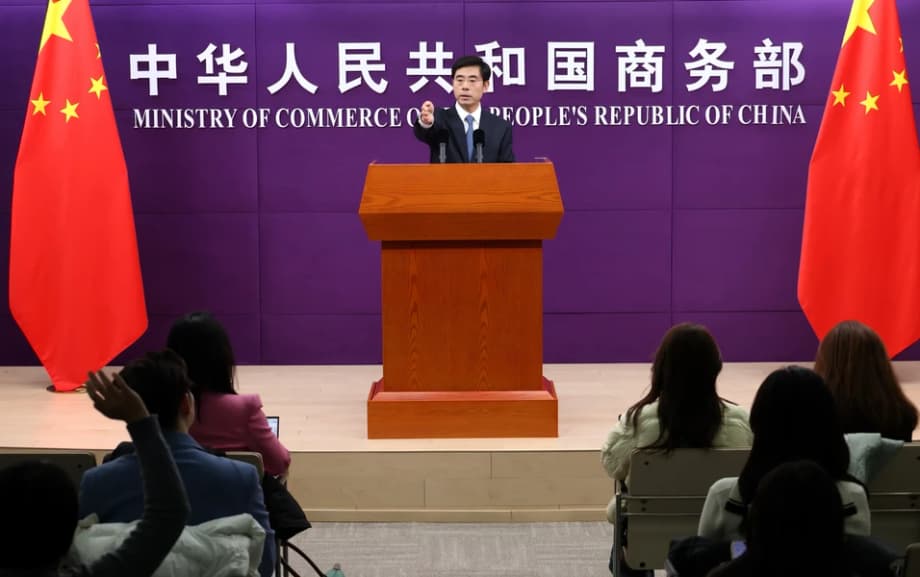
Beijing has issued an explicit threat of retaliation against the European Union over draft legislation designed to shore up the bloc’s manufacturing base. In a strongly worded statement released Monday, China’s Ministry of Commerce condemned the EU’s Industrial Accelerator Act (IAA) as a vehicle for systemic discrimination and warned that countermeasures would follow if Brussels proceeds with the proposed restrictions on foreign investment.
The Chinese government formally submitted its objections to the European Commission on Friday, outlining what it described as serious concerns regarding the legislation’s compatibility with international trade rules. A ministry spokesperson said the Act imposes multiple restrictive requirements on foreign investment across four strategic emerging industries: batteries, electric vehicles, photovoltaics, and critical raw materials. The proposal also introduces exclusionary EU origin clauses in public procurement and public support policies, which Beijing argues constitute institutional discrimination and investment barriers.
If the EU presses ahead with the legislation, and thereby harms the interests of Chinese companies, China will have no choice but to take countermeasures to firmly safeguard the legitimate rights and interests of its enterprises, the ministry warned. The statement represents the most forceful pushback yet against the EU’s latest attempt to revitalise its industrial sector through local content requirements.
The Mechanics of the Industrial Accelerator Act
Unveiled in March, the Industrial Accelerator Act forms the cornerstone of the EU’s strategy to reverse a worrying trend of deindustrialisation and job losses. The legislation targets three strategic sectors: clean technologies, automotive manufacturing, and energy-intensive industries including aluminium, steel, and cement. At its heart lie strict local content thresholds that companies must meet to access public funds and procurement contracts within the single market.
Under the proposed rules, electric vehicles would require 70% EU content to qualify for public support, while aluminium and cement would face 25% domestic production requirements. The Act also mandates that foreign firms partner with European companies and transfer technological know-how when establishing operations in the bloc, a provision that has drawn particular ire from Beijing.
The legislation arrives against a backdrop of acute economic pressure. The European Commission reports that over 200,000 jobs have vanished from energy-intensive industries and the automotive sector since 2024, with projections suggesting an additional 600,000 positions could disappear in car-making alone this decade. European Commissioner for Industry Stéphane Séjourné defended the proposal at its launch.
It (The Industrial Accelerator Act) will create jobs by directing taxpayers’ money to European production, decreasing our dependencies and enhancing our economic security and sovereignty.
Beijing’s Legal Challenge and Economic Fears
China’s opposition rests on a detailed critique of the Act’s consistency with World Trade Organisation principles. The Ministry of Commerce argues that the local content requirements and preferential treatment for EU-origin products violate fundamental WTO tenets, including most-favoured-nation treatment and national treatment. These principles require equal treatment of imported and domestically produced goods, standards that Beijing claims the IAA disregards.
Beyond the legal technicalities, Chinese officials express concern that the legislation will disrupt supply chains and slow the EU’s green transition. They argue that excluding Chinese technology and investment from Europe’s clean energy sectors could undermine fair competition and ultimately harm European consumers through higher prices and reduced innovation. The ministry has urged Brussels to remove provisions it considers discriminatory, specifically those related to forced technology transfer, intellectual property restrictions, and barriers to public procurement access.
The threat of countermeasures carries significant weight given Beijing’s economic influence and capacity to disrupt European supply chains. The ministry’s statement indicated it would closely monitor the legislative process while remaining open to dialogue, setting up a tense waiting period as the proposal moves through the EU system.
A History of Escalating Friction
The current dispute builds upon more than a year of deteriorating trade relations that began with the EU’s decision to impose tariffs on Chinese-made electric vehicles in October 2024. That move, intended to counter what Brussels described as unfair subsidies, triggered a robust response from Beijing, which launched investigations into imports of European brandy, pork, and dairy products. The EV tariffs themselves became a cautionary tale within Brussels, revealing deep divisions among member states and exposing the limitations of the EU’s traditional trade defence instruments.
Since then, tensions have multiplied across multiple fronts. The Commission has opened probes into Chinese biodiesel, sweeteners, and mobile access equipment, while Beijing has concluded investigations into the EU’s Foreign Subsidy Regulation, branding it an unfair trade barrier. In the digital sphere, the EU has targeted Chinese e-commerce platforms including Temu and Shein under the Digital Services Act, while Chinese firms have faced new scrutiny regarding data transfers and cybersecurity standards.
Perhaps most alarming for European industry was China’s demonstration of coercive power through mineral export controls in April and October 2025. By requiring export licences for rare earth materials and permanent magnets, Beijing temporarily disrupted production lines for automotive semiconductors, defence systems, and advanced machinery across Europe. Although a truce was negotiated following a Trump-Xi summit, the episode served as a stark reminder of Europe’s vulnerability to supply chain weaponisation, particularly in sectors critical to the defence build-up and green transition.
Brussels Defends Its Industrial Sovereignty
Faced with Beijing’s threats, European Commission officials have stood firm in defending the Industrial Accelerator Act as a necessary response to unprecedented economic challenges. Spokesperson Olof Gill offered a direct rebuttal to Chinese criticism.
Our proposals are carefully calibrated to achieve certain economic wider goals for our citizens. We engage with our global partners to the extent possible. We are happy to engage and hear their views.
The Commission’s position reflects a broader shift in European thinking regarding economic security and strategic autonomy. Officials acknowledge that previous approaches focused on levelling the playing field and securing market access in China have largely failed to prevent deindustrialisation. The EV tariff case, while contentious, taught Brussels that operating within traditional WTO rules against a competitor that bends them offers limited protection. As one senior EU trade official noted, the bloc has been operating within the rules, and it has not made a dent. There is no benefit to our measured approach.
The proposal now faces a complex legislative journey through the European Parliament and the European Council, where member states will weigh the benefits of industrial protection against the risks of triggering a full scale trade war with China. Some capitals, notably Madrid and Budapest, have previously sought to attract Chinese investment regardless of EU-wide concerns, potentially complicating efforts to maintain a united front. The divergence in member state interests regarding Chinese market access versus industrial protection remains the central political fault line in Brussels’ China strategy.
The Trump Factor and Great Power Calculus
The timing of this trade dispute cannot be separated from the turbulent transatlantic relationship under the Trump administration. Chinese strategists appear to be betting that pressure from Washington will drive European capitals toward Beijing as a counterbalance, reducing the appetite for de-risking measures that limit economic ties with China. Analysts within Chinese think tanks describe Europe’s predicament as one of vassalization to American security guarantees, suggesting that Trump’s radical assertiveness might force European leaders to reconsider their alignment.
Beijing has appointed Lu Shaye, known for his confrontational diplomatic style during his tenure as ambassador to France, as Special Envoy for Relations with Europe. The appointment signals little interest in conciliatory gestures. Instead, China seems to be pursuing a strategy of selective re-engagement that costs Beijing little while extracting maximum benefit from European desperation to find stable partners amid American unpredictability. Recent senior official exchanges with the United Kingdom, including agreements on automotive and legal services worth GBP 600 million, illustrate the template Beijing may apply to other European capitals.
However, fundamental divergences limit the potential for rapprochement. China’s continued support for Russia’s war effort, its differences regarding economic models, and its perspective on the rules-based international order remain incompatible with core European interests. The EU has already imposed sanctions on Chinese entities aiding Russia’s military machine, with a 15th package in December 2025 targeting six firms and one individual, and a 16th package expected to add further names. These actions demonstrate that despite Beijing’s hopes for a reset, European security concerns continue to override immediate economic temptations.
Market Reactions and Economic Fallout
Financial markets have begun pricing in the risks of an expanded Sino-European trade conflict. German consumer confidence has already weakened sharply, with the GfK indicator for May falling to -33.3, its lowest level since February 2023. Analysts at BNY attribute part of this decline to trade friction with China and geopolitical tensions, noting that the combination creates a bearish outlook for European assets and the euro.
The DAX index faces particular vulnerability given its heavy weighting of exporters who rely on Chinese markets for significant portions of their revenue. Should Beijing implement retaliatory measures beyond the current investigations into agricultural products, European automotive and chemical sectors could face immediate revenue hits. Currency markets are already positioning for potential ECB rate cuts in response to economic weakness, with interest rate derivatives suggesting falling yields on German Bunds as investors seek safety amid uncertainty.
For Chinese companies like BYD and CATL, which have invested heavily in European manufacturing facilities to circumvent existing EV tariffs, the IAA represents an existential threat. If forced to meet 70% local content requirements while simultaneously transferring technology to European partners, the economic rationale for their European expansion evaporates. This creates a scenario damaging to both sides where either Chinese firms withdraw, costing European jobs in the short term, or they accept terms that erode their competitive advantages, potentially triggering further retaliation from Beijing.
Key Points
- China’s Ministry of Commerce formally objected to the EU’s Industrial Accelerator Act on Friday, publicly warning Monday of unspecified countermeasures if the legislation proceeds.
- The Act requires 70% EU content for electric vehicles and 25% for aluminium and cement to access public procurement, targeting batteries, EVs, photovoltaics, and critical raw materials.
- Beijing argues the Made in Europe rules violate WTO principles including most-favoured-nation and national treatment, and constitute forced technology transfer.
- The dispute follows 2024 EV tariffs and ongoing Chinese investigations into European brandy, pork, and dairy, alongside EU probes into Chinese biodiesel and e-commerce platforms.
- Europe’s industrial base has shed 200,000 jobs since 2024, with 600,000 more at risk in automotive sectors, driving the push for local content requirements.
- The legislation requires approval from the European Parliament and Council, where member states remain divided on the balance between protection and trade war risks.