Envisioning a Networked Defense Architecture
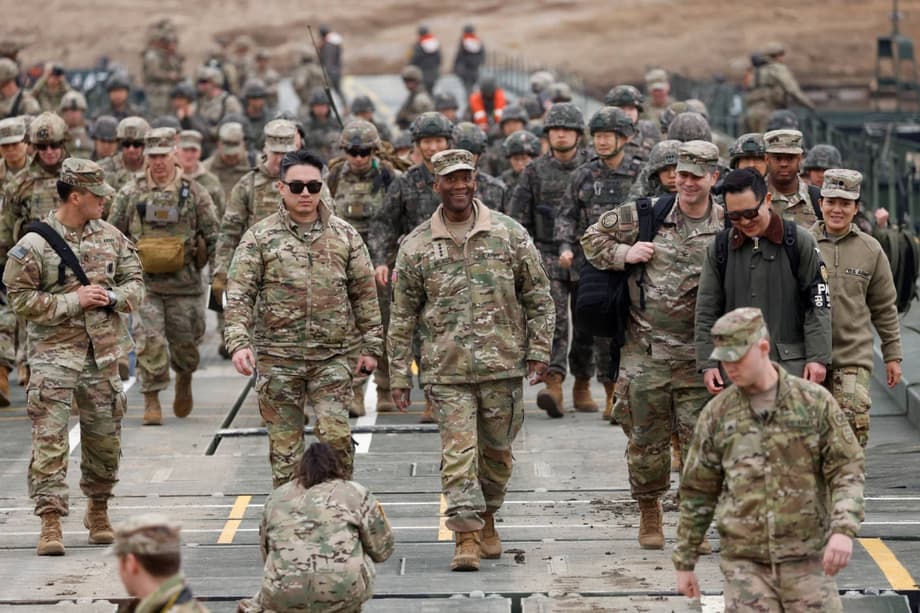
U.S. Army Gen. Xavier Brunson, who commands U.S. Forces Korea while simultaneously leading the United Nations Command and Combined Forces Command, has proposed an ambitious operational framework to transform how American allies in East Asia conduct military operations together. In a recent interview with The Japan Times, Brunson outlined a concept for linking the armed forces of South Korea, Japan, and potentially the Philippines into what he described as a “kill web,” a networked system designed to coordinate responses across conventional and emerging domains of warfare.
The strategy seeks to fuse the strengths of Washington’s regional treaty allies into a single, integrated apparatus capable of operating across land, sea, and air as well as the space, cyber, and electromagnetic arenas. Brunson explained the rationale behind this approach, stating that individual military capabilities, while formidable, require connection to maximize their effectiveness against modern threats.
We have to link these complementary capabilities into a kill web that achieves combined, joint, all-domain effects.
Brunson holds a unique position in the U.S. military hierarchy, wielding authority over three distinct commands that reflect the complex multinational nature of security on the Korean Peninsula. His proposal represents a significant expansion in strategic thinking, moving beyond traditional bilateral alliances toward a trilateral or even quadrilateral framework that includes Manila alongside Seoul and Tokyo.
The concept arrives as regional military planners confront an increasingly volatile security environment characterized by rapid nuclear modernization in Pyongyang and Beijing, alongside growing concerns about potential simultaneous conflicts. By creating a “kill web,” Brunson aims to ensure that sensors, shooters, and command nodes across the three allied nations can share targeting data and coordinate strikes in real time, creating a unified defensive architecture rather than three separate military structures operating in proximity.
This vision aligns with broader shifts in U.S. strategic posture toward the Indo-Pacific. Recent analysis from the Atlantic Council suggests that by 2030, the United States will likely face operational challenges in the region substantially more complex than those present today. China’s amphibious, air, and strike capabilities continue improving, while North Korea fields increasingly precise nonnuclear options alongside a robust tactical nuclear missile force. These developments create scenarios where Washington might find itself managing simultaneous crises or conflicts involving both nations.
Strategic Context and Emerging Threats
The “kill web” proposal emerges directly from recent intensive war gaming and strategic analysis conducted by U.S. defense planners. The Atlantic Council’s Indo-Pacific Security Initiative, with support from the Defense Threat Reduction Agency, recently conducted a series of tabletop exercises known as Guardian Tiger I and II. These simulations explored scenarios set in 2030 where the United States and its allies faced simultaneous confrontations involving both the Korean peninsula and Taiwan, with risks of limited nuclear use complicating operational decisions.
Participants in these exercises included U.S. government officials, military officers, and nongovernmental experts organized into teams simulating national leadership, military command, and adversary cells representing China and North Korea. The wargames revealed troubling gaps in current alliance coordination mechanisms and highlighted the extreme difficulty of managing two major conflicts simultaneously without integrated command structures.
The Guardian Tiger scenarios painted a stark picture of future regional warfare. In one pathway, North Korea initiated limited attacks on South Korean military forces in the Yellow Sea and Northwest Islands, eventually escalating to chemical weapons strikes and tactical nuclear demonstrations. In another, Chinese aggression against Taiwan expanded horizontally through missile strikes on U.S. bases in Japan and Okinawa, while North Korea opportunistically pressured South Korea to eject U.S. forces from the peninsula. Both scenarios illustrated how quickly localized conflicts could expand into regional wars with nuclear dimensions.
Analysis from these exercises suggests that by 2030, China will likely approach near-peer status with the United States regarding strategic nuclear capabilities. Its ability to project force against Taiwan and surrounding regions will improve dramatically through enhanced amphibious and strike assets. During this same period, North Korea will probably deploy a wider range of precise nonnuclear weapons alongside mobile tactical nuclear forces capable of hitting targets throughout the region and the continental United States. These parallel developments create a nuclear double threat requiring new approaches to integrated defense.
Operational Realities in Simultaneous Conflicts
The Guardian Tiger exercises exposed specific operational challenges that Brunson’s “kill web” concept aims to address. When China and North Korea act simultaneously or opportunistically, U.S. and allied forces currently face severe coordination difficulties due to fragmented command structures and insufficient mechanisms for real-time intelligence sharing across separate bilateral alliances.
In the Taiwan scenario, Chinese forces established maritime exclusion zones and conducted strikes against U.S. facilities in Japan while warning South Korea against allowing U.S. Forces Korea to support Taiwan operations. North Korea simultaneously initiated a coercion campaign to decouple the U.S.-South Korea alliance, including cyberattacks against military networks and strategic messaging demanding the withdrawal of American troops. These coordinated pressures exposed how separate alliance structures, while robust individually, struggle to present a unified front against multi-front threats.
The exercises revealed that South Korea might act unilaterally if Washington appears risk-averse or distracted by other commitments. In one scenario timeline, South Korean forces executed independent strikes against North Korean targets after perceiving U.S. hesitation, illustrating how alliance coordination could fragment precisely when unity matters most. Similarly, Japanese forces conducted counterstrikes against Chinese missile sites attacking U.S. bases, demonstrating allied capabilities but also highlighting the potential for uncoordinated escalation without robust joint command mechanisms.
Brunson’s proposal for linking Seoul, Tokyo, and Manila directly addresses these fragmentation risks. By creating networked connections between allied sensors and weapons systems, the “kill web” would enable shared situational awareness and coordinated responses rather than parallel but separate operations. This integration becomes particularly crucial for managing limited nuclear attacks, where split-second decisions about attribution and response require seamless communication between allies facing different threat vectors.
The wargames also highlighted the importance of Philippine participation in regional defense networks. While Manila maintains a Mutual Defense Treaty with Washington, its geographical position provides critical basing options and maritime awareness in the South China Sea that could prove essential in either a Korean or Taiwan contingency. Including Philippine capabilities in the network would extend the “kill web” coverage southward, creating a more comprehensive defensive architecture across the Western Pacific.
Divergent Escalation Patterns
A critical challenge complicating the proposed integrated defense network involves the fundamentally different ways China and North Korea escalate conflicts. The Guardian Tiger exercises revealed that preventing Pyongyang from escalating requires distinctly different approaches than managing Beijing’s aggression, creating a complex operational environment for the unified command structure Brunson envisions.
North Korea tends toward vertical escalation, particularly through early and frequent threats of tactical nuclear employment. The wargames showed Pyongyang potentially using low-yield nuclear strikes against military targets to deter intervention, backed by pre-delegation of launch authority to field commanders that could result in rapid nuclear use without direct approval from the capital. This pattern creates intense pressure for early response decisions and raises the risk of rapid nuclear exchange if allied forces cannot coordinate their deterrent messaging effectively.
China, conversely, favors horizontal escalation across multiple domains and geographic areas. During the Taiwan scenarios, Chinese forces expanded conflicts through cyberattacks against regional infrastructure, space domain operations targeting U.S. satellites, and strikes against Japanese bases supporting American operations. Beijing also threatened economic warfare and established exclusion zones in the Yellow Sea to pressure South Korea. These tactics aim to disrupt Washington’s ability to sustain operations without triggering immediate nuclear responses.
Managing these divergent patterns simultaneously presents extraordinary demands on command and control systems. While North Korean nuclear threats require immediate attention and potential nuclear responses, Chinese horizontal escalation demands sustained conventional operations across air, maritime, and cyber domains. Brunson’s “kill web” concept attempts to provide the command infrastructure necessary to process these simultaneous challenges, allowing allied forces to respond appropriately to North Korean nuclear threats while maintaining pressure against Chinese conventional aggression.
The exercises demonstrated that allies might interpret these threats differently based on their geographic positions. South Korea focuses intensely on North Korean vertical escalation risks, while Japan confronts Chinese horizontal expansion across maritime approaches. Without integrated networking, these divergent threat perceptions could lead to disjointed responses, with each ally optimizing for its specific danger while inadvertently exposing the others to greater risk. The “kill web” aims to synchronize these perspectives into a coherent regional defense.
Command Structure and Geopolitical Shifts
Implementing Brunson’s vision requires significant adjustments to existing military command architectures that have remained largely static since the Cold War. Currently, U.S. Forces Korea operates under a structure focused primarily on peninsular defense, while U.S. Forces Japan manages a separate bilateral relationship with Tokyo. The proposed trilateral integration would necessitate new mechanisms for operational coordination that transcend these traditional boundaries.
Recent reports indicate Brunson has already begun shifting strategic perspectives within his commands through the introduction of an “east-up” map orientation that situates South Korea within a broader Indo-Pacific context rather than as the focal point of a Korea-centric view. This cartographic shift symbolizes a larger doctrinal transformation, reorienting U.S. military thinking from a defensive posture centered on the 38th parallel toward a regional framework encompassing the East and South China Seas.
The Guardian Tiger exercises recommended specific structural reforms to enable the coordination Brunson seeks. Analysts suggested updating the Unified Command Plan to create enhanced capacity for bilateral and multilateral operational-level coordination in East Asia, potentially including a new joint warfighting command under U.S. Indo-Pacific Command that could coordinate activities across Korea and Japan simultaneously. Such changes would address current limitations where the separation between U.S. Forces Korea and U.S. Forces Japan hampers trilateral operational planning.
Brunson’s concurrent command of the United Nations Command, Combined Forces Command, and U.S. Forces Korea provides him with unique institutional leverage to pursue these integration efforts. The United Nations Command, in particular, offers a multinational framework that could potentially expand to include broader regional coordination beyond its traditional Korean Peninsula focus. By utilizing these existing command authorities while advocating for new networking capabilities, Brunson attempts to bridge the gap between current alliance structures and future integrated defense requirements.
The Bottom Line
- Gen. Xavier Brunson, commanding U.S. Forces Korea, proposes a trilateral “kill web” linking military capabilities of South Korea, Japan, and the Philippines to counter threats from North Korea, China, and Russia.
- The concept envisions networked coordination across land, sea, air, space, cyber, and electromagnetic domains to achieve combined, joint, all-domain effects rather than separate bilateral operations.
- Recent Guardian Tiger wargames revealed critical vulnerabilities in current alliance structures when facing simultaneous conflicts involving both China and North Korea by 2030.
- China tends toward horizontal escalation across domains and geography, while North Korea favors vertical escalation through early tactical nuclear threats, requiring different allied responses.
- Implementation requires updating command structures and coordination mechanisms to enable real-time intelligence sharing and joint operations across current bilateral boundaries.