

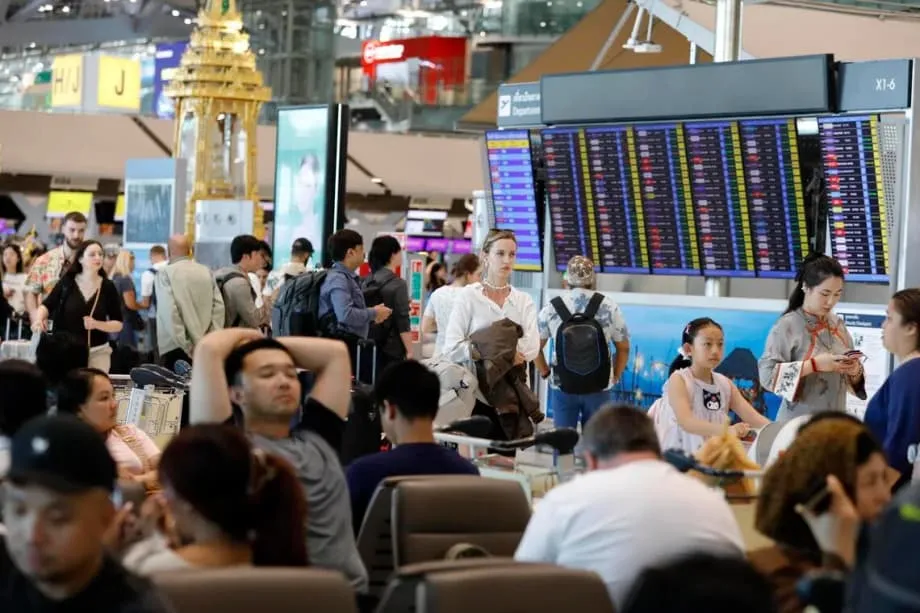
Summer schedules shrink as fuel prices double
Eleven of the 20 airlines making the largest schedule cuts worldwide are based in Asia, according to aviation data firm Cirium, as the war in Iran turns a fuel supply crisis into canceled flights and more expensive journeys. More than 150,000 flights globally have been canceled from schedules covering March through June 2026. Some reductions already extend into late October.
Contents
- Summer schedules shrink as fuel prices double
- Why the fuel squeeze hits Asia so hard
- Which airlines are cutting flights?
- Fuel reserves leave countries unevenly protected
- Europe cuts services while US airlines raise charges
- Unusual shipments and changes to flying
- The damage extends beyond airports
- What passengers should budget for
- Why recovery could take into 2027
- The Essentials
As of April 26, jet fuel prices have doubled since hostilities began on February 28, climbing from roughly $93 a barrel to more than $190 at peak levels. Asian passengers face fewer flights, withdrawn routes and substantial fuel surcharges just as they prepare for summer travel.
The disruption centers on the Strait of Hormuz, the narrow waterway through which roughly one fifth of global oil and liquefied natural gas shipments normally pass. Its effective closure to commercial traffic has interrupted a supply chain on which Asian airlines depend heavily. Across Southeast Asia, about two thirds of crude oil imports normally travel through the strait.
Airlines need both affordable fuel and dependable deliveries to keep their schedules running. The current crisis threatens both. Carriers are cutting services that have become too expensive to operate, while countries dependent on imported jet fuel are searching for replacement supplies.
An unnamed aviation analyst described the disruption as the most severe for commercial aviation since the COVID-19 pandemic, with recovery likely to stretch well into 2027. Industry warnings extend beyond ticket prices to less reliable service, weaker connections to secondary cities and the possibility that financially vulnerable airlines could collapse.
Why the fuel squeeze hits Asia so hard
Jet fuel normally accounts for about 25 to 30 percent of an airline's operating costs. Some Asian carriers have seen that share rise to nearly 45 percent since the war began. At that level, fuel can consume almost half the money needed to operate an airline, making routes that were profitable a few months ago uneconomic.
A single aisle commercial jet burns approximately 800 gallons of fuel an hour, while larger widebody aircraft consume more. Doubling the price of that fuel sharply increases the cost of every journey, even before an airline pays for staff, maintenance and other expenses.
Jet fuel also needs specialized storage infrastructure. Petrol and diesel are relatively easier for consumers and businesses to store, but aviation fuel cannot be stockpiled as readily throughout the economy. Airlines depend on functioning networks of refineries, storage facilities and deliveries to airports.
Singapore, South Korea, China and India produce jet fuel, yet their refineries rely heavily on Middle Eastern crude oil as the raw material. Asia's limited domestic refining capacity and dependence on those imports mean that local production offers only partial protection. When traffic through Hormuz stopped, refiners across the region could not maintain previous production levels.
South Korea and China prioritized domestic fuel supplies after the outbreak of war. Their moves removed approximately 1.3 million tonnes of jet fuel a month from the regional export market, equivalent to roughly 10 percent of Asian demand. Importing countries therefore face tighter supplies from nearby producers at the same time that Middle Eastern shipments are disrupted.
India, which exported 8.55 million tonnes of aviation fuel in the 2025 financial year, has also shifted toward protecting its domestic market. New Delhi introduced export duties in March, raising them to 42 rupees, or 57 Singapore cents, per liter by April. It capped monthly domestic price increases at 25 percent to protect local airlines. Those measures have left neighboring countries, including Vietnam, Myanmar and Pakistan, seeking alternative supplies.
Which airlines are cutting flights?
VietJet ranks third worldwide by the percentage reduction in its schedule, behind Qatar Airways and Etihad in the Middle East. The Vietnamese budget airline has cut its May schedule by nearly 20 percentage points, according to Cirium.
Sichuan Airlines, Garuda Indonesia, Malaysia Airlines, Xiamen Airlines and several carriers within the AirAsia Group have made reductions ranging from 10 to 15 percentage points. AirAsia has dropped entire routes, including Bangkok to Singapore and Jakarta to Kota Kinabalu, with some reductions running through late October.
The warning about daily losses was blunt, although the speaker was not identified:
Some Asian airlines are bleeding millions of dollars daily. As the war goes on, more flight cuts are a given.
TransNusa, an Indonesian budget carrier, has avoided cancellations so far, but most competitors have not been as fortunate. South Korean budget airline T'way Air plans to place cabin crew on unpaid furlough during May and June, among the first staffing reductions tied directly to the fuel crisis.
Airlines are prioritizing routes that bring in more revenue and removing marginal services. Major routes can remain available while passengers traveling to secondary cities lose connections. Combining several flights into fewer departures also fills more seats on each aircraft, leaving fewer inexpensive tickets for sale.
The disruption has developed across several dates, with further cuts already scheduled:
- February 28: Hostilities began, followed by a doubling of jet fuel prices.
- March: India introduced aviation fuel export duties; Indonesia reported 38 days of fuel stock in the middle of the month.
- April 19: New Zealand reported 47 days of fuel coverage.
- April 26: Airlines and governments were preparing for summer shortages and higher costs.
- May and June: T'way Air plans unpaid cabin crew furloughs, while several carriers have scheduled flight reductions.
- Through late October: Some AirAsia reductions remain in place; Lufthansa's cancellations cover May through October.
Fuel reserves leave countries unevenly protected
China, Japan, South Korea and Singapore hold the region's most secure positions because of their refining capacity and strategic reserves. Countries without comparable domestic refining infrastructure face a much greater threat to their aviation sectors.
Vietnam imports more than two thirds of its jet fuel, with 60 percent traditionally coming from China and Thailand. China's export ban and tighter regional supplies have prompted Hanoi to ask Beijing formally to maintain stable deliveries. Vietnam is also seeking emergency shipments from the United States across the Pacific.
The Philippines has secured fuel only through June. Myanmar and Bangladesh face similarly precarious conditions. Vietnam and the Philippines canceled flights early in the crisis, suggesting that national reserve figures may not fully reflect the fuel available to airlines where and when they need it.
Australia holds 30 days of reserves, which remain untouched. New Zealand had 47 days of coverage as of April 19. India says it has adequate supplies for 60 days, while Indonesia reported 38 days of stock in mid-March.
Indonesia's state energy company Pertamina has secured additional fuel to support Hajj flights through June. Malaysia's Petronas has enough stockpiled fuel until June and is purchasing more. These arrangements provide temporary protection, but airlines still face the cost of obtaining replacement supplies.
Singapore, the region's main refining and trading hub, does not disclose exact stockpile figures. Higher inventories there provide a partial buffer for neighboring markets, even as countries compete for available fuel.
Europe cuts services while US airlines raise charges
Europe is also confronting a potential physical shortage. The International Energy Agency describes the continent as having perhaps six weeks of jet fuel supplies remaining. Lufthansa has canceled 20,000 flights between May and October, reducing its planned consumption by approximately 40,000 metric tons.
KLM has cut 160 European flights for May. EasyJet expects a pretax loss exceeding 540 million pounds for the first half of fiscal 2026. Those figures show how the fuel shock is affecting both schedules and finances beyond Asia.
The United States, a major oil producer with domestic refining capacity, faces higher prices rather than physical shortages. Delta, United, American Airlines and JetBlue have responded by increasing checked baggage fees rather than base fares, although United has also publicly announced fare increases.
United has trimmed 5 percent of its schedule through the third quarter. Its chief executive, Scott Kirby, told staff in a memo that persistently high fuel prices could add $11 billion to the airline's annual costs. He compared that potential expense with less than $5 billion in profit during United's best year.
The possible additional fuel bill would therefore be more than twice that record annual profit. The comparison helps explain why airlines are cutting capacity and collecting more money from passengers, and why analysts expect stronger companies potentially to acquire distressed competitors.
Financially weaker budget carriers face particular pressure, with industry analysts predicting mergers or failures. Smaller airlines already losing millions of dollars daily have less room to absorb prolonged fuel increases while maintaining their existing networks.
Unusual shipments and changes to flying
The United States is arranging unusual shipments of military grade jet fuel across the Pacific to Asian allies. Tenders have been issued for 235,000 barrels of JP-5 naval aviation fuel from Cherry Point, Washington, to Subic Bay in the Philippines, and another 260,000 barrels to Yokose, Japan, for delivery in May and June.
JP-5 is normally reserved for naval aircraft. According to energy analytics firm Kpler, the shipments would be only the fourth and fifth instances of exports of that fuel from the United States since 2017. Their rarity illustrates the strain on supply chains normally served by Middle Eastern crude refined in Singapore and South Korea.
Commercial airlines are changing how they operate as well. Some are using "tankering," which means carrying enough fuel on an outbound flight to cover the return journey when the destination airport faces shortages. Others are combining multiple services into one departure to carry more passengers while using less fuel across their schedules.
Cathay Pacific and HK Express have canceled certain flights from mid-May through June. Fuel surcharges are also increasing, reaching as much as 150 pounds sterling on long haul routes.
These operational changes keep some journeys available, but passengers may encounter fewer departure times, fuller aircraft and higher charges. The pressure is greatest where an airline must manage both expensive fuel and uncertainty about supplies at its destination.
The damage extends beyond airports
The United Nations estimates that 8.8 million people across Asia and the Pacific risk falling into poverty because of the war's economic effects. The same energy disruption that raises airfares is increasing costs for farming, manufacturing and everyday transport.
Rice farmers in Myanmar are paying five times the prices charged before the war for diesel on black markets to save their harvests. Some Cambodian farmers have abandoned replanting because of fuel and fertilizer costs. In the northern Philippines, vegetable crops are rotting in fields because farmers cannot afford to transport them to market.
Bangladesh's garment factories, which supply major Western retailers, face severe production disruption as prices for thread made from petrochemicals double. The problem reaches beyond the fuel burned by vehicles: petroleum also supplies raw materials used in manufacturing.
Tourism businesses are being squeezed by the cost and availability of flights. Hotels in Sri Lanka report occupancy drops of 80 to 90 percent as airfares triple. Thailand recorded a 9 percent decline in tourist arrivals compared with a year earlier during the first week of March, while major hotels reported occupancy rates in single digits.
Street vendors, artisans and informal transport providers depend on visitors as well. Fewer arrivals mean less spending across those businesses, putting livelihoods at risk far beyond airlines and hotels. For economies dependent on tourism, a canceled flight can remove income from many people who never work at an airport.
What passengers should budget for
Travelers planning international journeys face higher prices and a greater chance of schedule changes. Industry advice includes choosing refundable fares and comprehensive travel insurance, while budgeting for fuel surcharges of $200 to $400 on a long haul return journey. Some carriers are doubling their previous surcharge levels.
Airlines' focus on routes that earn more revenue means passengers traveling between major cities may retain options, while those heading to smaller destinations could face fewer services. As carriers combine flights, more seats are occupied on each departure and the supply of cheaper fares can shrink.
Advance purchases for travel in late 2026 or early 2027 are also being considered as a way to plan around a possible improvement in supplies. The timing of that improvement remains uncertain, and the prospect of lower fuel prices does not remove the current risk of cancellations.
Passengers therefore need to consider the full cost of a journey, including surcharges and baggage fees, alongside the reliability of the planned schedule. The immediate problem is a combination of price and availability, rather than simply a higher advertised fare.
Why recovery could take into 2027
The European Union will present emergency measures that could include joint purchases of kerosene, the fuel used by jet aircraft, and shared reserves among member states. Asian aviation leaders have called for similar regional coordination.
The ASEAN Petroleum Security Agreement provides a possible framework, but it has never been activated despite existing on paper for decades. National measures to protect domestic supplies are already affecting neighboring countries, making regional cooperation a pressing issue.
Oil futures markets suggest prices may moderate by late 2026. Futures reflect prices agreed for delivery at a later date, giving an indication of market expectations. Physical fuel supplies could take longer to recover than prices.
Even an immediate reopening of the Strait of Hormuz would leave refineries needing weeks to return to full production and shipping schedules needing months to normalize. Restoring traffic through the waterway is therefore only the beginning of rebuilding dependable deliveries.
United anticipates oil prices remaining above $100 a barrel through the end of 2027. Alongside the aviation analyst's expectation of recovery extending into 2027, that outlook points to sustained pressure on affordable fares rather than a quick return to the prices passengers knew before the war.
The Essentials
- Jet fuel prices have doubled since February 28, rising from roughly $93 a barrel to more than $190 at peak levels.
- More than 150,000 flights have been canceled from global schedules covering March through June 2026.
- Eleven of the 20 airlines making the largest schedule cuts are based in Asia; VietJet has reduced its May schedule by nearly 20 percentage points.
- China and South Korea's moves to prioritize domestic supplies removed about 1.3 million tonnes of monthly jet fuel exports, roughly 10 percent of Asian demand.
- Vietnam, the Philippines, Myanmar and Bangladesh face acute supply pressure, while countries with stronger refining capacity and reserves have more protection.
- Lufthansa has canceled 20,000 flights from May through October, and the International Energy Agency says Europe may have around six weeks of jet fuel supplies remaining.
- Long haul return journeys can carry fuel surcharges of $200 to $400, while some airlines are also increasing baggage fees.
- Unusual US shipments of JP-5 naval aviation fuel to Japan and the Philippines are planned for May and June.
- The United Nations estimates that the war's economic effects could push 8.8 million people across Asia and the Pacific into poverty.
- Fuel supply recovery could extend into late 2026 or 2027, with weaker airlines facing the prospect of mergers or failure.