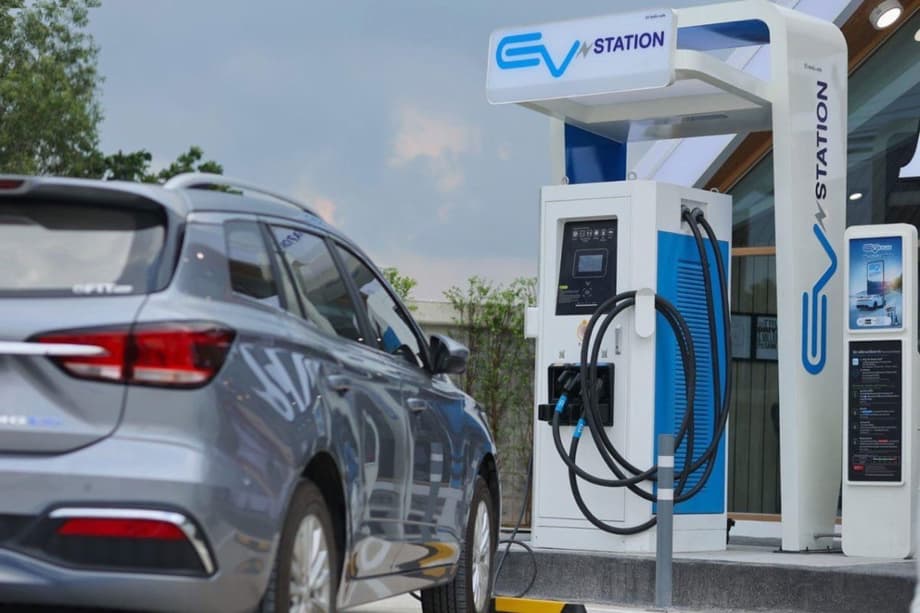
Government Unveils Aggressive Plan to Electrify Transport Sector
The Thai government is preparing an ambitious action plan to put 300,000 electric vehicles on the nation's roads through a combination of tax incentives, expanded trade-in schemes, and targeted support for public transport operators. Deputy Transport Minister Siripong Angkasakulkiat outlined the strategy following discussions with the Department of Land Transport, signaling a significant acceleration of the country's transition away from petrol-powered vehicles.
- Government Unveils Aggressive Plan to Electrify Transport Sector
- Dual Incentive Strategy Targets Private and Commercial Vehicles
- Building on Existing EV Policy Frameworks
- Commercial Fleet Focus and Battery Manufacturing Push
- Critical Perspectives and Implementation Challenges
- Economic and Environmental Implications
- Key Points
The initiative represents the latest phase in Thailand's comprehensive electromobility strategy, building upon existing frameworks like the EV3.0 and EV3.5 policies while addressing specific gaps in commercial fleet electrification. If approved by the cabinet, the measures could take effect as early as June through a royal decree, potentially transforming the automotive landscape in Southeast Asia's second-largest economy.
Dual Incentive Strategy Targets Private and Commercial Vehicles
The Transport Ministry's proposal centers on two complementary measures designed to lower financial barriers for vehicle owners across different sectors. First, the government plans to expand the existing car trade-in policy beyond private vehicles to encompass public transport operators, with a particular emphasis on the taxi sector. This expansion aims to convert approximately 27,000 diesel-powered taxis into electric or hybrid alternatives, addressing both urban air pollution concerns and the high fuel costs that burden commercial drivers.
Second, the Department of Land Transport is working with the Ministry of Finance to implement dramatic reductions in annual vehicle tax rates. Under the proposal, owners of electric and hybrid vehicles could see their annual tax obligations reduced by up to 80 percent, or potentially waived entirely during an initial transition period. These fiscal incentives target the total cost of ownership, addressing one of the primary concerns for consumers weighing the switch from conventional internal combustion engines.
Petrol-powered taxis have emerged as a focal point for the initiative, with the government offering a flat payment of 5,040 baht per vehicle under the diesel fuel aid scheme. To qualify, taxi operators must complete at least 2,500 kilometers of service during the 42-day support period, with compliance tracked through a specialized DLT application. This condition ensures that support reaches active commercial operators rather than dormant vehicles, maximizing the environmental and economic impact of the subsidies.
Building on Existing EV Policy Frameworks
The new measures complement Thailand's existing battery electric vehicle incentive structures, which have already demonstrated significant success in stimulating market growth. The EV3.0 policy, launched in 2022, and its successor EV3.5, approved for 2024-2027, established the foundation for the current expansion through subsidies, excise tax reductions, and import duty adjustments.
Under the EV3.5 framework, which took effect on January 1, 2024, the government offers subsidies ranging from 25,000 to 100,000 baht per vehicle depending on battery capacity and year of purchase. The policy also reduces excise tax from 8 percent to 2 percent for electric passenger cars priced below 7 million baht, while allowing import duty reductions of up to 40 percent for completely built-up units imported during 2024 and 2025. However, these benefits come with strict local assembly requirements: manufacturers must produce one vehicle locally for every two imported by 2026, or one for every three by 2027.
Narit Therdsteerasukdi, Secretary General of the Thailand Board of Investment and secretary of the National Electric Vehicle Policy Committee, explained the broader vision during a recent press conference.
The measures approved today will complete the so-called EV3 and EV3.5 sets of measures taken earlier for the passenger car sector, by focusing this time on large commercial vehicles. We believe this will significantly increase the adoption of electric trucks and buses, reduce pollution from the transportation and manufacturing sectors, and support companies' moves to reach their net-zero targets.
Statistics through January 2024 indicate that 14 manufacturers have registered 78,554 EV cars under the EV3 scheme, demonstrating robust industry participation in the incentive programs.
Commercial Fleet Focus and Battery Manufacturing Push
Recent approvals by the National Electric Vehicle Policy Committee reveal a strategic pivot toward commercial vehicle electrification and domestic battery production. The committee has authorized special tax deductions for companies transitioning large truck and bus fleets to battery electric vehicles, effective until December 31, 2025. Businesses purchasing domestically manufactured electric trucks and buses can deduct expenses equal to twice the actual vehicle price, while imported vehicles qualify for 1.5 times the price deduction.
Eligible commercial vehicles include container trucks, liquid transport vehicles, hazardous substance carriers, special trucks, tow trucks, and both air-conditioned and non-air-conditioned electric buses. These incentives aim to address the heavy-duty transportation sector's significant contribution to urban emissions while supporting Thailand's 30@30 policy goal: ensuring that 30 percent of vehicles manufactured domestically are electric by 2030.
Parallel to adoption incentives, the government is aggressively pursuing battery cell manufacturing capacity through the Competitiveness Enhancement Fund. To qualify for investment promotion, battery manufacturers must demonstrate energy density of at least 150 watt-hours per kilogram and a lifecycle of no less than 1,000 cycles. Companies must submit proposals by the end of 2027, with the government emphasizing that local battery production will ensure the sustainability and resilience of the national EV ecosystem.
Infrastructure Development and Regional Leadership
Thailand's EV acceleration occurs within a broader regional context where ASEAN nations are competing to establish dominant positions in the electric mobility supply chain. The country currently ranks as the top automotive producer in Southeast Asia and among the world's top 10 manufacturing hubs, providing a substantial industrial foundation for the transition.
Energy giants PTT and EGAT are spearheading charging infrastructure expansion, with PTT's Arun Plus subsidiary targeting over 7,000 charging points by 2030, while EGAT's Elex project focuses on highway fast-charging networks to facilitate long-distance travel. The Ministry of Energy and Ministry of Transport are coordinating to ensure charging station deployment keeps pace with vehicle adoption, addressing range anxiety that might otherwise deter potential buyers.
However, regional comparisons reveal both opportunities and challenges. While Thailand has achieved approximately 20 percent EV market penetration, Singapore has surpassed 40 percent of new registrations, driven by subsidies up to S$40,000 per vehicle. Malaysia, meanwhile, has experienced 100 percent year-on-year growth but faces policy uncertainty as tax holidays for imported EVs expired at the end of 2025, illustrating the critical importance of long-term incentive stability.
Critical Perspectives and Implementation Challenges
Despite the optimistic targets, the proposed trade-in scheme has attracted scrutiny regarding its structural design and ultimate beneficiaries. Critics have raised concerns that incentives channeled through carmakers might be partially absorbed upstream, potentially distorting market prices rather than delivering direct consumer benefits. With EV financing rates already competing at near-zero levels in some segments, the proposed 3.5 percent loan rate for the trade-in scheme may offer limited additional incentive compared to existing market offerings.
Environmental advocates have also questioned the net carbon impact of the transition without parallel reforms in Thailand's energy generation mix. Currently, over half of the nation's electricity derives from natural gas, raising questions about the overall emissions reduction achieved through vehicle electrification alone. Additionally, the lack of comprehensive plans for end-of-life management of retired vehicles and EV batteries presents potential future environmental challenges.
The definition of what constitutes an old
vehicle eligible for trade-in remains unclear, creating implementation risks. Without transparent scrapping systems, there is potential for leakage into secondary markets, undermining the environmental objectives of removing high-emission vehicles from active service. The government has also restricted public transport driving licenses to Thai nationals, a measure that reaffirms domestic labor protections while potentially limiting the pool of qualified commercial EV operators.
Foreign Investment and Supply Chain Considerations
Thailand's incentive structure has successfully attracted significant foreign manufacturing investment, with Chinese automakers BYD and Great Wall Motor collectively committing $1.44 billion to local production facilities. BYD's Rayong factory aims for annual production capacity of 150,000 units from 2024, while Changan Automobile has announced plans for substantial battery EV and plug-in hybrid manufacturing.
However, analysts caution that excessive or rapidly introduced incentives risk market saturation and labor shortages, potentially driving up costs and straining local resources. Michael Ignatiadis, Head of Manufacturing Strategy for Asia Pacific at JLL, notes that markets with incentives are particularly appealing during initial investment stages, but manufacturers must consider the risk of future incentive reductions or removals if market conditions shift.
The policy also mandates that Made-in-Thailand
products source at least 40 percent of materials and components locally, a requirement designed to support domestic industries while helping manufacturers decouple from Chinese supply chains and avoid potential tariff complications. This local content threshold aligns with similar requirements in Indonesia under the PPN DTP scheme, where VAT relief connects directly to domestic component levels.
Economic and Environmental Implications
The government's push for 300,000 additional EVs represents more than environmental policy; it constitutes a strategic economic pivot intended to maintain Thailand's automotive leadership amid global electrification trends. The automotive sector, often referred to as the Detroit of Asia,
contributes significantly to export revenues and manufacturing employment, making the transition to EV production critical for long-term industrial competitiveness.
Tax incentives alone have already facilitated the registration of more than 134,000 vehicles at a cost exceeding 19 billion baht, demonstrating the fiscal scale of the government's commitment. The new measures aim to build upon this foundation by targeting the used vehicle market and commercial fleets, segments that previous incentive schemes addressed less comprehensively.
Smart grid technologies and vehicle-to-grid integration pilots are also underway, with EGAT and Nissan testing systems that allow EVs to return energy to the grid during peak demand periods. These initiatives aim to mitigate grid stress while maximizing the value proposition of electric vehicle ownership beyond simple transportation.
Key Points
- The Transport Ministry targets 300,000 new EVs through tax cuts and expanded trade-in schemes, potentially effective by June via royal decree
- Annual vehicle tax for EVs and hybrids may be reduced by 80 percent or waived entirely during the transition period
- The trade-in program specifically targets 27,000 diesel taxis for conversion to electric models, with petrol taxi operators receiving 5,040 baht per vehicle under current aid schemes
- Thailand maintains its 30@30 policy goal: 30 percent of domestically produced vehicles must be electric by 2030, progressing toward 100 percent zero-emission vehicle use by 2035
- The EV3.5 policy offers subsidies between 50,000 and 100,000 baht per vehicle through 2027, with import duty reductions up to 40 percent for qualifying manufacturers
- New BOI incentives offer double tax deductions for domestically manufactured electric trucks and buses purchased by commercial fleets
- Battery cell manufacturers can access Competitiveness Enhancement Fund grants by meeting strict energy density and lifecycle requirements
- Over 55,000 transport operators and 206,000 vehicles have registered for diesel fuel aid, indicating significant commercial sector participation
- Critics warn of potential price distortion, unclear environmental benefits without power sector reform, and insufficient end-of-life planning for retired vehicles and batteries