
Marches stop, but the protest continues
India's Cockroach Janta Party has suspended further street marches after police used batons and tear gas against thousands of young protesters trying to reach Parliament in New Delhi on July 20, 2026. Delhi Police reported 60 protesters and 118 police and security personnel injured, nearly 180 people in total, while movement leaders said more than 150 demonstrators needed hospital treatment. Authorities said 70 protesters were detained.
Contents
- Marches stop, but the protest continues
- How the confrontation unfolded
- From an online joke to a national campaign
- Why a leaked exam paper can disrupt a family's plans
- Students describe the cost of repeated examinations
- Job worries widen the protest's appeal
- Wangchuk's hunger strike brings another point of conflict
- A brief government meeting leaves demands unresolved
- A different tactic, with the same demands
- The Bottom Line
Several hundred supporters returned to Jantar Mantar on Tuesday, July 21, despite heavy security and intermittent rain. The movement, known as the CJP, says its campaign will continue through sit ins, online organizing and other public action. Its central demands remain education reform, accountability for examination paper leaks and the resignation of Education Minister Dharmendra Pradhan.
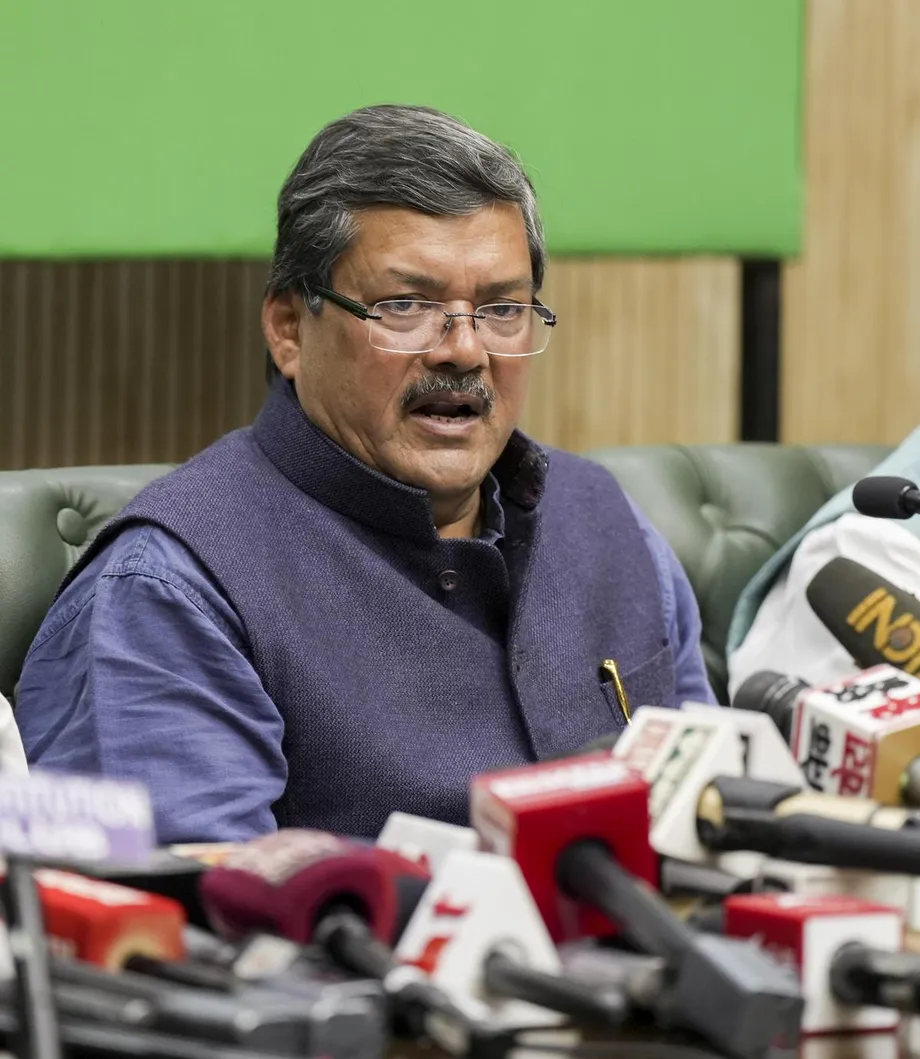
CJP founder Abhijeet Dipke explained at a news conference that the decision to stop marching was intended to prevent further injuries.
We will not march again because the police will hurt the youth again.
The July 20 confrontation was the most serious escalation since the protest began in May. Demonstrators assembled at Jantar Mantar, a designated protest site in central Delhi, before attempting to move toward Parliament as the monsoon session opened. Police had refused permission for the march and blocked roads toward the legislature with barricades.
The decision changes how the movement will press its demands, while leaving the dispute unresolved. Protesters want answers about cancelled examinations, the pressure on students and the treatment of demonstrators. The government has held a brief meeting with CJP representatives, but the group says that meeting produced no commitments.
How the confrontation unfolded
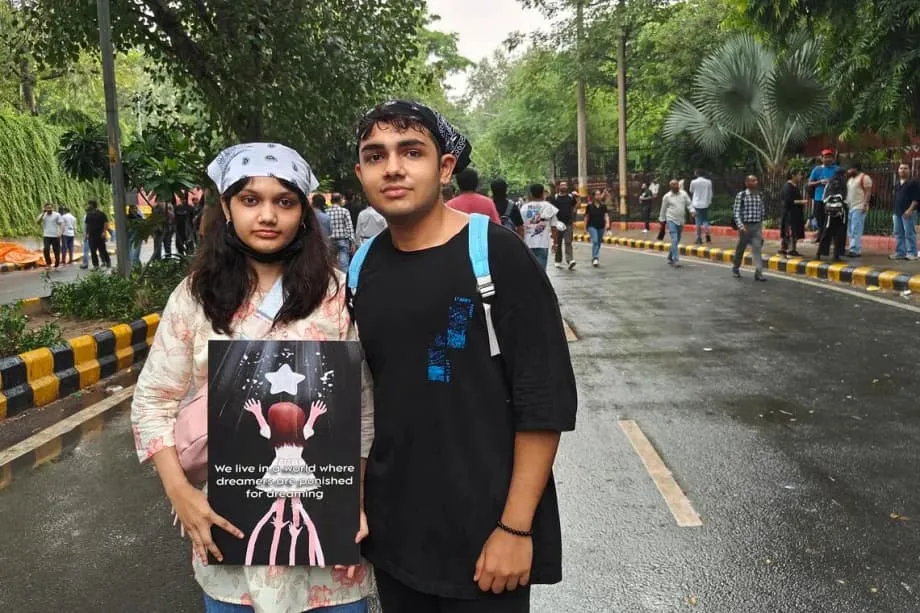
The July 20 gathering began peacefully, with protesters chanting slogans, waving Indian flags and sitting in small groups on the roads. Some sang during breaks in the rain. A group called for Pradhan to leave office and demanded that Prime Minister Narendra Modi also take responsibility.
Authorities closed or restricted nearby roads and metro stations. Mobile internet was reportedly blocked in parts of central Delhi, making communication more difficult and complicating travel for additional supporters. People continued to arrive, with crowd estimates ranging from more than 10,000 to above 20,000, depending on the time and the organization counting.
Tension increased when some demonstrators tried to get past the barricades. Police fired tear gas and used batons to clear the area. Witnesses described people running through side streets, struggling to breathe and helping injured friends. Volunteer medical teams treated protesters at the site, including people with head wounds and broken limbs.
Delhi Police said demonstrators ignored warnings, violated orders restricting movement, breached barricades and attacked officers with stones and other objects. Police also accused protesters of damaging property, including public and government vehicles. The CJP rejected that account and said police were the aggressors.
Videos shared online showed officers striking protesters with sticks and chasing people away from the site. Footage circulating after mobile internet services were restored also showed officers beating people, including women. The police and the movement gave conflicting accounts of how the violence began.
Amnesty International criticized the police response and said authorities should protect peaceful assembly rather than suppress it. Human Rights Watch called for a prompt investigation into claims that officers used truncheons and tear gas against protesters.
From an online joke to a national campaign
The CJP began on May 16 as a satirical online campaign. Its name refers to remarks attributed to Supreme Court Chief Justice Surya Kant, who compared some unemployed young people involved in online criticism and activism to cockroaches. The judge later said his comments had been misunderstood, but the label had already become a rallying point.
Dipke, a graduate aged 30 who studied in the United States, turned the insult into the movement's identity. Memes, songs, parody posters and social media campaigns became ways to mock the government and speak for people who felt ignored by political leaders. The movement's slogan describes it as a political party for people the system forgot to count.
The CJP is not a registered political party and says it has no alignment with any political organization. Its supporters now include students, parents, professionals, activists and opposition politicians. Its Instagram account reportedly attracted millions of followers within weeks, at one point exceeding the social media following of the ruling Bharatiya Janata Party.
Satire remains part of the street campaign. Protesters have used diapers to mock the government's failure to stop examination leaks, danced while banging plates and adopted the word cockroach as a symbol of survival. Their message is that young people who feel dismissed or excluded can still organize in large numbers.
The movement's growth has also brought in people who had never considered themselves activists. Some parents arrived with their children, while other supporters traveled overnight by bus from distant cities and states. A campaign that began with an online joke has become a gathering point for people facing similar worries about education and work.
Why a leaked exam paper can disrupt a family's plans
More than two million candidates took the National Eligibility Entrance Test for undergraduate medical education, known as NEET UG, in May 2026. They were competing for a limited number of medical places. Reports that the question paper had leaked led to cancellation of the examination and a retest in June.
India's competitive examinations can decide whether a student enters medical college or university, or gets a public sector job. Millions of students spend years preparing. Families often pay for expensive private coaching, borrowing money or using savings to cover tuition, travel and study materials.
The NEET UG disruption brought months of uncertainty. Students had to prepare again, postpone admissions and meet fresh expenses. Some families said the scandal destroyed their confidence in the fairness of the process. Protesters also point to leaks involving other national examinations, arguing that the problem extends beyond a single test or ministry.
For a family already paying for years of preparation, a cancelled examination can mean a lost year, more debt and another round of coaching. The movement connects those practical costs with the emotional pressure of competing against millions of other candidates for a small number of places.
The CJP has cited at least 21 student deaths by suicide linked to the examination crisis; other accounts have reported lower figures. The deaths have become a painful symbol of the pressure on students. Protesters want compensation for affected families, alongside changes intended to protect examinations from further leaks.
The group's demands include stronger safeguards for examination papers, transparent investigations and reforms to the testing system. It has called for 10 million rupees, about $104,000, for each family of a student who died by suicide.
Students describe the cost of repeated examinations
Pritam Kumar, a student aged 20 from Noida, said friends who took the affected medical examination had experienced severe distress. He traveled from the neighboring city to join the protest, then walked for about 40 minutes from the nearest open metro station after authorities restricted transport near the gathering.
Kumar explained why the medical examination scandal mattered to him personally.
"I have friends who sat the NEET exam that was leaked, so I know what kind of pain they have to deal with," Kumar said.
Hemang Kanojia, a student aged 25 from Chandigarh, traveled more than 240 kilometers to take part. He had taken another national competitive examination in 2024 that was also cancelled after a leak.
Kanojia said the shared experience of examination disruption brought students together and explained his decision to join the demonstration.
The pain from exam paper leaks is something that unites us," Kanojia said. "I am here because if not now, then when?
Their experiences connect two parts of the protest: students facing a fresh medical entrance examination and candidates who had already been through cancellations in earlier years. The CJP is seeking changes across the examination system, as well as Pradhan's resignation.
Job worries widen the protest's appeal
Girish Pawar, a business graduate aged 21 from Delhi, said he had struggled to find a job paying more than 15,000 rupees a month. He attended with his sister Mahima, making the event their first public demonstration.
Pawar explained his support for education reform and action on youth unemployment.
"I think it's for the greater cause," Pawar said.
India has experienced rapid economic growth in recent years, yet many young graduates say the jobs available do not match their qualifications or expectations. A study cited by economists placed unemployment among graduates under 25 at about 40 percent. Government data has also shown higher unemployment among young people in urban areas.
Many demonstrators describe their concerns as a combination of poor job prospects and rising education costs. Wider access to education has raised aspirations, while competition remains intense for a small number of secure jobs. Students and families can invest heavily in qualifications without finding the employment they expected.
Economists have warned that the gap between educational aspirations and employment opportunities can deepen public frustration. For many students, examinations are where that frustration becomes personal: a test intended to offer a route into education or work instead brings another delay and further spending.
Wangchuk's hunger strike brings another point of conflict
Sonam Wangchuk, an engineer and education activist aged 59 from Ladakh, joined the sit in at Jantar Mantar on June 28. He began an indefinite hunger strike in support of students and demanded accountability for examination failures. His involvement brought fresh support to the movement.
Wangchuk's health deteriorated during the fast. Police removed him from the protest site and took him to a government hospital, saying they acted to protect his health. His wife described the move as illegal detention and petitioned the Delhi High Court.
The court later allowed Wangchuk to move from the government hospital to a private medical facility. He has said he will continue fasting unless the government accepts responsibility for failures in the examination system or lawmakers are given a chance to address the protesters' concerns.
His removal helped draw more people to Delhi. Supporters saw the hunger strike and hospitalization as part of a wider dispute over civil rights and government accountability. Authorities presented his declining health as a public safety concern requiring intervention.
The campaign has developed through several key events:
- 2024: Kanojia took a national competitive examination that was cancelled after a leak.
- May 2026: More than two million candidates took NEET UG before reports of a paper leak led to cancellation and a retest.
- May 16: The CJP began as a satirical online campaign.
- June: NEET UG candidates faced a retest.
- June 28: Wangchuk joined the Jantar Mantar sit in and began an indefinite hunger strike.
- July 20: Police stopped the attempted march toward Parliament, and government representatives held their first public meeting with the CJP.
- July 21: Several hundred supporters returned, while CJP leaders announced that further marches would stop.
A brief government meeting leaves demands unresolved
Health and Family Welfare Minister J.P. Nadda met CJP representatives for about 10 minutes on July 20, marking the government's first public contact with the movement after weeks of limited engagement. He later urged protesters to end the demonstration to help restore normal conditions in the capital.
Nadda said the protesters had approached the government for talks for the first time. CJP spokesperson Saurav Das confirmed that representatives submitted a petition setting out their demands, including Pradhan's immediate resignation. Das said the government made no commitments.
Das, speaking for the movement in a social media post, said protesters would continue pressing their demand.
The peaceful protesters will not rest until the demand is met!
Parliamentary Affairs Minister Kiren Rijiju said the atmosphere should not be damaged while talks were taking place. As of July 21, the government had given no indication that Pradhan would resign. The education minister had rejected the demand and previously described the CJP as a disruptive group acting against the country.
Opposition parties have used the crackdown to attack Modi's government. Congress leader Rahul Gandhi and other lawmakers demonstrated outside the prime minister's residence on Tuesday, demanding answers about the police action. Police later removed the opposition lawmakers from the area.
The government faces demands about examination security and student compensation alongside criticism of the force used against demonstrators. The brief meeting, without concrete commitments, has done little to ease the movement's anger.
A different tactic, with the same demands
CJP leaders said on Tuesday that sit ins, online organizing and other public action would replace another march through New Delhi. They fear a repeat confrontation could cause further injuries and weaken public support. The return of several hundred supporters shows that ending marches has not ended the gathering at Jantar Mantar.
Chandan Mandal, a student aged 19 preparing for an engineering entrance examination, said he was struck during the crackdown. He decided that his opposition now extended to the government itself. Other participants said the violence convinced them that officials were unwilling to listen.
The CJP's loose structure has helped it grow. It began online, uses humor to attract attention and has no formal party machinery. That structure makes it difficult for the government to address through traditional negotiations, while leaving movement leaders responsible for keeping a large and diverse crowd peaceful.
The campaign's future influence will depend on whether it can connect examination failures with wider concerns about jobs, public services and political accountability while retaining its focus. Its rapid growth shows how quickly online satire can become organized street protest when it speaks to a widely shared grievance.
For now, the movement is changing its method rather than its demands. Education reform, accountability for leaked papers, compensation for bereaved families and Pradhan's resignation remain at the center of a campaign that has moved from social media to the streets and now seeks to avoid another march ending in violence.
The Bottom Line
- The CJP suspended further marches after the July 20 confrontation near Parliament in New Delhi.
- Delhi Police reported 60 protesters and 118 security personnel injured, and 70 protesters detained. CJP leaders said more than 150 demonstrators needed hospital treatment.
- More than two million NEET UG candidates faced a retest after the May 2026 examination was cancelled following reports of a paper leak.
- The movement wants Pradhan's resignation, examination reforms, transparent investigations and compensation of 10 million rupees for each affected bereaved family.
- Wangchuk's hunger strike, removal from the protest site and hospitalization brought fresh support to the campaign.
- A meeting with Nadda lasted about 10 minutes. The CJP said the government made no commitments.
- Supporters returned on July 21, and leaders said sit ins, online organizing and other public action would continue.