
A district seizure brings local tensions into view
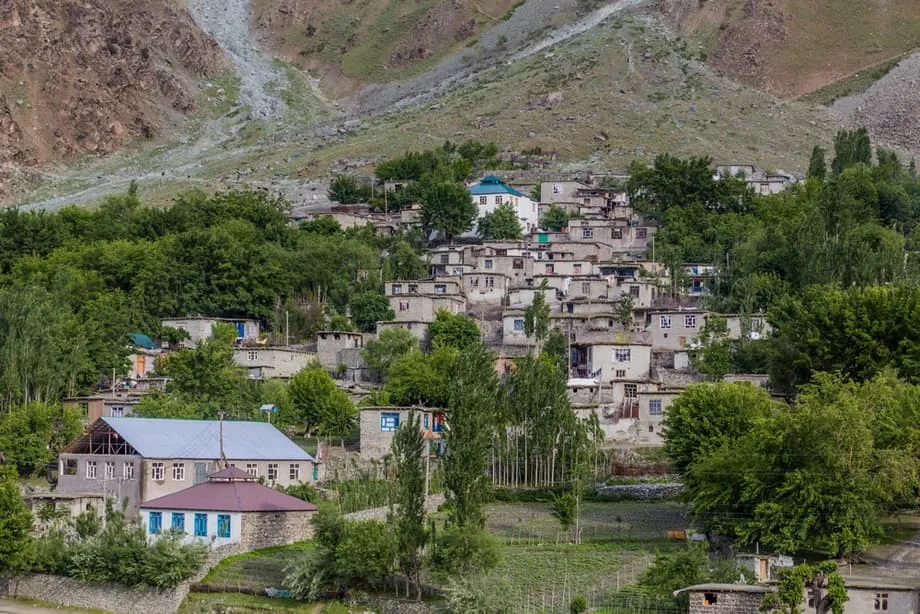
Armed men briefly seized the administration building in Yaftal e Sofla, in Afghanistan's northeastern Badakhshan province, last Friday, raising their own flag and disarming local police. The fighters identified themselves as members of the Homeland Soldiers' Front. They took military vehicles and equipment before withdrawing when government reinforcements arrived several hours later.
Contents
- A district seizure brings local tensions into view
- Gold deposits become a struggle over livelihoods
- Troop movements and clashes spread across the province
- A local commander's removal sharpens the dispute
- Who are the Homeland Soldiers?
- Representation and repression deepen distrust
- Mining tensions reach the Tajik border
- Forced returns add to the pressure on livelihoods
- Control of gold tests the Taliban's authority
- Key Points
The group also claimed attacks in Kishm and Yawan Ragh at about 2 a.m. Taliban authorities said at least seven people were arrested after the operation. Local accounts described searches from house to house that also affected civilians and Taliban members.
The takeover was the first reported seizure of a district administration by an opposition group, even temporarily, since the Taliban returned to power in August 2021. Taliban forces recovered control, but the episode exposed weaknesses in a remote province where disputes over gold, local leadership and livelihoods have put residents and commanders at odds with central authorities.
Taliban Army Chief of Staff Fasihuddin Fitrat visited the district and described the assault as an isolated action by agitators seeking publicity. His visit and the deployment of reinforcements reflected the authorities' treatment of the incident as a security matter.
Local accounts describe a wider struggle. Access to gold deposits, the removal of influential commanders, campaigns to destroy poppy crops and anger at Taliban rule have all contributed to unrest. The district seizure brought those pressures into view at a time when the authorities were also moving troops to protect mining operations elsewhere in Badakhshan.
The Taliban retains national institutions, major cities and the main security apparatus. Its ability to send reinforcements remains a major advantage. In Badakhshan, however, military control sits alongside disagreements about who may earn money from the province's resources and who has the authority to decide.
Gold deposits become a struggle over livelihoods
Badakhshan contains some of Afghanistan's richest gold deposits. For years, families earned money by sifting riverbeds and working deposits with basic tools. Mining on a small scale supported communities with few formal jobs, limited public services and unreliable trade.
Since the Taliban takeover, much of that activity has shifted toward concessions controlled by Taliban officials and foreign companies, especially firms from China, with some Turkish involvement. A concession gives an operator permission to work a particular mining area. For residents who previously worked there themselves, the change can mean losing access to their income.
In Shahr e Buzurg, mining areas once used by local residents have been fenced off and placed under armed guard. Similar activity has been reported in Yaftal, Raghistan, Kuran and Minjan. Residents say they are being pushed away from sites that supported their families.
On July 15, police in Shakai reportedly told local miners to remove their equipment from the Qitqati area within a week. For households without another source of work, that order threatened an immediate loss of earnings.
Abdul Matin Rahimzai, the Taliban administration's mining chief in Badakhshan, warned local forces against interfering with authorized operations. He also said no one could take over mines outside official control. Central authorities have sought to shut allegedly illegal sites and collect mining revenue more directly.
Regulation can provide safety rules and income for the state. Residents, however, say mining contracts are secret, the process for obtaining a licence is unclear and communities receive little benefit. The Taliban is reported to retain at least a quarter of mining revenue. The administration has not published the contracts or detailed earnings, leaving residents without a public accounting of how the money is divided.
Troop movements and clashes spread across the province
A Taliban unit of about 150 fighters reportedly entered Shakai district with advanced weapons, including laser guided equipment, as mining tensions continued. The deployment followed clashes between residents and forces linked to the Taliban, as well as visits by senior officials to several districts.
Earlier accounts described at least two people killed and 10 wounded in fighting connected to mining operations in Shakai. Across Badakhshan, separate clashes associated with poppy eradication, mining and armed resistance reportedly left at least four people dead and 32 wounded. Access to affected districts is restricted, and limited reporting makes independent verification difficult.
Poppy eradication means destroying crops used to produce opium. In communities where farming and informal mining provide essential income, enforcement campaigns can affect the same households already struggling to find work. That helps explain why operations described by the authorities as law enforcement can meet strong local resistance.
The developments unfolded over several periods, with mining restrictions and security operations adding to disputes that had already lasted months:
- August 2021: The Taliban returned to power, after which much of Badakhshan's gold sector moved toward concessions controlled by officials and foreign companies.
- After months of disagreement with central leaders: Supreme Leader Haibatullah Akhundzada removed the influential local commander Juma Khan Fateh from his position.
- July 15: Police in Shakai reportedly ordered miners to clear equipment from Qitqati within a week.
- Last Friday: The Homeland Soldiers' Front briefly seized the Yaftal e Sofla administration building and claimed attacks in Kishm and Yawan Ragh.
- By July 21, 2026: Taliban reinforcements had restored control of the district center, while reports described arrests, searches and further troop movements.
The deployments show the central leadership's capacity to intervene. They also place armed forces directly inside disputes about access to work, mineral income and the position of local commanders.
A local commander's removal sharpens the dispute
Juma Khan Fateh, an ethnic Tajik Taliban commander with influence in Badakhshan, was removed by Supreme Leader Haibatullah Akhundzada after months of disagreement with the central leadership. The dispute reportedly concerned authority and mineral revenue.
Taliban intelligence also detained Musa Kaka, a commander in Nusay district and an ally of Fateh, according to local accounts. Officials later reportedly began dismissing and disarming figures associated with Fateh.
Residents and other local sources described increased troop movements, the removal of several commanders and the collection of weapons previously used to guard mining sites. Those actions reduced the ability of local networks to maintain their own armed control around profitable deposits.
Fateh reportedly placed his forces on alert while instructing them to avoid starting a confrontation. The local commander told his followers:
We will not fire the first shot.
Fateh subsequently reportedly returned to the Darwaz area after renewing his loyalty. His changing position illustrates the uncertainty surrounding relations between influential northern commanders and the Taliban's central leadership.
Kabul has reasons to keep such figures inside its governing structure: they possess local influence and connections. At the same time, the leadership seeks to stop them from retaining independent armed networks or control over valuable mines.
For a local commander, armed followers and access to mining income can provide influence beyond an official job title. For central authorities, those same resources can support a competing center of power. Removing a commander may resolve a dispute over office while leaving followers with weapons, knowledge of the area and reasons to resist.
Who are the Homeland Soldiers?
The Homeland Soldiers' Front remains a little known organization. Some local accounts put its strength at between 1,300 and 1,400 fighters, many of them former members of the Afghan security forces that served the previous government. Other descriptions present it as a looser coalition of former soldiers, activists and residents opposed to Taliban rule.
Qayum Malang, a former special forces commander, is said to lead the group. Its seizure of the Yaftal e Sofla administration building lasted only several hours, and the fighters withdrew when reinforcements arrived. The operation nevertheless gave the organization a visible success and showed its ability to exploit a gap in local security.
Badakhshan has a long history of resistance to Taliban authority. The province borders China, Tajikistan and Pakistan. Along with Panjshir, it remained outside the first Taliban regime's control during the 1990s.
Large Tajik communities and other groups in the province have often viewed the Taliban leadership centered in Kandahar with suspicion. Local identity, former military connections and disputes over livelihoods provide several possible routes through which opposition can organize.
The National Resistance Front and the Afghanistan Freedom Front have also claimed attacks against Taliban personnel and institutions elsewhere in Afghanistan. Their capacity varies between provinces. Coordination between those organizations and the Homeland Soldiers' Front is unknown.
Former security personnel, ethnic networks and local grievances are all part of the opposition activity described in Badakhshan. The brief district takeover gave those forces a public demonstration of action, while the Taliban response showed the limits they face when larger government units arrive.
Representation and repression deepen distrust
The mining conflict also concerns political authority in a province where many residents are not Pashtun. The Taliban recruited Tajik and Uzbek commanders during its military expansion, but senior decisions remain concentrated among loyalists connected to its southern leadership.
A leadership survey cited by regional analysts found that about 90 percent of the senior and middle ranking Taliban figures it mapped were Pashtun. Tajiks accounted for roughly 5.2 percent and Uzbeks about 3 percent. Afghanistan has no dependable recent ethnic census, and the leadership figures are estimates. They illustrate how narrowly power is concentrated within a country with diverse communities.
The Hazara community faces a related pattern of exclusion and repression. In Herat, protests began after Taliban morality police detained women accused of violating dress rules. Taliban forces opened fire during demonstrations in the Jebrail neighborhood.
The United Nations confirmed that a boy aged 11 was killed. Local accounts also reported additional teenage deaths and more than 20 people wounded.
Herat's protests and Badakhshan's mining disputes began for different reasons. Restrictions on daily life drove the demonstrations in Herat, while access to resources and local authority are central to the disputes in Badakhshan. Both reveal how economic pressure and unequal representation can deepen anger toward the authorities.
In communities that already distrust the Taliban, a crackdown can stop a demonstration or disperse a gathering while leaving the underlying grievance unresolved. Losing access to work or seeing an influential local figure removed can make central government action feel more distant from local needs.
Mining tensions reach the Tajik border
Badakhshan's position beside the Pyanj River and its borders with Tajikistan, China and Pakistan gives the gold trade a regional dimension. Industrial mining can bring roads, dams and equipment. It can also change river flows, damage farmland and increase the movement of armed personnel.
In Dovang, Tajik border guards and Taliban fighters reportedly exchanged fire near a mining operation linked to China. One Taliban fighter was reportedly killed and four wounded.
The two sides later held a rare local meeting, with each accusing the other of supporting hostile groups. The dispute reportedly included concerns that mining infrastructure was diverting water toward Tajik territory. A project intended to extract gold had become entangled with arguments about a shared border and the movement of water.
Tajik authorities have maintained limited formal contact with the Taliban while allowing members of the National Resistance Front to travel or remain in Tajikistan. The Taliban has hosted or deployed fighters from Jamaat Ansarullah, a Tajik extremist group, along parts of the border.
Mining therefore adds a valuable commercial asset to an area already affected by security tensions. Roads, guarded sites and water works become part of a border environment where both sides accuse the other of allowing hostile activity.
Gold is attractive to armed groups because it is valuable, portable and relatively easy to move through informal trading routes. Untracked mineral income can pay for weapons, fighters and networks in which money or favors secure loyalty. Direct funding of transnational militant groups through particular mining operations is difficult to verify. The absence of public contracts and independent audits leaves the movement of mining money hard to monitor.
Forced returns add to the pressure on livelihoods
Deportations and forced returns from neighboring countries are adding to Afghanistan's economic strain. Taliban deputy spokesman Hamdullah Fitrat said 4,415 people returned through Afghan border crossings in a single day, including more than 3,800 through Torkham from Pakistan.
The International Organization for Migration reported that Pakistan expelled about one million Afghans in 2025. Many returned to a country where jobs are scarce, aid has fallen and public services are weak.
Some returnees settle in informal camps, including places where government control is limited and surrounding communities have few resources to share. Their arrival creates further demand for work, shelter and services in an economy already unable to meet many residents' needs.
The Council on Foreign Relations reported that nearly 23 million Afghans needed humanitarian assistance in 2025 and that more than 28 percent of the population faced malnutrition. Those figures place the mining disputes within a much larger struggle to earn enough money and obtain enough food.
Mining, poppy cultivation and smuggling provide vital income for many rural households, even when authorities classify the activities as illegal. Closing a mine or destroying a crop can therefore remove a family's means of support before another job is available.
Without replacement work or compensation, enforcement carries an immediate economic cost for residents. In Badakhshan, that cost connects the government's effort to regulate resources with the anger of people who depend on them.
Control of gold tests the Taliban's authority
The brief seizure in Yaftal e Sofla is unlikely by itself to threaten Taliban rule across Afghanistan. The movement recovered the district center and retains the institutions and security forces needed to respond to local attacks.
Badakhshan's unrest matters because several pressures are meeting in the same province. An armed opposition group challenged the government, miners objected to losing access to deposits, a Tajik commander fell out with central leaders, and Taliban units were deployed around mining operations. Border tensions and the economic strain associated with mass returns add further pressure.
Publishing mining contracts, identifying concession owners and auditing revenue would give residents a clearer account of who controls the deposits and where the money goes. Allowing communities to share in legal production could address some of the grievances raised by people excluded from sites they once worked.
Civilian protection and access for independent monitors would also help establish reliable figures for casualties and displacement. Restricted access currently makes it difficult to assess the full human cost of clashes and security operations.
Gold can provide income for the authorities while also becoming a rallying point for their opponents. The central issue in Badakhshan is whether the Taliban can turn military control into administration that local communities accept, in a province where livelihoods, identity and armed influence are closely connected.
Key Points
- The Homeland Soldiers' Front briefly seized the Yaftal e Sofla district administration last Friday before Taliban reinforcements arrived.
- The group also claimed attacks in Kishm and Yawan Ragh. Taliban authorities said at least seven people were arrested.
- Residents say gold concessions and guarded mining areas are cutting them off from essential income.
- Police reportedly ordered miners in Shakai to remove equipment from Qitqati within a week of July 15.
- Juma Khan Fateh was removed amid reported disputes over authority and mineral revenue, while figures associated with him faced dismissal and disarmament.
- A Taliban unit of about 150 fighters reportedly entered Shakai as mining tensions continued.
- A reported clash near a mining operation linked to China in Dovang left one Taliban fighter dead and four wounded.
- Forced returns, scarce jobs and reduced aid add to the economic pressures behind local unrest.
- The Taliban retains control, but unpublished mining contracts and disputes over local authority continue to fuel distrust.