Imported EVs Face a Much Higher Entry Price
Malaysia has raised the minimum on-the-road price for fully imported electric vehicles to RM250,000, approximately USD 57,000, following the end of its four-year import tax exemption on December 31, 2025. The new rules, effective January 1, 2026, also require imported EVs to deliver at least 200 kW of power, equivalent to 272 PS.
Contents
- Imported EVs Face a Much Higher Entry Price
- How the Import and Assembly Rules Work
- Taxes Return, but China Retains a Lower Import Duty
- Why Chinese Production Is Central to the Policy
- Thailand and Indonesia Seek Investment Alongside Imports
- A Different Balance From Western Trade Barriers
- Proton and Perodua Gain Room to Compete
- Chery Proceeds While BYD Reviews Its Plans
- Buyers Face Fewer Affordable Imports and Unresolved Rules
- Key Points
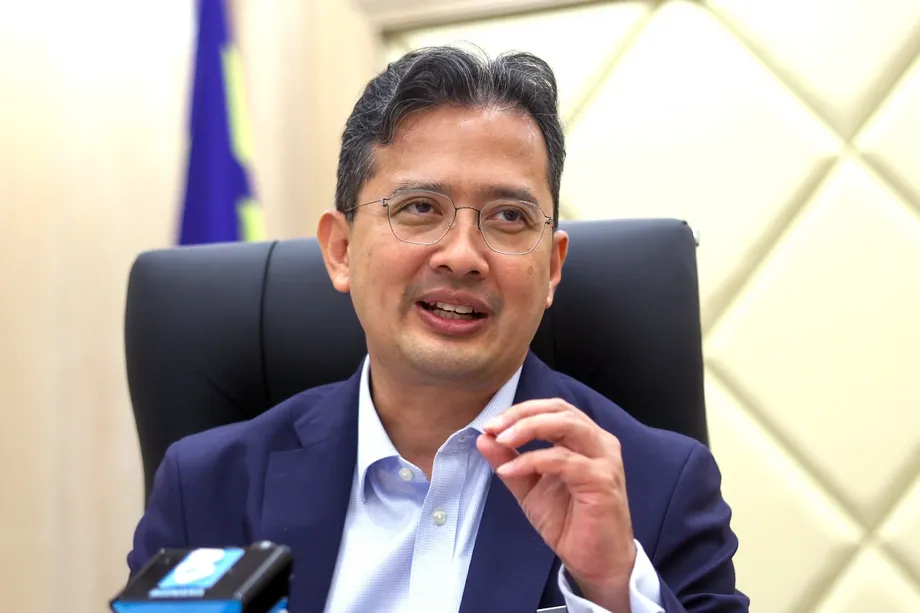
Investment, Trade and Industry Minister Johari Abdul Ghani announced the framework as Malaysia seeks to protect domestic carmakers and encourage foreign manufacturers to build vehicles and components inside the country. The previous minimum price was RM100,000. The new threshold is two and a half times that amount, an increase of RM150,000.
Malaysia introduced the tax holiday four years earlier to speed up the move away from fossil fuels. It helped electric vehicle adoption grow, while allowing Chinese manufacturers to gain substantial market share before local brands established their own electric models. BYD became Malaysia's bestselling electric vehicle brand in 2024.
As of April 16, 2026, the government is pursuing a different balance: fewer affordable vehicles arriving fully assembled from abroad, more investment in local production, and greater protection for Proton and Perodua. Together, those two domestic manufacturers account for roughly two-thirds of Malaysia's total vehicle market.
Foreign companies choosing local assembly face another demanding condition. New investments using completely knocked-down operations must export 80 percent of their Malaysian production, leaving only 20 percent for domestic sales. Those vehicles must also meet a minimum domestic price of RM100,000.
The measures represent one of Southeast Asia's most aggressive protectionist responses to the rapid growth of Chinese EV sales. They reshape both the cars Malaysian buyers can choose and the business case for manufacturers considering a factory in the country.
How the Import and Assembly Rules Work
Malaysia's framework separates completely built-up vehicles, known as CBU, from completely knocked-down vehicles, or CKD. A CBU vehicle arrives as a finished car. A CKD vehicle is assembled in Malaysia from imported components.
CBU electric vehicles must now satisfy two entry conditions: a minimum on-the-road price of RM250,000 and a power output of at least 200 kW. The power requirement measures how much power the vehicle can deliver, rather than how far it can travel on a charge.
The combination filters out the entry level and middle segments that helped drive recent growth in EV sales. A manufacturer seeking to sell a cheaper imported model must reconsider its product plans, while a model below the power threshold also falls outside the new requirements.
New CKD investments face a different set of restrictions. Only one vehicle out of every five produced in their Malaysian factories may be sold locally. The other four must go to export markets. Domestic sales must meet the RM100,000 price floor, keeping these vehicles in higher value segments rather than allowing them to compete directly with the cheapest domestic models.
Johari has stressed that the framework should encourage manufacturers to produce car components in Malaysia for assembly, instead of depending heavily on imported parts. Building a domestic network of suppliers for batteries, semiconductors and other critical components is part of that ambition.
Local assembly and local component production require different investments. A factory can assemble imported parts, while making those parts in Malaysia requires additional suppliers, equipment and production capacity. Critics of the policy say developing that deeper supply chain will take years.
Taxes Return, but China Retains a Lower Import Duty
Fully imported electric vehicles from most countries now face a 30 percent import duty, alongside 10 percent excise duty and 10 percent sales tax. Excise duty is a separate tax on the vehicle, while sales tax is another charge applied under the tax framework.
Vehicles originating from China receive a lower import duty of 5 percent under the ASEAN-China Free Trade Agreement, known as ACFTA. That leaves Chinese manufacturers with a preferential rate even after Malaysia's broad tax exemption has ended.
The RM250,000 minimum price nevertheless limits the usefulness of that advantage for cheaper Chinese models. A lower import duty can reduce costs, but manufacturers must still meet the government's minimum selling price and power requirement to bring in a finished EV.
CKD operations continue to benefit from exemptions from excise duty and sales tax through 2027. The difference in tax treatment gives manufacturers a financial reason to consider local assembly, alongside the government's restrictions on finished imports.
Malaysia's shift can be followed through several key dates:
- Four years before the new restrictions, Malaysia began waiving EV import taxes to encourage adoption.
- In 2024, BYD was Malaysia's bestselling electric vehicle brand.
- On December 31, 2025, the four-year exemption period for imported EVs ended.
- On January 1, 2026, the new restrictions on imported EVs took effect.
- In the first quarter of 2026, Proton's e.MAS 5 recorded sales of 6,701 vehicles.
- Through 2027, CKD operations remain exempt from excise duty and sales tax.
- By 2030, Malaysia aims for EVs to account for 20 percent of total vehicle sales.
Why Chinese Production Is Central to the Policy
Chinese EV manufacturers have built enormous production capacity after years of heavy state support and investment. They now face a saturated domestic market, intense price competition and falling capacity utilization, meaning factories are using less of their potential output.
More than half of China's EV sector is operating at a loss. Manufacturers are seeking buyers overseas for surplus production, often at artificially low prices that local competitors cannot match. Malaysia's restrictions respond to concern that this flow of vehicles could weaken its own manufacturing base.
BYD illustrates the commercial strength of that expansion. During Malaysia's tax holiday, the company shipped thousands of Atto 3 models and other vehicles into the country, establishing a presence before Perodua and Proton could introduce their electric lineups.
Chinese electric vehicles accounted for 85 percent of electric car sales in Thailand and two-thirds of Indonesia's EV market last year. Those shares show how quickly Chinese brands have become central to the region's transition to electric transport.
A warning about overseas expansion by Chinese manufacturers described the risk to their reputation. The speaker's name and role were not identified:
If a company is not doing well in the domestic market, forcibly expanding into overseas markets may not be a wise move and may even cause potential damage to the overall image of Chinese brands.
ASEAN has become the principal outlet for China's excess production capacity. Chinese exports to ASEAN exceeded those to the United States and European Union in 2023, then grew another 12 percent in 2024.
Much of that trade traditionally consisted of intermediate goods, meaning parts and materials used by regional manufacturers to make other products. An increasing share now consists of finished consumer goods, including EVs. These arrive ready for sale and can displace local production, putting manufacturing jobs under pressure.
Thailand and Indonesia Seek Investment Alongside Imports
Thailand, ASEAN's largest automotive producer, has eliminated tariffs on Chinese EVs under ACFTA. Its incentive system also requires manufacturers receiving support to produce locally at least as many vehicles as they import.
That policy has secured more than USD 1.5 billion in Chinese investment, including BYD's largest overseas factory in Rayong. Thailand's approach links access to its market with a commitment to build production capacity inside the country.
Japanese joint ventures have faced pressure as competition changes. Subaru closed its Thai facility, while Suzuki and Nissan announced similar shutdowns by the end of the year. The investment arriving from Chinese manufacturers is occurring alongside disruption for established producers.
Indonesia has used temporary import tax waivers to encourage local assembly. It has also faced criticism that Chinese mining and manufacturing investments leave too little value in the domestic economy.
Indonesian economist Faisal Basri estimates that Indonesia captures only 10 percent of the value added from Chinese mining investments, with little effect on household income in the regions concerned. Value added is the economic value created by an activity, including the income and production benefits retained where it takes place.
Malaysia's 80 percent export requirement goes beyond simply replacing imports with local assembly for domestic buyers. A company investing under the new CKD framework must build a business that can sell most of its Malaysian production abroad.
A Different Balance From Western Trade Barriers
The United States has imposed tariffs of 100 percent on Chinese EVs under Section 301. The European Union has introduced duties that vary by brand and reach as high as 45 percent. Canada and Turkey have adopted similar barriers.
Germany has taken a different approach, recently announcing a subsidy program worth €3 billion that is open to all manufacturers, including Chinese brands. France and the United Kingdom have introduced environmental standards that effectively exclude battery vehicles made in China.
Malaysia is attempting to preserve open trading relationships while limiting market distortion associated with subsidized excess production. Its policy combines a high entry price for finished imports, preferential trade treatment for qualifying Chinese vehicles, and tax incentives for local assembly.
Prime Minister Anwar Ibrahim has stressed Malaysia's desire to remain a neutral and nonaligned location. Protecting strategic domestic industries while navigating international trade tensions is part of that position.
For manufacturers, the practical issue is where to place production. A company with factories elsewhere in Southeast Asia must assess whether a Malaysian plant would add sales or take production away from an existing regional operation.
Proton and Perodua Gain Room to Compete
Proton and Perodua stand to benefit most directly from the restrictions because their combined share is roughly two-thirds of Malaysia's vehicle market. Higher entry requirements for imported EVs reduce competition from cheaper finished vehicles in the segments where domestic manufacturers are building their electric businesses.
Perodua launched its first electric model, the QV-E, after a development program costing USD 200 million. Proton's e.MAS 5 sold 6,701 vehicles in the first quarter of 2026, outpacing BYD's Atto 3.
Proton also benefits from its partnership with China's Geely Holdings, which owns 49.9 percent of the company. That relationship provides access to technology while supporting domestic assembly.
Malaysia's policy therefore creates different routes for Chinese automotive technology. Finished vehicles imported by Chinese brands face tighter entry conditions, while technology supplied through a partnership with a domestic manufacturer can support locally assembled cars.
The government expects local assembly eventually to provide more affordable choices than the current CBU imports. Meeting its 2030 target will depend partly on those vehicles reaching buyers as the market for less expensive finished imports contracts.
Chery Proceeds While BYD Reviews Its Plans
Chery Automobile is continuing with its assembly plant on the outskirts of Kuala Lumpur. Executive vice-president Men Lin Bo confirmed that construction is progressing and production is scheduled to begin this year, initially focusing on hybrid and petrol models.
Chery will benefit from the tax incentives available to CKD operations, including the exemptions from excise duty and sales tax that continue through 2027. Its initial production plans also show that investment decisions under the framework extend beyond electric vehicles alone.
BYD's planned facility in Perak is less certain. The company said it was still reviewing all possibilities and aligning internally over the requirements for production focused on exports. Its final investment decision remains under review.
Industry analysts have pointed to the challenge facing manufacturers that already operate plants elsewhere in Southeast Asia. Committing to Malaysia could redirect production from those facilities, particularly when 80 percent of output from a new Malaysian investment must be exported.
Bermaz Auto, which distributes Mazda and Xpeng vehicles, has already changed its import plans. It shelved plans to bring in the Mazda 6e and EZ60 because of the RM250,000 minimum price.
Datuk Seri Francis Lee Kok Chuan, Bermaz's group chief executive officer, confirmed that the company would instead pursue CKD operations for some models while continuing limited CBU imports for others. Its response illustrates how distributors may divide their lineups between local assembly and premium finished imports.
Buyers Face Fewer Affordable Imports and Unresolved Rules
Malaysian consumers have responded with mixed views. Industry veterans have welcomed the measures as a way to restore a level playing field and prevent domestic manufacturing from being displaced. Online discussion has also shown frustration among potential buyers who expected affordable Chinese EVs to remain available.
The minimum price and power requirements effectively remove budget and middle segment CBU options. Buyers are being directed toward locally assembled alternatives or more expensive imported vehicles.
Automakers typically plan new vehicle introductions over 12 to 24 months. Industry observers warn that abrupt changes make those plans harder to manage, affecting decisions about which models to introduce and whether to import them or assemble them locally.
Malaysian Automotive Association president Mohd Shamsor Mohd Zain confirmed that the industry is seeking clarification from the Ministry of Investment, Trade and Industry, or MITI. The unresolved issue is whether the restrictions apply to new models from brands already operating in Malaysia or only to entirely new market entrants.
Malaysia still aims for electric vehicles to reach 20 percent of total vehicle sales by 2030. Its strategy rests on local assembly supplying more affordable cars while a domestic network of component manufacturers develops.
The immediate change is already substantial: the minimum price for a finished imported EV has risen from RM100,000 to RM250,000, while new assembly investments must find overseas buyers for four-fifths of their output. The next stage depends on how manufacturers adapt their factory plans and product lineups within those conditions.
Key Points
- Malaysia's four-year EV import tax exemption ended on December 31, 2025, with new restrictions effective January 1, 2026.
- Fully imported EVs must have a minimum on-the-road price of RM250,000 and power output of at least 200 kW.
- New CKD investments must export 80 percent of production, with domestic sales subject to a RM100,000 minimum price.
- Chinese vehicles receive a 5 percent import duty under ACFTA, compared with 30 percent for vehicles from most countries.
- CKD operations retain exemptions from excise duty and sales tax through 2027.
- Chery plans to begin production this year, while BYD is reviewing its proposed Perak investment.
- Bermaz has shelved Mazda 6e and EZ60 imports and is considering local assembly for some models.
- Proton and Perodua stand to benefit from reduced competition from cheaper imported EVs.
- The industry is seeking clarification on whether restrictions cover new models from existing brands or only new entrants.
- Malaysia continues to target an EV share of 20 percent of vehicle sales by 2030.