
A Historical Map Halted a Museum Catalogue
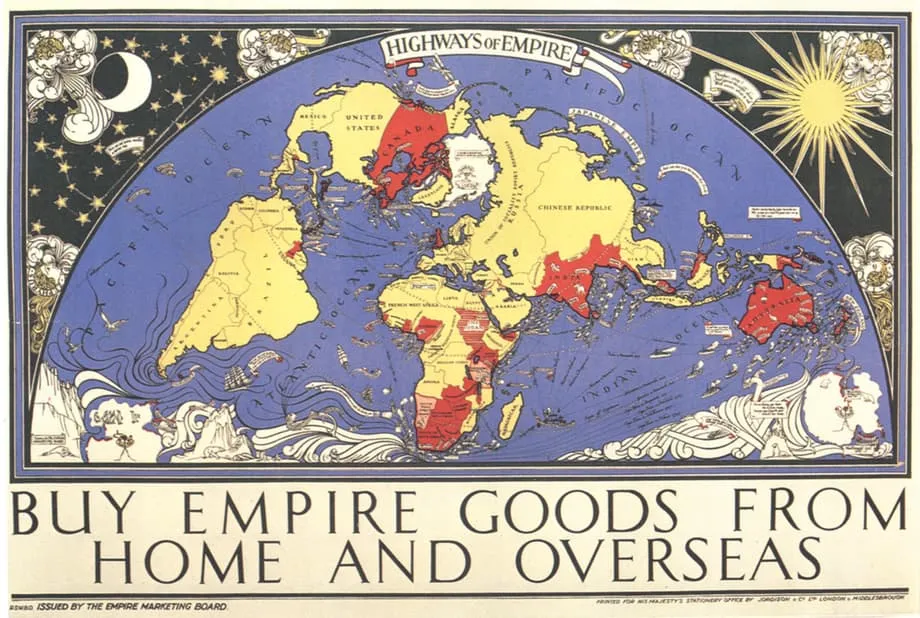
A map from the 1930s showing British imperial trade routes became a censorship problem for the Victoria and Albert Museum because it included China's borders. In November 2024, the museum's Chinese printer said the image had been rejected by China's General Administration of Press and Publication (GAPP), the state body responsible for regulating published content. Printing stopped while museum staff found a replacement.
Contents
- A Historical Map Halted a Museum Catalogue
- What the Printer Told the V&A
- Why the Museum Could Not Move Production
- A Previous Objection to Lenin
- How China's Printing Rules Reach Overseas Books
- The Cost Advantage Behind the Decisions
- The V&A Calls the Changes Minor
- Other British Institutions Give Different Responses
- Why Critics Challenge Small Deletions
- A Wider Dispute Over Cultural Independence
- The Bottom Line
The map was intended for the catalogue accompanying Music is Black, an exhibition that opened at V&A East this week, as of April 16, 2026. It would have accompanied an introduction by Gus Casely-Hayford, director of V&A East. Instead, readers received a photograph of people arriving in Southampton aboard the liner Begoña after a voyage from the West Indies.
Documents obtained through freedom of information requests, which allow people to seek records held by public institutions, reveal that this was not the museum's first encounter with Chinese printing restrictions. A map and a photograph of Vladimir Lenin, the Russian revolutionary and Soviet leader, had also been flagged in the catalogue for the V&A's 2021 exhibition Fabergé: Romance to Revolution.
The decisions bring a practical publishing problem into public view: a British museum can choose an exhibition's subject and commission its catalogue, yet the country where that book is manufactured can require changes to its contents. Chinese printing can cost roughly half as much as domestic alternatives. For cultural institutions managing tight budgets, those savings make the service attractive, while exposing their publications to Beijing's content rules.
What the Printer Told the V&A
C&C Offset Printing, the Chinese company that produces many V&A exhibition publications, told the museum that the trade routes map failed to meet Chinese requirements for depicting the country's borders. Its message identified the image on page 10 and offered two options: delete it or replace it.
In its November 2024 correspondence, C&C explained the rejection and the change it wanted the museum to make:
There is a map on p10 relates to China (there is China border here and we need to use the standard maps from Chinese Government) and GAPP rejected it. Our suggestion is to delete this map or use another image.
The illustration showed China within a wider diagram of British colonial trade networks. Museum staff had expected that contemporary maps showing political boundaries might draw objections. They were surprised that an archival image from the 1930s, included to explain British imperial history, would encounter the same scrutiny.
An unnamed V&A staff member described that frustration in an internal exchange with colleagues, while explaining why production had stopped:
It's a historic map showing British colonial rule so nothing to do with China, just shows China on the map and that seems to be enough to warrant rejection! Printing paused while we amend files … SORRY.
The objection turned an incidental detail in a historical illustration into a production issue for the entire book. The map's original purpose was to show colonial trade, but the printer required its depiction of China to comply with current government standards.
Why the Museum Could Not Move Production
The V&A's production team lost a week while amending the catalogue files. By the time the objection arrived, paper had already been ordered and delivered to the Chinese printer. Moving the job to a European printer was no longer financially viable.
Casely-Hayford was told that the team could not take production out of China and would therefore need another illustration. He responded sympathetically, acknowledging the stress the late changes must have caused the staff preparing the publication.
The replacement photograph of passengers arriving in Southampton from the West Indies allowed the catalogue to proceed. It also changed the historical material available to readers alongside the director's introduction: the image of imperial trade routes was removed, and a photograph of an arrival by sea took its place.
The timing matters to understanding the museum's decision. A printing location can be reconsidered before money is committed, but the correspondence shows how much narrower the choice became after supplies had reached the factory. At that stage, editorial decisions were bound up with spending already incurred and a publication schedule already under pressure.
A Previous Objection to Lenin
The catalogue for Fabergé: Romance to Revolution encountered similar restrictions in 2021. Chinese censors flagged a map and a photograph of Lenin as potentially sensitive. The Lenin image appeared at the beginning of an essay about the exhibition, which examined the history surrounding Fabergé eggs.
A V&A production employee told a curator that the printer could not produce the book with the image included, while acknowledging that the restriction had caught the team unprepared:
The Chinese printer is not able to print the book with the revolution/Lenin image at the start of your essay. I should have foreseen this, but the list of restrictions is constantly updated.
The objection illustrates how the restrictions extended beyond contemporary Chinese political commentary to a historical figure associated with Russia and the Soviet Union. The employee's explanation also describes a moving set of requirements, making it difficult for museum staff to anticipate which material would be accepted.
No specific explanation was given for why the Lenin photograph was considered problematic. The museum's experience nevertheless shows that a publication about an exhibition outside the immediate subject of Chinese politics could still require changes before a Chinese printer would manufacture it.
The chronology connects the two catalogue disputes:
- 2021: A map and a Lenin photograph were flagged during production of the Fabergé: Romance to Revolution catalogue.
- November 2024: C&C told the V&A that GAPP had rejected the historical trade routes map for the Music is Black catalogue.
- During the subsequent amendments: Printing paused, the schedule slipped by a week, and the museum selected a replacement photograph.
- The week of April 16, 2026: Music is Black opened at V&A East.
How China's Printing Rules Reach Overseas Books
China maintains strict controls over maps. Only licensed firms may legally produce maps of Chinese geography, including territories Beijing claims. Historical maps can also face objections when their borders differ from those recognized by modern Chinese authorities.
Taiwan and Tibet are among the subjects that receive close scrutiny under Beijing's content rules. Restrictions also cover references to Tiananmen Square and certain historical figures. A museum catalogue printed in China must pass through those controls even when its intended readers and the institution commissioning it are overseas.
The trade routes illustration shows how the rules can affect historical records. A map preserves the geographical understanding of the period in which it was made. Requiring that image to follow current standards can force a publisher to remove it, replace it or change what readers see.
A former employee of C&C defended the printer's position, explaining that Chinese companies cannot legally print content the government disapproves of. The former employee questioned why that requirement should surprise customers, given China's regulatory framework. From the printer's perspective, accepting a foreign commission still means operating under domestic law.
The Cost Advantage Behind the Decisions
The V&A is one of several major British cultural institutions that use Chinese printers. The British Museum, Tate and the British Library also commission printing in China to manage production costs. Savings can reach 50% compared with domestic alternatives, although prices depend on the individual job.
An unnamed British publisher described receiving a quote from a Welsh printer that was twice the price of the Chinese option. At those prices, the Chinese service would cost half as much. For institutions working within restricted budgets, the difference can determine whether domestic production is affordable.
The publisher also said that printing in China routinely involves delays while material passes through official inspection bodies. Maps and references to Tibet consistently attract scrutiny, requiring production teams to account for checks and possible objections.
The financial attraction and the editorial exposure come from the same decision: where to manufacture the book. Lower printing bills leave more money available within a publication budget, but government inspection can interrupt the schedule or require the removal of material. In the Music is Black case, the paper already delivered to the printer made a late move especially difficult.
The V&A Calls the Changes Minor
The V&A defended the catalogue changes as "minor" and said they did not affect the publications' narrative. The museum said it considers printing locations for individual projects and maintains close editorial oversight when working with Chinese firms.
Museum officials also said they would withdraw production if a requested change appeared problematic. That position leaves the museum responsible for deciding whether a printer's objection is acceptable and whether the publication can proceed without compromising its intended account.
The internal correspondence describes the practical limits on that choice in the Music is Black case. Staff had already committed paper to the Chinese printer, were facing a delay and had been told that moving production to Europe was not financially viable. They resolved the immediate problem by changing the image.
The museum's defense focuses on the narrative retained in the finished books. Critics focus on the historical material removed and the precedent created when an external authority can require such changes. Those are the two central judgments at issue: how much a particular deletion changes a publication, and who gets to decide that the deletion is necessary.
Other British Institutions Give Different Responses
Tate confirmed that it had used Chinese printers for several children's books and exhibition catalogues. It said it had never altered content at a printer's request. The British Library said it had never encountered censorship issues with material it had printed in China.
The British Museum declined to answer questions about how it handles censorship requests concerning at least eight recent publications produced in China. A spokesperson cited commercial confidentiality and offered no further comment.
The British Museum is chaired by George Osborne, the former chancellor who promoted closer economic ties between the United Kingdom and China while in government. Its response left its procedures for dealing with printing objections undisclosed.
The institutions therefore described different experiences with the same broad production market. The V&A acknowledged making changes, Tate denied making changes at printers' requests, and the British Library said it had not encountered censorship problems. The British Museum did not explain how it would handle them.
Why Critics Challenge Small Deletions
Sam Dunning, director of UK-China Transparency, argued that small editorial compromises form part of a wider pattern of transnational repression. In this context, the term describes a state extending censorship and control beyond its borders through economic pressure and institutional relationships.
Dunning warned that accepting small edits can establish a precedent, with the boundary of acceptable compromise shifting over time. His concern is that institutions seeking to preserve cost savings may gradually accept more extensive restrictions on their editorial independence.
Jessica Ní Mhainín, a spokesperson for Index on Censorship, challenged the description of the deletions as minor. Historical maps, she argued, are records of how societies understood geography, power and historical development. Removing them affects the evidence readers can examine, even when a museum believes its broader narrative remains intact.
Ní Mhainín warned that economic dependence on China encourages institutions to censor themselves. She urged cultural organizations to defend their independence and intellectual freedom, echoing concerns from human rights organizations about cultural and historical content being sanitized to meet authoritarian preferences.
The catalogue disputes put those concerns into concrete terms. Museum staff selected historical images for a reason, Chinese authorities objected through the printer, and the books proceeded after material was removed or replaced. Critics regard the acceptance of that process as consequential even when the individual change is small.
A Wider Dispute Over Cultural Independence
Last year, the government run Musée Guimet in Paris faced legal action from four groups supporting Tibet. They alleged that the museum had attempted to erase Tibet's cultural identity from its displays. Lawyers representing the groups described the curatorial decisions as deliberate compliance with Chinese lobbying demands promoted in France.
The Paris allegations concerned museum displays, while the V&A disputes concerned books manufactured in China. Both involve claims that relationships with Chinese entities can bring pressure over how history and culture are presented to audiences elsewhere.
Isaac Stone Fish, a former journalist and China expert, argued that companies continue to underestimate the risks of depending on Chinese supply chains. He said an arrangement in which printing books in China allows Beijing to dictate content changes poses fundamental problems for institutional integrity.
The V&A's experience brings the competing pressures together: cheaper production, government restrictions, money already committed and responsibility for historical accuracy. The museum says its catalogue narratives survived the changes. The correspondence records the material that did not survive, including a historical trade map and a photograph of Lenin.
The Bottom Line
- The V&A removed historical material from exhibition catalogues after objections raised through Chinese printer C&C Offset Printing.
- In November 2024, the printer said GAPP had rejected a map from the 1930s showing British imperial trade routes because of its depiction of China's borders.
- Printing paused for amendments, causing a week's delay. Paper already delivered to the printer made moving production to Europe financially unviable.
- The map was replaced with a photograph of passengers arriving in Southampton aboard Begoña from the West Indies.
- A map and a Lenin photograph also faced objections in the catalogue for the 2021 exhibition Fabergé: Romance to Revolution.
- Chinese printing can offer savings of 50% compared with domestic alternatives, but publications must pass government content checks.
- The V&A called the changes minor. Critics warned that accepting such demands weakens editorial independence and encourages further restrictions.
- Tate denied changing content at printers' requests, the British Library reported no censorship problems, and the British Museum declined to explain its approach.