A Record Low Puts Indonesia Under Pressure
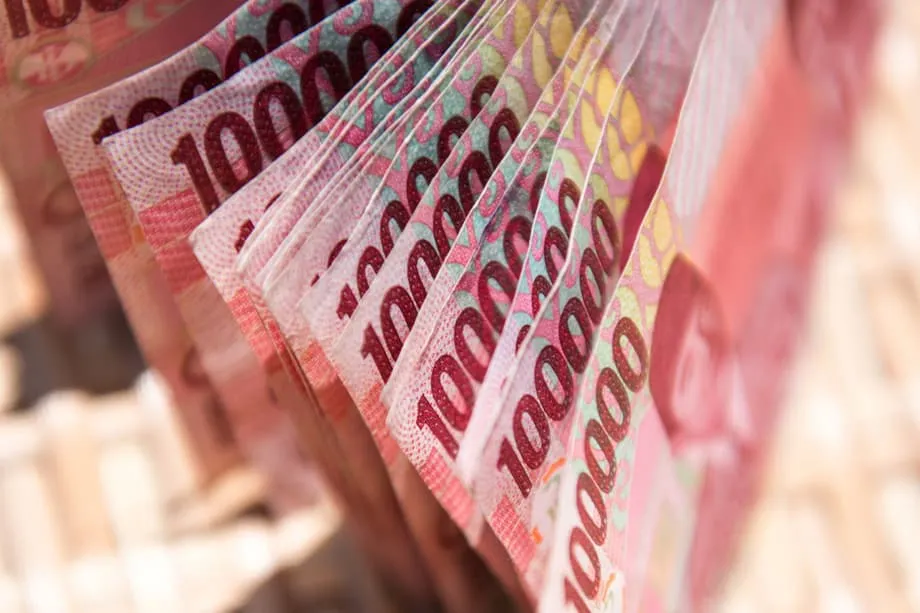
Indonesia's rupiah fell to 17,513 per United States dollar in the middle of May 2026, its weakest recorded level, as expensive oil, departing foreign investment and doubts about domestic economic policy converged. By May 15, the currency had lost roughly 5 percent since the start of the year, testing Bank Indonesia's ability to steady markets and President Prabowo Subianto's administration's ability to maintain confidence.
Contents
- A Record Low Puts Indonesia Under Pressure
- Why Demand for Dollars Keeps Rising
- How the Pressure Built
- Budget Rules and Institutional Trust Face Scrutiny
- Oil Prices Multiply the Subsidy Burden
- Exporters Gain While Importers Feel the Squeeze
- Bank Indonesia Tries to Defend the Currency Without Raising Its Benchmark
- Falling Reserves Limit the Room for Intervention
- Why Today's Risks Differ From 1997
- Two Currency Scenarios and an Energy Response
- The Bottom Line
The breach of 17,500 rupiah per dollar carries particular weight in a country shaped by the Asian Financial Crisis of 1997 to 1998. Today's financial system has stronger protections, but the latest decline is already putting pressure on fuel subsidies, businesses that import materials and companies repaying debt in dollars.
Foreign capital began leaving early: outflows reached $1.6 billion in the first three weeks of January. The United States Dollar Index subsequently strengthened as investors sought assets considered safer during geopolitical turmoil. Emerging market investments became less attractive, while Indonesia faced an expanding need for dollars to buy energy and meet overseas payments.
Currency and commodities observer Ibrahim Assuabi said tensions around the Strait of Hormuz remained high despite official statements that hostilities had ended. A United Arab Emirates strike on an Iranian refinery and continuing blockages of oil shipments added to demand for dollars. Critics have accused monetary authorities of an "ostrich policy," arguing that their assurances of stability downplay worsening conditions.
Indonesia's economy grew 5.61 percent in the first quarter, yet that expansion failed to restore market confidence. Government spending and seasonal consumption drove the increase more than productive investment, leaving investors concerned about how durable the growth would be.
Why Demand for Dollars Keeps Rising
Indonesia's currency weakens when demand for dollars outpaces the supply entering the country. Foreign investors buying Indonesian shares and bonds create demand for rupiah. When they sell those investments and move their money abroad, the process reverses. Companies importing goods or repaying foreign debt also need dollars, adding pressure when investment flows are already retreating.
The current account records trade in goods and services, together with income flowing across borders. Indonesia has recorded persistent deficits outside brief commodity booms, meaning these transactions have usually required more foreign currency than they brought in. Even the relatively modest current account deficit of $1.5 billion in 2025 left the country exposed to a new external shock.
The war in Iran and disruptions around the Strait of Hormuz have provided that shock. Blockages affecting one of the world's critical energy routes have removed up to 100 million barrels of crude supply from global markets each week, pushing Brent crude toward $110 a barrel. Indonesia, a net oil importer, must consequently find more dollars to pay for fuel.
United States interest rates add another source of pressure. The Federal Reserve's rate stands at 3.75 percent, while the yield on Treasury bonds maturing in 10 years is 4.47 percent. Those returns narrow the advantage offered by Indonesian investments and encourage investors to hold dollar assets during uncertainty.
Corporate dividend distributions around the middle of the year, foreign debt repayments, the pilgrimage season and import cycles increase seasonal demand for foreign exchange. According to the Financial Services Authority, capital outflows reached $990 million in April 2026, the highest in Southeast Asia that month. Indonesia is therefore facing both money leaving its financial markets and rising dollar requirements in its economy.
How the Pressure Built
Indonesia's latest currency decline developed over several months, with changes in fiscal leadership, investment flows and market access adding to the energy shock. The main developments trace a sequence from last year's bond sales to this month's record exchange rate.
- In September 2025, longtime Finance Minister Sri Mulyani Indrawati was abruptly replaced by Purbaya Yudhi Sadewa, an economist focused on growth. The largest government bond selloff of the year occurred that month.
- Across 2025, foreign investors sold roughly $6.4 billion of Indonesian government bonds, while the budget deficit reached 2.92 percent of gross domestic product.
- In the first three weeks of January 2026, capital outflows reached $1.6 billion.
- Earlier in 2026, Fitch and another major rating agency changed Indonesia's sovereign outlook from stable to negative.
- In April 2026, capital outflows reached $990 million and foreign exchange reserves fell to $146.2 billion.
- In May 2026, MSCI removed 18 Indonesian equities from its benchmarks, and the rupiah reached 17,513 per dollar by the middle of the month.
The sequence helps explain why stronger quarterly growth did little to calm markets. Investors were weighing immediate economic activity alongside concerns about government spending, institutional independence and their ability to invest in Indonesian shares with confidence.
Budget Rules and Institutional Trust Face Scrutiny
President Prabowo's government recorded a 2025 budget deficit equivalent to 2.92 percent of GDP, the widest in two decades outside the pandemic period. Indonesian law limits the annual deficit to 3 percent of GDP and public debt to 60 percent. Those limits have served as anchors for investor confidence since the late 1990s.
Speculation that the rules might be relaxed to accommodate expensive welfare commitments, including a $20 billion free school meals initiative, has unsettled bond investors. The replacement of Sri Mulyani by Purbaya sharpened concerns about whether the government's drive for growth would be accompanied by sufficient spending restraint.
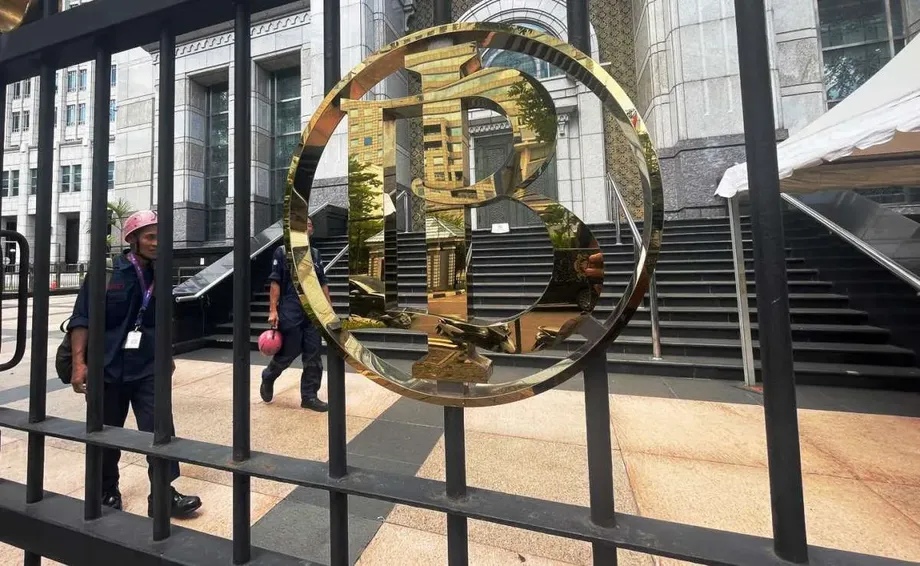
Bank Indonesia faces scrutiny over its own independence. The appointment of a nephew of the president as a deputy governor, together with a burden sharing arrangement under which the bank agreed to help fund government programs such as affordable housing, has renewed concerns about political influence over monetary decisions.
Parliament is also deliberating a bill that would strengthen the central bank's role in supporting economic growth. Such a responsibility could compete with its traditional objectives of price and currency stability. Government and central bank officials have repeatedly denied that monetary policy is being politicized, while investors continue to price their concerns into financial assets.
MSCI's removal of 18 Indonesian equities from its benchmarks in May was larger than authorities expected. The index provider cited concentrated shareholding and limited free float, the portion of a company's shares available for public trading. Funds adjusting their portfolios to follow the revised indexes added selling pressure and increased the supply of rupiah in currency markets.
Fitch and another major rating agency revised Indonesia's sovereign outlook from stable to negative earlier in 2026, citing policy uncertainty and the fiscal trajectory. A negative outlook signals concern about the direction of creditworthiness. The deterioration adds to investor caution and pressure on borrowing costs.
Oil Prices Multiply the Subsidy Burden
Indonesia's position as a net oil importer connects the currency decline directly to government finances. Oil bought in dollars becomes more expensive when crude prices rise. A weaker rupiah then increases the local currency cost of the same purchase, creating two pressures at once.
State owned Pertamina, which accounts for 69 percent of national oil production, operates within a system of regulated fuel prices. For Pertalite, sold at a subsidized retail price of 10,000 rupiah per liter, the government reimburses the difference between that price and procurement costs.
The reference formula uses the Mean of Platts Singapore index and Bank Indonesia's dollar buying rate from the previous month. Consequently, rupiah depreciation increases the subsidy bill even if the dollar price of crude stays unchanged.
The 2026 budget allocated 381.3 trillion rupiah for energy subsidies using assumptions of $70 oil and an exchange rate of 16,500 per dollar. Oil near $100 and a rupiah approaching 17,500 could add more than 200 trillion rupiah to the subsidy burden. Compared with the budget assumptions, $100 oil is about 43 percent more expensive, while 17,500 rupiah per dollar makes each dollar cost about 6 percent more.
Finance Minister Purbaya has acknowledged that an average oil price of $92 a barrel could push the deficit to 3.6 percent of GDP, above the legal ceiling. The government has capped subsidized fuel purchases at 50 liters per private vehicle per month and reduced the free nutritious meal program from six days to five days a week. Those measures are expected to save roughly 20 trillion rupiah, described as one fifth of the required savings.
Electricity adds another fiscal burden. State electricity company Perusahaan Listrik Negara, or PLN, must make fixed capacity payments to independent power producers regardless of whether their electricity is dispatched. That structural gap costs an estimated 33 trillion rupiah annually. Government compensation to PLN reached $11 billion in 2024, consuming 5 percent of the national budget.
Rising fossil fuel costs leave less room for investment that could expand production and generate future income. They also increase pressure to borrow to fund consumption and compensation payments, while the government is already operating close to its deficit limit.
Exporters Gain While Importers Feel the Squeeze
Commodity exporters can benefit from a weaker rupiah because their sales earn dollars while many operating expenses are paid in local currency. Coal, crude palm oil, nickel and natural gas businesses gain more rupiah when they convert their overseas revenue. Tourism operators may also benefit as Indonesia becomes cheaper for foreign visitors.
Economist Paul Krugman's balance sheet channel explains the other side of that movement: exchange rates change the local currency value of assets, income and debts. A company earning rupiah but owing dollars needs more local currency to meet the same repayment when the rupiah falls.
Manufacturers importing raw materials face a similar squeeze. Pharmaceuticals, cosmetics, steel and electronics are among the industries exposed to rising import costs, at a time when consumer demand is softening. Businesses must decide how much of the increase to absorb and how much to pass on to customers.
Bank Indonesia's Retail Sales Survey predicted that April 2026 sales would fall 1.91 percent from a year earlier. Respondents also expected further weakness over the following three to six months. Higher prices could therefore reduce sales volumes, while keeping prices unchanged would compress profit margins.
Stagnant household incomes make imported inflation especially difficult to absorb. Inflation driven by supply costs means goods become dearer because production and imports cost more, rather than because customers are buying more. Falling purchasing power can encourage companies to postpone expansion and pursue efficiency measures, including layoffs.
Indonesia still has a trade surplus, but import growth of 7.18 percent in 2026 has outpaced export growth of just 0.90 percent. That imbalance in growth means the real economy is generating insufficient additional foreign exchange to offset corporate and government dollar demand.
The Jakarta Composite Index has fallen more than 20 percent since the start of the year, making it one of Asia's worst performers. Falling share prices also reduce investor wealth, adding another restraint on spending and confidence alongside the currency's decline.
Bank Indonesia Tries to Defend the Currency Without Raising Its Benchmark
Bank Indonesia has held its benchmark interest rate at 4.75 percent while inflation stands at 2.42 percent, within its target. Raising the rate could make rupiah investments more attractive relative to dollar assets, but it would also increase borrowing costs for an economy dependent on consumption and showing limited strength in productive investment.
The monetary trilemma, sometimes called the impossible trinity, describes the competing goals involved. A country cannot simultaneously maintain a fixed exchange rate, independently set monetary policy and allow capital to move freely. Indonesia's floating currency permits adjustment, but protecting the rupiah still creates tension with keeping credit affordable and maintaining open financial flows.
The central bank has deployed seven stabilization measures. They include more intensive intervention in the spot foreign exchange market, purchases of government securities in the secondary market and increased activity in non deliverable forward markets, or NDF markets.
Spot transactions exchange currencies at current prices. NDF contracts let participants manage exchange rate exposure through a later cash settlement, while swaps exchange currencies with an agreement to reverse the transaction. These tools give the bank several ways to influence conditions beyond immediate dollar sales.
Bank Indonesia has also increased the interest offered on Bank Indonesia Rupiah Securities, known as SRBI, to attract capital without changing its benchmark rate. Senior Deputy Governor Destry Damayanti pledged that the bank would go all out to defend the currency through intervention around the clock in offshore and onshore markets.
The thresholds for domestic NDF and swap transactions were raised from $5 million to $10 million each to ease pressure on the spot market. Destry also underlined efforts to raise rates on rupiah notes with short maturities, strengthening the interest rate structure while leaving the main policy rate unchanged.
Falling Reserves Limit the Room for Intervention
Bank Indonesia's foreign exchange reserves fell to $146.2 billion in April from $148.2 billion in March, the fourth consecutive monthly decline. The remaining stock covers roughly 5.8 months of imports, but repeated intervention draws on a finite pool of foreign currency.
Josua Pardede, chief economist at Permata Bank, explained that continuous readiness can help contain sudden market pressure while strong demand for dollars continues to push the currency lower.
Bank Indonesia being ready around the clock does not prevent the rupiah from potentially weakening sharply. Even so, if the market faces a fresh wave of dollar demand from importers and foreign investors reducing risk, the central bank can slow the move far more easily than it can fully reverse it in one session.
The bank's measures can buy time for other policy adjustments. A deeper depreciation and further reserve losses could nevertheless increase pressure for a benchmark rate rise. That pressure would become stronger if higher administered fuel prices, meaning prices set or controlled by the government, pushed inflation above target.
Why Today's Risks Differ From 1997
Indonesia entered the Asian Financial Crisis with a rupiah pegged at an artificially high value against the dollar. When the government was forced to float the currency, the resulting exchange rate collapse involved a movement of more than 500 percent. Today's rupiah trades freely, allowing adjustment to occur gradually rather than through the abrupt abandonment of a peg.
Total public and private external debt now equals about 30 percent of GDP, and most has longer maturities. That repayment profile is more manageable than the dollar borrowing that overwhelmed politically connected conglomerates three decades ago. Banks also have stronger capitalization and tighter regulatory oversight, reducing the risk of widespread collapse.
Indonesia's continuing vulnerability is its dependence on foreign capital alongside current account deficits. Morgan Stanley grouped it among the Fragile Five emerging markets in 2013 for those reasons. In the present episode, Brazil and South Africa have seen their currencies strengthen, while Indonesia and India remain under pressure.
The divergence shows how tightening global liquidity can affect countries differently. Indonesia's present risk is a prolonged combination of fiscal stress, imported inflation and shrinking policy room, leaving the government repeatedly responding to shocks rather than preventing them.
Two Currency Scenarios and an Energy Response
Analysts have outlined a baseline in which Middle East tensions persist without an escalation that fully blocks the Strait of Hormuz. In that scenario, the rupiah could consolidate between 17,550 and 17,700 per dollar, with intervention and modest policy adjustments limiting a disorderly decline while volatility stays elevated.
An adverse scenario involves a prolonged closure of the strait and oil above $120 a barrel. The rupiah could then weaken to between 18,000 and 18,300, placing greater strain on subsidies, overseas debt repayments and corporate balance sheets. These ranges are conditional forecasts; the outcome depends on energy disruption and policy responses.
Restoring confidence requires credible fiscal discipline, transparent capital market governance and a clear commitment to central bank independence alongside currency intervention. Reducing dependence on imported fossil fuels would also address one of the pressures connecting overseas conflict to domestic budgets.
President Prabowo has ordered faster conversion from diesel to solar power, targeting 100 gigawatts of new capacity to be executed by state wealth fund Danantara across 30 priority locations. Redirecting subsidies for electricity generated from coal toward renewable deployment could reduce the import bill over time and attract private capital into clean energy. The immediate currency outlook remains closely tied to Hormuz developments and Federal Reserve decisions in Washington.
The Bottom Line
- The rupiah reached a record low of 17,513 per dollar in the middle of May 2026, losing roughly 5 percent since January.
- Oil disruption, attractive dollar returns, seasonal payments and capital outflows are increasing demand for foreign currency.
- The 2025 deficit reached 2.92 percent of GDP, close to the 3 percent legal ceiling, while higher energy costs threaten further spending pressure.
- Bank Indonesia has kept its benchmark at 4.75 percent while intervening across markets and increasing SRBI returns.
- Foreign exchange reserves fell to $146.2 billion in April, covering roughly 5.8 months of imports.
- Commodity exporters and tourism may benefit, while importers, businesses with dollar debts and households face rising costs.
- Analysts outline a baseline range of 17,550 to 17,700 per dollar and an adverse range of 18,000 to 18,300 if Hormuz disruption worsens and oil exceeds $120.
- Stronger banks and longer debt maturities distinguish today's pressure from 1997, but fiscal strain and imported inflation remain serious risks.