
The Human Cost at the Heart of a National Crisis
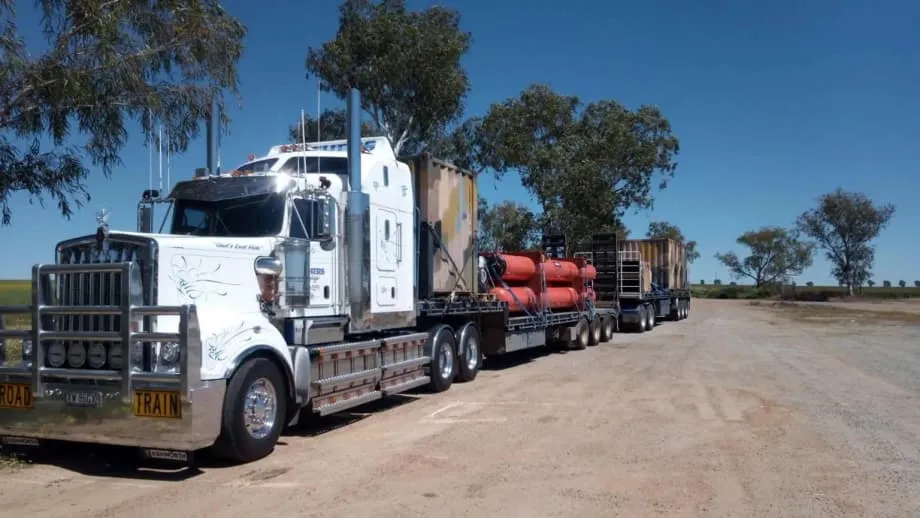
Aaron Fischer spent another sleepless night staring at spreadsheets. The owner-operator of a trucking company based in Howlong, a border town between New South Wales and Victoria, was running the numbers for the third time. His fuel bills had doubled. Where a tank of diesel once cost A$3,600, he now pays A$7,500. For a business running more than a dozen road trains across the 1,200km Nullarbor Plain each week, the mathematics had become terrifying. "I was laying in bed the other night with my laptop, just running through numbers," he tells reporters. "I need to know what I've got coming in and going out to make sure my maintenance bills are right, my fuel bills are fine, my tyre bills are good."
Contents
- The Human Cost at the Heart of a National Crisis
- From Global Conflict to Empty Fuel Bowsers
- The Diesel Paradox: Why Truckers Cannot Simply Stop Driving
- Government Responses: Loans, Excise Cuts, and Public Transport Relief
- The Cascade Effect: From Farm Fields to Hospital Wards
- Years of Recovery: No Return to the Previous Normal
- Industrial Tensions and Electric Alternatives
- The Bottom Line
Fischer is not alone. Across Australia, freight operators face existential threats as diesel prices reach unprecedented levels. According to the Australian Institute of Petroleum, the national average price of diesel hit 312.7 cents per litre, up from 180.2 cents before the conflict began. For Fischer, this means monthly fuel expenditure has exploded from A$150,000 to A$300,000. The cash flow crisis is acute. Operators typically wait 60 days for payment, meaning he must spend A$600,000 before seeing returns. "I've got to carry the business through for another two months before I see any of that money," he says. "This is where a lot of people are going to come unstuck."
From Global Conflict to Empty Fuel Bowsers
The crisis rippling through Australia's trucking industry traces back to February 28, when Iran announced the closure of the Strait of Hormuz following the outbreak of war. This narrow waterway facilitates the transport of roughly 20% of the world's oil. While a temporary ceasefire has since been announced, with Iran pledging safe passage for ships, the damage to global energy infrastructure has already been done. Prime Minister Anthony Albanese recently traveled to Singapore, a crucial refining hub, to firm up fuel supplies amid the chaos.
However, analysts warn that reopening the strait will not magically resolve the shortage. Iran's missiles targeted not only shipping lanes but the oil and gas infrastructure of neighboring nations including Saudi Arabia, Qatar, the United Arab Emirates, and Kuwait. Repairs to refineries and pipelines will take months, if not years. The war effectively removed approximately 11 million barrels per day from the market, roughly halving the flow through the strait. Even with safe passage guaranteed, insurance rates and shipping costs remain prohibitively high, while damaged facilities limit actual supply.
There's been some significant damage done to oil export infrastructure, including the Pearl GTL plant and about a third of the Gulf Nations' refineries. That means two to three million barrels a day of capacity will not come back online until repairs are done, which could take months, if not a few years.
This structural damage explains why Australia faces sustained pain despite diplomatic breakthroughs. The nation imports approximately 90% of its liquid fuels, largely from Singaporean and South Korean refineries. When those refiners struggle to secure crude from the Middle East, Australian bowser prices surge.
The Diesel Paradox: Why Truckers Cannot Simply Stop Driving
While urban motorists can reduce driving or switch to public transport, Australia's freight operators have no such luxury. This inflexibility explains why diesel prices have spiked faster and higher than petrol, creating a structural crisis that threatens to halt the movement of goods. Diesel serves as the economic fuel of global commerce, powering ships, trains, heavy equipment, and the trucks that move 90% of everyday goods.
Unlike petrol, which operates largely in regional markets with seasonal demand patterns, diesel is globally traded and priced. When a chokepoint like the Strait of Hormuz closes, the impact ripples through diesel markets worldwide. Inventories of distillate fuels typically run tighter than gasoline stocks, leaving little buffer when supply disruptions occur. Australia's specific vulnerability is acute. Surprisingly, the nation is the world's single largest importer of diesel, though not the largest consumer.
The mining sector accounts for approximately 35% of national diesel use through trucks and backup generators at remote sites. Farmers rely on it for tractors and transport. Long-haul truckers like Fischer traverse the Nullarbor where fuel stations sit 200km apart, and reports of diesel shortages along this route have already caused headaches for drivers. "We've had a few [drivers] that went to put fuel in and they've had none," Fischer notes. His road trains carry everything from mining equipment to bottled water and mail, burning up to 2,500 litres per trip depending on the load.
Michael Webb, one of Fischer's drivers, recently completed a 3,600km east-to-west run across the Nullarbor, cutting through Victoria and South Australia to Perth. "I've never driven a truck that's cost this much to fill up," the 33-year-old veteran says. "It's out of control."
Government Responses: Loans, Excise Cuts, and Public Transport Relief
Faced with panic buying and widespread anxiety, Prime Minister Anthony Albanese delivered a rare three-and-a-half-minute national address, urging Australians to "think of others" when using fuel. He asked those with alternatives to choose public transport, saving supplies for "people who have no choice but to drive." The government announced A$1 billion in interest-free loans for transport and freight sectors, though operators say this misses the mark.
Alex Randall from freight carrier Loadshift argues that loans simply add debt to businesses already drowning. "If you're a small carrier whose fuel bill has just doubled and your customers are cancelling jobs, the last thing you need is more on the books," he states. Instead, operators need direct payments or faster help with fuel costs.
The government halved the fuel excise by 26.3 cents per litre, with states adding further cuts totaling 32 cents, yet prices soared again within weeks. This failure stems from how Australian fuel pricing works. While crude oil prices eased slightly, local prices are set off international refined-fuel benchmarks. Diesel is priced off the Singapore gasoil benchmark, which has risen far more than petrol benchmarks because 60-70% of crude processed by Singapore's refineries comes from the Middle East. When these refineries source oil from elsewhere, they incur additional transport costs that get passed to Australian importers.
Some states have taken alternative approaches. Victoria and Tasmania made public transport free throughout April and until June respectively, aiming to reduce private vehicle demand. Victoria Premier Jacinta Allan stated the measure would "ease immediate pressure on households," while Tasmania's plan includes free school bus services. Other states, including New South Wales, opted to conserve resources to manage anticipated prolonged demand increases.
The Cascade Effect: From Farm Fields to Hospital Wards
The diesel crisis extends far beyond trucking depots. Modern Australian agriculture runs on diesel, and farmers now report deliveries slowing or stopping. The logic is stark: no diesel means no tractors, no planting, and eventually no food production. This connects fuel security directly to food security. When tractors cannot harvest crops or transport cattle, supermarket shelves empty and prices rise.
The impact cascades through healthcare as well. Hospitals face mass shortages of essential medical products such as gloves and syringes as supply chains buckle. Medical suppliers warn that Australia's healthcare system could buckle with no guarantee critical medicine stockpiles can be maintained. The Sydney Fish Market has introduced a levy to help fishermen battling higher diesel costs, while farmers urge supermarkets to pay higher prices for produce to cover their soaring fuel bills.
Urban data reveals the bifurcation of this crisis. Traffic has fallen 20% on major Sydney highways and Melbourne's Tullamarine Freeway as private motorists cut back. Weekend trips across Sydney's Harbour Bridge dropped from 144,000 to 89,000 daily. Yet freight traffic cannot decline, because, as driver Terry Snell notes, "Everything that you get has come off a truck at one point, whether it's your food, your drinks, the shirt you're wearing, the phone you're using." The 68-year-old veteran has reduced his workload from weekly to fortnightly runs because profit margins have become "very slim."
If we don't get this problem sorted and get it sorted very quickly, we are going to have a supply chain crisis.
Years of Recovery: No Return to the Previous Normal
Analysts warn Australians to prepare for years, not months, of elevated fuel prices. Energy analyst Saul Kavonic predicts that even with a ceasefire holding, oil markets face a fundamentally different outlook. "This is not an egg you can just unscramble," he explains. "For oil markets, there's no returning to the pre-war scenario." The extensive damage to Middle Eastern energy assets means two to three million barrels per day of refining capacity will remain offline for extended periods.
Compounding these concerns, Australia holds only 39 days worth of petrol and roughly 30 days of diesel and jet fuel in strategic reserves. The nation has looked beyond typical Asian trading partners toward the United States and Europe to secure supplies. However, global competition for remaining fuel stocks intensifies daily. "We're still living off the fuel that left the Strait of Hormuz before the war began," Kavonic notes. "The real crunch-point will come at the end of the month and in May. Then we'll start to see increased competition from other nations in Asia and globally, who will all be trying to scramble and secure the last little bits of fuel that are left."
William Hawkes, who started his trucking business just three months before the crisis began, illustrates the timing catastrophe. He has been forced to re-quote all jobs at rates one-third higher, straining new client relationships. When moving modular homes from Bendigo to Broome, a 5,300km journey, his drivers faced fuel shortages on the Nullarbor requiring rerouting that added hours to the days-long trip. His profit margin remains static while work volume plummets as clients cancel or delay jobs.
Industrial Tensions and Electric Alternatives
As costs mount, industrial relations have frayed. The Transport Workers Union filed proposals with the Fair Work Commission seeking new contractual arrangements requiring weekly reviews of freight rates to account for rising fuel costs. Employers fiercely oppose the plan. Australian Industry Group Chief Executive Innes Willox called it "deeply misguided, confusingly complex, and frankly unworkable," warning it would create "a new nightmare for industry to navigate" during an existing crisis.
Long-term solutions may lie in electrification, though transition timelines remain challenging. Australia currently operates only 629 battery electric buses compared with 42,800 diesel models, representing just 1% of the heavy fleet. By comparison, China runs 80% electric urban buses, the Netherlands 25%, and the UK 12%. The Bus Industry Confederation argues prioritizing electric buses would enhance fuel security while reducing emissions. "Each electric bus is powered by 100% renewable electricity produced in Australia, they are cheaper to operate and not reliant on foreign fuels," says ACT Transport Minister Chris Steel.
Heavy transport electrification lags further behind. Iron ore magnate Twiggy Forrest has invested heavily in heavy-duty electric mining machinery, replacing large diesel volumes, and Chinese miners have pursued similar routes. However, for long-haul truckers crossing the Nullarbor, electric alternatives remain distant. Battery technology currently cannot support the distances, loads, and remote charging infrastructure required for Australia's vast continental freight routes.
The Bottom Line
- Diesel prices have doubled since February, reaching over 312 cents per litre, forcing some trucking companies to cut operations by 50%.
- Australia imports 90% of liquid fuels, leaving the nation vulnerable to the Iran war's disruption of the Strait of Hormuz and damage to regional refineries.
- Despite government fuel excise cuts of 32 cents per litre, diesel prices continue rising due to Singapore gasoil benchmark pricing and damaged Middle Eastern infrastructure.
- The crisis threatens food security as farmers face diesel delivery shortages, and hospitals report critical medical supply shortfalls.
- Analysts warn oil markets may take years to recover to pre-conflict levels, with two to three million barrels of daily refining capacity offline indefinitely.
- Victoria and Tasmania have made public transport free to reduce demand, while the federal government offered A$1 billion in interest-free loans that operators say add unsustainable debt.
- Electric alternatives remain limited, with only 1% of Australia's bus fleet electrified and heavy freight electrification still technologically challenging for long-haul routes.