
Six Arrests Put a Major Welfare Promise Under Scrutiny
Indonesia's Attorney General Office has named six suspects in a corruption investigation into President Prabowo Subianto's free nutritious meal program, including its former agency chief, two former deputies, two businessmen and a foundation chairman. The investigation covers allegedly rigged kitchen approvals, inflated purchasing contracts and more than 21,000 electric motorcycles bought for over one trillion rupiah, many of which remained unused in warehouses for months.
Contents
- Six Arrests Put a Major Welfare Promise Under Scrutiny
- How the Investigation Expanded in June
- Why the Electric Motorcycles Became a Flashpoint
- Preserving Evidence While Keeping Assets Available
- Kitchen Approvals and Alleged Payments
- Political Connections Around the Foundation Network
- Food Safety and Ingredient Spending Under Pressure
- Protests and Calls for Wider Accountability
- Prabowo Promises Action as BGN Changes Priorities
- The Essentials
By July 17, 2026, the scandal had brought together concerns over public spending, political connections and the safety of meals served to children. At least 33,000 food poisoning cases have been reported among schoolchildren since the program began in early 2025. Student protests and demands to suspend the initiative have followed, while the government insists it will continue with changes to its management and priorities.
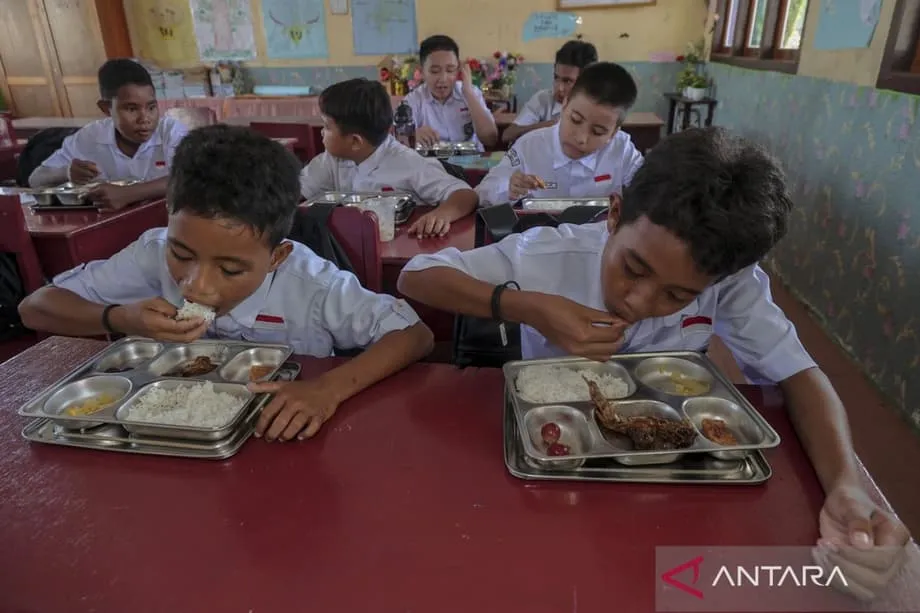
Prabowo launched the program to combat malnutrition by providing daily meals to nearly 90 million schoolchildren and pregnant women across the Indonesian archipelago. Malnutrition means the body does not receive the nutrients it needs to grow and stay healthy. The initiative turned a central campaign promise into one of the country's most ambitious social welfare programs.
The annual budget was described as approximately 270 trillion rupiah, or roughly $15 billion, with projected costs of $28 billion through 2029. The specific allocation cited for 2026 is 268 trillion rupiah, alongside an original target of 82.9 million recipients. New leaders at the National Nutrition Agency, known as BGN, now expect spending to fall below that allocation as they focus on food quality, remote regions and using existing facilities.
Prosecutors allege that officials manipulated procurement and the system used to approve kitchen operators, directing public money toward foundations that failed to meet eligibility requirements. The allegations involve both the purchase of equipment and decisions about which organizations could participate in the program.
How the Investigation Expanded in June
The Attorney General Office opened its investigation in early June. Its first arrests targeted the senior leadership of BGN, less than 24 hours after Prabowo dismissed three officials over failures in governance and food quality standards.
On June 3, investigators detained former BGN head Dadan Hindayana and two former deputies, retired police inspector general Sony Sonjaya and retired lieutenant general Lodewyk Pusung. Prosecutors accuse the three of manipulating procurement procedures and steering contracts toward foundations unqualified to operate the program's community kitchens.
The sequence of dismissals, arrests and inspections unfolded as follows:
- June 2: Prabowo dismissed Dadan, Sony and Lodewyk. State Secretary Prasetyo Hadi announced the decision, citing failures in governance and food quality standards.
- June 3: Investigators detained the three former BGN leaders.
- June 12: Investigators arrested businessman Asep Yusuf Somantri, described as a close associate of Sony, over alleged interference in kitchen partner verification.
- June 15: Prosecutors arrested Andri Mulyono, commissioner of logistics company PT Yasa Artha Trimanunggal, in connection with the electric motorcycle procurement.
- June 17: Investigators inspected a motorcycle warehouse in Bogor, West Java, to count vehicles and seal the site.
- June 18: Prosecutors named Glory Harimas Sihombing, chairman of the Indonesia Food Security Review Foundation, as the sixth suspect.
Sihombing was photographed leaving the Attorney General Office wearing a pink detainee vest with his hands in cuffs. His foundation runs several kitchens under the meal program and has documented links to volunteer networks that supported Prabowo's presidential campaign. Authorities have not detailed his precise alleged role.
The widening investigation has moved beyond the agency's former leaders to people involved in approving kitchen partners and supplying equipment. Prosecutors are examining how access to public contracts was controlled and how prices were set.
Why the Electric Motorcycles Became a Flashpoint
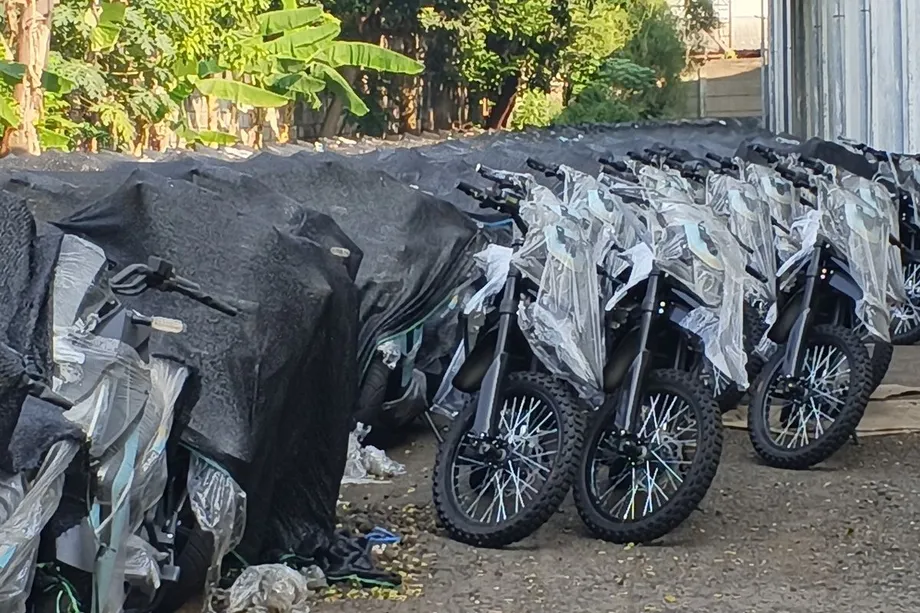
BGN purchased more than 21,000 electric motorcycles in 2025 for a total exceeding one trillion rupiah, equivalent to about $72.5 million. The vehicles were intended for kitchen heads delivering meals. Many instead spent months idle in warehouses, becoming a visible symbol of spending that failed to translate promptly into services.
The purchases drew public anger while the government was implementing austerity measures to reduce pressure on the state budget amid rising energy costs. Austerity means restricting spending to ease financial strain. Against that backdrop, unused vehicles intensified criticism of the program's priorities.
Finance Minister Purbaya Yudhi Sadewa said his ministry had initially rejected the motorcycle proposal because it was not a priority. He attributed the eventual purchase to internal miscommunication that caused parts of the proposal to be inadvertently approved. Purbaya has announced that no new electric motorcycle purchases will proceed in 2026.
Investigators allege that Andri Mulyono inflated the price of each motorcycle to bring the contract's total value as close as possible to BGN's budget ceiling. A budget ceiling is the maximum amount permitted for a particular expenditure. Prosecutors contend that Andri unlawfully profited from the scheme, although they have not disclosed the exact alleged markup.
The accusation concerns how the purchase was arranged and priced. For the government, the unused fleet also presents a practical problem: equipment already bought with public money needs to be put into service while investigators preserve the records required for their case.
Preserving Evidence While Keeping Assets Available
Investigators from the Office of the Assistant Attorney General for Special Crimes, or Jampidsus, visited the Bogor warehouse on June 17. Syarief Sulaeman Nahdi, Jampidsus director of investigation, said they were checking the number of motorcycles and securing the storage facility.
Syarief described the purpose of the inspection:
The purpose is to check the number of electric motorcycles and seal the site.
Further inspections at other locations are planned in stages. Syarief said investigators do not intend to confiscate the entire fleet because their work focuses on alleged irregularities in the procurement process. He explained that documentation and purchasing records were needed for the investigation, while the vehicles were public assets intended for service.
Syarief set out that approach in these words:
The investigation only requires documentation and records related to the procurement process, so there is no need to seize all the units, especially since these are assets that will be used for public service.
BGN deputy head Agustina Arumsari has said assets purchased with state funds, including the idle motorcycles, should be used as much as possible rather than left to decay in warehouses. The agency will coordinate with the Attorney General Office regarding the disposal of assets connected to the probe. Her stated principle is that everything purchased in 2025 must be utilized as effectively as possible.
Kitchen Approvals and Alleged Payments
Prosecutors allege that BGN officials manipulated the agency's partner verification portal to approve foundations that failed to meet basic requirements. The portal was the system through which organizations were checked before being allowed to operate kitchens. Once approved, the foundations reportedly received incentives worth billions of rupiah each day.
Investigators say several foundations were connected directly to BGN officials and employees, including the three senior leaders arrested on June 3. Syarief said the foundations were used to carry out criminal activities. Suspects allegedly interfered in the preparation of work plans, leaving project specifications disconnected from actual operational needs.
The disputed purchases extended beyond motorcycles. They included 32,000 pairs of shoes, 31,000 tablets and 5,400 televisions with screens measuring 75 inches. Those items were considered unnecessary and allegedly overpriced. Together, the allegations concern both excessive prices and decisions to buy equipment that kitchens did not need.
Asep Yusuf Somantri is accused of conspiring with Sony Sonjaya to recruit program partners. Prosecutors say Sony gave Asep access to influence BGN's partner verification team, allowing him to determine which applicants qualified and which existing approvals were revoked.
Asep allegedly used that access to push through applications even after registration deadlines had passed. Prosecutors also accuse him of making payments to Sony in exchange for his influence. The alleged arrangement placed decisions about access to the program in the hands of a businessman closely associated with a senior agency official.
Sony has applied for justice collaborator status, commonly described as whistleblower protection. In this context, he is seeking protected status while offering cooperation with investigators. Through his lawyer, he has indicated a willingness to disclose more than 20 additional names allegedly connected to the scheme.
Investigators are reviewing Sony's application before deciding whether to grant that status. His proposed cooperation could help them trace other participants, while prosecutors continue examining financial flows and partner selection across the country.
Political Connections Around the Foundation Network
Glory Harimas Sihombing's arrest has drawn attention to the Indonesia Food Security Review Foundation, which operates meal program kitchens in South Tangerang, Yogyakarta, Bogor and Karawang. The foundation is among the organizations under scrutiny for potentially benefiting from manipulated verification procedures.
Dirgayuza Setiawan, a cofounder of the foundation, currently serves as Special Assistant to the President for Communication. Campaign finance watchdogs have noted that its patron, Hanief Adrian, is secretary general of the Prabowo Gibran Youth Volunteers. Sihombing himself reportedly coordinated activities at the Expert Council Office of Prabowo.
The foundation also published a book about accelerating the free meal program. It was launched in May 2025 with a foreword written by Dadan Hindayana, who was then BGN head. Those connections have placed the foundation's role within the program under close public scrutiny.
Indonesia Corruption Watch, the antigraft watchdog that first filed complaints about the initiative, examined 102 foundations involved in operating kitchens across 38 provinces. Its review identified connections to politically linked people, including politicians, government officials, military figures, law enforcement officials and business networks.
Wana Alamsyah, head of the watchdog's law and investigation division, has called for BGN to be dissolved. He argues that the agency was poorly planned and the program launched too quickly, leaving it vulnerable to patronage and corruption. Patronage involves using influence to direct positions, contracts or other benefits toward connected people.
Wana has also urged investigators to examine suppliers and the people responsible for procurement decisions, extending scrutiny beyond agency leaders and foundation operators. His demand focuses on the full chain of decisions through which public money was committed and paid.
Food Safety and Ingredient Spending Under Pressure
At least 33,000 mass food poisoning cases have been reported among schoolchildren who ate meals prepared under the program since its rollout in early 2025. Independent education monitors have also estimated that tens of thousands of children became sick. The scale of illness has brought kitchen hygiene and supply chain oversight into the debate alongside financial misconduct.
Indonesia Corruption Watch documented alleged irregularities in ingredient purchasing during monitoring between November 2025 and January. It found alleged markups of 2,000 to 5,000 rupiah per kilogram on staples including chicken and vegetables. Those practices reportedly added as much as 27 million rupiah to a kitchen's monthly costs.
A markup in this case means an alleged increase in the recorded purchase price. When it is applied repeatedly to ingredients bought in large quantities, a small extra charge per kilogram can accumulate into a much larger monthly expense.
Other controversies include halal certification contracts awarded to an allegedly ineligible state enterprise and inconsistent budgeting across dozens of kitchens. The locations involved range from Greater Jakarta to East Nusa Tenggara and North Sumatra. Halal certification concerns whether food meets Islamic dietary requirements.
Meals containing ultra processed food and ingredients of poor quality have also been reported. Those complaints place the program's nutritional purpose at the center of the controversy: its success depends on children and pregnant women receiving suitable food, as well as on the number of meals distributed.
State Secretary Prasetyo Hadi acknowledged governance failures when announcing the dismissal of the three BGN leaders on June 2. He cited issues involving discipline in implementing governance, including discipline in maintaining food quality standards. Just hours earlier, Prabowo had appeared alongside Dadan at a school inspection in West Jakarta, illustrating how quickly the leadership situation changed.
Protests and Calls for Wider Accountability
Students protesting Prabowo's spending plans clashed with police in Jakarta on June 12. Demonstrations used the hashtag MenujuIndonesiaBangkrut, meaning Indonesia heading for bankruptcy. Protesters portrayed the free meals program as a misplaced priority amid a weakening rupiah and widening budget deficits.
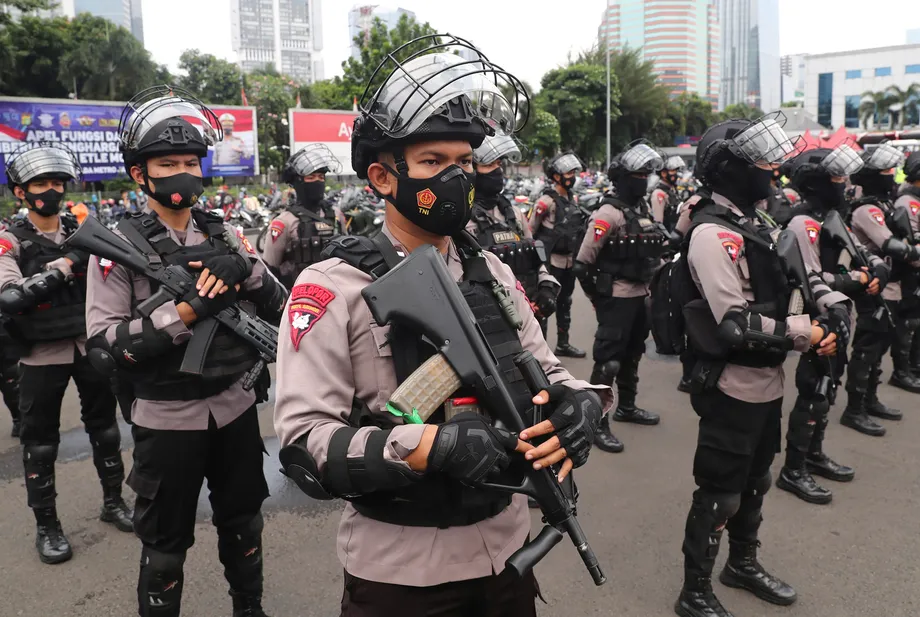
Further protests took place in several major cities on June 15. Authorities deployed more than 6,000 police and military personnel in the capital. Calls to cancel or suspend the program added public pressure to the criminal investigation and the government's efforts to change its operation.
Wana Alamsayah's demand for broader scrutiny included vendors and procurement committee members. Wana Alamsyah, who leads Indonesia Corruption Watch's law and investigation division, said accountability should extend to everyone who may have benefited from weak governance:
Authorities should investigate all parties who may have benefited from the poor governance of the program. Law enforcement authorities should also examine the roles of vendors and procurement committee members involved in the process.
Wana questioned why authorities waited until 2026 to act when criticism had circulated widely on social media throughout 2025. He suggested that mounting fiscal pressure could explain the timing, arguing that officials needed to sacrifice someone to legitimize rearranging or refocusing the program as budget constraints tightened.
Muhammad Qodari, head of the Government Communications Agency, rejected demands to halt the initiative. He said the government would keep operating the program and evaluate problems encountered during implementation:
Any programme will inevitably face challenges during its implementation and operational stages. There will always be variations and problems along the way. Only dead people have no problems. But those problems do not mean we should stop or retreat. We evaluate them.
Prabowo Promises Action as BGN Changes Priorities
Prabowo addressed thousands of officials and program partners in Bogor hours after Dadan's arrest. He said there should be no room for misconduct and pledged that officials who steal public money would receive no exceptions.
The president expressed his position directly:
I do not want the money of the people to be stolen, and there will be no exceptions.
Law Minister Supratman Andi Agtas said the government respects the Attorney General's investigation. He also noted that Prabowo had repeatedly warned officials against breaking the law.
Nanik S. Deyang, the new BGN head, has announced a shift toward efficiency rather than scale. She declared a moratorium on new kitchen approvals, meaning a pause in authorizing additional operators, and said the agency would promote existing school canteens instead of building new facilities.
BGN now plans to prioritize remote regions and food quality rather than pursue the original target of 82.9 million recipients. Spending is likely to fall below the 268 trillion rupiah budgeted for 2026. The change places the emphasis on how meals are prepared and delivered while limiting expansion.
Syarief Sulaeman Nahdi has said prosecutors will continue examining financial flows and partner selection processes nationwide. Additional suspects will be named if sufficient evidence emerges. Further warehouse inspections and the review of Sony's cooperation application are also part of the investigation's next steps.
The government therefore faces two immediate tasks: keep meals reaching intended recipients and address the purchasing, approval and food safety failures that have damaged the program. The investigation is still in its early stages, while BGN's new leadership has committed to tighter spending priorities and greater use of assets already purchased.
The Essentials
- Six suspects have been arrested in the free meals corruption probe, including former BGN chief Dadan Hindayana, former deputies Sony Sonjaya and Lodewyk Pusung, businessmen Asep Yusuf Somantri and Andri Mulyono, and foundation chairman Glory Harimas Sihombing.
- Prosecutors allege manipulated procurement, rigged kitchen partner verification and approvals benefiting unqualified foundations.
- More than 21,000 electric motorcycles were purchased in 2025 for over one trillion rupiah. Many remained unused, and investigators allege inflated prices.
- Other disputed purchases include 32,000 pairs of shoes, 31,000 tablets and 5,400 televisions with screens measuring 75 inches.
- At least 33,000 food poisoning cases have been reported among schoolchildren since the program began in early 2025.
- Student protests and Indonesia Corruption Watch have demanded stronger accountability, while the government says the program will continue.
- New BGN head Nanik S. Deyang has paused new kitchen approvals and is prioritizing existing canteens, remote regions, food quality and efficiency.
- Prosecutors are tracing financial flows and reviewing Sony's request for justice collaborator status. He has offered through his lawyer to disclose more than 20 additional names.