A Royal Welcome Amid Wartime Fuel Pressures
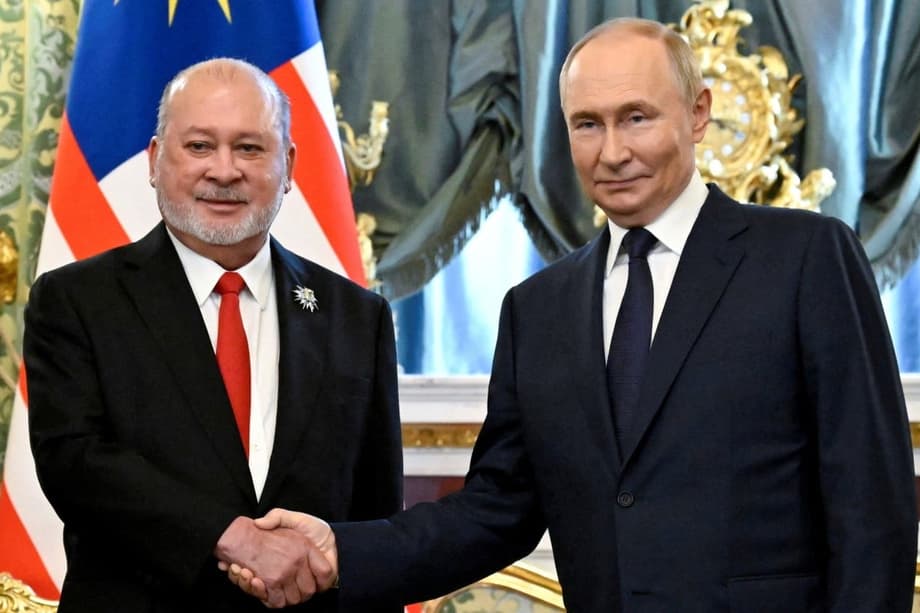
Malaysian King Sultan Ibrahim Iskandar arrived at Vnukovo-2 International Airport outside Moscow at 4:20pm local time on Thursday, stepping into a geopolitical moment where ceremony and crisis overlap. Russian Deputy Foreign Minister Andrey Rudenko, head of the Russian Protocol Department Bogdashev Igor Viktorovich, and Malaysian Ambassador Cheong Loon Lai stood on the tarmac to receive the monarch, who travelled at the personal invitation of President Vladimir Putin. Sultan Ibrahim is set to attend Russian Victory Day commemorations on May 9 as a guest of honour, marking the latest chapter in a remarkable twelve month surge of high level contact between Kuala Lumpur and Moscow.
The 2026 Victory Day ceremony will proceed with troops marching in formation and aerobatic flybys, though Kremlin aide Yury Ushakov confirmed that no military vehicles or equipment will take part in the parade. Russia did not send out special invitations to foreign leaders for the 81st anniversary, yet several dignitaries proactively signalled their desire to attend. Putin will host a formal reception for delegations on May 9 and deliver an address before laying flowers at the Tomb of the Unknown Soldier alongside veterans and guests. Beyond the pageantry, the presence of the Malaysian monarch carries weight because it lands at the exact moment Malaysian leaders are scrambling to secure alternative oil supplies while war rages around the Strait of Hormuz.
The Strait of Hormuz Squeeze
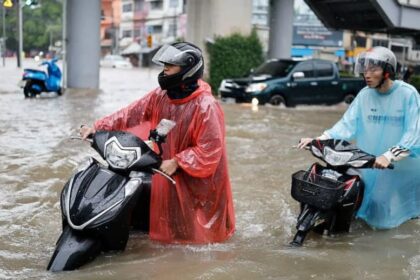
The Iran war has thrown global energy markets into disarray by disrupting traffic through the Strait of Hormuz, a narrow waterway between Oman and Iran that serves as the primary maritime choke point for Gulf oil. Roughly one fifth of global petroleum consumption passes through this channel, making any sustained interruption a threat to importing nations across Asia. The resulting bottleneck has forced governments from Tokyo to New Delhi to search for new suppliers and to consider emergency reserves, all while trying to stop fuel costs from driving broader inflation.
Prime Minister Anwar Ibrahim addressed these pressures directly last month when he announced that national oil company Petronas had received approval to negotiate with Russia for crude oil supplies. Speaking at the opening of the Sultan Ismail Petra Airport terminal in Kota Bharu, Anwar explained that the step was necessary to keep national energy reserves sufficient for domestic consumption. He pointed out that several Western nations that previously imposed sanctions on Moscow have recently returned to Russian energy markets out of economic necessity, suggesting that Kuala Lumpur should exercise the same pragmatic flexibility. Anwar also revealed that early diplomatic engagement with Iranian leadership had secured safe passage for Malaysian tankers through the contested strait, allowing a Petronas vessel to dock at the Pengerang Integrated Complex in Johor. That facility functions as the main hub for refining operations in the country.
The Prime Minister stressed that domestic demand remains the top priority, adding that Malaysia would assist friendly nations such as Australia only if a surplus existed. His remarks came after Australian Prime Minister Anthony Albanese visited Kuala Lumpur to discuss possible supplies of petrol, diesel, and fertiliser. The diplomatic choreography illustrates how quickly the conflict around Iran has transformed Malaysia from a regional oil producer into a careful shopper on the global market, balancing relationships across competing powers to keep its own pumps running.
A Year of Intensifying High Level Contact
The Moscow visit builds on a foundation of repeated royal and ministerial trips that would have been unimaginable just a few years ago. In August 2025, Sultan Ibrahim undertook the first state visit by a Malaysian head of state to Russia since the two countries established diplomatic ties in 1967. Over five days he toured Moscow and Kazan, the capital of Tatarstan, where discussions focused on petrochemicals, innovation, Islamic finance, and the halal industry. Putin described bilateral relations as being on strong footing and praised Malaysia for its role in the Russia Islamic World Strategic Vision Group.
That August trip was followed by a January 2026 journey to Saint Petersburg, where Sultan Ibrahim visited the historic Smolny Complex and toured the underground Smolny Bunker built in 1937. City Governor Alexander Beglov hosted a banquet and presented the monarch with a video showcasing the city, which is home to nearly 800 bridges and roughly 200 museums. The engagement demonstrated that both sides are willing to invest in the symbolic grammar of statecraft, using cultural exchange to smooth the way for harder commercial negotiations.
Prime Minister Anwar Ibrahim has been equally active. He travelled to Vladivostok for the Eastern Economic Forum in September 2024, attended the BRICS summit in Kazan in October 2024, and made a state visit to Moscow and Kazan in May 2025. The frequency of these encounters suggests a deliberate strategy to institutionalise contact at the highest levels, ensuring that neither bureaucracy nor geography can stall momentum when critical deals are on the table.
Putin and the King Prepare for Talks
Kremlin aide Yury Ushakov confirmed that Putin will hold a one to one meeting with Sultan Ibrahim on May 9, a session requested personally by the Malaysian monarch. Ushakov noted that the two leaders last met on January 26 in Saint Petersburg, making this their second in person encounter in under four months. The aide also disclosed that Putin will hold bilateral discussions on the same day with Slovak Prime Minister Robert Fico, Lao President Thongloun Sisoulith, and leaders from Abkhazia and South Ossetia. The Malaysian audience, however, stands out because of the specific economic requests Kuala Lumpur is expected to table.
Broadening the Energy Partnership
Russian Ambassador to Malaysia Naiyl Latypov has made little secret of the ambition of Moscow to deepen commercial ties. He told reporters that bilateral trade grew by 30% in 2025 to reach roughly $3.2 billion, a figure he called unsatisfactory because the true potential remains far larger. Western sanctions have created structural barriers, and Latypov acknowledged that about eleven Malaysian companies currently sit on Western sanctions lists. He insisted that mutually beneficial business will find a way to operate despite these restrictions, adding that Russia does not wish to cause trouble for Malaysian partners.
Energy sits at the heart of the agenda. Russian firms have held multiple rounds of what Latypov described as productive and promising discussions with Malaysian oil and gas players over petroleum and liquefied natural gas, commonly known as LNG, supply arrangements. Russia possesses some of the largest global proven hydrocarbon reserves, and Moscow has openly stated its readiness to increase deliveries of oil products and LNG to Southeast Asian buyers who find their traditional Middle Eastern routes compromised.
The cooperation is not limited to fossil fuels. Russian manufacturers are offering advanced electrical equipment, solar panel technology, and hydroelectric machinery to support Malaysian renewable energy goals. A more striking proposal involves civilian nuclear power. After the Malaysian government announced that it intends to study atomic energy development, Russia has positioned itself as a candidate to supply everything from large conventional reactors to small modular reactors and even floating nuclear platforms. Small modular reactors are compact advanced units that can be factory built and deployed with a smaller footprint than traditional plants, making them potentially suitable for distributed grids or island territories. Latypov said such projects could tap into Malaysian shipbuilding capacity, particularly yards in Sabah and Sarawak, while also creating demand for local technical education and regulatory training.
Defence Deals and Geopolitical Balancing
Beyond energy, military procurement is emerging as a parallel track in the bilateral relationship. Malaysia operates an ageing mix of Russian and Western hardware, including eighteen MiG-29 Fulcrum jets and eighteen Su-30MKM Flanker fighters acquired from Moscow in earlier decades, alongside American F/A-18 Hornets. These fourth generation aircraft are approaching the end of their operational lifespans, and the Royal Malaysian Air Force faces a pressing need for modern replacements.
Sultan Ibrahim has taken a personal interest in defence modernization, publicly urging the Defence Ministry to abandon a plan to buy second hand American Sikorsky UH-60 Black Hawk helicopters and instead pursue government to government procurement without intermediaries. During the August 2025 Russia trip, Russian sources indicated that the monarch was shown modernized helicopters capable of fulfilling similar roles. Defence Minister Mohd Khaled Nordin swiftly affirmed the government to government approach. The Russian fifth generation Su-57E Felon fighter is now reported to be among the long term options under review, alongside American and French alternatives. Historical familiarity helps; Russia was the largest arms exporter to Southeast Asia between 2000 and 2023, and Malaysia ranked as the third biggest buyer in that period with purchases totalling $1.27 billion.
Navigating History and the BRICS Factor
The deepening embrace of Moscow is not without controversy. In May 2025, the International Civil Aviation Organization ruled that Russia was responsible for the 2014 downing of Malaysia Airlines Flight 17 over eastern Ukraine, an incident that killed all 298 people on board. During his own state visit to Moscow, Anwar raised the matter privately with Putin but avoided public confrontation. The issue did not feature prominently during the August 2025 visit by the King, and analysts note that Kuala Lumpur appears determined to prevent a single tragedy from derailing a wide ranging strategic relationship.
Domestic politics partly explain the warmth toward Russia. According to the State of Southeast Asia Survey 2025, only 25% of Malaysian respondents ranked the Russia Ukraine conflict as a top concern, while 75.8% placed the Israel Gaza war in that category. Putin is widely perceived in Malaysia as supportive of the Palestinian cause, a stance that finds strong support among the predominantly Muslim electorate. Engaging Russia therefore offers the government a degree of domestic political reinforcement without alienating key constituencies.
Foreign policy experts describe the Malaysian approach as one of equidistance, a posture aimed at preserving strategic autonomy by avoiding tight alliances with any single great power. While the Malaysian electrical and electronics sector depends heavily on American investment, Kuala Lumpur has consistently resisted entangling security commitments. The current courtship of Russia fits within that tradition, allowing Malaysia to maintain ties with Washington, Beijing, and Moscow simultaneously.
The BRICS dimension adds further incentive for Kuala Lumpur to keep Moscow close. Malaysia has formally applied for membership in the grouping, which now includes Brazil, Russia, India, China, South Africa, and newer entrants such as Indonesia. Anwar has lobbied hard for admission, visiting Beijing and New Delhi to secure backing and attending BRICS summits. Full membership requires consensus among existing members, meaning Russian approval is essential. For Putin, pulling Malaysia into the fold would advance the goal of building non Western institutions and expanding Russian influence in Southeast Asia. The Victory Day visit, therefore, is as much about protocol as it is about securing a favourable hearing in a club that Kuala Lumpur believes can amplify its voice on Palestine, trade reform, and institutional fairness.
The Bottom Line
- Sultan Ibrahim arrived in Moscow on May 7, 2026, to attend Russian Victory Day celebrations as a guest of honour and will hold a one to one meeting with President Putin on May 9.
- Malaysia authorised Petronas to negotiate crude oil purchases from Russia after the Iran war disrupted traffic through the Strait of Hormuz and threatened domestic fuel supplies.
- Bilateral trade between Malaysia and Russia reached approximately $3.2 billion in 2025, with Moscow seeking deeper cooperation in oil, gas, nuclear technology, and renewable energy equipment.
- Defence modernization talks are advancing, with Russian helicopters and the Su-57E fighter among options being considered as Malaysia replaces ageing military aircraft.
- The visit underscores the strategy of Kuala Lumpur to diversify partnerships, manage relations with sanctioned powers, and advance its application for full BRICS membership.