A 50,000 Worker Ceiling Meets a Tourism Recovery
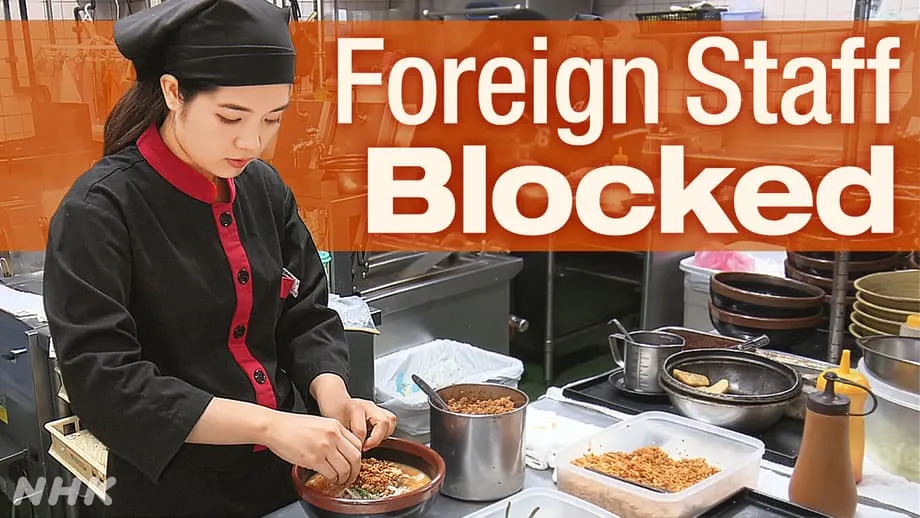
Japan stopped accepting new applications for Type 1 Specified Skilled Worker visas in food service on April 13, 2026, as the industry approached its allocation of 50,000 workers for the five years ending in March 2029. By the end of February, the sector already employed roughly 46,000 people under that status, according to the Immigration Services Agency. Officials expected the ceiling to be breached by May and suspended new certificates of eligibility from April 13.
Contents
- A 50,000 Worker Ceiling Meets a Tourism Recovery
- How the Visa Program Works
- Restaurant Chains Reconsider Their Plans
- A Worker Moves From Factory to Restaurant
- Why the Allocation Ran Out So Early
- Immigration Politics Complicate a Change
- Business Owners Face a Separate Visa Squeeze
- Recruitment Gets More Expensive
- Other Countries Are Recruiting for Similar Needs
- Proposals Focus on Flexibility and Working Conditions
- The Bottom Line
Restaurants and hotels preparing for another summer tourism season are bracing for record visitor numbers. For restaurant operators, however, growing customer demand is meeting a restriction on one of their main sources of staff. By July 17, the freeze had left chains reconsidering expansion, international students uncertain about promised jobs, and employers facing a tighter hiring market.
The 46,000 workers recorded in February represented about 92 percent of the 50,000 ceiling. A limit intended to cover five years was therefore approaching exhaustion within two. Restaurants say the allocation failed to keep pace with the recovery in travel and dining after the pandemic.
The consequences reach beyond recruitment departments. Foreign employees have become core members of restaurant teams, taking responsibility for ingredients, shift schedules and training. Some businesses fear losing students they have already helped prepare for restaurant careers. Others worry that keeping legal recruitment channels closed will encourage illegal hiring and expose migrants to exploitation.
Japan's government has not agreed to raise the food service ceiling. The Ministry of Agriculture, Forestry and Fisheries, which oversees the sector's Specified Skilled Worker program, says no significant economic change has been observed that would justify revising the limit for now. Restaurant operators strongly disagree.
How the Visa Program Works
Japan launched the Specified Skilled Worker program in 2019 to bring foreign workers into industries struggling to recruit Japanese employees. The government plans to admit more than 800,000 foreign workers across 19 sectors during the 2024 to 2029 period. Food service has an allocation of 50,000.
Type 1 status permits work for up to five years and does not allow family reunification. Type 2 offers longer stays and can provide a route toward permanent residency after a separate examination. Moving between the two requires meeting further conditions, rather than simply completing a period of restaurant employment.
Some politicians on the right describe the program as a back door to permanent residency. Type 1 holders, however, cannot apply directly for permanent residency through that status. The examination for moving to Type 2 has a pass rate of about 50 percent, and successful candidates still need to meet the requirements for any eventual grant of permanent residency.
Restaurants also have fewer recruitment options than some other industries. They cannot use the Technical Intern Training Program, a route available to other sectors. That makes the Specified Skilled Worker program one of their few legal channels for employing foreign labor and helps explain why food service reached its ceiling first.
The main dates show how quickly the situation changed:
- 2019: Japan launched the Specified Skilled Worker program.
- 2019 to 2024: The pandemic depressed restaurant demand during the program's first phase.
- 2024 to March 2029: Food service received a ceiling of 50,000 workers for the second phase.
- End of February 2026: Food service employed roughly 46,000 Type 1 workers.
- April 13, 2026: Authorities suspended new food service applications and certificates of eligibility.
- May 2026: Officials had expected the sector to exceed its ceiling by this month.
- June 2026: An examination had been scheduled for students whom Skylark Holdings was helping prepare.
Restaurant Chains Reconsider Their Plans
A ramen operator with about 200 outlets illustrates how dependent some chains have become on foreign recruitment. Its 75 foreign employees account for roughly a quarter of its staff working full time. The company rushed to recruit another 20 workers before the deadline, while offers already made to international students expected to qualify after graduation were left in limbo.
Yudetaro, a noodle chain, has roughly 500 employees with Specified Skilled Worker visas among its 660 staff working full time. That is about three quarters of its workforce. Mos Food Service has publicly said that expanding foreign recruitment is essential to sustaining its operations.
Skylark Holdings, which operates family restaurants, employs 32 exchange students from countries including Myanmar in jobs with limited hours. It had been helping them prepare for the Type 1 examination scheduled for June. The company now fears those workers may go home and never return.
Nakagawa Takahiro, a human resources manager, described the pressure on recruitment and the possible consequences for annual store openings:
Across the industry, securing workers has become extremely challenging, and the Specified Skilled Worker system had become an important channel for hiring job ready personnel. However, due to the recent suspension, our company may be forced to reconsider those plans.
Restaurant expansion requires enough people to run each new location as well as the existing outlets. When recruitment becomes uncertain, opening plans become uncertain too. Students who expected to move from study into restaurant employment face the same disruption from the other side: a promised job may no longer provide the route they expected into working life in Japan.
A Worker Moves From Factory to Restaurant
Hang, a Vietnamese employee at a ramen branch in Chiba Prefecture, first came to Japan about ten years ago as a technical intern trainee. She worked at a food processing factory in Aichi Prefecture before returning in 2022 under Specified Skilled Worker status.
Restaurant work offered Hang better pay and a way to support her son. It also gave her more opportunities to speak Japanese, something she values in her daily work. Describing the difference between the two jobs, she said:
I prefer working in the restaurant because I can use Japanese more. There was not much opportunity when I was working in the factory.
Japan's food service jobs are popular in Vietnam's online employment market. Urban restaurants need large numbers of staff, and the work is viewed as safer and less grueling than factory or construction employment. For workers such as Hang, the visa offers legal status, stable wages and a chance to improve language skills.
Employers receive staff ready to work in an economy where Japanese recruits are increasingly scarce. The same combination of job opportunities and worker preferences has made food service a major destination within the visa program. A restriction on new entrants therefore affects both restaurant staffing and the plans of people seeking those jobs.
Why the Allocation Ran Out So Early
Japan initially projected a need for 53,000 restaurant workers during the program's first phase, from 2019 to 2024. The pandemic then crushed dining demand and held back recruitment, bringing actual demand to about 35,000.
Officials kept the food service ceiling at 50,000 for the second phase as the system balanced surpluses and shortfalls across industries. Once border restrictions eased and inbound tourism surged, restaurants needed workers much faster. An allocation designed for five years was exhausted within about two.
Shoichiro Ikebe, a consultant who advises companies on employing foreign workers, said the limit did not reflect the strength of the recovery:
The cap of 50,000 workers did not adequately reflect the strong needs of the food service industry.
Ikebe also said the limit would have been reached much earlier without the pandemic. His assessment connects the initial period of weak hiring with the later surge: the years when restaurants needed fewer people shaped a ceiling that became restrictive when customers returned.
Korekawa Yu, director of the National Institute of Population and Social Security Research, pointed to the investment employers must make in training, examinations and administrative paperwork. Rapid growth in applications, he argued, reflects strong demand for workers because businesses must commit time and resources to recruiting them.
Korekawa proposed treating the expected intake as a target rather than an inflexible ceiling:
The government miscalculated the projected number of workers to be accepted. Rather than treating the expected number as a rigid numerical cap, it should develop a system to accept them and use this figure as a general target.
Construction and nursing care remain well below their allocations. Food service's difficulties therefore sit alongside unused capacity elsewhere in the program. The problem is a mismatch between individual industries' staffing needs and the limits assigned to them.
Immigration Politics Complicate a Change
Prime Minister Sanae Takaichi's administration has taken a harder approach to immigration, treating it as a political issue as well as an economic one. Lawmakers regarded as immigration hardliners, including State Minister Kimi Onoda and Hayato Suzuki, have been appointed to oversee the Specified Skilled Worker program.
The far right Sanseito party gained influence after the 2025 Upper House election. Its rise increased pressure on the ruling Liberal Democratic Party to adopt tougher language about foreigners. More vocal conservative voters have made even small adjustments to visa allocations politically risky.
Restaurant operators are seeking access to employees while the government faces pressure to tighten immigration controls. Arguments about eventual permanent residency have added to that tension, even though the Type 1 and Type 2 categories have different rules and moving to longer residence requires further steps.
The dispute leaves employers asking for a response to immediate vacancies within a political debate that extends far beyond restaurant kitchens. The agriculture ministry's decision to leave the ceiling unchanged for now keeps that tension unresolved.
Business Owners Face a Separate Visa Squeeze
Japan also revised the Business Manager visa in October 2025. The capital requirement rose from 5 million yen to 30 million yen, a sixfold increase. Applicants must also employ one person working full time who is Japanese, a permanent resident or a long term resident.
The applicant or an employee must demonstrate Japanese ability at the JLPT N2 level, a specified level in the Japanese Language Proficiency Test. The applicant must have three years of business management experience or a relevant master's degree.
Average monthly applications reportedly fell from about 1,700 to roughly 70 after the change, a decline of 96 percent. Ethnic restaurant owners have been particularly affected, adding pressure on businesses already operating in a difficult food service market.
Manish Kumar, an Indian restaurant owner in Saitama Prefecture, described an unsuccessful renewal attempt at a gathering in Tokyo in May. He has lived in Japan for 30 years, and his restaurant had operated for 18 years. Kumar explained what the prospect of leaving meant for his family:
My children were born in Japan and raised in Japan. They only speak Japanese, and all their friends are Japanese, but we are being told to go back to India.
Jagmohan Chandrani, chairman of the Edogawa Indian Association, warned that the community he had helped build over decades could begin to come apart. For established owners, the visa change affects a business, a family and the local relationships built around both.
The government says the stricter rules are intended to stop shell companies from using the visa as a shortcut to residency. A shell company exists on paper rather than operating a genuine business. At a news conference in May, State Minister Kimi Onoda defended the changes:
We have, to a certain extent, dispelled concerns about the business manager status being abused as a means of immigration.
Critics accept that preventing abuse is legitimate but argue that a flat capital threshold treats a neighborhood restaurant with a long operating history in the same way as a paper company. Private sector surveys found that bankruptcies among foreign owned food service businesses reached a high not seen in nearly 30 years last year. In a survey of 299 foreign owned companies, more than 45 percent expected the new rules to hurt their operations.
Recruitment Gets More Expensive
Labor market data showed a tightening market within weeks of the food service suspension. Job advertisements seeking Specified Skilled Worker visa holders in the industry more than doubled in two months. The average annual salary offered rose by 160,000 yen to 3.34 million yen.
Employers are consequently facing fewer available recruits and higher labor costs at the same time. The staff involved often do much more than basic kitchen tasks. Many order ingredients, arrange shifts and train newcomers, yet they frequently earn less than Japanese colleagues.
Industry groups have already promoted serving robots, mobile ordering and self checkout to reduce the pressure on staff. Companies have also removed mandatory retirement ages and recruited more elderly workers. Those measures have not filled the gap.
Some experts fear that restaurants unable to recruit legally will turn to illegal employment. That could expose migrants to exploitation and create additional enforcement problems. The warning adds another cost to leaving the recruitment channel closed: businesses under staffing pressure may seek workers outside the rules intended to protect them.
Other Countries Are Recruiting for Similar Needs
Japan's restaurant shortage belongs to a wider pattern of ageing populations and recovering tourism. Germany is recruiting skilled workers through its Make it in Germany campaign and has eased routes for professionals in logistics, healthcare and trades.
Spain approved an extraordinary regularization process for migrants already in the country, aiming to bring them into tourism, agriculture and construction. Regularization gives people a way to obtain legal status where they already live. Greece has signed agreements with countries such as Egypt to recruit seasonal farm workers, supporting the food supply chains on which hospitality businesses depend.
Italy has expanded its Decreto Flussi system, which sets annual allocations for workers from outside Europe, to include more tourism and service jobs. These countries are using different approaches to address the demand for employees in services and related industries.
Japan's foreign worker population reached nearly 2.57 million by 2025, up 11.7 percent from the previous year and another record. The figure shows how deeply foreign labor is already woven into the economy, even as immigration becomes more politically contentious.
The OECD says tourism employment has recovered unevenly across its member countries, with many destinations struggling to recruit after travel demand returned. Hospitality is especially exposed because it needs large numbers of workers serving customers directly. Vacancies can affect service quality, operating efficiency and visitor satisfaction.
South Korea, Taiwan and Singapore also depend on foreign workers in hospitality, elder care and construction. Each faces the task of responding to public concern while keeping services running. Japan's decisions attract attention because it is one of the world's largest tourism markets and has long been regarded as a model of orderly, restrictive migration management.
Proposals Focus on Flexibility and Working Conditions
Korekawa and others propose replacing the rigid ceiling with a target that can be adjusted as demand changes. Most experts making that case are not arguing for an open border. They are asking for a system that responds to differences between industries and to the recovery since the pandemic.
One proposed step is to shift unused allocations from sectors with slower recruitment to industries nearing their limits. For Business Manager visas, another is to assess an applicant's operating record, tax payments and employment practices instead of relying mainly on the 30 million yen capital requirement.
Such a review could give small ethnic restaurants with long local histories a different assessment from companies that exist only on paper, while still allowing the government to act against abuse. The proposals address two separate pressures: restaurants seeking employees and restaurant owners seeking permission to continue running their businesses.
Some industry observers describe Japan's dilemma as an 'impossible trinity': with a shrinking population, cheap everyday services, rising wages and strict immigration controls cannot all be maintained at once. Keeping prices low while paying more requires businesses to find savings elsewhere, a difficult task when workers are scarce and other costs are rising.
During the long period of stagnation after the 1990s, Japan effectively chose low prices and low immigration. Wages largely stood still, while affordable everyday services helped keep living standards comfortable. Inflation, rising input costs and a shrinking workforce are now disrupting that balance.
Restaurants also face decisions about how they treat the workers they already employ. Training managers, paying better wages and improving working conditions could make the industry more attractive to Japanese and foreign staff alike. A future built around foreign workers as disposable labor would leave the sector's underlying employment problems unresolved.
Japan's tourism success creates its own staffing demands. Every new flight, hotel and ramen shop needs people, and a shrinking society increasingly draws those employees from abroad. The food service freeze has brought that dependence into focus just as restaurants need more workers to welcome visitors.
The Bottom Line
- Japan suspended new Type 1 Specified Skilled Worker applications for food service on April 13, 2026.
- The sector had roughly 46,000 workers by February against a ceiling of 50,000 for the period ending in March 2029.
- Restaurant chains face uncertain student recruitment, tighter hiring and possible changes to expansion plans.
- Job advertisements seeking visa holders more than doubled in two months, while average advertised annual pay rose to 3.34 million yen.
- Business Manager visa changes raised the capital requirement from 5 million yen to 30 million yen and added employment, language and experience requirements.
- The agriculture ministry is leaving the food service ceiling unchanged for now despite objections from operators.
- Proposals include flexible intake targets, reallocating unused places and judging business owners by their operating records.