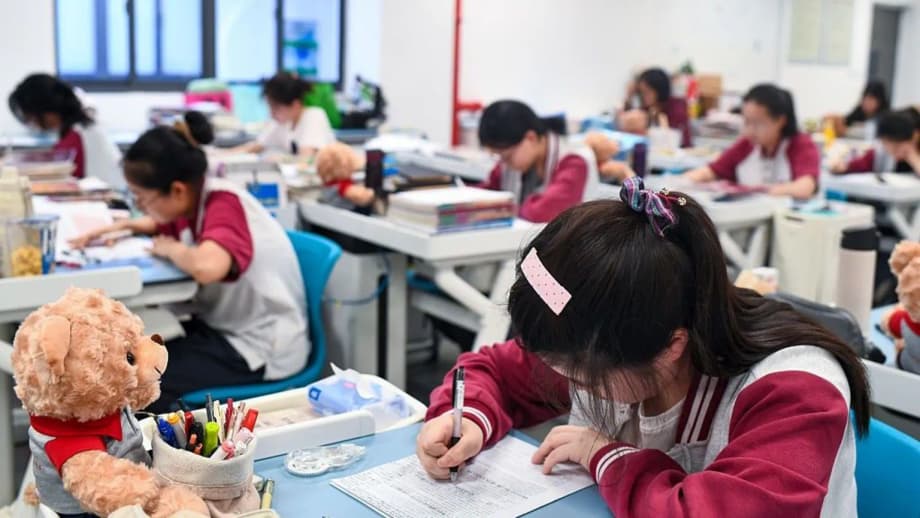
A hidden response to relentless academic stress
For Xiaomei, a high achieving student in a coastal province of China, prescription drugs became a way to shut out the fear of failure. At 14, she began taking large amounts of cough medicine after an older boy told her it would help her relax. The tablets made her dizzy at first. Soon, the numb feeling became a brief escape from exams, family arguments and the pressure to remain among the best students in her school.
- A hidden response to relentless academic stress
- Why are medicines becoming an escape?
- Sleep loss may be a warning sign
- How online access opened the door
- Authorities tighten controls, while users switch products
- The mental health gap behind the numbers
- Family support can interrupt the cycle
- A global pattern of chemical coping
- What prevention could look like
- The Bottom Line
Over two years, she bought several medicines online, none prescribed for her or anyone in her family. Some were used to treat nerve pain or epilepsy. She sometimes took five tablets and sometimes more than 10, chasing different effects. After taking 50 tablets on one occasion, she became so ill that she had to tell her parents.
She described her motivation in an interview with the BBC.
When I felt too much pressure from my studies, or I did not do well at exams, or even when I quarrelled with my parents, I would take these drugs. I was running away from reality.
Her story is part of a wider pattern reported in online chat groups, where Chinese teenagers exchange advice about medicines, discuss how to obtain them and describe using drugs to feel detached from their lives. The behavior is difficult to measure because official data on prescription drug misuse among minors remain limited, yet authorities and researchers have identified it as a growing public health concern.
Why are medicines becoming an escape?
China has one of the most competitive education systems in the world. Students preparing for the national college entrance examination, known as the Gaokao, often study for long hours while facing intense expectations from schools and families. Some schools divide students into elite classes and remove those whose grades fall. A poor result can feel less like a temporary setback and more like proof that a student has lost a place in society.
Xiaomei said students in her elite chemistry class discussed overdosing because they felt like complete losers when they could not keep up. The drugs were not always taken to seek pleasure. Many teenagers used them to reduce anxiety, induce sleep, dull emotional pain or escape memories of disappointing results. In medical terms, this is an attempt at pharmacological coping, using a substance to manage distress without professional supervision.
Recent research involving 2,140 Chinese high school seniors offers evidence for this connection. The study surveyed students from six public schools in southern China, including both key schools and ordinary schools. It found that stress was linked to prescription drug use through sleep problems and weakened social connections. The direct statistical link between stress and drug use was not significant after those factors were considered.
This finding does not mean academic stress is harmless or unrelated to drug use. It suggests that stress may work through a chain of problems. A student under strain may withdraw from parents and friends, sleep badly, feel exhausted and then turn to medicine for relief. The research found that sleep disturbances were the strongest pathway associated with prescription drug use, followed closely by students’ perceptions that their sleep was poor.
Sleep loss may be a warning sign
High school seniors in China frequently sleep for less than six hours a night, according to research discussed in the study. Sleep loss can weaken concentration, increase irritability and make anxiety harder to control. Students who cannot rest may look for pills that promise calm, energy or mental distance from their worries.
The research found that students with stronger bonds to their parents and schools tended to report better sleep and fewer sleep problems. These bonds include feeling attached to family, caring about school and believing that academic goals have personal meaning. Such connections can provide emotional support when grades fall or exams approach.
The study used questionnaires rather than medical diagnoses, and it measured recent prescription drug use rather than long term addiction. Its results cannot prove that stress causes drug use. Still, the findings show why prevention cannot focus solely on removing medicines from online platforms. Sleep, family communication and access to mental health care are also part of the problem.
For teenagers, the difference between legitimate treatment, misuse and abuse can be unclear. A medicine taken for a diagnosed condition under medical guidance is different from taking a larger dose, using another person’s prescription or seeking a mind altering effect. Yet those behaviors can develop along the same continuum, especially when students have little knowledge of drug safety.
How online access opened the door
Xiaomei said she was able to buy cough medicine with only a few clicks. She entered her national identity number, which includes her age, but the sale still went through. In some cases, 50 tablets cost less than one US dollar. Online chat groups then helped users identify alternative medicines after authorities restricted a particular product.
Teenagers have reportedly used coded names for drugs to avoid detection. Some users shared instructions for finding medicines that had not yet been placed under tighter control. Others offered old prescriptions belonging to parents as templates for obtaining new supplies. Voice messages recorded after large doses showed users slurring their words and struggling to coordinate their bodies, while others advised them simply to sleep.
China produces a large share of the world’s pharmaceutical ingredients, and medicines are widely distributed through hospitals, pharmacies and digital commerce. That does not make prescription drugs safe for casual use. A tablet can have very different effects at a therapeutic dose and at a dose taken to cause intoxication. Mixing medicines can also create risks that users cannot assess from online advice.
A 2021 study of Chinese adolescents aged 12 to 18 found that 96.61 percent had engaged in some form of self medication, mainly using common products such as vitamins, fever reducers and painkillers. The study focused on ordinary self treatment, not drug intoxication, yet its findings show how familiar medicine use can become during adolescence. Easy access and low cost may encourage young people to treat medicines as routine consumer products rather than substances requiring careful guidance.
Authorities tighten controls, while users switch products
Chinese regulators have responded with a series of restrictions. In December 2021, dextromethorphan, the cough suppressant used by Xiaomei, was moved from over the counter status to prescription only. In 2022, it was included on a list of medicines banned from online sales. Authorities later tightened rules on production, procurement and distribution, placing the drug in the national catalog of Category II psychotropic drugs.
Manufacturers now need designated production approval, while unauthorized companies cannot buy the medicine. Medical institutions and pharmacies have also been told to strengthen management of supplies. The measures followed reports that teenagers were obtaining dextromethorphan through online sellers and using it for excitement, euphoria or hallucinations.
Authorities have since reported that young people moved toward other medicines, including drugs used for nerve pain, seizures and other conditions. Recent controls in China have also targeted medicines such as pregabalin, with limits on production and restrictions on many online sales.
China’s wider drug figures show a decline in several categories. Officials said the number of juvenile drug cases and juvenile defendants fell by 32 percent in 2025 compared with the previous year. The number of newly identified drug users under 35 also fell sharply, according to official data cited in the original report. Yet juvenile figures in 2025 remained around 1.8 times higher than in 2023, and officials warned that new addictive substances and medicines diverted from pharmacies remain a concern.
Drug officials have also highlighted substances outside the traditional controlled drug lists, including nitrous oxide and etomidate. Some addictive products are disguised as everyday goods or sold through vaping products. The changing market makes enforcement difficult, particularly when sellers use social media and shift to a new medicine after restrictions are introduced.
The mental health gap behind the numbers
Researchers and clinicians argue that enforcement alone cannot address why teenagers take these drugs. A 2023 Mental Health Blue Book study estimated that nearly 95 million people in China experience depression, with more than 30 percent under the age of 18. The figures cover a broad population and do not measure prescription drug misuse directly, yet they point to a large need for mental health support.
China has expanded services in schools. State Council figures indicate that counselors are now present in 92 percent of primary schools and 95 percent of junior middle schools. Several cities have added mental health lessons, and national plans call for counseling rooms in schools, psychiatric services in county hospitals and a wider crisis support network by 2030.
Access remains uneven. A 2020 study published in The Lancet estimated that China had only about 500 qualified child psychiatrists, many concentrated in Beijing, Shanghai and other major cities. A counselor at school may be able to identify distress, but serious depression, addiction or overdose risk may require a specialist, medical assessment and continued treatment.
Xiang Biao, a sociologist and director at the Max Planck Institute for Social Anthropology, has linked the pressure on children to family expectations and social isolation. Many families have one child, following decades of the former one child policy, so parents may place their hopes for security and status on a single student. Long school hours can also leave little time for friendships and activities outside academic competition.
Biao explained that children may receive constant attention while still lacking the kind of emotional support they need.
Many children receive lots of attention but the type of attention they want is to be asked how they feel. Do they feel lonely or stressed? Often in China parents brush that away and say you just have to be stronger.
Family support can interrupt the cycle
Xiaomei’s experience changed after her overdose led to hospital treatment. Her parents did not scold her. They listened, expressed how painful it was to see her suffering and began talking with her more openly. She said that knowing someone was standing by her side made a major difference. She later performed well in the entrance examination she had feared.
Her recovery does not remove the need for medical care or suggest that family support alone can treat addiction. It does show how a calm response can make it easier for a teenager to disclose drug use before another overdose occurs. Parents can watch for changes in sleep, mood, memory, school attendance and social behavior, while avoiding threats that may drive a child further into secrecy.
Young people also need a safe way to discuss anxiety, depression and self harm. The BBC found messages in some chat rooms encouraging users to hurt themselves in order to feel something. That connection makes the issue more urgent, since drug misuse may appear alongside depression, isolation and suicidal thoughts.
Lu Jingchan, a 22 year old who spent years battling depression and overdosed more than four times, now uses social media to warn others. He described the effect of prescription drugs in stark terms.
The drugs drove me to the brink of madness. You risk sinking into an abyss of addiction, destroying your health.
He has stopped taking prescription drugs and urges teenagers to seek help rather than use medicine to numb themselves. His account also shows that dependency can develop even when a person begins with a desire to escape emotional pain rather than to become intoxicated.
A global pattern of chemical coping
The Chinese experience is part of a broader trend. In Britain, some young adults have begun taking medicines such as pregabalin and propranolol before parties, dates or work meetings because they believe the drugs reduce social anxiety without the next day effects of alcohol. Social media users sometimes promote combinations of medicines as a stack, presenting them as a cleaner or healthier way to feel relaxed.
That comparison can be misleading. Pregabalin is used for epilepsy and nerve pain, while propranolol can reduce physical signs of anxiety such as a rapid heartbeat. Taken without supervision or in large amounts, they can cause dizziness, fainting, impaired judgment and dependence. Withdrawal may bring anxiety, insomnia, depression or suicidal thoughts. Medicines bought online may also be counterfeit, contaminated or incorrectly labeled.
Researchers studying young people in China found a similar pattern in which medicines were used to manage anxiety, sleep loss and exam stress. The shared feature is a belief that a pill can provide fast control when ordinary coping methods feel unavailable. The short term relief may reinforce the behavior, making the person less confident about facing exams, social situations or family conflict without drugs.
What prevention could look like
Prevention needs several layers. Schools can screen privately for stress, sleep problems, depression and drug use, then refer students to trained professionals. Sleep education should cover regular rest, evening routines and treatment for insomnia, rather than presenting exhaustion as a normal cost of success.
Schools and local authorities can also strengthen relationships through peer mentoring, teacher advisory groups and activities that give students a sense of belonging outside grades. Parents need guidance on listening, discussing medication risks and storing prescription drugs securely at home.
Digital enforcement remains necessary. Online pharmacies and social media platforms should verify prescriptions, investigate sellers using coded language and remove advertisements for controlled medicines. China already requires online prescription sales to confirm prescription authenticity and use real name systems, yet reports of easy access suggest that enforcement gaps remain.
Researchers caution that the available evidence has limits. The recent study of high school seniors used self reported answers from one region and measured students at one point in time. It did not establish addiction or prove a cause and effect sequence. Future research should follow students over several years and examine peer influence, coping skills, family income, regional differences and access to professional care.
The Bottom Line
- Chinese teenagers are using prescription medicines to escape exam stress, anxiety, sleep problems and emotional pain.
- Dextromethorphan and other medicines have been placed under tighter production, sales and prescription rules.
- Research among 2,140 high school seniors linked drug use with poor sleep and weaker social bonds.
- Official figures show fewer juvenile drug cases in 2025, while new substances and diverted medicines remain concerns.
- Schools, families, health services and online platforms all have a role in preventing unsafe medicine use.
- Early conversation and compassionate support can help teenagers seek treatment before misuse becomes dependence.