A five kilogram sale opens a new market
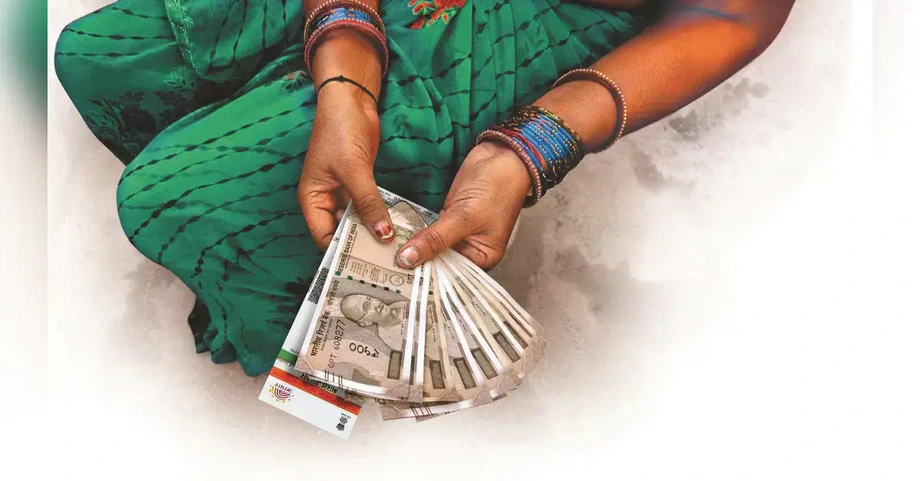
A five kilogram lot of matcha from Chota Tingrai Tea Estate in Assam sold for Rs 3,000 per kilogram at the Guwahati Tea Auction Centre on July 3, 2026, marking India's first commercial sale of locally produced matcha. Guwahati based Sheosons Chai Co. bought the tea through auctioneer J Thomas & Co. Pvt Ltd.
Contents
- A five kilogram sale opens a new market
- Why drinking the whole leaf changes the process
- A decade of work with Japanese partners
- Finding the right plant for Assam
- Matcha assamica develops a distinct flavour
- Demand spreads from tea bowls to Indian kitchens
- A small product within a large tea business
- Why tea estates are looking beyond black tea
- Consistency will decide the next stage
- Key Points
The family owned estate in Tinsukia district has spent years adapting Japanese machinery and production methods to Assam's native tea plants. Its matcha now commands reported auction prices of between Rs 3,000 and Rs 3,800 per kilogram, giving a state famous for strong black tea a foothold in a different market.
The launch also gives India a domestic source of a product increasingly used by cafes, bakeries and wellness businesses. Matcha lattes, desserts and other foods have spread across Indian cities, where most supplies previously came from East Asia.
Assam Chief Minister Himanta Biswa Sarma described the development as a new stage in the state's tea history and connected it to India's long collaboration with Japan. For tea estates facing rising costs, ageing bushes, unstable weather and competition from cheaper imports, the project offers another product to sell.
The opening auction was small, but it established a public commercial price and a first buyer. The investment behind it was much larger: the Jalan family spent more than US$1 million on its green tea and matcha factory, which has a reported processing capacity of about 800 kilograms a day.
Chota Tingrai is branding the powder as Matcha assamica. The name places its Assam plant variety at the centre of the product's identity, while acknowledging that Japanese expertise helped make commercial production possible.
Why drinking the whole leaf changes the process
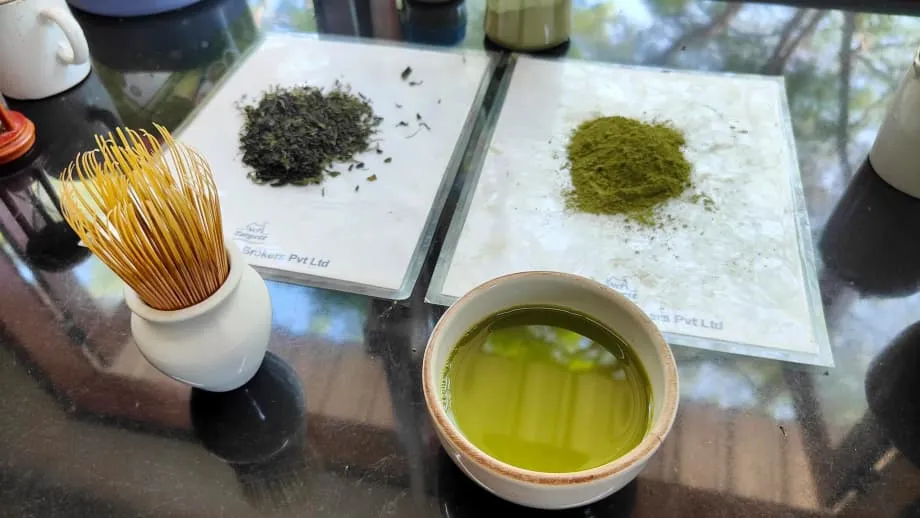
Matcha is a finely ground green tea powder. With ordinary green tea, hot water draws compounds out of the leaves, and the leaves are then discarded. Matcha is whisked directly into water, so the drinker consumes the whole leaf.
Japanese producers commonly cover tea bushes for several weeks before harvesting. Limiting sunlight encourages higher levels of chlorophyll, which gives leaves their green colour, and L theanine, an amino acid associated with the tea's flavour. These changes help create matcha's vivid appearance, smooth texture and savoury taste, often called umami.
Harvested leaves are steamed to stop oxidation, the process that changes their colour and flavour. Producers remove stems and veins, leaving material known as tencha. The tencha is dried and ground into a very fine powder, traditionally in slow stone mills. That powder can then be whisked into hot water or used in drinks, confectionery and cooked foods.
Mrigendra Jalan, whose family owns Chota Tingrai, explained why bitterness was a central concern when developing the estate's matcha:
Matcha is the only form of tea where you are ingesting the entire leaf, so you can't have something that is too bitter.
Assam's native Camellia sinensis assamica is prized for the bold taste it gives black tea. When the leaf is powdered and consumed whole, that strength can become harsh. Bitterness and faults in processing are also more obvious than in a drink made by soaking and removing the leaves.
Chota Tingrai therefore needed both a suitable cultivar, or cultivated plant variety, and a processing method that would soften astringency while retaining colour and useful compounds. Astringency is the dry, puckering feeling a tea can leave in the mouth.
A decade of work with Japanese partners
Chota Tingrai's matcha programme grew from a partnership lasting about a decade with Japanese tea manufacturers, agronomists, equipment suppliers and tea specialists. Agronomists work on how crops grow and how cultivation can be improved. Kawasaki Kiko, a Japanese tea machinery company, was among the partners involved in the technical work.
The estate installed a fully automated factory using Japanese methods and machinery designed for the local crop. Its task was to bring those production techniques into Assam while working with plants suited to the state's growing conditions.
Masanori Yanagawa, a Japanese tea consultant and certified tea instructor, worked with the Jalan family for more than three years. The collaboration began with green tea production and produced its first experimental matcha batch in 2017. That trial showed that an Indian tea variety could be used instead of the small leaf Japanese plants traditionally associated with matcha.
The project developed over several stages before its commercial debut:
- Over about a decade, Chota Tingrai worked with Japanese manufacturers, agronomists, equipment suppliers and tea specialists.
- In 2017, the estate produced its first experimental matcha batch after beginning its collaboration with green tea production.
- On July 3, 2026, its first commercial lot sold at the Guwahati Tea Auction Centre.
- In 2026, the estate reported about 250 kilograms of matcha output and plans to reach between 200 and 300 kilograms a month.
The long preparation period helps explain the scale of the factory investment behind the small first sale. Producing matcha required work on the plant, the equipment and the handling of the leaf, rather than simply grinding an existing black tea product.
Finding the right plant for Assam
Chota Tingrai selected Tinali 17 for commercial production because of its high polyphenol and amino acid content, together with its strong green colour. Polyphenols are natural compounds found in tea, while amino acids help shape its taste. TV9 has also been identified as an indigenous Assam variety used in the wider matcha programme.
The estate tested Yabukita, one of Japan's best known tea varieties. It performed poorly in Assam's hot conditions and was less resistant to local pests than native plants. That experience reinforced the value of using Assam's own tea genetics instead of trying to reproduce Japanese cultivation in a different climate.
Fresh leaves at Chota Tingrai are steamed and passed through several drying cycles in dryers powered by gas. Each cycle uses a lower temperature while the leaves are rolled. The aim is to remove moisture gradually and reduce the loss of colour, antioxidants and other natural compounds.
The dried tencha is cooled before milling. Small batches are then ground for more than 12 hours to produce the finished powder. This careful sequence connects the choice of leaf to the colour, texture and flavour of the product buyers receive.
Matcha assamica develops a distinct flavour
Matcha assamica is being presented as a product with its own identity, rather than a substitute for Japanese matcha. Differences in plant type, soil, climate and cultivation all contribute to that identity.
Japanese matcha is often made from Camellia sinensis sinensis, a plant with smaller leaves grown in cooler regions. Assamica has larger leaves and is suited to Assam's warm tea gardens at low altitude. Those growing conditions and plant characteristics produce a different cup.
Mrityunjay Jalan, the estate's fourth generation owner, said Japanese matcha often has a strong umami character and pronounced grassy notes. He described the Assam product as retaining vegetal flavours while being less astringent, with a sweeter aftertaste.
Jalan sees that flavour as a possible starting point for consumers who are interested in matcha but find traditional versions too intense. Describing the audience he hopes to reach, he said:
It can be an entryway for people to start drinking a lighter variety of matcha and then maybe move on to a stronger grade of matcha.
Yanagawa said matcha made with Japanese varieties and Japanese cultivation methods cannot be reproduced exactly in Assam. He also said products made elsewhere using a matcha style of green tea production could meet demand if they provide consistent quality and the characteristics consumers expect from powdered green tea.
That gives the Assam product room to build a separate market position. Lattes, iced beverages, ice cream, cakes and other culinary uses are possible targets, because a robust tea flavour can work well in those recipes. The estate can pursue those uses while developing its own reputation alongside the ceremonial matcha associated with Japan.
Demand spreads from tea bowls to Indian kitchens
Matcha's market now extends far beyond Japanese tea ceremonies. Cafes use the powder in hot and cold drinks, and food companies add it to doughnuts, chocolates, biscuits and health products. Indian uses include ladoos, dosas and other foods that combine a global trend with familiar local recipes.
Indian demand is projected to reach about US$167 million by 2030. That forecast helps explain the commercial interest in a domestic supply, particularly as global demand has grown faster than production in traditional supply centres, bringing shortages and higher prices.
Japan remains the leading producer and consumer of matcha. China, Vietnam, Taiwan and South Korea are also important sources. India's entry gives local buyers another possible supply route as the powder becomes more common in cafes and food manufacturing.
Chota Tingrai has identified the United States, Europe and West Asia as possible export markets. Other major destinations for matcha imports include Canada, the United Kingdom, Germany, Australia, Singapore and South Korea.
Domestic cafes and food manufacturers may provide an earlier customer base while the estate develops production volumes and quality controls. Those buyers need a powder that performs reliably in recipes, making repeat orders and consistency central to the business.
A small product within a large tea business
Chota Tingrai's reported matcha production of about 250 kilograms during 2026 is modest beside its wider operations. Its gardens produce roughly three million kilograms of tea annually, including about 130,000 kilograms of green tea.
Using those figures, green tea represents about 4.3% of the estate's annual tea output. The reported 250 kilograms of matcha is less than 0.01% of that three million kilogram total. Matcha is therefore still a very small part of the business, despite the attention and prices it has attracted.
The estate plans to reach between 200 and 300 kilograms of matcha a month. No date has been given for reaching that target. Moving toward it will require a larger flow of suitable leaves and the same careful processing used for the early batches.
The factory's reported capacity of about 800 kilograms a day covers its green tea and matcha operation. The investment of more than US$1 million must earn its return through sales, with repeat orders, reliable quality and buyer acceptance of Indian matcha all part of the business case.
The first auction gives the estate a starting point: a named buyer and a price of Rs 3,000 per kilogram for the opening lot. Current reported prices of Rs 3,000 to Rs 3,800 per kilogram make the product attractive, while sustained demand will determine how much of the wider tea business it can become.
Why tea estates are looking beyond black tea
India's tea history stretches back more than two centuries, but black tea remains at the centre of production and exports. Assam's conventional output includes orthodox tea and CTC tea. CTC refers to a method in which leaves are crushed, torn and rolled into small pieces to make strong brews.
Tea estates face rising labour and energy costs, ageing bushes and falling yields in some gardens. Extreme weather is becoming more frequent. Auction prices have often failed to keep pace with expenses, while cheaper imported tea adds competitive pressure.
Speciality teas offer another approach because buyers pay for flavour, origin and processing rather than volume alone. Producers in Assam and neighbouring Manipur already make fermented and raw teas inspired by Pu'er styles. Darjeeling estates have experimented with Yabukita, combining Japanese plant genetics with Indian growing conditions.
Chota Tingrai's matcha fits into that search for different markets. It combines local cultivars with Japanese equipment and technical support, using processing to turn Assam leaves into a product for buyers beyond the state's established black tea trade.
Successful diversification could create demand for different worker skills, equipment and leaf standards. It could also encourage estates to invest in processing instead of selling most of their harvest as a bulk commodity. Those gains depend on careful planning because matcha needs precise timing, specialised machinery and strict quality checks.
Consistency will decide the next stage
Chota Tingrai's next commercial test is to maintain the same colour, taste and texture across batches as production grows. Cafe chains, food manufacturers and export customers need a dependable ingredient, making consistent output central to future contracts.
Japanese matcha carries a long cultural history, with established grades, preparation methods and regional identities. Assam's product will need transparent information about its plant variety and production process as it builds a distinct Indian identity.
A smoother, less bitter powder could suit drinks made with milk and a range of recipes. Assam's established tea heritage also gives Matcha assamica a clear place of origin. Local plants, Japanese equipment and Indian processing conditions together define the product the estate is taking to market.
Repeat sales, consumer response and progress toward the monthly production target will determine the pace of expansion. Success could encourage other Indian tea gardens to test their own products using matcha methods, widening the state's move into speciality tea.
Key Points
- Chota Tingrai Tea Estate in Tinsukia produced India's first commercial matcha batch.
- A five kilogram lot sold on July 3, 2026, at the Guwahati Tea Auction Centre for Rs 3,000 per kilogram.
- Sheosons Chai Co. bought the lot through J Thomas & Co. Pvt Ltd.
- The estate selected Tinali 17 for commercial production, with TV9 also identified in its wider matcha programme.
- Japanese machinery and technical support helped adapt production to Assam's native tea plants.
- Matcha assamica is being developed with a distinct flavour and identity.
- The estate reported about 250 kilograms of matcha output in 2026 and aims for 200 to 300 kilograms a month.
- Indian demand is projected to reach about US$167 million by 2030.
- Repeat orders and consistent quality will shape expansion as India's tea estates seek alternatives to reliance on black tea.