Industry Leaders Respond to Government Challenges
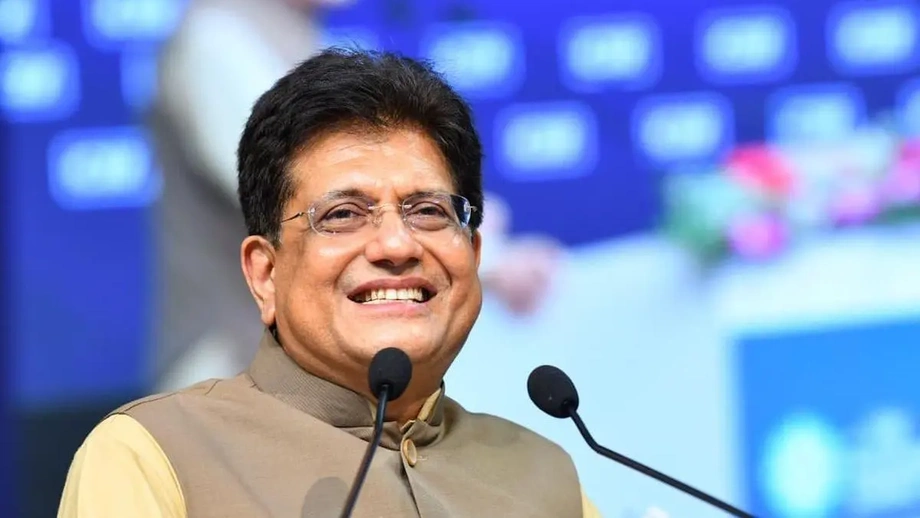
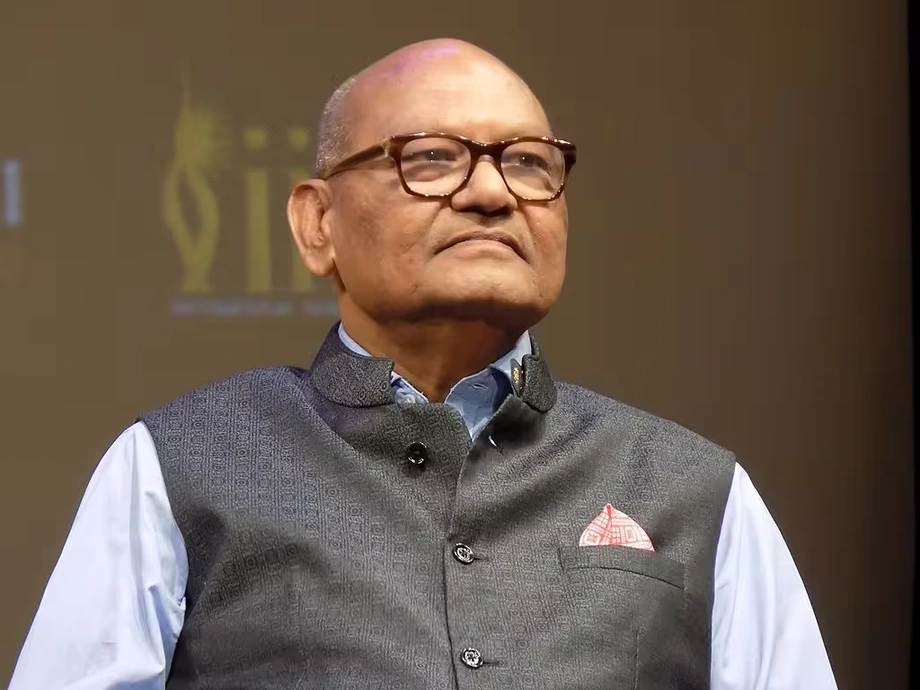
Vedanta Group Chairman Anil Agarwal issued a three-point economic growth roadmap on November 20, 2026, responding directly to challenges raised by Prime Minister Narendra Modi during the Federation of Indian Chambers of Commerce and Industry centenary celebrations in New Delhi. Prime Minister Modi challenged industry leaders over stagnant hiring and wage growth despite substantial tax cuts, such as the reduction of the basic corporate tax rate from 30% to 22% and income tax exemptions on annual salaries up to Rs 12 lakh. Addressing the annual gathering, the Prime Minister noted that businesses often expect the government to drive employment and wage increases rather than taking the initiative themselves. "If tax rates are slashed and you still do not increase hiring or raise wages, who will?" Prime Minister Modi stated during his address. Anil Agarwal published his proposals in a post on X, describing the Prime Minister's address as open and straightforward while urging the corporate sector to support the national goal of becoming a developed economy.
Contents
- Industry Leaders Respond to Government Challenges
- Expanding Private Management of State Enterprises
- Replacing Lengthy Approvals with Self-Certification
- Unlocking Mineral and Energy Exploration for Startups
- Recent Policy Reforms in Mining and Exploration
- Addressing Domestic Resource Dependence and Import Costs
- Key Points
Prime Minister Modi specifically highlighted India's heavy reliance on imports for pharmaceutical ingredients, specialised steel, aluminium products, and machinery. He encouraged corporate leaders to build domestic manufacturing capabilities and capitalise on expanding global trade partnerships. Responding to this call for long-term domestic investment, Agarwal outlined specific measures involving public asset privatisation, self-certification for businesses, and startup participation in mineral and energy exploration. He argued that these reforms would generate employment, attract investment, raise incomes, and strengthen the Indian rupee. Drawing a parallel to the agricultural self-sufficiency drive of the past, Agarwal called for a nationwide movement around these economic reforms.
Expanding Private Management of State Enterprises
The first proposal in Agarwal's growth plan calls for transferring the management of public sector enterprises and state-owned assets across natural resources, energy, light manufacturing, and heavy industry to private operators. Agarwal argued that private management could significantly boost productivity and increase output several times, up to 10 times in certain sectors. According to his proposal, improved operational efficiency would stimulate the growth of ancillary micro, small, and medium enterprises, thereby creating millions of jobs. He pointed to successful private operations in sectors such as airports, ports, airlines, telecommunications, metals, and hotels as proof of concept.
To ensure that the benefits of privatisation reach the workforce, Agarwal set two mandatory conditions for any transfer of state assets. He emphasized that private operators must guarantee no layoffs of existing employees while simultaneously expanding the workforce threefold. Explaining the mechanics of asset sales, Agarwal suggested that the government could either sell shares to private corporations or distribute them directly to the public, citing historical public share distributions in British Airways and British Petroleum. He added that proceeds from government asset sales should be utilised to reduce public debt and finance critical infrastructure development. In democratic economies, he argued, governments should focus primarily on governance rather than direct business operations.
Addressing the three-point proposal, government and industry representatives noted that while privatisation and structural reforms are under active evaluation, any implementation must carefully balance employment security, fiscal discipline, and regulatory oversight across critical sectors.
Replacing Lengthy Approvals with Self-Certification
The second recommendation focuses on dismantling bureaucratic barriers and building mutual trust between the government and the corporate sector. Building on the Prime Minister's emphasis on trust as the foundation for economic development, Agarwal proposed replacing lengthy regulatory approval procedures with a self-certification mechanism. Under this framework, the government would establish clear and straightforward regulations that allow new industries to begin operations rapidly without waiting for multiple bureaucratic permissions. Compliance would subsequently be monitored through regular audits rather than upfront approvals.
This proposed shift aims to reduce compliance costs, shorten setup times, and encourage entrepreneurs to invest in new ventures without facing administrative delays. The recommendation aligns with ongoing government efforts to improve the ease of doing business in India. Prime Minister Modi had previously invited industry representatives to suggest further regulatory reforms, indicating administrative openness to corporate recommendations. By streamlining the initial startup phase, the self-certification model seeks to accelerate industrial growth across various manufacturing and service sectors.
Unlocking Mineral and Energy Exploration for Startups
The third proposal targets the below-the-ground sector, encompassing minerals, metals, and hydrocarbons, by encouraging startups and young entrepreneurs to enter exploration. Agarwal noted that while mining and processing require massive capital investments, exploration is significantly less capital-intensive and can be initiated with funding as low as Rs 5 crore. Under his proposed model, smaller startups would identify and discover mineral deposits or oil reserves and subsequently sell their findings to larger companies possessing the financial and operational capacity to undertake extraction and processing. For instance, an exploration startup discovering oil reserves could sell its findings to Oil and Natural Gas Corporation, while a company identifying mineral deposits could transfer its discovery to Hindustan Zinc.
Current regulations generally treat any new mineral or hydrocarbon discovery as government property, limiting the commercial freedom of independent explorers. Agarwal called for policy modifications to allow private explorers to benefit commercially from their discoveries, creating an incentive structure that would attract entrepreneurial talent and private capital. This approach could establish hundreds or thousands of specialized exploration startups, expanding India's domestic resource base and reducing import dependence. Policymakers have gradually introduced reforms in this sector, including the 2015 amendment to the Mines and Minerals (Development and Regulation) Act, which introduced auction-based allocation for mineral concessions.
Recent Policy Reforms in Mining and Exploration
India's regulatory framework for mineral exploration has undergone several legislative and institutional adjustments in recent years to encourage private participation. The Mines and Minerals (Development and Regulation) Amendment Act of 2023 introduced exploration licences for 29 specified deep-seated minerals, including lithium, cobalt, nickel, copper, and gold. This legislation empowered the central government to auction mining leases and composite licences for strategic minerals, allowing licence holders to conduct reconnaissance and prospecting activities while receiving a revenue share once mining begins. Additionally, the government enabled notified private exploration agencies to undertake projects and introduced schemes offering eligible licence holders reimbursement of up to 50 percent of exploration expenditure.
Institutional support has accompanied these legislative updates to strengthen the critical mineral value chain from exploration to processing and recycling. The National Critical Mineral Mission, approved in January 2025 with an outlay of Rs 16,300 crore, set targets to complete 1,200 exploration projects and auction more than 100 critical mineral blocks by the 2030-31 fiscal year. These measures are designed to address a growing domestic supply gap driven by infrastructure development, electric mobility, renewable energy, defence, and advanced manufacturing sectors.
Addressing Domestic Resource Dependence and Import Costs
Industrial demand for metals and minerals continues to surge while domestic availability remains constrained across multiple categories. India remains entirely import-dependent for lithium, cobalt, and nickel, while overall import dependence for copper stands at approximately 57 percent, rising to 96 percent specifically for copper ore and concentrates. Official trade data indicates that India's imports of metals and ores nearly doubled over a decade, increasing from $32.2 billion in 2015 to $60.5 billion in 2025. Bridging this widening gap requires a robust domestic exploration ecosystem capable of securing critical resources within the country.
Anil Agarwal's proposal to engage startups in exploration is designed to create a steady pipeline of domestic discoveries for established mining companies. By allowing smaller entities to monetise their findings, the model aims to inject entrepreneurial energy into a sector traditionally dominated by large public and private enterprises. Enhanced resource security would help insulate domestic manufacturing from global supply chain disruptions and volatile international commodity prices, supporting the broader objective of economic self-reliance.
Key Points
- Vedanta Group Chairman Anil Agarwal outlined a three-point economic growth roadmap on November 20, 2026, following Prime Minister Modi's address at the FICCI centenary celebrations where the Prime Minister questioned industry hiring and wage growth.
- The first proposal advocates transferring state enterprise management to private operators under two strict conditions: no layoffs and a threefold increase in the workforce.
- The second proposal recommends replacing lengthy regulatory approvals with a self-certification framework backed by audits to accelerate business setup.
- The third proposal encourages startups with capital investments starting around Rs 5 crore to enter mineral and energy exploration and sell discoveries to larger firms like ONGC and Hindustan Zinc.
- Official trade figures show India's imports of metals and ores increased from $32.2 billion in 2015 to $60.5 billion in 2025, underlining the need for domestic exploration reform.