Rising Deforestation Threatens Indonesia Green Gains
Rayon is a soft and breathable fabric used for clothing, paper, tissue, and packaging, but producing it often requires clearing centuries-old tropical forests. A study published in the journal Science in November 2026 by researchers led by Robert Heilmayr of University of California Santa Barbara reveals that Indonesia is facing a major setback in its environmental progress. Between 2011 and 2017, the country nearly halted deforestation driven by the pulp industry, reducing forest clearing by 95 percent. Since 2017, however, forest clearing for pulpwood plantations has more than quadrupled, raising urgent concerns among conservationists and researchers.
Contents
- Rising Deforestation Threatens Indonesia Green Gains
- Understanding the Drivers of Past Progress
- The Reversal and Ongoing Supply Chain Breaches
- Impact on Endangered Wildlife and the Mahakam River Watershed
- Financial Backing and Corporate Transparency Concerns
- Policy Shifts and Future Expansion Risks
- At a Glance
Forest clearing for pulpwood rose from about 5,600 hectares (13,838 acres) in 2017 to 24,300 hectares (60,047 acres) in 2022. By 2022, the destruction caused by pulpwood harvesting surpassed the land clearing driven by industrial oil palm plantations. Researchers tracked this alarming reversal using satellite data, supply chain records, and remote sensing analysis from 2001 to 2022, documenting how rapidly the pulp sector returned to old-growth forests.
Understanding the Drivers of Past Progress
The success achieved during the 2010s was not the result of a single policy or corporate promise. According to Jason Jon Benedict, a project scientist at the Environmental Markets Lab, an all-of-the-above approach proved necessary. The government introduced stronger domestic reforms to protect forests and peatlands, while international incentives encouraged sustainable practices. At the same time, plantation managers improved agricultural productivity, allowing existing plots to produce more wood per hectare without requiring new land clearance.
Corporate leadership also played a vital role when major forestry groups adopted zero-deforestation commitments. Asia Pulp and Paper pledged to end forest clearing in its supply chain in 2013, followed by Asia Pacific Resources International Limited in 2015. These voluntary promises made Indonesia the first tropical nation where all national pulp production was theoretically covered by zero-deforestation pledges, proving that substantial conservation was possible under the right conditions.
The Reversal and Ongoing Supply Chain Breaches
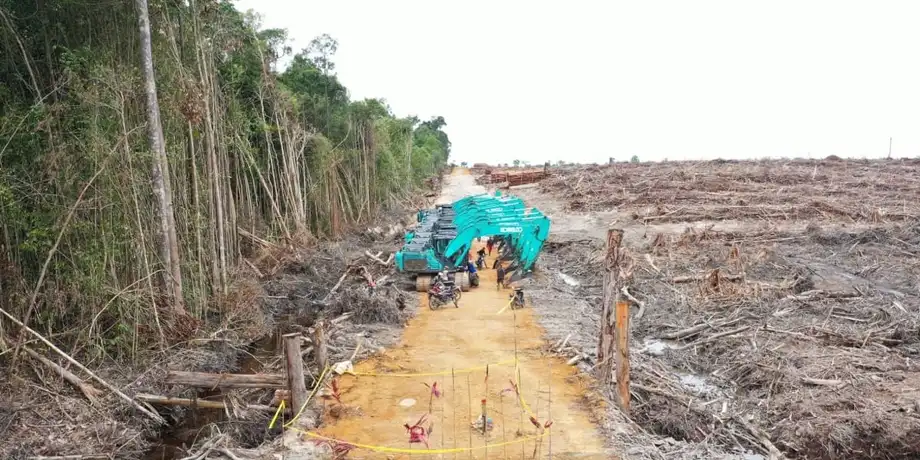
Despite those earlier commitments, recent investigations show that deforestation has returned to key supply chains in Indonesian Borneo. A report published by the Rainforest Action Network reveals that Singapore-based pulp giant Royal Golden Eagle (RGE) has continued sourcing wood from suppliers clearing natural rainforests in East Kalimantan. Customs records and satellite analysis show that a wood chip mill named PT Balikpapan Chip Lestari sourced timber from two concessions, PT Sendawar Adhi Karya and PT Bakayan Jaya Abadi, which cleared 5,565 hectares of natural forest between 2020 and 2024.
Royal Golden Eagle acknowledged the violations after an investigation, stating that the land cover change in those supplier concessions was likely non-compliant with its sustainability policies. Lucita Jasmin, Group Sustainability Director at Royal Golden Eagle, announced the immediate cessation of all supply from the chip mill. The company stated that it will no longer source wood from that facility in the future.
Based on the preliminary findings of our investigation regarding supply to BCL by SAK and BJA, and following the earlier issues with BCL and its then supplier PT Industrial Forest Plantation in 2023, Asia Symbol has taken the decision to immediately cease all supply from Bcl.
The volume of timber involved in these breaches is substantial. In 2024, the two forestry concessions sent more than 400,000 cubic meters of wood to the PT Balikpapan Chip Lestari chip mill. The mill then exported 100 percent of its wood chips, totaling over 800,000 tons valued at more than $70 million, directly to Asia Symbol, a mega-sized pulp mill owned by RGE in Rizhao, China. Environmental advocates argue that such large volumes demonstrate that zero-deforestation policies are routinely bypassed through complex corporate structures.
Impact on Endangered Wildlife and the Mahakam River Watershed
The recent deforestation is concentrated in the watershed of the Mahakam River, which is the third largest river on the island of Borneo and contains some of the last intact rainforests in Indonesia. This region serves as a critical habitat for several critically endangered and iconic species. Among them are the Mahakam River Dolphin, known locally as pesut, and the Bornean orangutan. Furthermore, the elusive Sumatran rhinoceros, previously thought to be extinct in the wild on Borneo, was detected in nearby areas in 2016 and 2025.
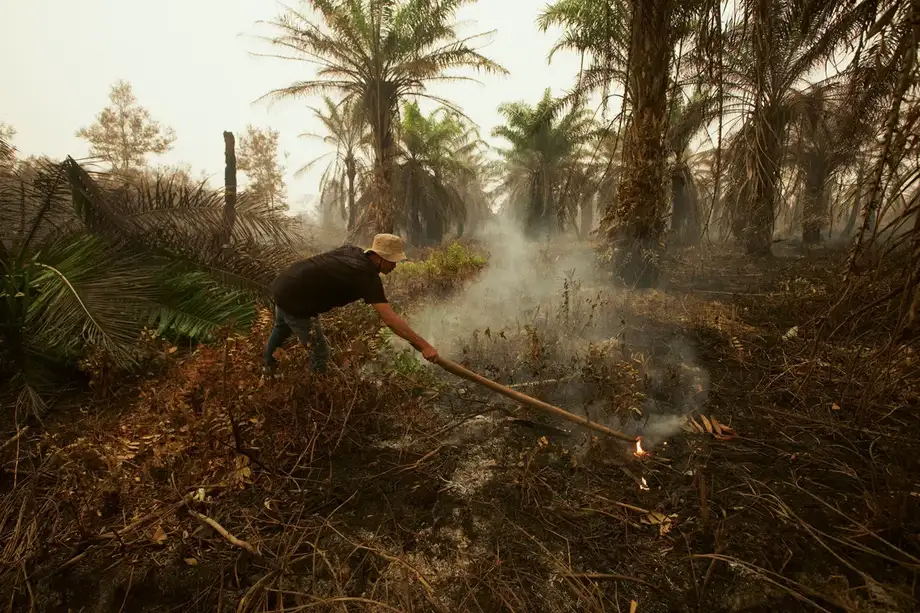
Environmental researchers note that replacing intact rainforest with monoculture acacia and eucalyptus plantations reduces the ability of the land to absorb heavy rainfall. This disruption increases soil erosion and elevates the risk of severe floods and landslides for local Indigenous Dayak communities who depend on the forest for their livelihoods and traditional farming. Additionally, clearing carbon-rich peatlands releases massive amounts of stored greenhouse gases into the atmosphere and creates thick haze that impacts regional air quality.
Financial Backing and Corporate Transparency Concerns
International financial institutions face mounting pressure regarding their lending practices to forestry conglomerates. The Japanese megabank Mitsubishi UFJ Financial Group has continued providing financial credit to RGE's pulp division, including $222 million to APRIL between 2020 and July 2025, alongside a $95 million contribution to a syndicated loan in 2024. Environmental groups argue that banks must apply their environmental policies to an entire corporate group rather than just individual compliant subsidiaries to prevent indirect financing of forest destruction.
Transparency issues are further complicated by the use of offshore shell companies and complex ownership structures. Investigators from organizations such as Auriga Nusantara note that ultimate beneficial owners are often obscured, making it difficult to trace which concessions supply specific mills. This lack of visibility undermines the credibility of corporate sustainability pledges and allows controversial operations to continue expanding without public accountability.
Policy Shifts and Future Expansion Risks
The long-term outlook for Indonesia's forests faces additional threats from recent legislative changes and planned industrial expansions. A sweeping deregulation law passed in 2020 rolled back numerous environmental protections, while the issuance of new licenses opened selectively logged forests to full plantation conversion. Meanwhile, the pulp industry is expanding its production capacity by nearly 80 percent to meet growing global demand for paper and viscose products.
Researchers estimate that this upcoming mill expansion could drive an additional 345,947 acres of deforestation and convert nearly 494,210 acres of peatland, an area larger than the city of Los Angeles. In a related case regarding industrial permit enforcement, Indonesia revoked the forest permit for Riau Andalan Pulp and Paper across 338,536 hectares in Riau due to recurring peatland fires and environmental damage. This administrative action demonstrates that the government is willing to intervene against permit violations, even as broader industrial pressures continue to mount.
At a Glance
- Forest clearing for pulpwood plantations in Indonesia has more than quadrupled since 2017, rising to 24,300 hectares by 2022.
- Royal Golden Eagle acknowledged that supplier concessions cleared 5,565 hectares of natural forest in East Kalimantan between 2020 and 2024 in breach of no-deforestation policies.
- Planned industrial mill expansions threaten to drive hundreds of thousands of additional acres of deforestation and peatland conversion across the region.
- Mitsubishi UFJ Financial Group provided $222 million in financing to APRIL between 2020 and July 2025 despite ongoing supply chain violations.