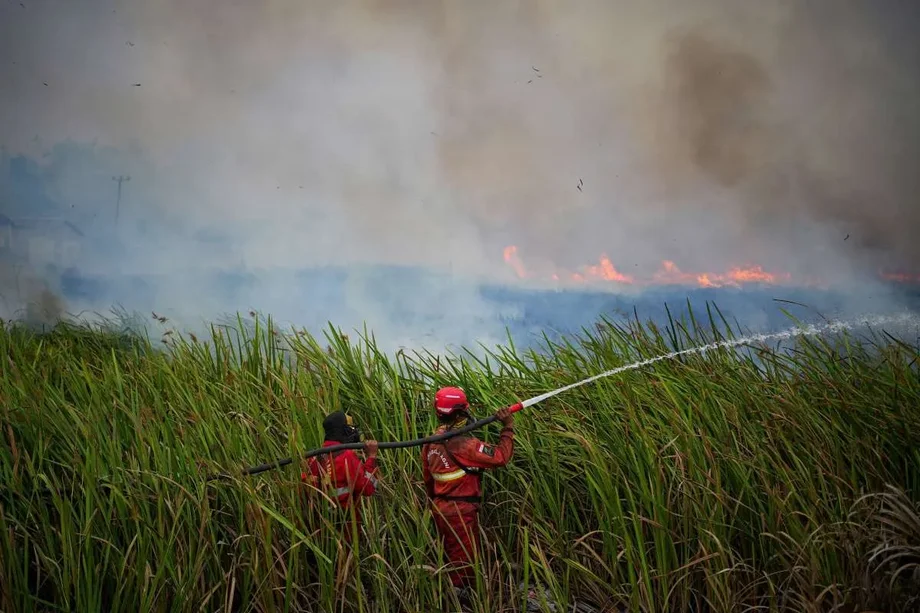
Eight companies face action as Indonesia battles fires and haze
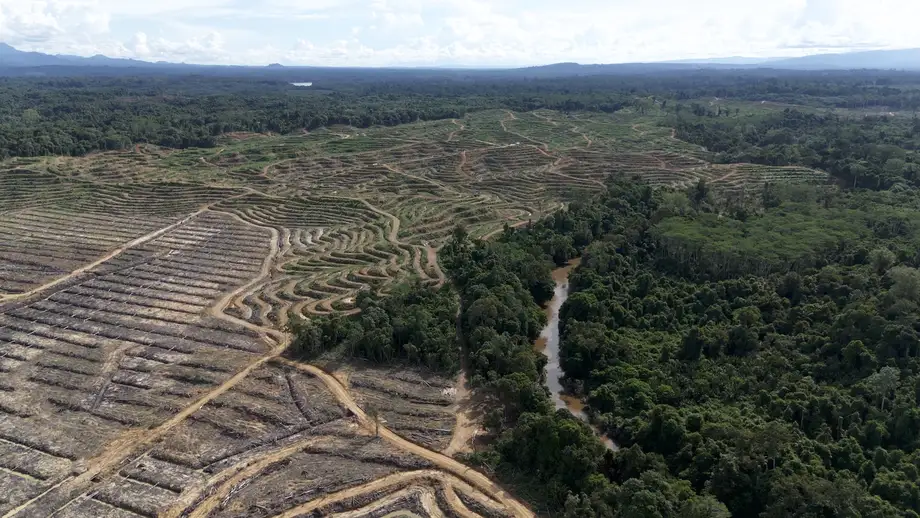
Indonesia will withdraw or withhold land rights covering more than 42,000 hectares from eight companies linked to forest and land fires, while inspecting another three companies whose concessions cover more than 11,000 hectares. The measures target businesses in Kalimantan, the Indonesian part of Borneo, as smoke from the country's most intense fires in 11 years spreads across borders.
Contents
- Eight companies face action as Indonesia battles fires and haze
- What losing HGU means for a company
- Three firms face the loss of entire concessions
- Expired rights and blocked applications affect four more firms
- One partial revocation and three unresolved cases
- Foreign investment links bring regional scrutiny
- Health pressures and public demands preceded the action
- How the enforcement sequence unfolded
- Key Points
Agrarian Affairs Minister Nusron Wahid said three companies would lose their cultivation rights in full because fires had repeatedly affected their concessions, burned more than half their land and exposed inadequate equipment and infrastructure to prevent or contain further outbreaks.
The other measures differ according to each company's circumstances: one faces partial revocation, one will lose access to land after its rights expired, and three will have applications for land rights rejected. Eight companies therefore face action, while three remain under investigation.
The announcement comes amid a growing health emergency. Health Ministry figures recorded more than 400,000 cases of acute respiratory infections across seven Indonesian provinces by November 2. Singapore has also summoned representatives of companies listed on its stock exchange whose Indonesian plantations were suspected of having fires.
The National Police's Criminal Investigation Department, known as Bareskrim, recommended action against 11 companies. Indonesia's Agrarian Affairs and Spatial Planning Ministry and National Land Agency, known together as ATR/BPN, then grouped the businesses into five categories after reviewing their land rights, fire histories and prevention measures.
What losing HGU means for a company
HGU, short for Hak Guna Usaha, is a legal right to cultivate a specified area of land. For a plantation business, it provides the authority to use that land for agricultural production. Revoking it removes that authority over all or part of the concession.
A plantation business permit and HGU serve different purposes. A business permit authorises the commercial activity, while HGU concerns the right to cultivate the land itself. Three companies in this case already hold business permits but have not received HGU, so the government plans to block the land rights rather than cancel rights already issued.
Nusron said the ministry would also recommend that the Home Affairs Ministry and relevant local governments evaluate those companies' business permits. Most descriptions identified them as plantation permits, although one identified them as mining permits. The government did not disclose the crops or plantation types involved.
Coordinating Minister for Political and Security Affairs Dudung Abdurachman said businesses remained responsible for preventing environmental damage, even when they held state permits. He warned that violations could lead to suspension or revocation.
Dudung described the government's position at the Jakarta press conference:
"There must be no tolerance for violations, no preferential treatment for corporations and no party that is above the law," Dudung said.
Three firms face the loss of entire concessions
PT MIB in Banjar, South Kalimantan, PT RKA in Melawi, West Kalimantan, and PT SKM in Ketapang, West Kalimantan, face full revocation of their HGU. PT MIB was also identified as PT NMIB in the company list.
The concessions were described as covering approximately 4,000 hectares for PT MIB, 11,000 hectares for PT RKA and 7,000 hectares for PT SKM. Together, those figures amount to about 22,000 hectares, or 220 square kilometres.
Nusron said the three businesses had experienced repeated fires, with more than 50 percent of their concessions burned. He also cited a lack of adequate facilities and infrastructure to anticipate and reduce fire damage. The government's stated grounds therefore combine the extent of the burning with recurring outbreaks and the companies' ability to respond.
Full revocation would remove cultivation rights across each concession. That makes this the broadest category of action against an individual company, compared with the partial withdrawal planned elsewhere.
Expired rights and blocked applications affect four more firms
PT BSLT in Kubu Raya, West Kalimantan, holds a concession of 2,300 hectares whose HGU expired in 2020. The company was also identified as PT PSLT. Nusron said the rights would not be renewed and the land would return to state control.
The government will also refuse to issue HGU to PT ANI in Landak, PT BOS in Kapuas Hulu and PT AER in Ketapang, all in West Kalimantan. The areas cited were 5,246 hectares, 4,750 hectares and 5,134 hectares respectively.
Those three areas total 15,130 hectares. For the companies, rejection would close off the route to obtaining cultivation rights over that land, while the proposed review of their business permits could bring another administrative decision.
Each measure addresses a different legal position. PT BSLT's rights have already expired; the three other companies are waiting for rights that the ministry now says it will refuse. This explains why the action against eight businesses includes more than straightforward cancellation of existing permits.
One partial revocation and three unresolved cases
PT SAE in Landak, West Kalimantan, faces partial revocation of its HGU. Its concession covers approximately 1,510 hectares, with a more precise figure given as 1,510.2639 hectares. Nusron said fires affected less than half the concession.
The concession's total area and the area to be withdrawn are different figures. Authorities have yet to specify how much of PT SAE's land rights will be revoked.
PT STP and PT JMS, both in Kutai Kartanegara, East Kalimantan, and PT API in Ketapang, West Kalimantan, remain under review. Their concessions together cover more than 11,000 hectares.
Nusron said officials were conducting physical inspections and checking measurements to decide whether those businesses should lose all or part of their HGU. No deadline was given for those decisions or for completing the announced withdrawals and refusals.
The ministry also said it would continue monitoring the affected companies to prevent further land burning. That means inspections will remain part of the response after the land rights decisions, rather than ending when paperwork is changed.
Foreign investment links bring regional scrutiny
Nusron said some of the 11 companies had beneficial owners linked to investors from South Korea, Malaysia and Singapore, alongside Indonesian investors. A beneficial owner is the person who ultimately owns, controls or benefits from a company, including through other businesses in an ownership chain.
Nusron described those connections when discussing the companies selected for action:
"Based on the beneficial ownership of the 11 companies, some are linked to investors from South Korea, Malaysia, and Singapore," he said.
The minister did not identify the investors or match their nationalities to individual companies. His announcement places the ownership structure of businesses operating in Kalimantan under scrutiny alongside their conduct on the land.
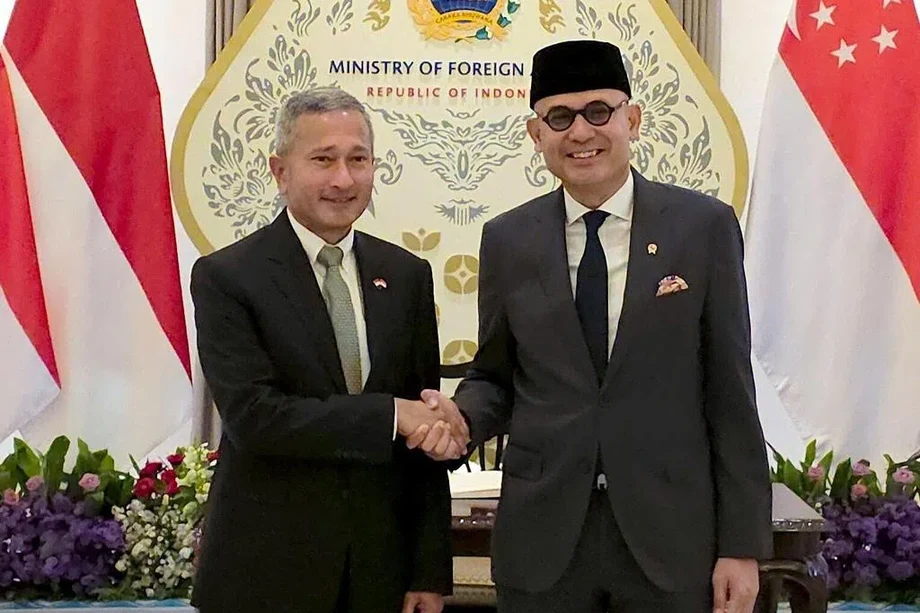
Singapore's decision to summon representatives of companies listed on the Singapore Exchange adds a regional response to the Indonesian measures. The companies were suspected of having fires on plantations in Indonesia as worsening smoke and haze drifted into the city state.
Indonesia's action concerns cultivation rights and business permits. Singapore's summons concerns companies with a connection to its financial market and a pollution problem affecting its residents. Together, the developments show how the consequences extend beyond the districts where the fires burn.
Health pressures and public demands preceded the action
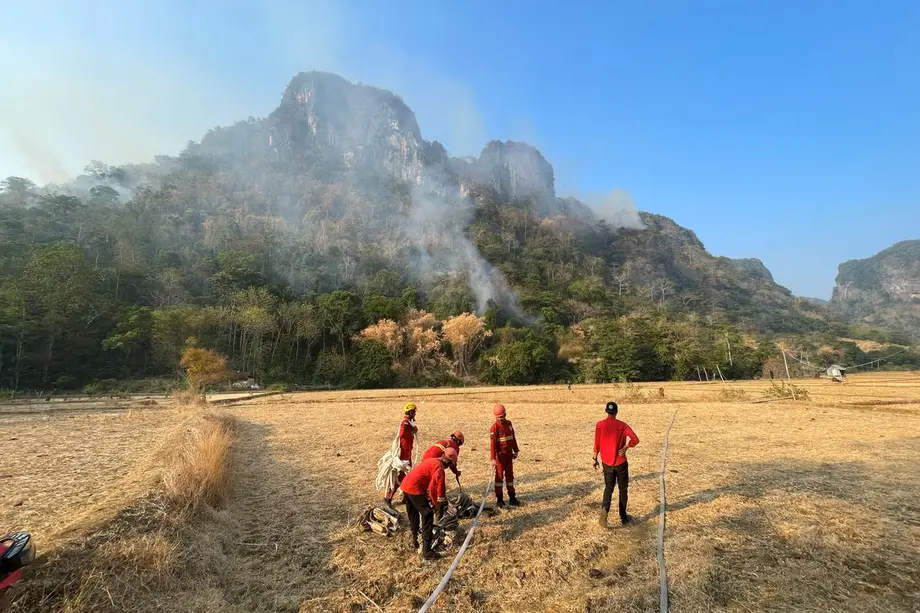
Indonesia has been battling its most intense forest and land fires since 2015, with major areas burned on Sumatra, Borneo and Papua. The more than 400,000 respiratory infection cases recorded by November 2 give a measure of the pressure on communities exposed to fire and haze.
Acute respiratory infections affect the airways and can cause symptoms such as coughing, fever and difficulty breathing. Smoke adds to the burden by irritating the lungs and making breathing harder, especially for people already living with respiratory conditions.
The permit decisions follow student demands for action during demonstrations on October 20, when President Prabowo Subianto marked two years in office. Protesters called for the fires to be declared a national disaster and for companies responsible for burning to face prosecution.
At that stage, the wildfire monitor Nusantara Atlas had estimated that 1,916,588 hectares burned between January and September. Presidential Chief of Staff Listyo Sigit Prabowo said the president had ordered stronger aerial operations, better coordination and faster investigations into 98 cases involving suspected corporate links.
Fire damage has also reached places far from the Kalimantan concessions. In South Sulawesi, fires threatened ancient paintings in the Maros-Pangkep cave landscape. Flames came within 800 metres of a cave containing prehistoric art, while more than 270 hectares of the surrounding national park burned between September 30 and October 18.
How the enforcement sequence unfolded
The case brings together an old permit expiry, a worsening fire emergency and new decisions about land use. The main dates are:
- 2020: The HGU covering PT BSLT's 2,300 hectares expired.
- October 19, 2026: Prabowo summoned senior officials to discuss the fires and ordered a stronger response.
- October 20: Students demonstrated across Indonesia, including demands for action against companies responsible for burning.
- November 2: Health Ministry data recorded more than 400,000 acute respiratory infection cases in seven provinces.
- November 9 and 10: The land rights announcement was described as taking place on November 9, while another account dated the same press conference November 10.
The next decisions concern the three businesses still under inspection, the extent of PT SAE's partial revocation and the evaluation of business permits held by companies denied HGU. The ministry's five categories make those separate tasks, even though all arose from the same police recommendation.
For the affected districts, the immediate change is in who retains legal authority to cultivate particular areas. The return of PT BSLT's land to state control is another concrete outcome. Continued monitoring will be needed to carry out the government's stated aim of preventing renewed burning on the affected concessions.
Key Points
- Indonesia announced action affecting more than 42,000 hectares associated with eight companies linked to forest and land fires.
- PT MIB, PT RKA and PT SKM face full HGU revocation after repeated fires burned more than half their concessions.
- One expired concession will return to state control, three HGU applications will be refused and PT SAE faces partial revocation.
- PT STP, PT JMS and PT API remain under inspection, with more than 11,000 hectares involved.
- Some beneficial owners have investment links to South Korea, Malaysia and Singapore, according to Nusron.
- Health Ministry figures recorded more than 400,000 respiratory infection cases across seven provinces by November 2.