Shared oil routes put corporate denials under scrutiny
Internal accounting records, court testimony and palm oil shipments along Indonesia's Mahakam River have become central to new allegations that Singapore listed First Resources concealed business links to companies accused of clearing thousands of hectares of forest.
Contents
- Shared oil routes put corporate denials under scrutiny
- Following palm oil from mills to the river
- Accounting files and staff links deepen the dispute
- Forest losses extend across different concessions
- Certification action left ownership allegations unresolved
- A sale in South Sorong faces fresh questions
- First Resources sets out its response to fires
- Years of complaints lead to demands on buyers and banks
- Key Points
Rainforest Action Network (RAN) says records describe companies across First Resources, Kalimantan Agro Sejahtera (KAS) Group and FAP Agri as "related parties". Its investigation also traced crude palm oil from their mills through shared transport and storage infrastructure in East Kalimantan, on the Indonesian side of Borneo.
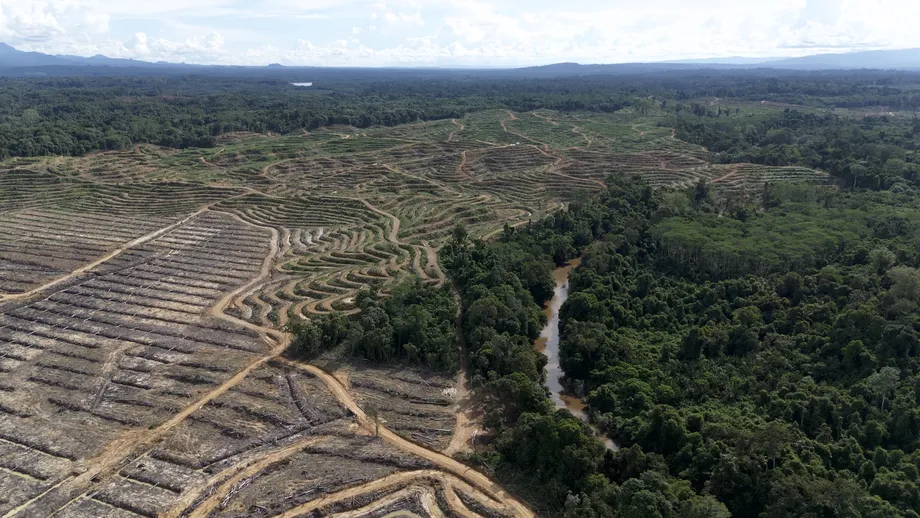
In its investigation announcement, RAN reports more than 9,800 hectares of forest clearance across concessions it describes as controlled by the Fangiono group between January 2021 and May 2026. The announcement, dated October 29, also identifies approximately US$1.2 billion in credit issued to companies across the group between January 2021 and September 2026.
First Resources, controlled by the billionaire Fangiono family and overseeing more than 270,000 hectares of oil palm plantations, rejects the alleged integration. It says it operates lawfully and denies having coordinated or mixed crude palm oil supply chains with the Indonesian suppliers identified by investigators. FAP Agri also disputes key allegations. KAS did not respond to requests for comment.
Following palm oil from mills to the river
RAN investigators followed trucks and barges carrying crude palm oil, the oil extracted from harvested palm fruit before refining. They documented shipments from KAS mills passing through a First Resources bulking facility on the Mahakam River, alongside oil from First Resources and FAP Agri.
A bulking facility collects and stores oil before it is shipped onward in larger loads. RAN says oil from the three groups appears to have been mixed there before moving to coastal refineries serving international markets. Employees interviewed during the investigation also described connections between the businesses.
For buyers, the route matters because a shipment's environmental record depends on the plantations supplying it. When oil from several producers enters shared storage, checking the names on the final sales documents alone leaves buyers without a full picture of where the oil originated.
First Resources sells to Cargill and other major food processing and trading businesses. RAN has submitted formal grievances to traders and global brands, asking them to investigate and suspend sourcing across the wider group. The grievances are requests for action; no resulting buyer decisions were announced in the investigation.
Accounting files and staff links deepen the dispute
Internal accounting files dated April 2024 appear to identify companies across First Resources, KAS and FAP Agri as related parties, according to RAN. In accounting, that term generally describes businesses or people connected through ownership, control or influence. Investigators consider its use important because First Resources had publicly denied commercial links with KAS.
Records from a lawsuit filed by KAS in 2022 add another strand of evidence. RAN says employee statements in those proceedings described regular transport of KAS palm oil to First Resources operations.
The Environmental Investigation Agency (EIA) and its Indonesian partner Kaoem Telapak examined corporate, personnel and commercial connections in their Corporate Connections investigation. They identified a commissioner of KAS companies who was also described as FAP Agri's commercial head, as well as documents recording transactions between businesses in the two groups.
First Resources told EIA that KAS is neither a subsidiary, associated company, related party nor interested person of First Resources. It also said it had not purchased palm oil products from KAS or entered into other transactions with it. FAP Agri disputed EIA's interpretation of the personnel and transaction evidence, saying commercial relationships do not demonstrate corporate control.
The dispute concerns both ownership and day to day business arrangements. Investigators are asking whether companies presented as separate share enough management, trading and logistics to bring their activities within the same sustainability commitments.
Forest losses extend across different concessions
Satellite analysis described in the investigations put forest clearance attributed to KAS and FAP Agri at more than 9,300 hectares between 2021 and 2026. RAN's announcement gives a broader figure of more than 9,800 hectares across concessions it identifies as controlled by the Fangiono group between January 2021 and May 2026.
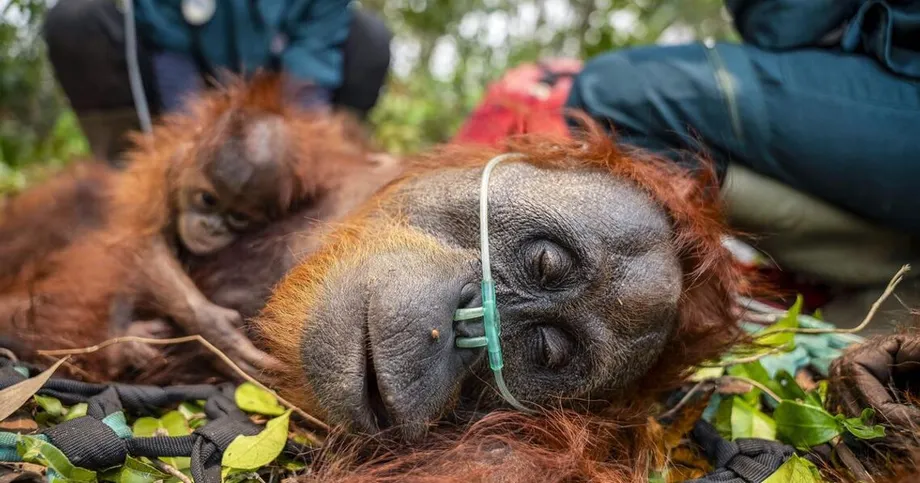
The totals cover differently described groups of concessions and periods. RAN documented endangered Eastern Grey Gibbons in habitat affected by the clearance, connecting the corporate dispute to the survival of animals living in those forests.
KAS has a small public profile compared with its reported operating scale. Corporate recruitment and training information cited by investigators describes about 70,000 hectares of land, six palm oil mills and approximately 15,000 employees. Its ownership structure leads to companies registered in the British Virgin Islands, where the people who ultimately benefit from those entities are not publicly disclosed.
Earlier findings reached beyond Borneo. In A Family Affair, published on August 7, 2025, Kaoem Telapak and EIA alleged that a company affiliated with Ciliandry Anky Abadi (CAA) had cleared more than 6,000 hectares of forest in Papua since 2022.
That report identified First Resources, FAP Agri and CAA as businesses allegedly affiliated with the Fangiono family. It also described allegations of prolonged conflicts with Indigenous Peoples and local communities, and operations lacking complete permits. The Papua figure concerns a different location and period from the latest forest clearance totals.
Certification action left ownership allegations unresolved
First Resources pledged in 2015 to end deforestation in its supply chain. Corporate records indicate that more than half of its plantations have since received certification from the Roundtable on Sustainable Palm Oil (RSPO), a voluntary organisation that sets environmental and social requirements for members.
RSPO certification matters commercially because customers and lenders use it when assessing environmental commitments. First Resources also publishes a sustainability report as a company listed on the Singapore Exchange. That report is not reviewed by an independent third party.
An RSPO complaint filed in 2021 alleged that First Resources controlled other corporate groups. New Borneo Agri, a previous name used for KAS, was added to the complaint in 2024. According to EIA, the case closed in 2025, and First Resources received a suspension of three months for failing to fully declare its relationship with FAP Agri.
The outcome did not require First Resources to treat KAS as part of the same group. RAN senior researcher Alex Helan challenged the handling of the case, arguing that the decision left the alleged movement of oil linked to deforestation through shared supply routes insufficiently addressed.
For certification bodies, the practical issue is where to draw a company's boundary. A commitment covering only businesses formally listed as subsidiaries can leave other connected operations outside its reach. EIA and RAN want fuller examination of management, financing, procurement and logistics alongside formal share ownership.
A sale in South Sorong faces fresh questions
EIA and Kaoem Telapak also examined two South Sorong concessions, PT PMP and PT PPM, which First Resources acquired and later sold. The original account dates the sale to 2025. The concessions are now owned by PT HAM.
Investigators say PT HAM and PT BMS, a shipping company associated with First Resources, have the same ultimate beneficial owner: Zarvex Global Ltd, registered in the British Virgin Islands. An ultimate beneficial owner sits at the end of an ownership chain and ultimately owns or benefits from the business.
The shared ownership connection has prompted EIA to seek a fuller explanation of the sale and the businesses involved. Ben Melling, EIA's forests campaigner, said the findings raise questions about whether the transfer produced complete separation from the assets.
Melling explained why his organisation is looking beyond the names attached to individual companies:
This is about accountability. A company cannot simply be judged by the environmental record of the businesses which formally carry its name if, behind the corporate structure, there are significant links to other companies which are clearing forests.
EIA and Kaoem Telapak are asking First Resources and FAP Agri to disclose their historical and current relationships with KAS, including staffing, transactions, logistics and financing arrangements.
First Resources sets out its response to fires
First Resources is also facing scrutiny over fires and haze in Indonesia. In its updated fire response, dated October 16, 2026, the company said prolonged dry conditions associated with El Nino had increased regional fire activity, with its West Kalimantan concessions most affected.
The statement, signed by company secretary Victor Lai Kuan Loong, said field checks found many nearby hotspots originated outside its operating boundaries. Some fires subsequently spread into managed areas, where company teams worked to contain them. First Resources also said West Kalimantan hotspot numbers had fallen sharply in recent weeks and were largely concentrated in places where it did not operate.
The company described a Zero Burning Policy covering land preparation and future replanting, supported by daily satellite monitoring, drones, ground patrols, trained firefighters and equipment. On existing peat plantations, it said teams monitor water levels, rainfall and soil moisture. Peat is soil rich in partly decomposed plant material that becomes more vulnerable to fire when dry.
PT Kayung Agro Lestari, or PT KALE, entered the group through the acquisition of PT Austindo Nusantara Jaya in May 2025. First Resources said PT KALE had no replanting programme planned. It described difficulties reaching fires in conservation areas because access and water supplies can be limited.
First Resources acknowledged operational disruption from poor visibility and deteriorating air quality, but said it expected no material operational or financial impact. Its fire statement addresses prevention, response and plantation management, while the new investigations focus on corporate relationships and the origin of traded palm oil.
Years of complaints lead to demands on buyers and banks
The allegations have developed through corporate complaints, investigations and company responses over more than a decade. The principal dates are:
- 2015: First Resources pledged to end deforestation in its supply chain.
- 2021: An RSPO complaint challenged its alleged control of other corporate groups.
- 2022: A KAS lawsuit generated employee statements later cited as evidence of transport links.
- 2024: New Borneo Agri was added to the RSPO complaint; First Resources denied commercial links with KAS.
- 2025: The RSPO case closed, with a suspension of three months over disclosure of the FAP Agri relationship. EIA and Kaoem Telapak published A Family Affair on August 7.
- October 2026: First Resources issued its updated fire response, followed by RAN's October 29 announcement of new findings.
RAN's estimate of US$1.2 billion in credit places banks alongside commodity buyers in the dispute. The organisation says the financing included major Asian banks with policies intended to prevent support for clients driving deforestation.
Palm oil buyers commonly use NDPE commitments, meaning no deforestation, no development on peat and no exploitation. Enforcing those promises requires tracing oil back through traders, storage facilities and mills to the plantations producing the fruit.
Pete Cooper, RAN's senior corporate engagement specialist, said buyers need independent checks on both forest clearance and supplier disclosure:
Buyers cannot trust promises of deforestation-free palm oil when the supplier hides where that oil comes from.
RAN wants sourcing suspended across the wider group pending investigation. EIA and Kaoem Telapak are calling for suspension of identified sourcing, trading and other relationships with KAS until their questions are answered. The announcements give no deadline for those answers or date for a new certification decision.
Key Points
- RAN alleges that accounting records and shared palm oil logistics connect First Resources, KAS and FAP Agri more closely than publicly acknowledged.
- RAN reports more than 9,800 hectares of forest clearance across concessions it describes as controlled by the Fangiono group from January 2021 to May 2026.
- First Resources denies the alleged supply chain integration; FAP Agri disputes key findings, and KAS did not respond.
- An RSPO complaint closed in 2025, with First Resources suspended for three months over incomplete disclosure of its FAP Agri relationship.
- EIA and Kaoem Telapak are seeking fuller corporate disclosure, while environmental groups are urging buyers to suspend specified business relationships.
- First Resources says it prohibits burning, maintains fire monitoring and response systems, and expects no material financial impact from the fires and haze.