A bigger order book meets a shortage of planes
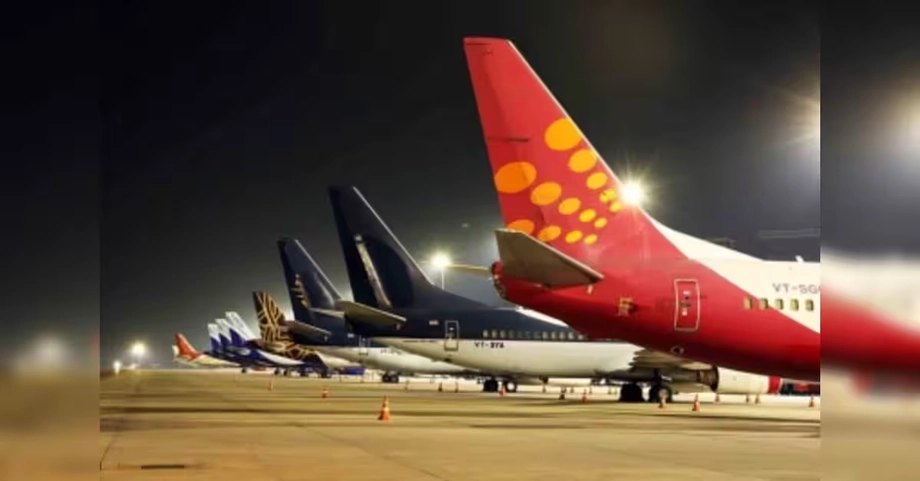
India is ready to order another 1,000 civilian aircraft, Commerce and Industry Minister Piyush Goyal said in Cairo on November 16, 2026, as airlines seek faster deliveries to meet rising demand. The expansion would enter a crowded global queue: manufacturers began 2026 with about 17,000 unfilled aircraft orders, according to consultancy Oliver Wyman.
Contents
- A bigger order book meets a shortage of planes
- India's fleet could nearly double by 2036
- How many aircraft are already waiting for delivery?
- Why manufacturers cannot quickly clear the queue
- Why leasing matters to almost every Indian carrier
- GIFT City is building a domestic financing base
- Legal protections and bank funding enter the picture
- What more aircraft could mean for Egypt and Indian manufacturing
- The dates shaping the expansion
- Key Points
Speaking during a visit to Egypt lasting two days, Goyal said India's aircraft requirement exceeded 2,000 planes. IndiGo, Air India and Akasa Air already have substantial orders with Airbus and Boeing, while some deliveries listed by the Ministry of Civil Aviation stretch to 2034.
Goyal, whose portfolio covers commerce and industry, described the aircraft shortage as acute and said India was pressing established manufacturers to supply planes faster.
"We have ordered more than 1,200 planes, and we are ready to order another 1,000 planes; we need more than 2,000 planes for our requirements. So we are pursuing the established manufacturers of aircraft for faster supplies," Goyal said.
No airline allocation, contract value or signing schedule was announced for the additional 1,000 aircraft. Goyal's comments set out the scale of demand, while airlines still need delivery slots, financing and aircraft ready to enter service.
The challenge has two connected parts. Manufacturers must build more planes, and Indian carriers must arrange the money and leasing contracts needed to operate them. Government efforts now address both, with pressure for faster supplies alongside changes intended to bring more aviation finance into India.
India's fleet could nearly double by 2036
Oliver Wyman's global fleet forecast projects India's commercial aircraft fleet growing from 812 in 2026 to 1,605 in 2036. That is an increase of 793 aircraft, or almost 98 percent, over ten years.
The forecast puts India's average annual fleet growth at 7.1 percent, the highest regional rate in its comparison. The Middle East follows at 5 percent, while the worldwide fleet is projected to grow by 3.2 percent annually.
India's projected pace is therefore more than twice the global rate. China is expected to add the largest number of aircraft, but India is expected to expand fastest in percentage terms.
Within the decade, Oliver Wyman expects India's annual growth to average 7.3 percent between 2026 and 2031, then 6.8 percent between 2031 and 2036. Those figures describe growth in the operating fleet. Aircraft deliveries also replace older planes, so the number arriving over a period can exceed the net increase in aircraft flying.
How many aircraft are already waiting for delivery?
KPMG's May 2026 aircraft leasing report lists approximately 1,630 aircraft pending delivery across three leading airline groups. Its table provides a more detailed picture of the existing pipeline than Goyal's broad reference to orders exceeding 1,200 aircraft.
- IndiGo: 901 aircraft, comprising 841 Airbus A320 family aircraft and 60 A350 family aircraft.
- Air India Group: 541 aircraft, including Boeing 737 MAX, 777X and 787-9 aircraft, plus Airbus A320 and A350 family aircraft.
- Akasa Air: 189 Boeing 737 MAX aircraft.
IndiGo accounts for about 55 percent of the pending aircraft in that table. Its large A320 family commitment shows the scale of planned capacity for domestic and regional flying, while A350 orders add aircraft suited to longer international routes.
A December 2025 Ministry of Civil Aviation reply to the Lok Sabha documented orders awaiting delivery, including aircraft scheduled to enter service as late as 2034. For passengers, expansion will arrive gradually as individual planes join fleets, allowing airlines to add departures or destinations.
Why manufacturers cannot quickly clear the queue
Oliver Wyman estimates that the global backlog of about 17,000 aircraft would take more than 12 years to clear at production rates prevailing at the start of 2026. Indian airlines are competing for manufacturing capacity with carriers across the world.
Airbus and Boeing face shortages of components and workers, alongside engine reliability problems and delays in certification. Certification is the approval process used to establish that an aircraft or engine meets safety requirements before it enters service.
The consultancy expects supply constraints to limit annual aircraft production worldwide until at least 2030. It estimates that these restrictions will leave production more than 6,000 aircraft below what could otherwise have been built.
Delayed deliveries also affect replacement plans. Airlines may keep existing aircraft flying longer while waiting for new ones, adding pressure to maintenance schedules. Oliver Wyman expects global fleet growth to accelerate in the second half of the decade as manufacturers reach their targeted capacity, with aircraft having a single aisle driving most of the increase.
Why leasing matters to almost every Indian carrier
More than 85 percent of Indian carriers' fleets are leased, according to the Ministry of Civil Aviation. KPMG places the share at approximately 85 percent, compared with more than 70 percent globally. Leasing is therefore central to how Indian airlines obtain aircraft.
A lease lets an airline use a plane in return for regular payments rather than paying its entire purchase price at delivery. This spreads costs across years of flying and leaves more cash available for staff, fuel, maintenance and other operating expenses.
KPMG estimates typical annual aircraft lease rentals at Rs 7 crore to Rs 8 crore per aircraft, equivalent to Rs 70 million to Rs 80 million. Aircraft generally have an economic life of 25 to 40 years, making access to finance over long periods especially valuable.
Indian airlines have historically relied heavily on lessors based in overseas centres such as Ireland and Singapore. These payments create recurring foreign exchange outflows running into billions of dollars annually. Developing leasing businesses in India could retain more financing activity and specialist work within the country.
GIFT City is building a domestic financing base
GIFT City's International Financial Services Centre, or IFSC, in Gandhinagar, Gujarat, is the government's main platform for developing aircraft leasing and aviation finance within India. It operates under a special financial framework designed to connect businesses with international capital.
KPMG records 38 aircraft lessors registered with the International Financial Services Centres Authority as of December 31, 2025, including four provisional registrations. That compares with 33 at the end of January 2025.
By December 2025, IFSC entities had leased 196 aircraft and 89 engines. KPMG also records a broader total of 370 aviation assets leased through the centre. These figures show activity extending beyond complete aircraft to engines and other aviation assets.
Major airlines have begun using the centre for financing transactions. In October 2025, Air India's wholly owned leasing subsidiary at GIFT IFSC secured a $215 million loan lasting seven years to finance six Boeing 777-300ER aircraft. The subsidiary owns the aircraft and leases them to Air India.
IndiGo also secured Japanese operating lease with call option financing, known as JOLCO, for two Airbus A320 family aircraft through its GIFT City entity. KPMG identifies it as the first such transaction for an Indian carrier. This structure combines leasing with an option for the airline to buy the aircraft later.
Legal protections and bank funding enter the picture
The Protection of Interest in Aircraft Objects Act, 2025 aligns India's framework with the Cape Town Convention, an international agreement covering rights over aircraft and related assets. KPMG says the law strengthens creditors' ability to recover aircraft and reduces the risks they face when financing airlines.
For a lessor, the ability to recover a plane after an airline fails affects the price of doing business. More predictable recovery procedures can support better lease terms because lenders and aircraft owners face less uncertainty about their assets.
Budget 2026 extended the IFSC income tax deduction to 20 consecutive years within a period of 25 years, according to KPMG. That longer period fits more closely with the decades during which aircraft can generate lease income.
The Ministry of Civil Aviation also convened a committee in September to examine leasing and financing bottlenecks. Options under consideration include greater bank credit, financing denominated in rupees, simpler regulatory processes and joint ventures to develop technical knowledge and leasing skills.
KPMG recommends changes to the Banking Regulation Act, 1949 and Reserve Bank of India rules to permit banks to participate directly in equipment leasing. It also proposes specialist aviation finance desks and access to longer lasting funding from banks, insurers, pension funds and infrastructure financing institutions. These recommendations sit alongside government discussions about streamlining No Objection Certificates for aviation infrastructure.
What more aircraft could mean for Egypt and Indian manufacturing
EgyptAir currently operates direct flights between India and Egypt. Goyal said additional aircraft would allow more services between the countries, connecting fleet expansion with the trade and investment agenda of his Cairo visit.
The commerce minister described the connection between aircraft availability and routes in his remarks to journalists.
"We need to see more (air) connectivity… as we get more aircraft, we are sure we will be able to have more flights to Egypt," he said.
India and Egypt also hope to begin formal trade agreement negotiations within 90 days, after finalising terms of reference. Their discussions covered trade payments in local currencies, shipbuilding and seaport development. More flights would provide additional travel options for businesses and visitors as those ties develop.
India already participates in the aerospace supply chain. Boeing and Airbus together procure about $2 billion in components and services annually from Indian companies. Airbus has two final assembly lines in India, one for military transport aircraft and another for helicopters.
Brazil's Embraer and the Adani Group are exploring regional aircraft manufacturing in India through a strategic collaboration. Their work adds a manufacturing strand to India's aviation ambitions, while the immediate commercial fleet expansion depends on deliveries from existing production programmes.
The dates shaping the expansion
India's aviation plans extend across several years, from legal and financing reforms already introduced to aircraft deliveries well into the next decade.
- 2025: India introduced the Protection of Interest in Aircraft Objects Act, aligning its aircraft financing framework with the Cape Town Convention.
- October 2025: Air India's GIFT IFSC subsidiary secured a $215 million loan for six Boeing 777-300ER aircraft.
- December 2025: The civil aviation ministry documented delivery schedules extending to 2034. GIFT IFSC registrations reached 38 aircraft lessors by the end of the month.
- May 8, 2026: The civil aviation ministry, FICCI and IFSCA scheduled the India Aircraft Leasing and Financing Summit 2.0 at GIFT City.
- November 16, 2026: Goyal said in Cairo that India was ready to order another 1,000 aircraft.
- Until at least 2030: Oliver Wyman expects global aircraft production to remain constrained.
- 2036: India's commercial fleet is projected to reach 1,605 aircraft, up from 812 in 2026.
KPMG also cites projected deliveries of about 3,300 aircraft to India by 2043 and estimates a leasing market opportunity approaching $100 billion. The practical task is to match each arriving aircraft with financing, operating capacity and routes that passengers want to use.
Key Points
- Goyal says India is ready to order another 1,000 aircraft and is seeking faster deliveries from manufacturers.
- KPMG lists approximately 1,630 aircraft already pending delivery for IndiGo, Air India Group and Akasa Air.
- Oliver Wyman projects India's fleet nearly doubling from 812 aircraft in 2026 to 1,605 in 2036.
- Global production constraints are expected to persist until at least 2030.
- India is expanding leasing and financing activity at GIFT City, supported by legal and tax changes.
- Additional aircraft could support more India and Egypt flights alongside wider trade talks.