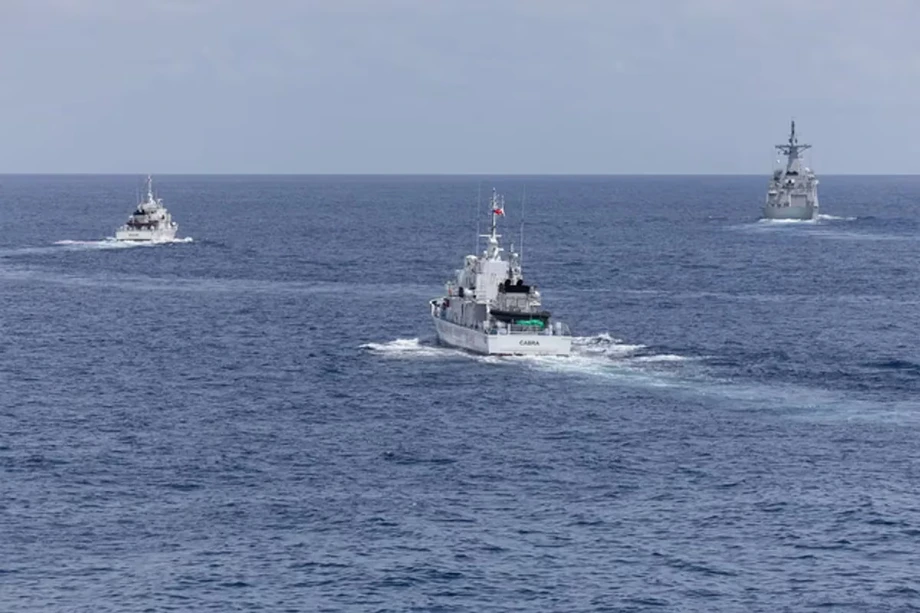
Four countries begin coordination before naming center locations
The Philippines, United States, Japan and Australia already have a defense coordination mechanism operating, Philippine Defense Secretary Gilberto Teodoro Jr. said in Cebu on November 11, 2026, following their agreement to establish a Combined Coordination Center in the Philippines.
Contents
- Four countries begin coordination before naming center locations
- What the ministers agreed in Cebu
- What a shared maritime picture means
- Exercise coordination moves to the strategic level
- The center name has an earlier history
- Information sharing was already being developed
- Maritime activities connect the plans
- How the announcements developed
- Key Points
The announcement puts practical cooperation ahead of the public unveiling of the center. Teodoro identified maritime domain awareness, coordination, consolidation of information and military interoperability as the mechanism's main areas of work. In plain language, the countries want a clearer shared picture of activity at sea and armed forces that can work together more effectively.
The four defense ministers committed to establishing the center at their October 28 meeting in Cebu, held alongside the ASEAN Defense Ministers' Meeting-Plus. Their joint defense statement, published November 10, also sets out plans to coordinate defense investments, strengthen senior consultations and expand combined exercises.
Teodoro, speaking to reporters during an awards ceremony for uniformed personnel involved in the ASEAN meetings, said the governments would have to agree before locations could be made public.
"We may disclose certain locations upon agreement by the parties, but right now, we cannot disclose yet," he said.
The center's precise sites, organizational structure, formal establishment schedule and detailed operating arrangements remain undisclosed. Its relationship to a previously announced coordination center for the United States and Philippines at Camp Aguinaldo has also not been publicly explained. Those details matter because the same name has been used for initiatives involving different sets of countries.
What the ministers agreed in Cebu
Teodoro met Australian Deputy Prime Minister and Minister for Defence Richard Marles, Japanese Minister of Defense Koizumi Shinjiro and United States Secretary of War Pete Hegseth on October 28, 2026. Their statement places the center within a wider effort to strengthen deterrence, military cooperation and regional security.
Deterrence means making a potential attacker think the likely cost of an attack would be too high. The ministers linked that goal to practical commitments: investments supporting Philippine defense, more frequent consultations, and exercises that involve more activities and become more complex.
The statement specifically says the countries will synchronize defense investments to support the Philippines in defending its archipelago. For a country spread across many islands, equipment purchases and military planning need to account for the movement of people, supplies and information across the sea.
The ministers also cited the Pacific Chiefs of Defense Cooperation Council Terms of Reference, Exercises Balikatan and Keen Sword, and regular maritime cooperative activities as foundations for their next steps. The center therefore sits within an existing pattern of military cooperation, with the four governments seeking a more organized way to sustain it.
What a shared maritime picture means
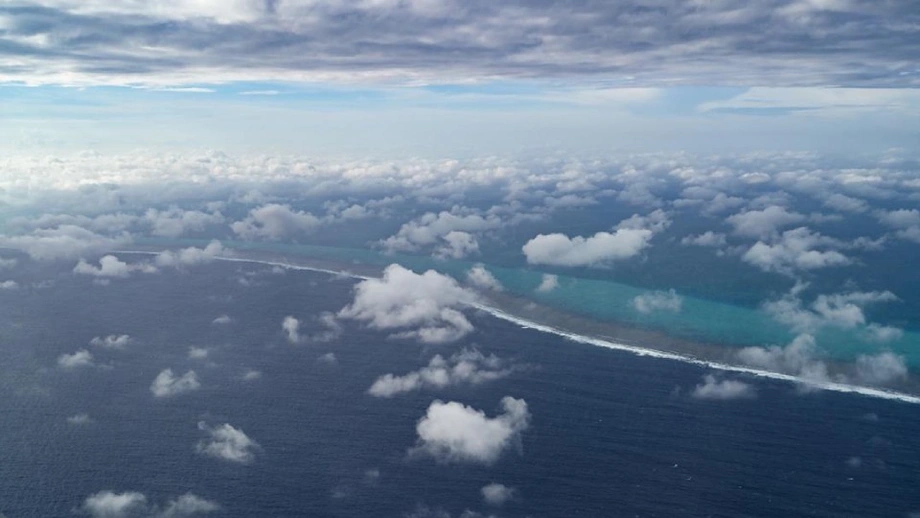
Teodoro placed maritime domain awareness among the mechanism's main tasks. The term means understanding what is happening at sea, including where vessels are operating and which activities may require attention. Information becomes more useful when participating forces can bring it together and understand it in a consistent way.
Information consolidation is the work of gathering separate pieces into a usable picture. Coordination then helps the participating militaries organize their activities around that picture. These functions connect the center's information work with its broader purpose of improving cooperation among four armed forces.
Interoperability, another priority named by Teodoro, means that different militaries can work together effectively. It involves more than having equipment: personnel also need compatible procedures, communication practices and planning arrangements. A coordination mechanism gives the countries a continuing place in their military relationships to work through those needs.
Exercise coordination moves to the strategic level
Teodoro said coordination for military exercises had shifted from the Armed Forces of the Philippines Education and Training Command to the strategic level under Strategic Command. He described the work as involving interoperability as the Philippine military acquires additional capabilities.
The change places exercise coordination within broader military planning. Training still matters, but the work now also concerns how the armed forces organize cooperation with partners and fit new capabilities into joint activities.
The four ministers' pledge to expand the scope, complexity and frequency of exercises supports that direction. Scope concerns the activities covered; complexity concerns how demanding they are; frequency concerns how often forces practice together. Taken together, the commitments call for deeper cooperation through repeated military activity.
The Defense Cooperation Council provides another part of that structure. Its Terms of Reference were signed by the four countries' military chiefs in Singapore on May 29, 2026. The framework covers information sharing, regular multilateral maritime activities, coordinated strategic communications and cooperation in operational planning, logistics and military sustainment. Logistics and sustainment mean keeping forces supplied, maintained and able to continue operating.
The center name has an earlier history
The Combined Coordination Center announced by the four ministers follows an earlier project bearing the same name. On November 18, 2024, United States and Philippine defense leaders broke ground for a center at Camp Aguinaldo in Manila, intended for personnel from those two countries to work alongside one another.
Officials described that project as a venue for regional security coordination, particularly concerning the South China Sea. It was designed to receive classified and unclassified information feeds. Classified information is sensitive material whose access and handling are restricted by government rules.
The announced target at the time was to open the facility by autumn 2025. That was a planned opening date. The November 2026 announcement concerns an operating coordination mechanism involving four countries, while the earlier groundbreaking concerned a facility described in bilateral terms.
The history also includes a November 2024 statement by Teodoro about a coordinating center in Manila involving the Philippines, Australia, the United States and Japan. That earlier announcement helps explain why the 2026 commitment follows several years of discussion about more permanent coordination.
Information sharing was already being developed
The November 18, 2024 groundbreaking coincided with the signing of a United States–Philippines General Security of Military Information Agreement, known as GSOMIA. The agreement established a framework for protecting classified military information exchanged between the two governments.
Such an agreement sets rules for how sensitive information is handled and safeguarded. Those protections help governments share material that requires tighter controls than ordinary public information. The 2024 agreement was between Washington and Manila, while the current coordination initiative brings together four defense partners.
Teodoro, speaking during the 2024 events as Philippine defense secretary, described the investment of resources and personnel behind the bilateral effort.
"It's part of the strategic approach to facing our shared threats that both of our countries have invested a lot of resources, a lot of manpower, and a lot of brain power. And I'm sure it will benefit future generations of both our peoples to come," he said.
The United States had also announced $500 million in foreign military financing for the Philippines during an earlier visit by then Defense Secretary Lloyd Austin. Officials said the countries were working on priorities including asymmetric capabilities and cyber capabilities. Asymmetric capabilities seek to counter an opponent's strengths through a different approach, rather than matching every ship, aircraft or weapon.
Maritime activities connect the plans
Teodoro discussed the four countries' cooperation at an Australian Strategic Policy Institute forum in November 2024. He said they would soon inaugurate a coordinating center in Manila and had agreed to hold "a lot of minilateral activities together." Minilateral cooperation means a small group of countries working together on shared interests.
Teodoro identified maritime cooperative activities in the West Philippine Sea as the easiest activity for the partners to organize. The Philippines uses that name for waters in the western part of its maritime domain, including areas of the South China Sea.
Explaining the immediate opportunity for cooperation, Teodoro said:
"The easiest to pull together is the maritime cooperative activities in the West Philippine Sea. However, there will be more coordination and cooperation on that basis," he said.
The four countries are informally called the "Squad." Their November 2026 statement connects those maritime activities with a broader set of commitments covering investment, consultations and exercises. The proposed center would give their coordination a more permanent organizational focus.
How the announcements developed
The public record stretches from discussions and a bilateral groundbreaking in 2024 to a four country framework and ministerial commitment in 2026. Keeping those dates together shows how the current mechanism emerged:
- November 2024: Teodoro told an Australian Strategic Policy Institute forum that the four countries would soon inaugurate a coordinating center in Manila.
- November 18, 2024: United States and Philippine defense leaders broke ground for a Combined Coordination Center at Camp Aguinaldo and signed GSOMIA.
- May 29, 2026: The four countries' military chiefs signed the Defense Cooperation Council Terms of Reference in Singapore.
- October 28, 2026: The four defense ministers met in Cebu and committed to establishing a Combined Coordination Center in the Philippines.
- November 10, 2026: The joint ministerial statement was published.
- November 11, 2026: Teodoro said the coordination mechanism was already operating.
The October statement also expressed serious concerns about the East China Sea and South China Sea. The ministers opposed unilateral actions, including force or coercion, that escalate tensions and undermine regional peace and stability. Their response combines closer military preparation with more regular communication among defense leaders.
For the Philippines, the concrete changes described so far are an operating coordination mechanism, strategic oversight of exercise coordination and commitments to align partner investments with the defense of its islands. For the four militaries, the work centers on sharing a clearer picture, planning together and practicing cooperation more often.
Key Points
- Teodoro says the Philippines, United States, Japan and Australia already have a defense coordination mechanism operating.
- The four defense ministers committed to establishing a Combined Coordination Center at their October 28, 2026 meeting in Cebu.
- The mechanism focuses on maritime awareness, information consolidation, coordination and military interoperability.
- Exercise coordination has moved to the strategic level under Strategic Command, according to Teodoro.
- A separate United States–Philippines center project broke ground at Camp Aguinaldo in November 2024.
- The four governments also pledged coordinated defense investments, stronger consultations and expanded exercises.