A Historic Defense Package Sealed at the Manila Summit
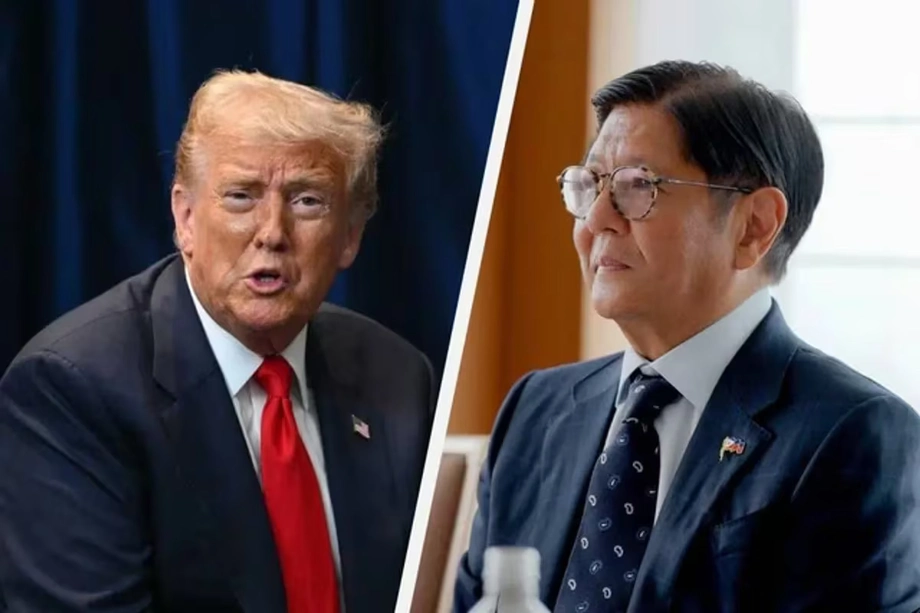
MANILA, Philippines. Washington has pledged a Foreign Military Financing loan package worth more than $2 billion (P127.3 billion) to modernize the Philippine military and upgrade strategic infrastructure stretching from Subic Bay to the Luzon Strait. Announced on November 18 and 19, 2026, following a visit of two days by U.S. President Donald Trump to Manila for the 49th Association of Southeast Asian Nations (ASEAN) Summit with Philippine President Ferdinand Marcos Jr., the agreement marks a major expansion in military backing for Washington's oldest treaty ally in Asia.
Contents
- A Historic Defense Package Sealed at the Manila Summit
- What Weapons and Drones the Philippines Plans to Buy
- Locking Down the Luzon Strait and Basco Airport
- Drone Boats and the Shift Toward Unmanned Defense
- From Postwar Dependency to a Reciprocal Defense Pact
- Trade Pressure, Energy Deals, and the Luzon Economic Corridor
- Beijing Condemnation, ASEAN Talks, and Political Risks
- Key Dates in the Defense Realignment
- Key Points
Foreign Military Financing is a U.S. government program that provides either loans or direct grants to partner nations so they can purchase defense equipment, services, and training from American manufacturers. Under a White House fact sheet released after the summit, the proposed $2 billion loan will allow Manila to acquire critical defense and security equipment from U.S. suppliers while supporting more than 7,000 American jobs.
The United States and the Philippines will pursue a historic Foreign Military Financing loan package of more than $2 billion to provide the Philippines with critical defense and security capabilities from US suppliers.
Alongside the loan, the White House committed $400 million (around P25 billion) in direct Foreign Military Financing support aimed at expanding Philippine operations in the South China Sea. That $400 million allocation represents 80% of the $500 million annual grant ceiling that the U.S. Congress previously authorized for the Philippines from 2026 through 2030, and it is more than 33 times smaller than the $2 billion loan itself.
In a separate release on the Manila agreements, the White House outlined how the $400 million package would be spent and how it ties into American manufacturing.
The United States will utilize $400 million in [foreign military financing] for the Philippine military to expand its operational reach and deterrence capabilities in the South China Sea, including long-range fires, command and control, critical infrastructure and multi-domain drones, supporting 1,500 American jobs.
Digital warfare and communications upgrades form another piece of the bilateral package. Both governments finalized a $37 million contract with an unnamed U.S. company for Super Intelligence mission support designed to help American and Philippine forces share data and operate together smoothly. The Philippine Department of National Defense separately committed to working with U.S. technology providers on a $63 million upgrade to its military cloud computing infrastructure.
What Weapons and Drones the Philippines Plans to Buy
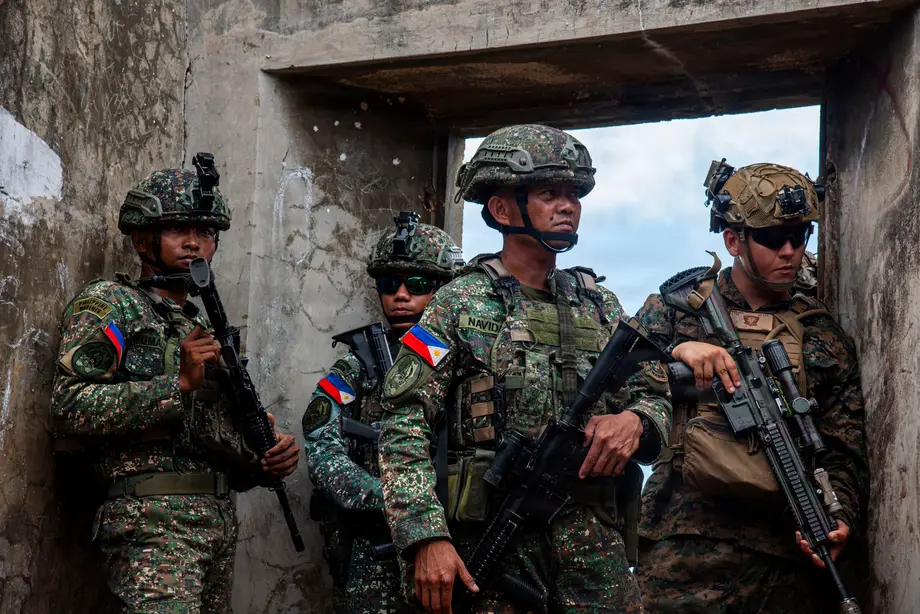
Armed Forces of the Philippines (AFP) Chief of Staff General Antonio Nafarrete told reporters at Camp Aguinaldo that the military will prioritize acquiring kinetic weapons, meaning munitions built to strike physical targets rather than purely defensive gear, using the $2 billion financing. Nafarrete pointed to the increasing presence of Chinese vessels in Philippine waters, noting that People's Liberation Army naval vessels have been entering international sea lines of communication near the archipelago and that stronger capabilities are needed so foreign forces recognize the country can defend its territory.
Col. Francel Margareth Padilla, spokesperson for the Armed Forces of the Philippines, welcomed the new financing alongside Washington's earlier approval of more than $5 billion in potential arms sales, noting that acquisitions will undergo standard military assessments based on operational requirements and national defense priorities.
We appreciate the continued support of the United States in strengthening the AFP's capabilities. These forms of assistance contribute to our ongoing modernization and efforts to develop a credible defense posture.
Philippine defense planners have not yet announced which specific weapons systems they will purchase first using the $2 billion loan. Defense manufacturer Lockheed Martin has submitted substantial proposals covering M142 High Mobility Artillery Rocket Systems (HIMARS), F-16V Viper fighter jets, and a frigate design of the International class developed with naval architect Gibbs and Cox for the Philippine Navy.
Last year, the U.S. Defense Security Cooperation Agency approved a possible sale of 20 F-16V Block 70/72 fighter jets to Manila valued at $5.58 billion, covering 16 single-seat F-16C aircraft, four two-seat F-16D aircraft, engines, and related support equipment. Manila has also expressed interest in buying Lockheed Martin's Mid-Range Capability, known as Typhon, a ground launcher using Mark 41 vertical cells that the U.S. Army has stationed in the Philippines since April 2024.
Geopolitical analyst Richard Heydarian said he expects future U.S. announcements regarding missile exports and transfers, including HIMARS rockets and Philippine access to American missile batteries already operating in the country such as Typhon and the Navy-Marine Expeditionary Ship Interdiction System (NMESIS).
Locking Down the Luzon Strait and Basco Airport
Geography explains why the White House paired weapons financing with construction funds in the northern Philippines. Between the northern Philippine province of Batanes and the southern tip of Taiwan lies the Luzon Strait and the Bashi Channel, a 190-kilometer stretch of water linking the South China Sea to the wider Pacific Ocean along the First Island Chain, the string of islands stretching from Japan through Taiwan and the Philippines.
Under the Manila deals, Washington and Manila plan to modernize Basco Airport in Batanes, located within 100 miles of Taiwan, to expand military operational access, speed up disaster relief, and strengthen commercial supply routes across the northernmost islands. Since 2025, the U.S. Marine Corps has used Basco Airport to deploy maritime sensing teams and NMESIS mobile launchers, which fire Naval Strike Missiles with an operational range exceeding 185 kilometers, nearly spanning the entire 190-kilometer gap between Batanes and Taiwan.
Ben Lewis, a co-founder of PLATracker and a specialist on the Chinese military, explained the strategic importance of placing missile launchers along that narrow waterway.
The Luzon Strait and Bashi Channel represent a critical access point to enter or exit the Pacific Ocean from the South China Sea and Taiwan Strait, and the deployment of NMESIS allows the US to assert control over that access.
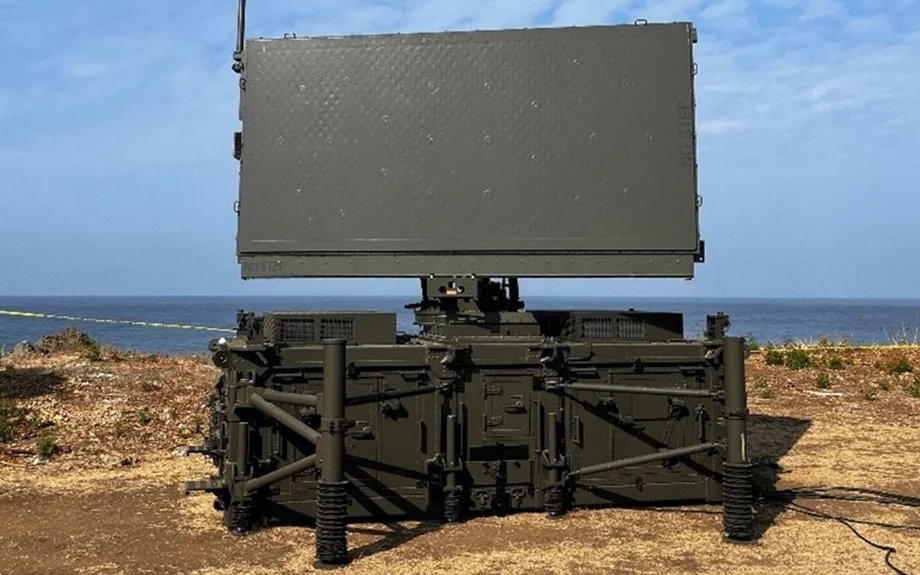
Allied troops have practiced moving these weapons rapidly between islands without relying on permanent concrete bases. In 2024, a joint maritime domain awareness team placed radar equipment on an island only 88 miles from Taiwan. During Balikatan 25, a large drill involving 3,000 Filipino troops and 2,000 U.S. personnel (a 5,000-troop force split 60% Filipino and 40% American), Philippine Army Brig. Gen. Michael Logico confirmed the first deployment of NMESIS launchers in the country, while the 3rd Marine Littoral Regiment carried out simulated missile strikes without live fire across multiple Batanes islands.
Col. John Lehane, commander of the 3rd Marine Littoral Regiment, described bringing the mobile missile batteries to the Philippines as an important milestone for the alliance.
Working with the government and Armed Forces of the Philippines to bring the NMESIS into the Philippines has been a significant step in the right direction for the reaffirmation and strengthening of US-Philippine relations.
Training intensified further in 2026. In May 2026, Exercise Balikatan integrated missiles designed to strike ships into realistic coastal combat drills, and on June 19, 2026, U.S. Marines from the 3rd Littoral Combat Team unloaded a NMESIS launcher from a Marine KC-130J Super Hercules transport aircraft during KAMANDAG 10 at Itbayat in the Batanes Islands. Farther south at Subic Bay, a former U.S. Navy base northwest of Manila, Washington announced a $40 million fuel storage facility, building on vehicle and supply warehouses contracted by the U.S. Army and Marine Corps since 2022 and the staging of U.S. Coast Guard cutters across from the Philippine Navy primary base earlier this summer.
These projects anchor nine activated sites under the Enhanced Defense Cooperation Agreement (EDCA) across Palawan and Northern Luzon, turning the northern region into a defensive barrier designed to block hostile ships and aircraft from moving freely through the First Island Chain. Technical assessments in 2026 still highlight an urgent gap in Integrated Air and Missile Defense, prompting ongoing deployments of unmanned aircraft and missile batteries to protect populated areas from drone or missile attacks.
Drone Boats and the Shift Toward Unmanned Defense
Unmanned surface vessels, often called drone boats, are fast becoming central to how Manila patrols contested waters without risking human crews. U.S. defense officials closely studied how Ukrainian drone boats and missiles damaged Russia's Black Sea fleet beginning in late 2022, and Washington is applying similar lessons to Manila's Asymmetric Capabilities Program, a connected network of uncrewed systems involving Florida defense firm Maritime Tactical Systems Inc. and Ocean Aero, with attack drones scheduled for transfer next year.
On November 4, 2026, in a ceremony announced by the U.S. Embassy in Manila on November 10, U.S. Ambassador Lee Lipton handed over two Devil Ray T38 drone boats valued at more than $8 million to Philippine Marine Corps deputy commandant Brig. Gen. Bayani Curaming. The transfer took place at Subic Bay inside a newly opened Unmanned Center of Excellence operated by Maritime Tactical Systems Inc., building on an earlier November 2024 visit to Puerto Princesa on Palawan where then U.S. Defense Secretary Lloyd Austin inspected an American Mantas T12 drone boat in Philippine service.
Lipton praised the Subic Bay delivery as proof of how U.S. industry supports Philippine modernization.
These American-made systems show the incredible strength of our Alliance.
Measuring 40 feet in length, the Devil Ray T38 can race across open water at speeds above 50 knots while carrying 4,000 pounds of sensors or cargo. Army Col. Daniel Oh, chief of the Joint U.S. Military Assistance Group-Philippines, explained how the boats expand patrol coverage at lower cost than ships operated by human crews.
It will strengthen the AFP's growing autonomous fleet, expanding its ability to monitor wider areas of Philippine waters for longer periods at a lower cost than crewed vessels.
Brig. Gen. Curaming added that unmanned vessels are increasingly vital as maritime threats evolve around Philippine shores.
This undertaking reflects a longstanding partnership based on mutual respect, shared responsibility, and a common commitment to maritime security.
From Postwar Dependency to a Reciprocal Defense Pact
Underlying the hardware transfers is a major shift in how Washington and Manila interpret their 1951 Mutual Defense Treaty. During official bilateral strategic dialogues in February 2026, both governments affirmed that the treaty obligates the United States to defend Philippine armed forces, aircraft, and public vessels, explicitly including Philippine Coast Guard ships, against armed attacks anywhere in the Pacific and the South China Sea.
In May 2026, Admiral Samuel J. Paparo, commander of U.S. Indo-Pacific Command, visited the Philippines to push live maritime domain awareness, which gives commanders a shared, instant picture of ship and aircraft movements across vast ocean expanses. Five months later, in October 2026, talks between U.S. Secretary of War Pete Hegseth and Philippine Defense Secretary Gilberto Teodoro Jr. produced an additional boost in U.S. security cooperation funds to speed up AFP modernization along the First Island Chain, though the U.S. Department of War did not disclose the exact dollar figure or list specific beneficiary projects.
Security ties are also expanding beyond a strictly bilateral framework into a wider network with Japan and Australia. Australian infrastructure funding in 2026 is designed to complement the nine EDCA sites in the Philippines, while in May 2026 the 11 members of ASEAN agreed to establish the ASEAN Maritime Center in the Philippines, anchoring regional maritime diplomacy in the United Nations Convention on the Law of the Sea (UNCLOS) during Manila's year as ASEAN chair.
Trade Pressure, Energy Deals, and the Luzon Economic Corridor
Speaking at a White House news conference on November 20, 2026, after returning from Asia, President Trump and Secretary of State Marco Rubio made clear that Washington expects American military protection to generate commercial business for U.S. workers and exporters. Trump linked Philippine security concerns over China directly to purchases of American goods.
We affirmed the historic bonds between our countries. The agreement involves more than $2 billion in American-made equipment, which will increase significantly.
Trump also recounted telling Marcos that suppliers outside Washington's alliance network would not defend the Philippines in a crisis, claiming Manila agreed to shift 100% of its energy and agricultural imports to the United States instead of buying from the Middle East and Brazil.
If China attacks, the Middle East is not going to come to their rescue, so they should buy from us.
Secretary Rubio reinforced that message during the same news conference, arguing that America's role as Manila's primary defense provider must be mirrored in bilateral trade.
If we are their primary defense provider, then what we do with them from a commercial standpoint should reflect that commitment that we've made.
Rubio added that Trump had personally shaped a trade arrangement designed to benefit the U.S. economy, though neither official explicitly stated that military aid depended on commercial orders. Manila's Presidential Communications Office said both sides reached an understanding on energy and food security, while full terms of the broader trade deal remain undisclosed.
The President personally negotiated an agreement that will be highly beneficial and fair to the American economy.
Commercial announcements during Trump's Southeast Asian tour totaled more than $17 billion, including a planned $12 billion private transaction by Philippine Airlines to buy up to 20 Boeing 787 aircraft powered by GE Aerospace engines. Both governments are also exploring an intergovernmental agreement on civilian nuclear power to expand the Philippine electricity supply, which if completed would become the first U.S. civil nuclear pact with an Indo-Pacific partner.
Those November talks built on difficult trade negotiations earlier in the year. When Marcos visited Washington on July 22 to meet Trump, Rubio, and Hegseth, Trump imposed a 19% tariff on Philippine goods, sitting two percentage points above the 17% reciprocal rate set in April and one percentage point below the 20% tariff Trump had demanded. Two days after meeting Marcos, Rubio announced $60 million (P3 billion) in fresh U.S. assistance, including a request to Congress for $15 million (P825 million) to spur investment by the private sector in transport, logistics, energy, and semiconductors within the Luzon Economic Corridor.
This is the US government's first announcement of new foreign assistance for any country since the Trump administration began its review and realignment of foreign assistance in January.
A U.S. State Department statement noted that the corridor funding, if approved by Congress, is meant to reduce vulnerability to Chinese economic pressure alongside a trilateral economic and security partnership linking the United States, Japan, and the Philippines.
If approved, this funding will support investments in the areas of transport, logistics, energy, and semiconductors that will help create jobs and drive economic growth in the country.
Beijing Condemnation, ASEAN Talks, and Political Risks
Beijing has condemned the 2026 Balikatan exercises as destabilizing and maintained persistent Chinese Coast Guard patrols maneuvering near Philippine Coast Guard vessels. Early in 2026, the Chinese Embassy in Manila launched a coordinated campaign targeting independent journalists and investigative outlets that document Chinese maritime incursions under the Philippine government's public transparency drive, while Beijing urged ASEAN members to resist outside interference in regional talks.
At the close of the 49th ASEAN Summit in Manila on November 18, 2026, President Marcos announced that negotiations on a South China Sea Code of Conduct, a proposed rulebook to prevent clashes in contested waters, are now 85% to 90% complete. Talks will continue in 2027 when Singapore takes over the ASEAN chairship.
Chester B. Cabalza, founder and president of International Development and Security Cooperation, said Washington's defense commitment remains unmatched by Manila's other regional partners, while arguing that the Philippine government can balance closer U.S. military ties with diplomatic engagement toward Beijing.
Washington wants to strengthen Manila to build a network of allies that are capable of defending their own sovereignty and willing to contribute to regional security.
Cabalza noted that Manila should maintain stability with China even as it upgrades its military with American loans and artificial intelligence tools.
Now that Manila knows how to navigate an active hedging strategy, this will not hinder our relationship with Beijing.
Security assessments nevertheless warn that maintaining political support inside the Philippines for the expanded U.S. military presence will face intense tests from influence campaigns backed by Beijing ahead of the 2028 Philippine national elections.
Key Dates in the Defense Realignment
- 2022: U.S. military branches begin regularly staging forces and supplies around Subic Bay.
- April 2024: The U.S. Army stations the Mid-Range Capability missile launcher in the Philippines; allied sensing teams place radar on an island 88 miles from Taiwan later that year.
- November 2024: Then U.S. Defense Secretary Lloyd Austin inspects a Mantas T12 drone boat operated by Philippine forces on Palawan.
- 2025: U.S. Marines begin using Basco Airport to insert sensing teams and NMESIS missile batteries; Balikatan 25 deploys NMESIS for the first time alongside 5,000 Filipino and American troops.
- February 2026: Bilateral strategic dialogues confirm the 1951 Mutual Defense Treaty covers attacks on the Philippine Coast Guard.
- May 2026: Admiral Samuel J. Paparo visits Manila, Balikatan 2026 tests coastal missile defense, and ASEAN establishes the ASEAN Maritime Center in the Philippines.
- June 19, 2026: U.S. and Philippine Marines unload NMESIS at Itbayat, Batanes during KAMANDAG 10.
- July 2026: Marcos meets Trump, Rubio, and Hegseth in Washington; Trump sets a 19% tariff and Rubio announces $60 million in economic and maritime aid.
- October 2026: Talks between Hegseth and Philippine Defense Secretary Gilberto Teodoro Jr. increase U.S. security cooperation funding.
- November 4, 2026: U.S. Ambassador Lee Lipton transfers two Devil Ray T38 drone boats worth over $8 million at Subic Bay.
- November 18 to 20, 2026: The 49th ASEAN Summit closes in Manila, the White House unveils the $2 billion loan and $400 million grant package, and Trump and Rubio link defense support to U.S. trade gains.
- 2027 to 2030: Singapore assumes the ASEAN chair for Code of Conduct talks in 2027, U.S. attack drone transfers are slated for next year, Philippine national elections arrive in 2028, and congressional FMF grant authorizations run through 2030.
Key Points
- Washington announced a proposed $2 billion (P127.3 billion) Foreign Military Financing loan package supporting over 7,000 U.S. jobs, alongside $400 million (P25 billion) in direct military financing supporting 1,500 jobs.
- Both governments committed $37 million for Super Intelligence mission support and $63 million for military cloud infrastructure, plus a $40 million fuel storage facility at Subic Bay and upgrades to Basco Airport within 100 miles of Taiwan.
- The Armed Forces of the Philippines will prioritize physical strike weapons, with Lockheed Martin pitching HIMARS, F-16V jets (following a $5.58 billion approval last year for 20 aircraft), and frigates, though Manila has not yet named its initial purchases.
- U.S. Ambassador Lee Lipton delivered two Devil Ray T38 drone boats worth more than $8 million to the Philippine Marine Corps on November 4, 2026, ahead of attack drone transfers planned for next year.
- President Trump and Secretary of State Marco Rubio explicitly tied U.S. security backing to Philippine purchases of American energy, agriculture, and defense gear, while Philippine Airlines plans a $12 billion order for up to 20 Boeing 787 aircraft.
- South China Sea Code of Conduct talks reached 85% to 90% completion as Manila balances deterrence along the First Island Chain against Beijing's pressure ahead of the 2028 elections.