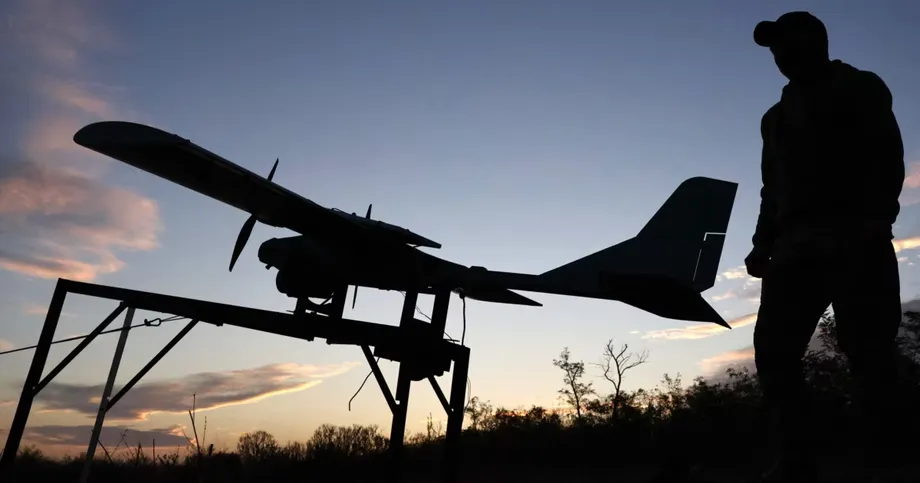
A missing component can stop a Ukrainian drone
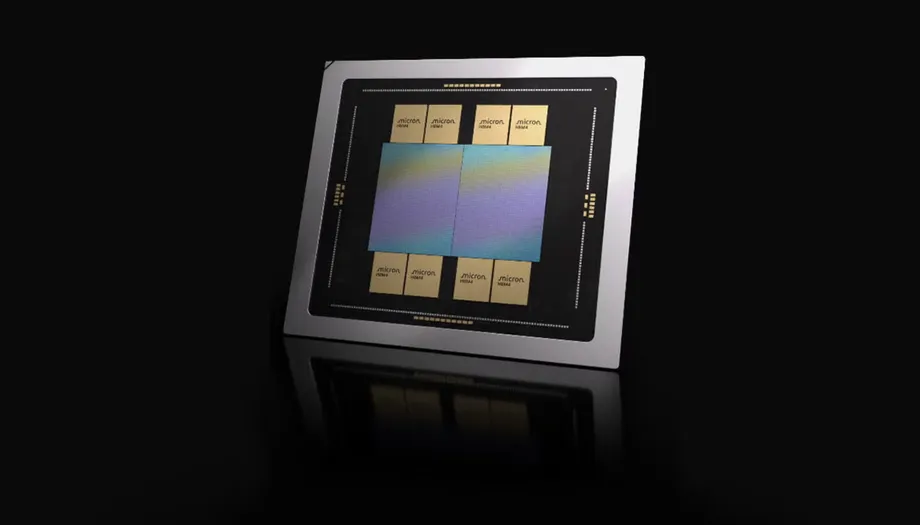
Europe produces about 600,000 thermal sensors a year. Ukraine needs an estimated 4 million, according to Andrii Taganskyi, an executive at Ukrainian camera developer Odd Systems. That gap helps explain why a country producing millions of drones still depends on China for some of the smallest parts inside them.
Contents
- A missing component can stop a Ukrainian drone
- Domestic production has changed the industry
- What the import figures actually measure
- Thermal cameras expose the scale problem
- Replacing China could mean fewer drones
- Export controls push purchases through other countries
- Taiwan offers components and manufacturing experience
- Trade routes and diplomacy complicate cooperation
- Factories need reliable supplies before the next restriction
- Key Points
Ukraine has made substantial progress in building its own aircraft, motors, electronics and cameras since Russia's full invasion in February 2022. Fire Point, which makes the FP-1 aircraft used for strikes deep inside Russia, says 90 percent of its components come from Ukraine and the rest from European and allied suppliers. Other manufacturers remain more exposed to Chinese factories.
The immediate pressure is growing. On October 19, China announced further export restrictions scheduled to take effect on November 18. The measures cover specialized drone engines, brushless motors, electronic speed controllers and carbon fiber blades. Speed controllers regulate the power delivered to a motor, making them essential to keeping many drones stable and controllable.
Ukraine's challenge is therefore more precise than simply making more drones at home. Its manufacturers need dependable supplies of sensors, battery cells, magnets and other components at prices that allow them to keep producing enormous quantities.
Taganskyi described the vulnerability of a camera that is mostly manufactured without Chinese inputs but still needs a small number of essential imported parts:
"Without this 5%, there is no camera," Taganskyi said.
For soldiers, a missing sensor can mean losing the ability to see targets at night. For factories, it can leave otherwise completed equipment waiting for a component that costs only a fraction of the finished product.
Domestic production has changed the industry
Fire Point says it produces between 200 and 260 drones a day while deliberately avoiding Chinese components. Its FP-1 platform made up the bulk of a force of more than 1,000 Ukrainian drones launched toward Russian territory on October 17 and 18, including strikes on energy and industrial infrastructure in St. Petersburg and the Leningrad region.
Vyriy, another Ukrainian drone manufacturer, describes a similar shift from a different starting point. Founder Oleksii Babenko says the company depended on China for nearly 90 percent of its components three years ago. Today, between 70 and 80 percent are made in Ukraine.
Government initiatives such as the defense technology platform Brave1, sustained military demand and investment have helped manufacturers expand. Catarina Buchatskiy, co-founder and analytics director at the Serpens Center for International Security in Kyiv, identified the main drivers as "capital and contracts." Reliable orders give companies revenue they can reinvest in equipment and local production.
Local factories also shorten the journey between a soldier requesting a change and a manufacturer delivering it. Artur Savchii, an analyst at the same center, says domestic components can be redesigned within days, while changes involving foreign supply chains can take months.
President Volodymyr Zelenskyy said in a July 15 speech that Ukraine was producing 10 million drones a year. That statement describes an annual production rate. Ukrainian defense agencies built and deployed nearly 2.5 million drones during the first half of 2026, a measure of equipment reaching military use during that period.
What the import figures actually measure
Ukraine's State Customs Service figures show a steep decline in the share of imported drone parts arriving directly from China: nearly 90 percent at the beginning of 2024, compared with 28 percent during the first eight months of 2026. Those figures track direct imports, while manufacturers also buy Chinese components through other countries.
The customs records contain several categories, each describing a different part of the market. Finished civilian drones, drone components and the wider category of aircraft parts have different totals and country shares.
In January through March 2025, Ukraine imported 127,800 civilian drones worth $371.3 million, an increase of 39 percent from the same period a year earlier. China supplied 125,700 units, or 98 percent of the total, according to the customs service.
For the whole of 2025, drone imports reached $1.7 billion, up 44.9 percent from $1.17 billion in 2024. China supplied $1.44 billion, accounting for 84.86 percent by value. Taiwan supplied 4.28 percent and Poland 3.16 percent. Those three suppliers together accounted for 92.3 percent of the value.
Aircraft parts imports reached $476.3 million in 2025, around 3.5 times the previous year's $134.81 million. China supplied 41.12 percent by value, Poland 29.83 percent and Czechia 24.67 percent. This customs category includes drone components alongside parts for other aircraft and space vehicles.
A report by the Ukrainian Council of Defense Industry and the Snake Island Institute put China's share of imported drone component value at 38 percent in the first half of 2025. Meanwhile, imports of Chinese parts during the first six months of 2026 had already reached around 76 percent of the total recorded for all of 2025. Ukraine can reduce China's share of a rapidly growing market while continuing to buy large quantities from Chinese factories.
Thermal cameras expose the scale problem
Ukrainian companies can design and assemble thermal cameras, which detect infrared radiation to show heat rather than ordinary visible light. They still depend on imported sensors and lenses that allow those cameras to find people, vehicles and other targets in darkness.
Taganskyi's estimate of 600,000 European sensors against Ukrainian demand for 4 million means Europe's entire annual output would meet only 15 percent of that demand. The numerical gap is 3.4 million sensors, even before accounting for Europe's own customers.
China also accounts for about 60 percent of global germanium production. Germanium is a material used in infrared optics, including thermal camera lenses. Chinese suppliers make these components more cheaply than European competitors, while Beijing has tightened restrictions on germanium exports.
Battery and motor production contain similar dependencies. Ukrainian firms can assemble battery packs but still need imported cells, the individual units that store electricity. Motors require magnets and other materials that are difficult to obtain outside China at the necessary scale.
Skyfall, the manufacturer of the Vampire drone used to drop bombs, identifies lithium batteries, motor magnets and fiber optic cables as major areas of dependence. Some drones use fiber optic cable to carry control signals, providing an alternative to radio links that electronic warfare equipment can disrupt.
Replacing China could mean fewer drones
Oleksandr Yakovenko of TAF Industries says switching entirely to Western alternatives could raise costs by as much as 60 percent and reduce production by a similar amount. For Ukraine, paying more for each aircraft can mean putting fewer aircraft into service during an intense war.
Olena Kryzhanivska, a defense analyst and author of the Ukraine Arms Monitor newsletter, described the shortage of substitutes:
"Alternatives exist, but, for now, the quantities are insufficient to supply millions of drones," Kryzhanivska said.
Rare earth magnets illustrate how long replacement capacity can take to build. These magnets help convert electricity into motion inside drone motors. Europe is expected to reach commercial scale production in the early 2030s, with prices estimated to remain 15 to 30 percent above Chinese equivalents.
European financing is being shaped around those constraints. Ukraine has secured an exemption within a €60 billion defense procurement loan that could allow continued use of critical Chinese components where European supplies are insufficient. The European Union is also directing nearly €6 billion toward Ukrainian drone capabilities.
Vita Holod, a junior research fellow at Ukraine's National Academy of Sciences, said the exemption reflects the practical limits facing both buyers and manufacturers:
The EU exemption is quite revealing. It shows that neither Ukraine nor Europe can yet replace Chinese suppliers at the necessary scale, speed, and price.
Export controls push purchases through other countries
China began imposing restrictions on some drones in 2023 and expanded controls on components in 2024. Ukrainian manufacturers say the rules have caused delays, higher costs and greater reliance on intermediaries in other countries.
Some components recorded as imports from Poland or Czechia were manufactured in China and shipped through those countries. Ukrainian executives also describe purchasing chains involving several countries. Some say product descriptions on export paperwork have been altered to keep shipments moving.
China's Commerce Ministry says its latest restrictions seek to protect national security and interests. In its statement announcing the changes, the ministry said they "fully demonstrate China's firm opposition to the illicit use of drones for non-peaceful purposes".
Beijing denies supplying lethal weapons to either side and says it opposes military use of civilian drones. Ukrainian manufacturers fear that Chinese suppliers could continue serving Russia while restricting Ukrainian buyers. Babenko says Vyriy traced sophisticated antennas on a recovered Russian drone to a Chinese supplier, which told the company the technology had been developed for Russia.
The restrictions and Ukraine's response have developed over several years:
- February 2022: Russia launched its full invasion, with Ukraine heavily dependent on Chinese drone components.
- 2023: China introduced restrictions affecting certain drones.
- 2024: Beijing expanded controls on components, while China supplied nearly 90 percent of Ukraine's directly imported drone parts at the start of the year.
- 2025: Ukraine imported $1.7 billion in drones and $476.3 million in the broader aircraft parts category.
- January through August 2026: China's share of direct drone parts imports fell to 28 percent.
- October 19: Beijing announced further restrictions, scheduled to take effect on November 18.
Taiwan offers components and manufacturing experience
Taiwan is becoming an alternative supplier because its advanced manufacturing capabilities overlap with Ukraine's needs. Both also have strategic reasons to develop supply chains that can operate without Chinese inputs.
Taiwan's Research Institute for Democracy, Society, and Emerging Technology, known as DSET, says Ukrainian companies use Taiwanese flight controllers, batteries, motors, cameras and other electronic components. Interest has expanded to sensors, single-mode optical fiber and jet engines.
In May, a delegation from the Ukrainian drone association IRON, led by chief executive Volodymyr Cherniuk, visited Taiwan to meet potential partners. Thunder Tiger has sent drone systems to Ukraine for testing and evaluation. Kunway Technology already exports two models to Ukraine through Poland.
Taiwan's Economy Ministry recorded about 242,000 drone exports in the first half of 2026. Ukrainian defense agencies built and deployed nearly 2.5 million drones during the same period, roughly ten times as many. The figures describe different activities, exports and military deployment, but show the scale of demand Taiwanese businesses would be entering.
Michael Cunningham, a senior fellow in the China program at the Stimson Center, says cooperation on production is still at an early stage because Taiwan's drone industry is also relatively young. Taiwan offers useful technologies, while expanding output to serve Ukraine requires further investment and industrial partnerships.
Trade routes and diplomacy complicate cooperation
Poland and Czechia received 93 percent of Taiwan's drone exports in the first half of 2026. DSET analysts Cathy Fang and Samara Duerr say customs data records the declared export destination, leaving the number subsequently transferred to Ukraine unknown. Their assessment that some shipments reflect Ukrainian demand rests mainly on industry interviews.
Ukraine has no diplomatic relations with Taipei, and Beijing strongly opposes official engagement with Taiwan. China is also Ukraine's largest trading partner, while Ukraine supplies agricultural products to China. Kyiv must weigh industrial security alongside the potential economic costs of a deeper dispute.
Relations have already become more strained. Ukraine has sanctioned Chinese companies over alleged support for Russia's military. In July 2025, Ukrainian authorities detained two Chinese nationals suspected of collecting information about the Neptune missile for Chinese intelligence.
China's ambassador to Ukraine, Ma Shengkun, stated in a June 30 letter that Beijing respects the territorial integrity of all countries, including Ukraine. Ukrainian officials nevertheless remain concerned about China's close partnership with Russia and the advantages that relationship gives Russian manufacturers seeking Chinese components.
Factories need reliable supplies before the next restriction
Skyfall has proposed specialized industrial hubs in Europe, with each concentrating on a vulnerable part of the supply chain, such as motors, sensors or cameras. That approach would direct investment toward the components most likely to interrupt production.
Mykola Stavytskyi, a Ukrainian drone battalion commander, says Kyiv wants to purchase essential components from Europe but cannot obtain the supplies it needs. His concern is that suppliers could stop serving Ukraine and European buyers while continuing sales to Russia.
Maksym Vasylchenko, chief executive of Ukrainian unmanned ground vehicle producer Tencore, warns that a war involving China and Taiwan could also interrupt supplies. Substituting a different battery or magnet can require engineering changes and may reduce performance, he says.
November 18 is the next concrete deadline for manufacturers facing China's expanded controls. Ukraine's progress in domestic assembly and component production gives it more options than it had in 2022. Its remaining exposure is concentrated in parts that are difficult to replace quickly, cheaply and in sufficient quantities to sustain battlefield demand.
Key Points
- China's share of Ukraine's directly imported drone parts fell from nearly 90 percent in early 2024 to 28 percent in the first eight months of 2026.
- Ukrainian manufacturers still need Chinese sensors, battery cells, motor magnets and other essential inputs.
- Europe's estimated annual production of 600,000 thermal sensors compares with Ukrainian demand for 4 million.
- Western substitutes could raise costs by up to 60 percent, according to TAF Industries executive Oleksandr Yakovenko.
- Taiwan is supplying more components and exploring production partnerships, although capacity and diplomatic constraints remain.
- China's next export restrictions are scheduled to take effect on November 18.