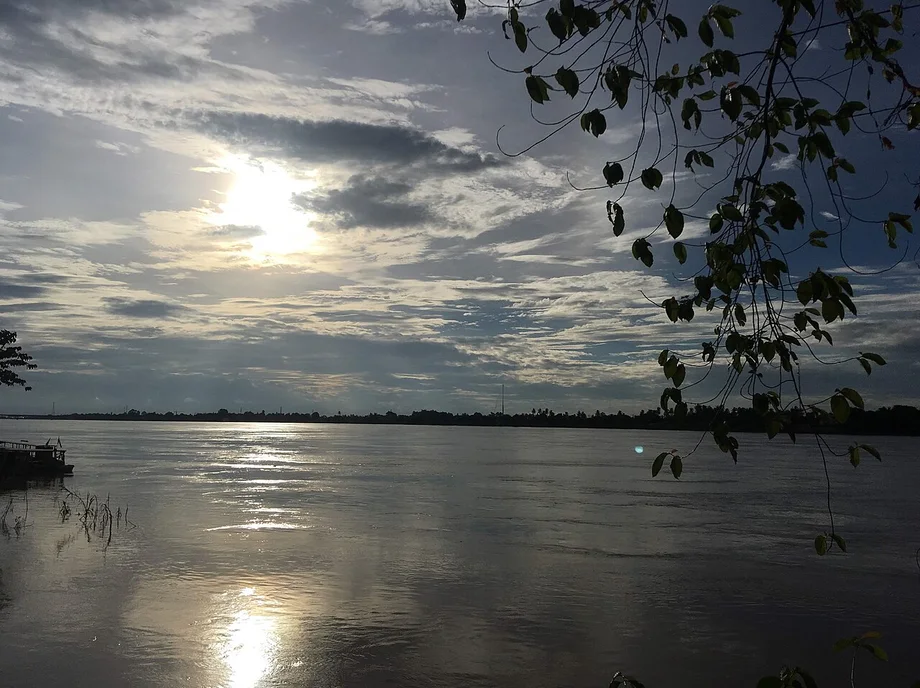
A Warning Upstream, Tests Downstream
Sweden's embassy in Bangkok voiced concern on 25 November about worsening pollution in rivers that feed the Mekong, just as Thailand and Laos were testing the main river for arsenic. Sweden, a long standing development partner of the Mekong River Commission, spoke after the commission's Council met in Hanoi on 20 November. Cambodia, Laos, Thailand and Vietnam took part, alongside development partners.
Contents
- A Warning Upstream, Tests Downstream
- What the Tests Can Show
- Nong Khai and Bueng Kan Come Into Focus
- What the Official Mekong Assessment Found
- How High Are the Sediment Readings?
- Where the Arsenic May Be Coming From
- Diplomacy Turns to Mining Controls
- A Timeline of Decisions and Deadlines
- Six Stations and a Gap Between Plans and Data
- River Pollution Reaches Food and Water
- What Communities Can Do While Results Are Pending
- Why Sweden's Warning Matters Beyond One River
- Key Points
Thailand told the Council that pollution and water quality needed urgent attention because of risks to public health and livelihoods. The development partners issued a joint statement reaffirming cooperation on water management across the basin. Sweden said it shared concern about reports of worsening pollution in the Mekong's tributaries.
The Mekong River Commission expects the joint arsenic results in early December. Its update on 26 November pointed to arsenic in parts of the Mekong, health concerns among residents of Thailand's Nong Khai province, and reports of fish with skin lesions. Commission officials said water quality findings could help national health and fisheries authorities decide what follow up is needed.
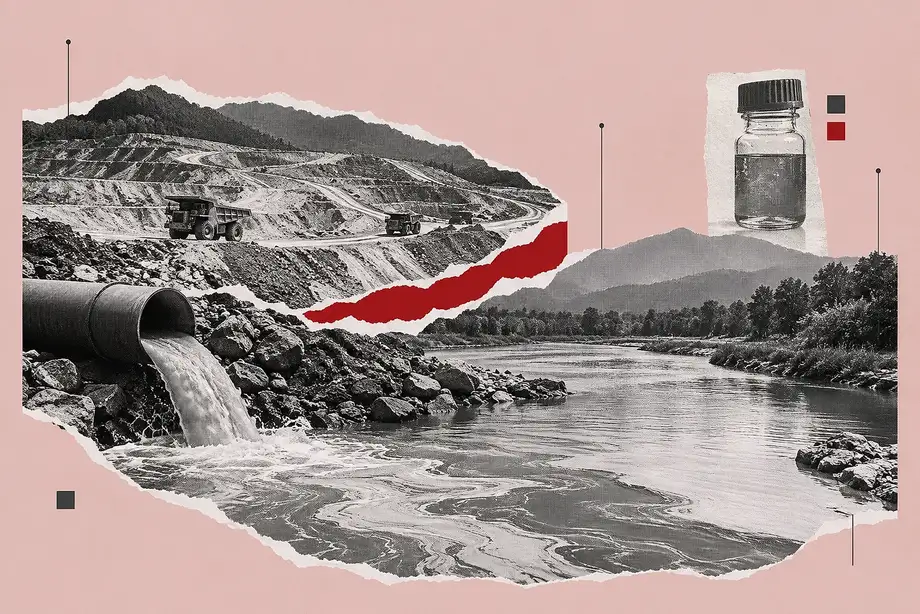
The concern reaches beyond one test. Rivers such as the Kok, Sai and Ruak run from Myanmar and Laos toward the Mekong, carrying whatever upstream communities and industries release into them. In a river basin, pollution rarely stays inside a border line, because water, mud and fish move with the current.
What the Tests Can Show
Arsenic is a naturally occurring element found in rock and soil. Mining can expose it and wash it into water. It has no color or smell, which is why testing matters. A common water standard used in Thailand is 0.01 milligrams per liter, written as 0.01 mg/L. That means one hundredth of a milligram in a liter of water, a tiny amount that can still matter over years of drinking or cooking with it.
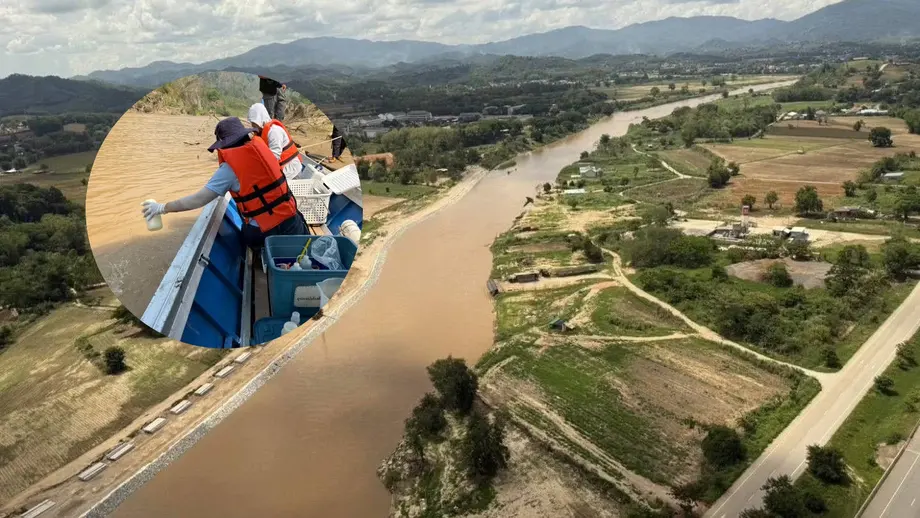
Thailand and Laos began testing on 16 November with support from Japan. The commission expected fieldwork to finish on 27 November. The work uses a regional water quality network that has monitored the Mekong and its major tributaries since 1985. National laboratories in the network analyse samples for 19 water quality indicators, giving governments a shared set of measurements.
Testing water is only part of the picture. Sediment is the mud and sand on the riverbed. Metals can stick to sediment and remain there after the water above looks clearer. Fish, shellfish and plants can take up contaminants from water and sediment, which is why officials are also looking at food safety.
Nong Khai and Bueng Kan Come Into Focus
The commission's 26 November update named Nong Khai as a place of concern after residents reported health worries and fish abnormalities. Tests cited for August 2026 put arsenic in Loei and Nong Khai provinces at three to four times Thailand's surface water standard of 0.01 mg/L.
In Laos' Xiangkhouang province, Huay Hin Lai stream has been linked to reports of cyanide, mercury and lead above standards, along with mass fish deaths. The stream connects to the Nam Ngum system and the Mekong. Thailand's Pollution Control Department assessed the site as about 285 km upstream of where the Nam Ngum joins the Mekong, with water passing through the Nam Ngum reservoir first. Officials considered it unlikely to affect Phon Phisai district in Nong Khai. Tests in Huay Hin Lai on 12 November, four days after fish deaths were found, were back within Lao standards.
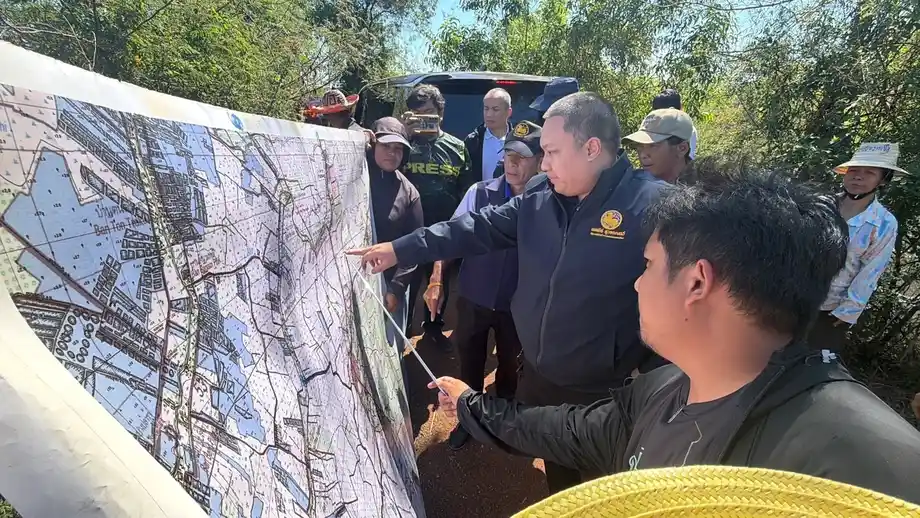
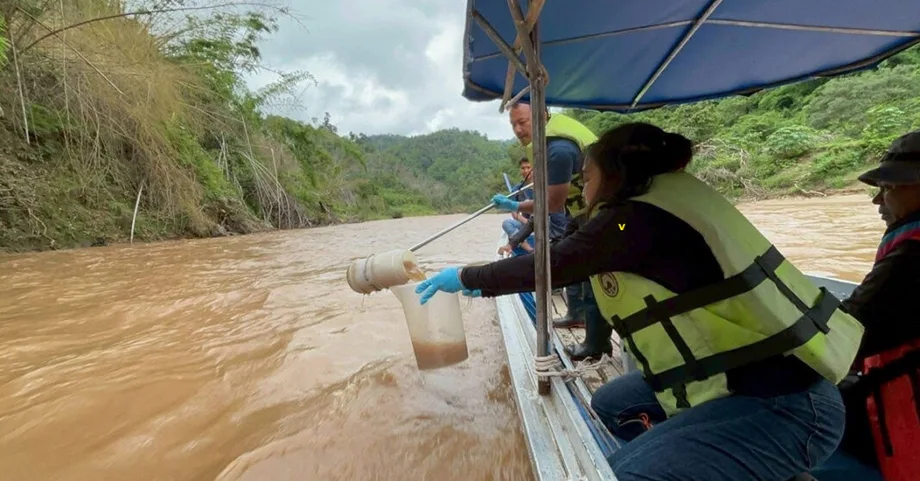
Dr Surint Worakitthamrong, Director General of the Pollution Control Department, ordered the Water Quality Management Division and Regional Environment Office 9 in Udon Thani to join local agencies. On 26 November, they collected water from the middle of the Mekong before Friendship Bridge 5 between Bueng Kan and Bolikhamxay, at a depth of 3.30 metres, and took sediment samples from the riverbank. The samples were sent for cyanide and heavy metal testing, with results expected in about three weeks.
Bueng Kan's provincial health office is tracking about 65 people at risk, especially people who live or work near the river and may have contact with natural water or sediment. Six had urinary arsenic above reference values. Follow up results for four showed no arsenic related abnormality. Health workers use screening results to decide who needs follow up, and a diagnosis needs clinical assessment and exposure history.
What the Official Mekong Assessment Found
The Mekong River Commission published its MRC assessment on 29 April 2026. The commission was established in 1995 under the Mekong Agreement among Cambodia, Laos, Thailand and Viet Nam. Its procedures set common methods for monitoring and managing water quality.
The assessment used monitoring rounds from February and March 2026, collected by Thailand's Pollution Control Department and shared through the Thai National Mekong Committee. It found arsenic in water slightly above the 0.01 mg/L standard. Sediment samples showed more serious concern along the Kok River in Chiang Mai and Chiang Rai, the Sai and Ruak rivers, and all three monitored Mekong stations in Chiang Rai, where concentrations exceeded hazardous levels under Thai guidelines.
Other heavy metals tested in water, including cadmium, copper, nickel, chromium, zinc and mercury, remained within normal water quality standards. The commission said arsenic contamination remains localised, but rainfall, river flow and sediment movement can affect where it spreads and collects.
How High Are the Sediment Readings?
Thailand's Pollution Control Department collected 21 sediment samples from 7 to 10 July 2026 in its twelfth monitoring round. Its guidelines set 10 milligrams per kilogram as safe for benthic animals, meaning creatures that live on the riverbed, and 33 mg/kg as a severely hazardous level. Those figures help explain why sediment results have alarmed local officials.
Four Mekong sites in the July round exceeded the severe level. Golden Triangle permanent border point measured 66 mg/kg, Wiang in Chiang Saen measured 80 mg/kg, Ban Sop Kok measured 50 mg/kg, and Ban Hua Wiang in Chiang Khong measured 68 mg/kg. The 80 mg/kg reading was eight times the safe level and more than twice the severe level. Another set of tests this year cited by officials put three mainstream Mekong stations at 73 to 296 mg/kg, with the highest reading nearly nine times the severe threshold.
The Ruak River measured 49 mg/kg at the Ko Chang pumping station used by the Mae Sai waterworks and 55 mg/kg at its mouth in Wiang, Chiang Saen. The Kok River reached 45 mg/kg at Chaloem Phrakiat Bridge 1 in Chiang Rai city, where nickel measured 26 mg/kg, lead 46 mg/kg and chromium 66 mg/kg. The Sai River had 25 mg/kg at Ban Hua Fai and 13 mg/kg at Ban Pa Sang Ngam, while the Korn River, a Kok tributary, measured nickel at 38 mg/kg.
Where the Arsenic May Be Coming From
Yodchanan Wongsawat, Thailand's Science Minister, said at the talks that arsenic was linked to mining sites in Myanmar's Shan State rather than natural background levels. He stated the source plainly:
Arsenic does not come from nature, it came from mining sites.
Thai officials have focused on gold and rare earth mines across the border. Rare earth elements are metals used in magnets for products such as wind turbines, medical devices and electric vehicles. Mining can disturb rock, expose minerals and create waste that rain washes into streams. Many mining areas in Shan State are controlled by armed groups, including the United Wa State Army and the National Democratic Alliance Army, rather than Myanmar's central government.
The Stimson Center in the United States identified 833 unregulated mines across the Mekong basin from satellite images. It also estimated that more than 2,400 mines across mainland Southeast Asia may release cyanide and mercury into rivers. Brian Eyler, director of the center's Southeast Asia programme, said metals do not break down in the way many chemicals do, so they can keep cycling through water, sediment and food chains.
Thai scientists have also used isotope analysis, a method that compares atomic weights like a fingerprint, to estimate about 143 kilograms of arsenic crossing through the Sai River each day. Officials say that figure helps trace movement of contamination, while the source of individual discharges remains a subject of investigation and diplomacy.
Diplomacy Turns to Mining Controls
At talks with China and Myanmar on 24 November, Thailand asked Beijing to help shut Shan State mines for at least six months. The first Thai and Myanmar working group met a day later in Bangkok, with China's ambassador attending. The two sides agreed to joint sampling on the Kok and Sai rivers. No public agreement was reached on the proposed suspension, and officials did not say how it would be enforced.
Guo Jiakun, spokesperson for China's Foreign Ministry, said on 25 November that Chinese companies abroad must obey local laws and that pollution can have several causes, including geology and climate change. He said experts would join on site investigations through the working group. China has not confirmed the Thai account that all three sides agreed on the mining source.
Sihasak Phuangketkeow, Thailand's Foreign Minister, described China's response after Prime Minister Anutin Charnvirakul raised the issue with President Xi Jinping. He said:
China made clear that they do not support activities that are improper, illegal or cause harm.
Thailand's chemical ban plan followed pressure from officials who say the country is part of the supply chain. The National Security Council estimated that 70 to 80 percent of chemicals used by the mines are shipped from Thailand. Thailand plans to ban exports of two rare earth mining chemicals, restrict imports of six minerals including gold and rare earths, and declare more than 150 km of the Kok a pollution control zone from 2 December. The export ban is still under legal review.
A Timeline of Decisions and Deadlines
The pollution issue has built through years of monitoring, then moved quickly in November. These dates show what has happened and what comes next.
- 1985: the regional water quality network begins monitoring the Mekong and major tributaries.
- 1995: the Mekong River Commission is established under the Mekong Agreement.
- March to September 2025: Thai tests detect arsenic and other heavy metals in the Kok, Sai, Ruak and Mekong rivers.
- 21 July 2025: a regional meeting takes place in Chiang Rai; a civil society roundtable follows on 20 August, and a water quality emergency response consultation is held in Vang Vieng on 8 December.
- 6 February 2026: arsenic in Bokeo exceeds the standard limit; tests on 23 February, 8 March and 24 March return to within limits. Luang Prabang stays below 0.01 mg/L through the monitoring period.
- 7 to 10 July 2026: Thailand collects 21 sediment samples, finding severe arsenic levels at several Mekong and Ruak points.
- 20 August 2026: a parliamentary subcommittee asks the agriculture minister to explain how contaminated land, irrigation water, rice, maize and pineapple will be handled.
- 16 November 2026: Thailand and Laos begin joint Mekong arsenic testing with Japanese support.
- 20 November 2026: the Mekong River Commission Council meets in Hanoi; Sweden speaks on 25 November.
- 24 and 25 November 2026: talks with China and Myanmar take place, followed by the first Thai and Myanmar working group meeting and agreement on joint sampling.
- 26 November 2026: the commission issues its update and Thai teams sample water and sediment near Friendship Bridge 5.
- 27 November and early December 2026: fieldwork is expected to end, and joint arsenic results are due.
The calendar matters because officials can act faster when they have comparable data. The three country talks were set up to move from separate national tests toward shared measurements, though several field plans are still being arranged.
Six Stations and a Gap Between Plans and Data
After the six station river watch agreed on 25 November, officials planned four stations on the Kok River and two on the Sai River, with water quality data shared at least twice a year through designated agencies. None is operating yet. The first joint sampling was set for December 2026 to January 2027, depending on logistics, and neither government has published a map of the sites.
Raweewan Bhuridej, permanent secretary of Thailand's Ministry of Natural Resources and Environment, described a phased plan. The first phase covers monitoring and public health impacts. Later work would consider sediment, fish, vegetables and laboratory capacity. She said China had offered technical help, including information sharing, surveys and a joint laboratory:
China is prepared to support cooperation between Thailand and Myanmar
The Mekong River Commission has its own framework, the Technical Guideline on the Implementation of the Procedures for Water Quality, which sets common methods, standards and reporting approaches. That matters because two countries can measure the same river differently if they use different sampling depths, timing or laboratory methods.
River Pollution Reaches Food and Water
A Thai fisheries department official provided details from nearly two years of testing. More than 500 samples were taken from the Mekong, Salween, Sai, Kok and Ruak rivers. Eighteen had heavy metals above safety limits. Ten species were affected, including freshwater shrimp, river snails, freshwater mussels, horse mussels and local fish that feed on them. In some samples, arsenic was nearly four times the permitted limit and lead nearly six times the limit. No contamination was found in farmed aquatic species.
Tap water supplies to 14 villages in Mae Sai district were suspended earlier this month after arsenic at the local waterworks reached 0.3 mg/L, or 30 times Thailand's standard. Authorities warned residents against eating certain shellfish and river species from affected areas.
Saengwaree Suvirakan, a farmer from Tha Ton in Chiang Mai who joined a protest in Bangkok, said fish stocks had already been falling. She described the effect on local buyers:
Fish are harder to find and even if you find, people won't buy it.
Aombun Thipsuna, a local activist, and residents collected nearly 60 fish samples for analysis at Naresuan University. The fish of concern include pla khae catfish, a widely eaten species that can weigh up to 60 kilograms, with discolored fins, sores and abnormal lumps. Specific metal levels in those fish samples have not been disclosed. Environmental groups, the university and students from 14 local schools are testing soil, water and fish, with findings to be shared through a Safe Fish application.
What Communities Can Do While Results Are Pending
Bueng Kan's provincial waterworks branch said tap water that has passed through treatment and quality checks still meets standards. Officials told residents to keep that separate from water taken directly from the Mekong, which remains under monitoring. The provincial agriculture office has sampled riverside vegetables. Its early assessment found a low chance of contamination, but laboratory results are still needed to confirm safety.
Bueng Kan's governor urged residents and farmers along the Mekong to follow updates from government agencies. The province advised people to avoid raw fish and fish organs while monitoring continues. Fish can be cooked, but advice can vary by species and location, so local results matter.
The arsenic health risks behind that advice are hard to see at first. Short bursts of very high exposure can cause stomach pain, vomiting, diarrhea and numbness. Exposure over years can cause dark spots on the skin, hardened growths on palms and soles, and higher risks of cancers of the skin, lungs, bladder, liver and kidneys. Arsenic can also affect blood vessels and heart rhythm. These effects explain why officials are tracking people who regularly touch river water or sediment.
Why Sweden's Warning Matters Beyond One River
Sweden's statement adds diplomatic weight to concerns already raised by Thailand at the Mekong River Commission Council. The development partners' joint statement reaffirmed cooperation on water management, while the commission continues to share data through regional systems. That cooperation gives smaller communities a better chance of getting comparable answers about the water they use.
Japan is supporting the current Thailand and Laos testing and a broader programme to monitor heavy metals in the Lower Mekong Basin from 2026 to 2028. The United Kingdom and other development partners also support regional heavy metals work. The programme aims to build baseline data, track changes over time and make testing more consistent between countries.
For people along the river, the consequences are practical. About 2,500 pumping stations draw Mekong water for drinking and agriculture. The river runs 4,909 km and supports more than 60 million people, and the United Nations Food and Agriculture Organization describes it as the world's largest inland fishery. Whether families can drink water, eat fish and sell crops depends on what the current round of tests finds and how quickly governments act on the results.
Key Points
- Sweden voiced concern on 25 November about worsening pollution in rivers feeding the Mekong.
- Thailand and Laos began joint arsenic tests on 16 November, with results expected in early December.
- Thailand's Pollution Control Department found severe arsenic levels in sediment at several Mekong, Ruak and Kok sites.
- Officials linked much of the contamination to gold and rare earth mining in Myanmar's Shan State, while China said companies abroad must obey local laws.
- Thailand and Myanmar agreed to six monitoring stations and twice yearly data sharing, but the stations are not yet operating.
- Communities near the river were advised to use treated tap water, avoid raw fish and fish organs, and wait for laboratory results on vegetables and river food.