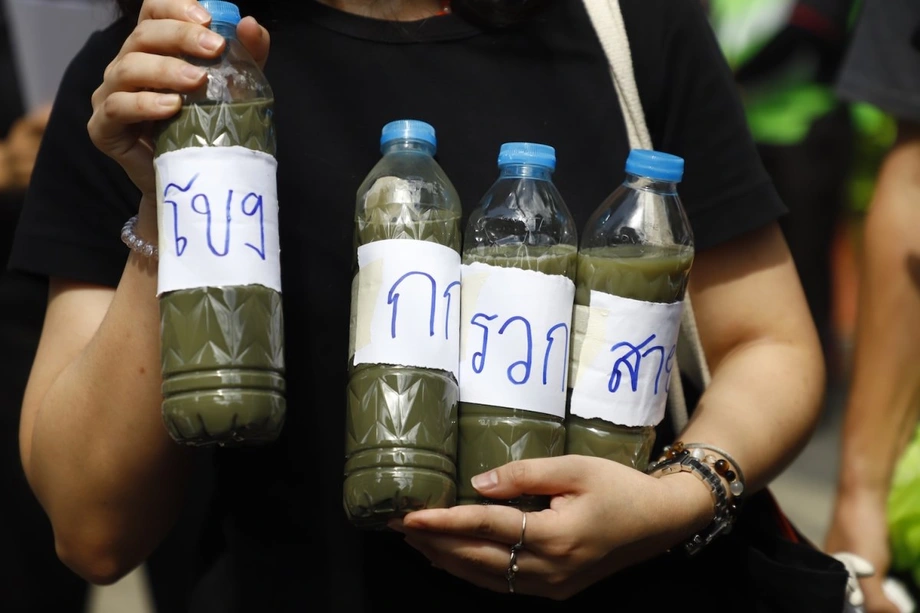
Six Stations for Rivers That Ignore Borders
Bangkok and Myanmar's government, which is backed by the military, agreed on Wednesday to build six water quality stations on the Kok and Sai rivers, the first joint effort to measure heavy metals flowing from Shan State into northern Thailand. The deal came at the first meeting of a Joint Working Group on water quality management in boundary and transboundary rivers, held in Bangkok on Nov. 25.
Contents
Four stations will sit on the Kok and two on the Sai. None is operating yet. Officials set the first joint sampling for December 2026 to January 2027, depending on logistics, and agreed to exchange data at least twice a year through designated agencies. A joint release said both countries 'attach great importance to the water quality situation in the boundary rivers'.
The stakes reach beyond the two rivers. Thai tests have found arsenic above the national standard of 0.01 milligrams per liter in the Kok, Sai, Ruak and Mekong. The pollution has disrupted fishing, farming and tourism in Chiang Rai and Chiang Mai provinces and drawn China into talks with Thailand and Myanmar.
Arsenic is a naturally occurring element that can harm people who drink contaminated water or eat food grown in it over long periods. It has no color or smell, which makes testing essential. That is why monitoring stations have become the center of a dispute that runs from Shan State to the Mekong River.
Thailand had asked for four stations inside Myanmar and four on its own side, plus about 20 monitoring points along affected rivers and tributaries. The final plan is smaller. A joint release described four sampling points on the Kok and two on the Sai in each country, a wider network than the six stations first announced. Neither government has published a map of the sites.
What the Rivers Carry
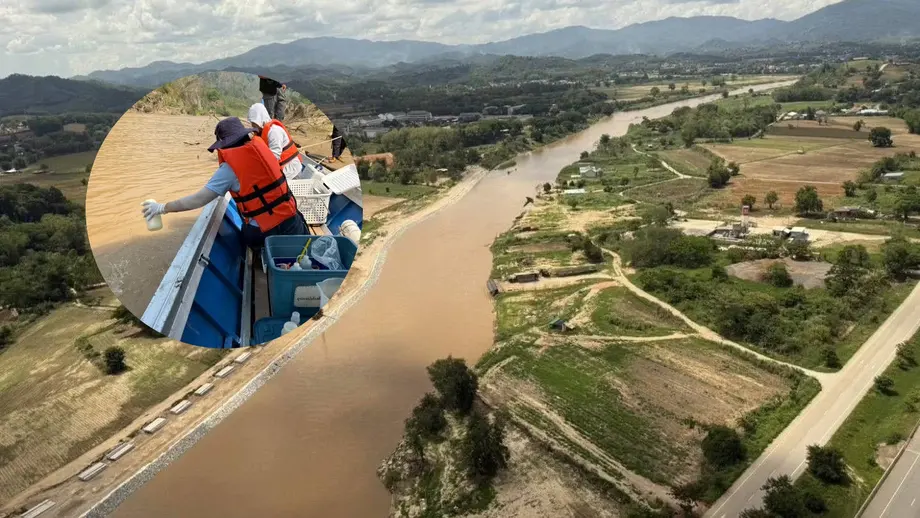
Thailand's Pollution Control Department first recorded arsenic above the 0.01 mg/L standard in the Kok in March 2025. The highest routine reading was 0.026 mg/L near the Myanmar border, 2.6 times the limit. In tests from Oct. 26 to 30, 2026, one of 10 Kok points near the border stayed above the standard, while all three Sai points were slightly above it.
Those are monthly samples. Thai Foreign Minister Sihasak Phuangketkeow said readings had at times surged to as much as 30 times the Thai standard. Thai scientists also found a chemical fingerprint: isotope analysis indicates that about 143 kilograms of arsenic crosses the border through the Sai River every day. Isotopes are versions of an element with different atomic weights, and their ratios can work like a signature.
Sediment tells a worse story than water in some places. Along the Kok in Chiang Mai and Chiang Rai, the Sai and Ruak, and all three monitored Mekong stations in Chiang Rai, arsenic in sediment exceeded hazardous levels under Thai guidelines. Most other heavy metals in water, including cadmium, copper, nickel, chromium, zinc and mercury, stayed within normal standards. Thai authorities have also found contaminants in the Salween and Kraburi, the other border rivers.
Chiang Mai University researchers used a Heavy Metal Pollution Index, a scale that combines several metals into one score, to rank sites. Every tested location in the Kok, Sai, Ruak and Mekong mainstream exceeded medium pollution limits. Thaton, where the Kok enters Thailand, and Sob Ruak, where the Sai and Ruak meet the Mekong, passed high pollution thresholds. At Mae Sai and Tachilek, the index came close to 100 times the threshold for high pollution.
A Poison Trail From Shan State
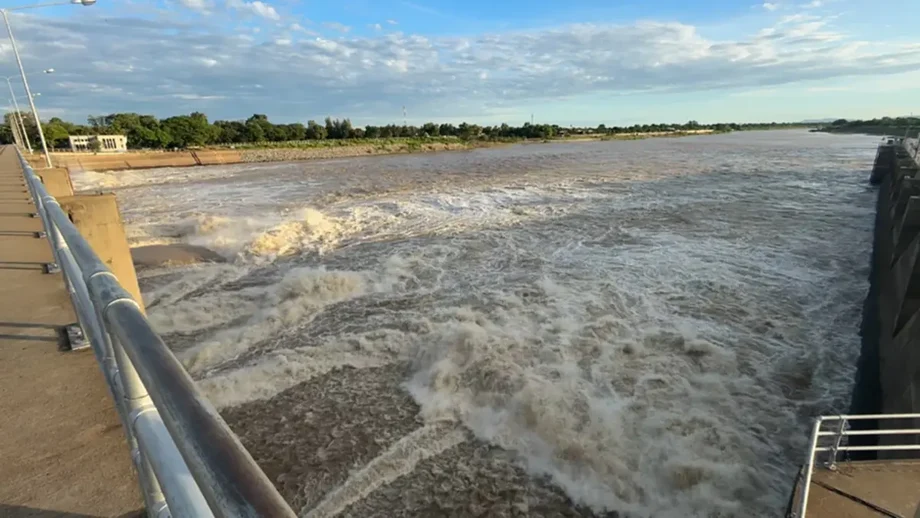
The Kok begins in eastern Shan State, enters Thailand in Chiang Mai and flows through Chiang Rai. The Sai and Ruak form parts of the border. All three feed the Mekong, the river that supplies food and transport to millions of people in Thailand, Laos, Cambodia and Vietnam.
Upstream, Shan State has become one of the world's busiest sources of rare earths. These metals are used in magnets for wind turbines, medical devices, electric vehicles and smartphones. Demand has pulled mining into territory held by ethnic armed groups, including the United Wa State Army and the National Democratic Alliance Army, rather than Myanmar's government.
Satellite imagery shows the speed of change. the Stimson Center's satellite mapping identified 60 rare earth mines in Myanmar's part of the Mekong Basin. Thirty-one sit in Wa State near the headwaters of the Nam Lwe, a 200 kilometer tributary that meets the Mekong near the Laos border, and 26 are in NDAA territory farther downstream. Three active rare earth mines lie upstream on the Kok, with at least two more possibly under development. One rare earth mine and at least nine gold mines are active near the head of the Sai, with five gold mines in development.
The process is messy. Miners inject water mixed with fertilizer or acid into deforested hillsides, then collect the slurry in downhill pools to separate the rare earths. River water siphoned uphill returns to streams carrying arsenic, manganese, mercury and cadmium. For every ton of rare earth minerals processed, about 2,000 tons of toxic waste are produced, the Stimson Center estimates. The center also estimates that more than 2,400 mines across mainland Southeast Asia, many illegal and unregulated, could release cyanide and mercury into rivers.
Thai investigators have focused on eastern Shan State, including areas under a militia backed by China. Chinese miners opened rare earth mines under the protection of the United Wa State Army, which has close ties to Beijing. China's embassy in Bangkok has denied that Chinese miners are involved, and Beijing says its firms abroad must follow local laws and protect the environment. During the Nov. 24 talks, Chinese representatives acknowledged that private Chinese companies operate mines in the area, according to Thai officials.
The Communities Paying the Price
Thaton subdistrict in Chiang Mai is the first place the Kok reaches after crossing from Myanmar. About 20,000 people live there, including 12 indigenous groups. The Sept. 11, 2024 flood pushed the river up by six meters in places and changed its course. Residents have reported skin rashes after contact with river water, and some villages depend on the Kok for drinking and irrigation in the dry season.
Fishing has stopped. Researchers visiting in August 2025 observed no fishing on the Kok or the Mekong mainstream. Boat and rafting services from Thaton's river port have halted, homestays have closed and tourism is nearly dead. The Loi Kratong festival, when Thai communities float candles on rivers, no longer takes place there, and an annual ritual that floats a Buddha statue downstream has been canceled.
Farms have suffered too. Floods ruined rice, oranges, baby corn and green pepper on the Kok floodplain. Crops from Thaton now struggle in local markets. Rice mills in Chiang Rai have paused paddy purchases, and hotel bookings in the province fell by 50 percent. Some produce still reaches canners that sell to supermarkets worldwide, leaving buyers with little way to know where it grew.
Health questions remain. Thailand's Ministry of Public Health began collecting urine samples from villagers in Chiang Mai and Chiang Rai in July 2025. By November 2026, tests on the same 322 residents in 2025 and 2026 showed arsenic levels in their bodies had risen by more than 50 percent, opposition leader Natthaphong Ruengpanyawut said, citing government results. The Department of Fisheries has warned people not to eat 10 aquatic species while testing continues.
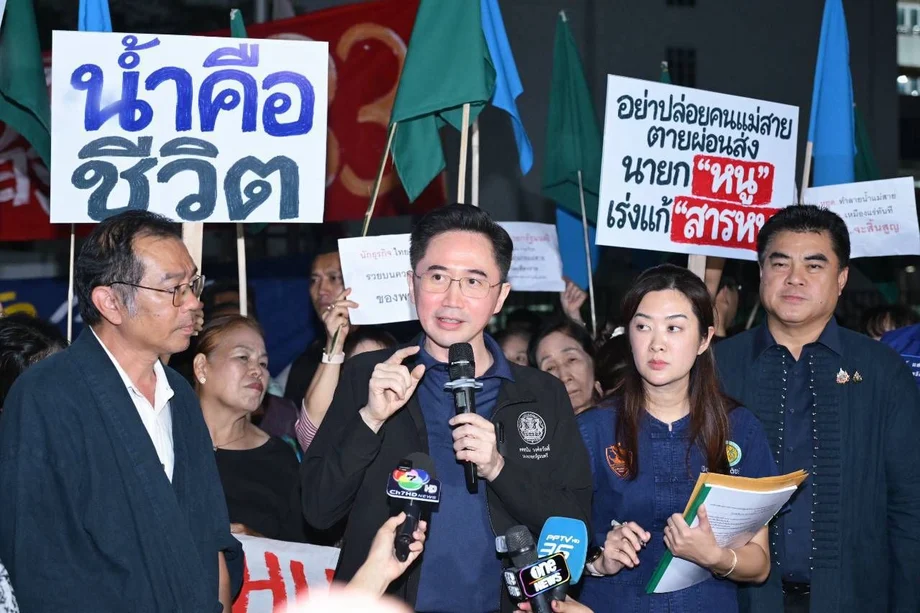
Official advice has been inconsistent. Officials told Thaton residents that their crops and fish were safe but best avoided, a message that left families unsure what to sell or eat. Local testing boards publish results in town centers and online, but elderly and disabled residents cannot always reach them. A Suan Dusit University poll in November found 89.2 percent of respondents worried about river contamination, and 85.9 percent had little or no confidence in the government's response.
How Arsenic Reached the Mekong
The pollution is not staying inside Thailand. the Mekong commission's October update traces the alert to 5 April 2025, when the Thai National Mekong Committee Secretariat notified the body based in Vientiane. The commission, which groups Cambodia, Laos, Thailand and Vietnam, contacted Myanmar's Environmental Conservation Department and proposed joint water quality monitoring. Myanmar is a dialogue partner of the commission.
On 21 July 2025, the commission convened a regional meeting in Chiang Rai and supported a field visit to the Kok and Mekong. Tests in August showed arsenic above 0.01 mg/L at times in the Kok, Sai and Ruak. At the Mekong confluences with the Kok and Ruak, August samples stayed within limits, but samples collected between 1 and 5 September 2025 exceeded them. The commission told member countries to prepare for possible downstream effects.
Downstream Laos became the test case. The commission and Lao agencies began sampling at Luang Prabang in June 2025 and found arsenic below the standard through 23 September 2025. New stations opened in Bokeo province in early October 2025. Bokeo recorded one exceedance on 6 February 2026, the commission's April assessment records. Tests on 23 February, 8 March and 24 March 2026 showed levels back within limits. Luang Prabang has stayed below 0.01 mg/L throughout. Arsenic has been monitored twice a month in Luang Prabang since July 2025 and in Bokeo since October 2025.
The commission held a civil society roundtable on the Kok on 20 August 2025 and a regional consultation in Vang Vieng on 8 December 2025. It is launching regional heavy metal programs for 2026 to 2028 with support from Japan and the United Kingdom, and it is integrating Thailand's data into regional systems. Its chief executive, Busadee Santipitaks, said the agency is trying to combine science with clear public communication.
We understand the concern this has raised among riverine communities. This is why our focus is on solid science, close coordination, cooperation, and clear communication. We are watching the situation closely every day and taking action to make sure the rivers are protected, the authorities are involved, and the people are aware.
Diplomacy Moves to Beijing
Pressure built through 2026. On 20 November, Prime Minister Anutin Charnvirakul raised the issue with Chinese President Xi Jinping in Shenzhen. Xi said Beijing opposed environmentally damaging activities and would provide technical help, according to Thai officials. China agreed to strengthen water quality inspections and monitoring. No agreement to close mines or a timetable for cleanup was announced.
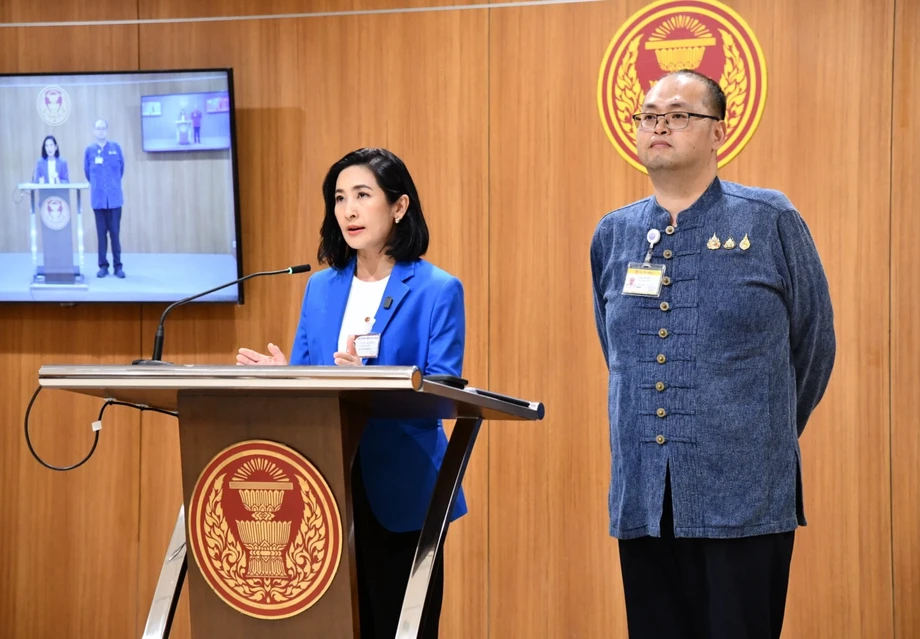
Four days later, Thai, Myanmar and Chinese officials met at Thailand's Foreign Ministry. China's ambassador to Thailand, Zhang Jianwei, and specialists from Yunnan joined Myanmar's permanent secretary for natural resources, Hla Maung Thein, and Shan State representatives. Thai Deputy Prime Minister and Foreign Minister Sihasak Phuangketkeow led the Thai delegation. Chinese leaders said they do not back illegal or destructive mining in Shan State and would help verify the source of the pollution.
Bangkok wants more than data. Deputy Prime Minister Yodchanan Wongsawat said Thailand would ask Myanmar to suspend unregulated mining in Shan State for at least six months so that operators can install treatment systems. Thailand also wants the names of mine owners and says there is no reason not to disclose them eventually. China would be asked to act as an intermediary where Myanmar has only partial control.
The ultimate goal for the Thai people is to see a temporary suspension of mining operations, ideally for at least six months, to allow time for improvements in mining practices.
Myanmar has not said whether it will accept the suspension. China has not published its own account of the talks. Beijing said earlier in November that it was not familiar with specific allegations against Chinese companies but that its firms must protect the environment and it was willing to cooperate on water pollution. Yodchanan said China should trace rare earth shipments and refuse products from unregulated mining, and that such a rule should become a global standard.
Technical support is part of the package. Raweewan Bhuridej, permanent secretary of Thailand's Ministry of Natural Resources and Environment, said China had offered information sharing, joint surveys and a joint laboratory.
China is prepared to support cooperation between Thailand and Myanmar.
Thailand's Own Crackdown
Thailand is also trying to cut the flow of chemicals that make the mining possible. The government plans to ban exports and transit shipments of chemicals used in rare earth mining. The National Security Council estimates that 70 to 80 percent of the mining chemicals under examination are shipped from Thailand to Myanmar. Officials are reviewing which substances to control and how to limit damage to other industries.
On the home front, Thailand plans to designate more than 150 kilometers of the Kok River as a pollution control zone from 2 December. The National Environment Board is due to review the proposal. Authorities have identified 10 groundwater sources in Chiang Rai and are preparing 14 village water systems to supply nearly 20,000 people. An online risk map covering soil, crops and water is due by 15 December, and the Department of Disaster Prevention and Mitigation is running daily briefings from an emergency center in Chiang Rai.
An agricultural map will mark areas red, yellow or green by toxicity, and farmers in green zones have been told they can plant off season rice. Science is part of the response. Thai and Chinese laboratories are preparing isotope tests to match contaminants to specific mines, and a laboratory at Mae Fah Luang University is being calibrated to Chinese analytical benchmarks. Thailand is also testing weirs that trap sediment. A computer model suggests one design could remove 94.6 percent of arsenic, and a pilot lasting 18 months aims to protect about 27,000 rai of farmland. The figure is a model result, not yet proven at full scale.
The Trade That Feeds the Mines
Money explains why the mining has spread so fast. In the first nine months of 2025, Thailand imported 105,752 tons of antimony, tungsten, copper, lead and manganese from Myanmar, mostly in ore form. The shipments were worth more than 13.9 billion baht, about $422 million, more than double the value and volume of all minerals imported from Myanmar in 2024. More than 50 companies registered in Thailand have been importing critical minerals from Myanmar, much of which is re-exported to China.
Antimony is used in bullets, armor, semiconductors and flame retardants. Tungsten, copper, lead and manganese feed construction, batteries and electronics. China is the main buyer of Myanmar's rare earths and the main supplier of the chemicals and equipment that keep the mines running. That gives Beijing bargaining power that Thailand does not have. Chaipruak Doungprapat, the security council's secretary general, said abandoned and unregistered mines with uncleared waste may also be adding pollution when rain washes it into streams.
Thai lawmakers want to use trade rules as a lever. A parliamentary subcommittee chaired by Phattarapong Leelaphat, a People's Party MP for Chiang Mai, has proposed secondary legislation under the 2017 Minerals Act, including Section 104, to track ore from mine to export. The aim is to stop Thailand from serving as a transit route for minerals that cannot be shown to come from clean operations. Opposition leader Natthaphong Ruengpanyawut has also called for checks on ore imports and exports and for talks with China on supply chain oversight. Yodchanan met the OECD secretary general on Nov. 23 to press for traceability standards for rare earths.
What the Deal Does and Does Not Do
The Nov. 25 agreement is a monitoring pact, not an enforcement order. It sets four sampling points on the Kok and two on the Sai, a work plan for one year, an exchange of data twice a year and a first joint sampling window of December 2026 to January 2027. Phase one covers surface water and public health. Testing of river sediment, fish, vegetables and farm soil is to follow in a second phase, along with laboratory upgrades.
Several gaps remain. None of the stations is operating yet, and no map of the sites has been released. The agreement does not assign blame or name mine owners. Myanmar's central government controls only part of the mining territory. The Stimson Center counted 2,214 mining sites across Myanmar since 2015, more than half opened after the 2021 coup. Of 2,245 sites identified in a later count, just 577 lie in areas under central government control. The rest sit in territory held by armed groups, including the Kachin Independence Army and the United Wa State Army, which Myanmar's government refuses to recognize officially.
That limits what a bilateral deal can achieve. Thailand can measure water at the border, but it cannot send inspectors into Wa State or NDAA territory. China can trace rare earth shipments and refuse ore from unregulated mines, but Beijing has not agreed to do so as a formal policy. Thai officials say they want mine operators to identify themselves and join a cleanup, a step that depends on cooperation from companies that have stayed out of sight.
More diplomacy is scheduled. Thai and Myanmar representatives plan joint field inspections in Chiang Rai on Nov. 28 and 29. Thailand will raise the issue at the Ayeyawady-Chao Phraya-Mekong Economic Cooperation Strategy meeting on Nov. 28 and at the Mekong-Lancang leaders' meeting in Guilin in late December. Thai officials also plan to meet the governor of Tachileik, opposite Chiang Rai, to discuss alerts about incidents that could affect water quality.
A timeline of the main steps shows how slow the process has been:
- March 2025: Thailand's Pollution Control Department first records arsenic above the standard in the Kok River, with a peak of 0.026 mg/L.
- 5 April 2025: Thailand's national Mekong committee alerts the Mekong River Commission.
- 21 July 2025: A regional meeting in Chiang Rai agrees to draft a joint monitoring plan.
- August to September 2025: Arsenic exceedances appear at the Kok, Sai and Ruak, then at Mekong confluences.
- October 2025: New monitoring stations open in Bokeo, Laos.
- December 2025: A regional consultation on emergency water quality response is held in Vang Vieng, Laos.
- January 2026: Myanmar tells the commission it will work with Thailand and welcomes technical support.
- 6 February 2026: Arsenic exceeds the standard in Bokeo, then returns within limits by late March.
- 20 November 2026: Prime Minister Anutin Charnvirakul raises the issue with President Xi Jinping in Shenzhen.
- 24 November 2026: Thailand, Myanmar and China hold trilateral talks in Bangkok.
- 25 November 2026: Thailand and Myanmar agree the joint monitoring plan.
- 2 December 2026: Thailand plans to designate a 150 kilometer pollution control zone on the Kok.
- December 2026 to January 2027: The first joint water sampling is scheduled.
Key Points
- Thailand and Myanmar agreed on Nov. 25 to set up six joint water quality stations, four on the Kok River and two on the Sai, with first sampling due between December 2026 and January 2027.
- Thai tests have found arsenic above the 0.01 mg/L standard in the Kok, Sai, Ruak and Mekong, with a routine peak of 0.026 mg/L and official accounts of surges up to 30 times the limit.
- Thai scientists estimate about 143 kilograms of arsenic crosses the border through the Sai River each day.
- Satellite mapping has identified 60 rare earth mines in Myanmar's Mekong Basin, including three active on the upper Kok.
- About 20,000 people live in Thaton, where fishing has stopped, tourism has collapsed and crops face market rejection.
- Thailand plans to ban exports of rare earth mining chemicals and to designate 150 kilometers of the Kok as a pollution control zone from Dec. 2.
- Thailand imported 105,752 tons of minerals from Myanmar in the first nine months of 2025, worth about $422 million.
- Myanmar has not accepted a proposed six month halt to mining in Shan State, and China has not published its account of the talks.