Diplomacy moves alongside local safeguards
Thailand is bringing China into efforts to trace and stop pollution in rivers shared with Myanmar, while preparing water, health and farming measures for communities downstream. Thai Deputy Prime Minister and Foreign Minister Sihasak Phuangketkeow said on November 20 that a meeting between Thai and Myanmar working groups had been brought forward to November 25 and 26. A preliminary meeting with Myanmar's working group leader and China's ambassador to Thailand was planned for November 24.
Contents
The talks follow a meeting between Thai Prime Minister Anutin Charnvirakul and Chinese President Xi Jinping in Shenzhen, where Anutin sought Chinese technical help. Sihasak said Xi had personally made clear that China did not support improper or substandard activity by Chinese private businesses. China has agreed to technical cooperation, with Chinese academic institutions expected to work with Mae Fah Luang University.
The effort adds a three country technical track to Thailand's direct diplomacy with Myanmar. Thailand says it wants evidence about where contaminants enter the river system, rather than assigning blame before that work is done. The next steps could affect drinking water, irrigation and farmers' ability to sell crops in northern Thailand.
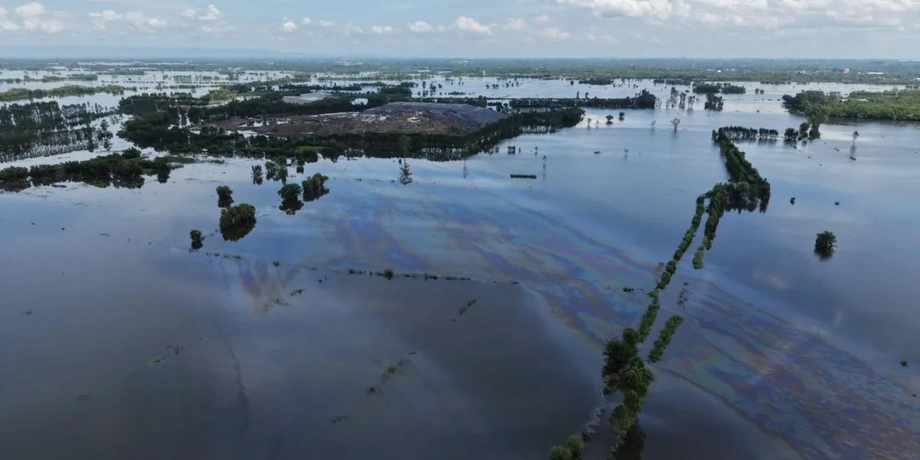
Residents have already faced disruption. During earlier talks in Naypyidaw, Thailand raised concerns about arsenic and other pollution in rivers crossing the border, after untreated Sai River water was measured at 0.3 milligrams of arsenic per litre, 30 times Thailand's surface water standard of 0.01 milligrams per litre. The November 12 discussions and river concerns are described in Thailand's talks with Myanmar.
What will the November meetings cover?
Sihasak said he asked Myanmar President Min Aung Hlaing to bring forward the bilateral working group meeting. The schedule now places preliminary discussions on November 24, followed by the Thai and Myanmar working group meeting on November 25 and 26. Thailand's Deputy Prime Minister and Higher Education, Science, Research and Innovation Minister Yodchanan Wongsawat and Natural Resources and Environment Minister Suchart Chomklin are due to join the Thai side of the preliminary discussions.
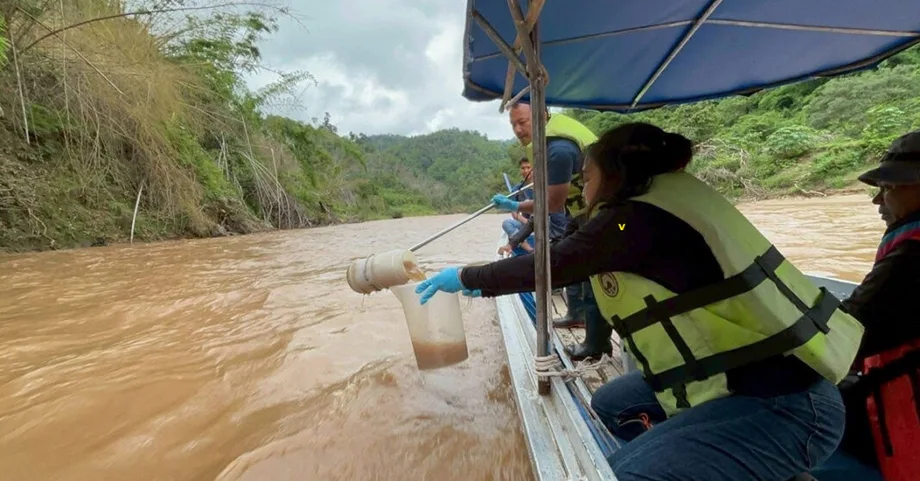
China's ambassador to Thailand is also expected at the November 24 meeting. The three countries are preparing to coordinate technical work, including where to measure river quality and how to identify the source of arsenic. Thailand has proposed adding monitoring points in Myanmar, especially near mining areas, and involving a working group from Shan State, where mining activity is concentrated.
Yodchanan has proposed a joint technical team to locate pollution and stop it at its source. Thailand plans to use water test results from its environment ministry alongside isotope analysis by the higher education ministry. Isotopes are forms of the same chemical element that have different atomic weights. Their patterns can act like a fingerprint, helping researchers compare arsenic in water with possible sources.
The meetings build on an earlier agreement by Thailand and Myanmar to treat river pollution as urgent. A shared technical process could give both countries a common set of measurements, while Chinese institutions and Mae Fah Luang University are expected to support laboratory work. The governments have not yet announced the specific monitoring locations, the full membership of the technical group or a final timetable for its findings.
Why is China involved?
Thailand says the suspected sources of pollution lie beyond its borders, limiting what Thai authorities can do directly at the source. Anutin said Thailand must seek cooperation rather than rely on sanctions or pressure against businesses operating outside the country. He said China had agreed to send specialists to help measure water quality and assess how toxic the water may be.
China has also agreed to technical cooperation aimed at improving water monitoring. A separate proposal is to establish joint monitoring stations using Chinese technology. Sihasak's account of Xi's position was that China would not support activities that damage the environment or fail to meet proper standards.
Anutin has proposed raising cross border water pollution at the Mekong Lancang Cooperation leaders' meeting in Guilin in December. That forum could give the issue a regional setting beyond the November working group discussions. No date for a formal decision or a specific commitment at the December meeting has been announced.
Thailand's approach joins diplomacy with scientific investigation. If the countries agree on sampling methods and locations, their officials can compare results from both sides of the border. That matters because rivers carry water and sediment downstream, while mining and other activities may occur far from the Thai communities that depend on them.
What is being done for people downstream?
Yodchanan has outlined six urgent measures for northern Thailand, combining investigation with steps to protect water supplies and farms. One is isotope testing to help identify the source of arsenic. Another is cooperation on a laboratory with China's science institutions and Mae Fah Luang University, using shared standards so results can be compared.
A third measure is a trial of the "Sai Sai" system, developed by the higher education ministry and Naresuan University, to capture toxic sediment. The trial is planned for an irrigation area near the Daeng Mine in Mae Sai district, before water reaches agricultural fields. The captured waste is intended to be destroyed under Pollution Control Department standards.
Authorities are also preparing community water filtration systems in risk areas of Chiang Rai and Chiang Mai, including Fang and Mae Ai districts. The Irrigation Department has reserved 22.5 million cubic metres of water across three reservoirs for emergencies. More than 100,000 litres of clean water have already been distributed, according to Yodchanan.
Those measures address immediate exposure and supply, while testing and diplomacy seek to locate the source. The government has also discussed slowing water with weirs and using sediment traps. Yodchanan said a forum with academics was planned for Sunday to assess those options, and he planned to visit Chiang Rai from Sunday to Monday to hear residents' concerns and check local work.
What do health and crop checks show?
In Loei province, Governor Chaiyaphon Charunphong said health officials tested urine samples from 76 people considered at risk. Five had arsenic levels above the reference threshold. Officials are conducting further investigation because arsenic can also occur naturally and a high test result alone does not identify its source.
Bueng Kan health officials reported six residents or farmers with total arsenic in urine above the reference level. They had not identified anyone as a patient suffering from arsenic poisoning. A result above a reference level calls for follow up, but officials still need to assess exposure and health alongside the test.
Crop testing has offered one reassuring finding: Deputy Agriculture Minister Piyarat Tiyapairat said tests of rice in Chiang Rai found no arsenic above the standard. The agriculture ministry said it would discuss buying and destroying rice if future testing finds levels above the limit, to prevent affected crops from entering the market.
At the same time, some mills have reportedly declined to buy rice and other agricultural products in certain areas. Anutin said on November 21 that whether to declare a disaster area would depend on the situation. Asked about reports of crop rejection, he replied, "Not yet." Authorities have not published a full account of affected farms, the number of rejected shipments or a final decision on a disaster declaration.
How will authorities manage mining and farm risks?
Thailand's Industry Ministry is preparing controls on the types and condition of minerals brought into or sent out of the country, as well as restrictions on products or substances that can be used in mining. Deputy Interior Minister Jedeset Thaiseth said officials wanted better records of where imported minerals go, after saying they could not yet identify all the places receiving them.
The agriculture ministry is collecting samples of plants, soil and water for an Agri Map that will mark areas red, yellow or green according to risk. Officials aim to complete the map by December 15, starting with Mae Ai and Chiang Rai. Green areas are intended to help farmers show that their products meet Good Agricultural Practices standards, while the map is also meant to guide testing and public updates.
The map could help distinguish areas where crops can be certified from places needing more checks or restrictions. Its usefulness will depend on the sampling and the continuing publication of test results. Authorities have said an online platform is being prepared to share water and agricultural findings.
Thailand is also considering a wider international route. Yodchanan said he would discuss the issue with the Thailand Institute of Justice and seek to bring it to United Nations environmental bodies under the principle of climate justice. That step was described as a plan, not a completed submission.
What happens next?
The immediate focus is the November 24 preliminary session and the November 25 to 26 working group meeting. Officials are expected to discuss cooperation among Thailand, Myanmar and China, technical monitoring, evidence from water tests and isotope analysis, and ways to address pollution at its source. Thailand is also expected to press for monitoring sites in Myanmar near mining areas.
The next regional opportunity is the Mekong Lancang leaders' meeting in Guilin in December. At home, the December 15 target for the agricultural risk map is a key date for farmers and buyers seeking clearer information about crop safety.
Several details remain undecided: the exact monitoring network, the timing of laboratory results, whether a disaster area will be declared and how authorities will respond if crops fail safety standards. Meanwhile, clean water distribution, community filters, health checks and crop sampling are intended to reduce risks while talks continue.
Key Points
- Thailand, Myanmar and China are preparing technical cooperation on river pollution, with meetings scheduled for November 24 to 26.
- Thailand plans to use water tests and isotope analysis to trace arsenic and identify possible sources.
- Three reservoirs hold 22.5 million cubic metres for emergency use, and more than 100,000 litres of clean water have been distributed.
- Tests found arsenic above a urine reference level in five of 76 people screened in Loei and six people in Bueng Kan; no arsenic poisoning patients had been identified in Bueng Kan.
- Chiang Rai rice tests found no arsenic above the standard, while authorities plan an agricultural risk map by December 15.
- Thailand may raise the issue at the Mekong Lancang leaders' meeting in Guilin in December.