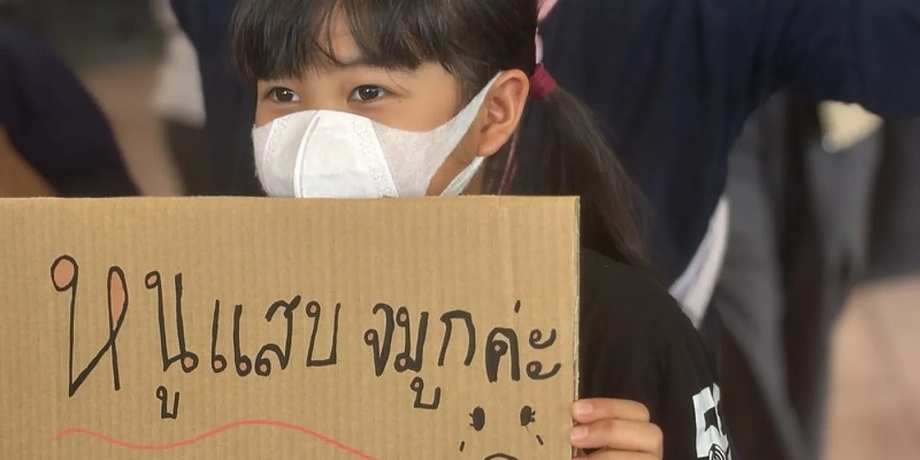
November votes could turn clean air into a protected right
Thailand's clean air bill is scheduled to return to the House of Representatives on November 25, 2026, after a joint parliamentary committee completed its review, bringing seven years of advocacy closer to a law that would recognise the right to breathe clean air.
Contents
- November votes could turn clean air into a protected right
- How seven proposals reached a final compromise
- What the proposed rights would mean for residents
- Which pollution sources would face controls?
- Who would act when pollution becomes dangerous?
- How fines and funds would pay for cleaner air
- Cross border smoke brings banks and diplomacy into the bill
- Why public access to emissions data matters
- Businesses seek measurable results and support for smaller firms
- What must happen after parliamentary approval?
- Key Points
The Senate aims to complete its consideration by November 30, ahead of the parliamentary session's scheduled end on December 22. Committee spokesperson Karndee Leopairote, a Democrat Party deputy leader, said members reached agreement on all provisions at a meeting on Tuesday.
The proposed Clean Air Management Act would combine pollution controls, public health protections and financial measures intended to make polluters contribute to the cost of cleaner air. A committee agreement earlier in November set a proposed fine of 25 million baht for a first offence and up to 50 million baht for a repeat offence.
Chakrapol Tangsutthitham, the committee's deputy chairman and a Pheu Thai MP, described the legislation as the first of its kind to recognise clean air rights, with protection extending to unborn children. He said MPs and senators had reached a common understanding on the bill.
The committee's recommendations now focus on making those promises work: training local officials, including smaller businesses in oversight, connecting pollution databases and coordinating action against smoke crossing Thailand's borders. For residents, the practical stakes include earlier warnings, health support and clearer responsibility for reducing harmful emissions.
Both chambers must still approve the agreed text before it proceeds for royal endorsement and publication in the Royal Gazette. The proposed November timetable remains a target, and no confirmed commencement date has been announced.
How seven proposals reached a final compromise
Parliament's work began with several competing proposals rather than a single bill. On January 17, 2024, the House voted by 443 votes to accept the principles of seven clean air drafts and established a special committee of 39 members to examine their details.
The proposals came from the government, political parties and citizens. One was submitted by legal scholar Kanongnij Sribuaiam with 22,251 eligible voters. The government version drew on ideas from the other drafts, including economic measures, coordinated budgets, science and public communication.
The main parliamentary milestones show why another round of votes is necessary:
- January 17, 2024: The House accepted seven drafts in principle, with 443 votes.
- February 14, 2024: Campaigners submitted a related pollution disclosure bill backed by 12,165 signatures.
- October 21, 2025: The House approved the clean air bill at its third reading with 309 votes.
- October 27, 2025: The Senate accepted it in principle with 149 votes and appointed a committee of 27 members.
- September 2, 2026: The House rejected Senate amendments by 414 votes to two.
- November 10, 2026: Joint committee spokespersons announced agreement on seven disputed issues, ahead of a final review.
- November 25 and 30, 2026: The House and Senate respectively are expected to consider the compromise.
The joint committee's role was to reconcile the positions of the two chambers after the House rejected the Senate's changes. Its completed review now gives lawmakers an agreed text to consider.
What the proposed rights would mean for residents
Parliament's legislative briefing paper explains the rights approach in the earlier proposals. It describes the government draft as containing 102 sections, arranged in 10 chapters plus transitional provisions, and compares it with other drafts.
Section 6 of the government draft would require state agencies to warn people about air pollution that could affect them and provide health care without charge to people whose health is harmed by that pollution. Section 7 would protect the right to live with clean air that does not harm health.
Section 8 connects that right to practical public involvement. People would have rights to important air quality information, to monitor pollution, to protect themselves and others, and to participate in state decisions, planning and follow through.
For a family living near a pollution source, those provisions connect three needs: knowing when the air becomes dangerous, having a voice in efforts to reduce emissions and receiving help when pollution causes illness. The committee's description of protection beginning before birth places maternal and child health within that wider purpose.
Which pollution sources would face controls?
The parliamentary briefing identifies four categories of pollution sources covered by the proposals: fixed sites, open burning, vehicles and pollution crossing national borders. That structure brings factories, transport and burning under a common framework while allowing different controls for different sources.
The drafts would require owners or operators of pollution sources to use treatment systems, equipment or other management methods to meet emissions standards. They also provide for civil liability, criminal penalties and monetary sanctions, with details varying between proposals.
PM2.5 is a central concern. The term refers to particles no more than 2.5 micrometres across, small enough to travel deep into the lungs. The briefing identifies transport, industry, construction, agriculture and forestry, and pollution arriving from abroad as important contributors, with their relative importance changing from place to place.
The committee's November compromise would also give provincial environmental committees responsibility for identifying the types and sizes of polluting activities in their areas and referring them to the relevant agencies. This would connect national legislation with decisions about specific local activities.
Who would act when pollution becomes dangerous?
The government draft described in Parliament's briefing creates committees at three levels: national policy, operational management and provincial administration. The policy committee would set direction and master plans, while the management committee would establish air quality and emissions standards and develop economic measures.
The joint committee's November agreement would place provincial governors at the head of provincial environmental committees. It would also add up to two representatives from private business organisations to the relevant committee structure.
Earlier draft provisions give a concrete picture of emergency action. Once an area is declared an air pollution disaster zone, provincial or Bangkok authorities would have 60 days to prepare a plan to reduce and remove pollution. Measures include health services for respiratory illness, enough additional rooms protected from dust for vulnerable groups, and more ways to communicate health advice.
Governors would be able to order pollution causing activities to stop or be suspended, direct agencies and individuals to help control pollution, or close a business responsible for it. Karndee said local administrative organisations would need staff training so they could carry out their responsibilities.
How fines and funds would pay for cleaner air
The latest committee account describes environmental and clean air funds supporting implementation. Under the polluter pays principle, emitters would contribute through fees, fines or compensation, with the Clean Air Fund supporting pollution reduction, health assistance and research.
The financial design has changed during drafting. Parliament's earlier comparison includes a proposal for a clean air fund contribution equal to 10% of excise tax collected on specified goods or services that may cause harmful haze. It also describes a government draft route that would send pollution related fees and revenue to the existing Environmental Fund.
The briefing records concern that a separate clean air fund could duplicate the Environmental Fund, create interpretation problems and affect public finances. That history helps explain why the committee is now concentrating on workable collection and spending arrangements.
The proposed 25 million baht first offence fine and maximum 50 million baht repeat offence fine are part of the committee's agreement on criminal penalties. Pollution management fees serve a different purpose: they charge for managing pollution, while compensation addresses damage suffered by people or property.
Economic measures in the drafts also include taxes, transferable emissions rights, insurance and subsidies for cleaner activities. Transferable rights would allow regulated emitters to exchange permission to release a specified amount of pollution under rules set by the authorities. The committee wants these tools to reduce pollution without weakening the ability of Thai businesses to compete.
Cross border smoke brings banks and diplomacy into the bill
The committee recommends closer cooperation with neighbouring countries, with the Ministry of Foreign Affairs leading diplomatic coordination alongside the Ministry of Natural Resources and Environment. This addresses a practical difficulty: Thai authorities can regulate activities inside Thailand more directly than activities in another country.
Earlier proposals examined by Parliament included compensation duties for owners or operators of foreign pollution sources whose haze damages health or the environment in Thailand. They also contemplated scientific evidence such as satellite images, wind speed and weather data to establish when pollution crossed the border.
The November compromise adds a financial sector dimension. It limits the definition of financial institutions to commercial banks and specialised banks, while specifying liability relating to advice provided to operators of pollution sources abroad.
The agreement includes an exemption where a bank can demonstrate that it had a risk assessment system and followed state policies or orders. This makes banks' evaluation of pollution risks relevant alongside the conduct of the source operator.
Why public access to emissions data matters
Karndee said the clean air law should be connected with related legislation, particularly the Pollutant Release and Transfer Register, or PRTR, system. A PRTR records pollutants released into the environment or transferred elsewhere, such as waste moved for treatment.
Campaigners submitted Thailand's PRTR proposal to Parliament on February 14, 2024, with 12,165 supporting signatures. Its connection with the clean air bill would bring information about sources of emissions alongside information about the air people breathe.
The parliamentary briefing also describes proposals for digital national air quality records, data on pollution sources and timely public warnings when forecasts indicate that air quality will fall below standards. These functions would help residents decide when to limit exposure and help authorities identify where controls are needed.
Section 31 of the government draft says air quality standards must rest on scientific evidence while taking economic, social, environmental, health and technological conditions into account. Standards and the air quality index would take effect after publication in the Royal Gazette.
The briefing's historical measurements show the scale of the task. Thailand's national annual average PM2.5 concentration fell from 21 micrograms per cubic metre in 2021 to 20 in 2022, a decrease of about 5%. Across 87 monitoring stations, annual averages in 2022 ranged from 10 to 35, showing how much conditions varied by location.
Businesses seek measurable results and support for smaller firms
Thai businesses are preparing for the clean air proposal alongside proposed climate change and sustainable packaging laws. At the Sustainability Expo 2026 in Bangkok, business speakers urged companies to improve emissions records and pollution controls before mandatory requirements begin.
The proposed Climate Change Act would introduce mandatory emissions reporting, a carbon tax and an emissions trading system. The proposed packaging framework would make producers and importers financially responsible for recovering packaging. The Federation of Thai Industries and the Pollution Control Department have launched a voluntary recovery pilot lasting 24 months.
Those parallel proposals help explain the clean air committee's decision to remove the refundable payment mechanism in Sections 175 and 176. Members expected future legislation covering waste management to address that area. They also removed a temporary protection provision in Section 11, paragraph two, because court procedures and other laws already provide routes for protection.
Expo panelist Puntarika Susuntitapong said businesses supported the clean air bill's goals but wanted guarantees that industry fees would produce measurable improvements in air quality. She also called for larger companies to help smaller suppliers develop technical capacity.
Karndee's recommendations address a similar concern by seeking business representation that includes small and medium enterprises. Smaller operators will need understandable rules and practical support, while residents will need transparent evidence that money collected is reducing pollution.
What must happen after parliamentary approval?
State agencies would need to change working procedures and prepare the detailed regulations that turn the act's broad powers into daily practice. Earlier government planning identified 22 subordinate legal instruments. These are regulations and notices that explain matters such as procedures, technical requirements and administration under the main law.
Chakrapol said the committee's remaining observations concerned this implementation work, including financial tools and progress towards World Health Organization air quality standards. Training staff, connecting databases and setting clear collection and spending rules would therefore be central tasks after passage.
The immediate decision belongs to Parliament. Approval on the proposed November schedule would complete another major stage of a process that has already involved public petitions, seven drafts, votes in both chambers and a committee compromise.
Key Points
- The House is expected to consider the agreed clean air bill on November 25, 2026, with Senate consideration targeted by November 30.
- The parliamentary session is scheduled to end on December 22.
- The proposal would protect clean air rights and combine public health support with controls on four categories of pollution sources.
- The committee agreed on a proposed fine of 25 million baht for a first offence and up to 50 million baht for a repeat offence.
- Implementation priorities include local staff training, pollution disclosure, support for smaller businesses and cooperation on cross border haze.
- Approval by both chambers, royal endorsement and Royal Gazette publication remain necessary before the bill becomes law.