Majlis sends immigration bill to security committee after 52–1 vote
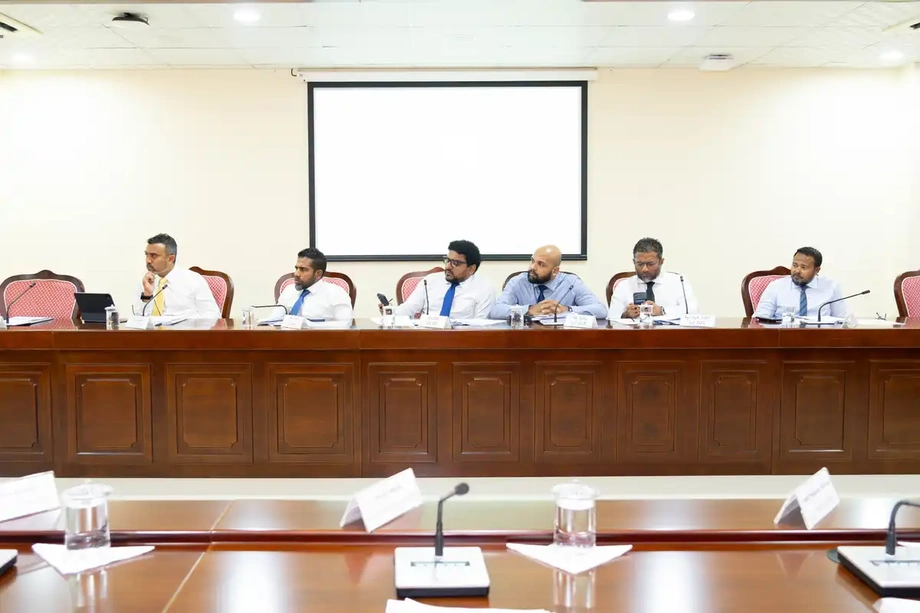
The Maldives Parliament accepted a government immigration bill on 18 November 2026 by 52 votes to one, sending a proposal for an unconditional ban on Israeli passport holders to the Parliamentary Committee on Security Services for review.
Contents
- Majlis sends immigration bill to security committee after 52–1 vote
- What would change from the existing ban?
- How the proposal reached Parliament
- Dual citizenship puts border checks in focus
- Who else would be refused entry?
- A wider rewrite of immigration services
- Minister rejects circulating Resident Visa claims
- Muizzu ties the restriction to support for Palestinians
- Key Points
The proposal would remove the condition linking the entry ban to the end of Israeli attacks against Palestinians. President Dr Mohamed Muizzu said the new legislation would prohibit entry regardless of changing circumstances, extending a restriction first introduced in April 2025.
The People's Majlis vote moves the bill into committee scrutiny. The proposal also reaches well beyond the passport restriction, covering the organisation of Maldives Immigration, foreign nationals' permission to enter and stay, passport services for Maldivian citizens, staff training and immigration offices.
Mohamed Dawood, the member of Parliament for North Kulhudhuffushi, introduced the government bill. Its acceptance follows Muizzu's announcement on 9 November that the government wanted the Israeli passport restriction written into law without a condition that could end it.
The government-submitted bill received its first reading at a Monday parliamentary sitting.
What would change from the existing ban?
President Muizzu's office set out the government's position in a 9 November statement, reference 2026-661. It said earlier proposals linked the prohibition to Israel halting what the president described as genocide against Palestinians following 7 October 2023. The current bill, the office said, would make the prohibition unconditional.
The existing framework bars Israeli passport holders while the attacks against Palestine continue. Under the proposed wording, an end to those attacks would no longer provide a condition for ending the restriction. That is the central change for travellers affected by the measure.
The amendment to the Immigration Act ratified on 15 April 2025 prohibits Israeli passport holders from entering until Israel ends what the legislation describes as inhumane acts against the Palestinian people. The new bill instead lists Israeli passport holders among those prohibited from entering without attaching that condition or specifying an expiry date. The ban would therefore remain in place even if the war ends or the circumstances cited in the existing law change.
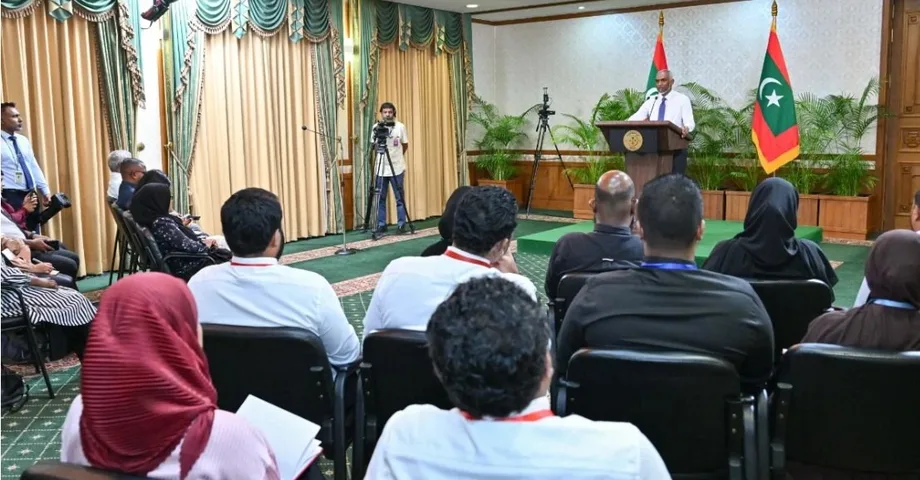
Muizzu explained the proposed rule at a press conference at the President's Office, where he discussed government legislation submitted to Parliament:
We have firmly and clearly defined in the act that no person with an Israeli passport can enter Maldives.
The restriction is framed around possession of an Israeli passport. Questions about people who also hold another country's passport are being addressed through immigration checks, according to the president.
How the proposal reached Parliament
The Maldives already has an entry restriction on Israeli passport holders. The present legislative effort seeks to change its duration and place it within a broader immigration framework.
- 2007: The existing Maldives Immigration Act came into force.
- 15 April 2025: Muizzu ratified parliamentary changes introducing a ban on Israeli passport holders.
- 9 November 2026: Muizzu said the government had submitted legislation providing for an unconditional prohibition.
- 18 November 2026: Parliament accepted the bill by 52 votes to one and referred it to the Parliamentary Committee on Security Services.
The 52 supporting votes amounted to about 98 percent of the 53 votes cast for or against accepting the bill. That gives the proposal a large majority at this stage, while leaving the committee to examine its provisions.
No date has been announced for the committee to complete its review or for the proposed legislation to take effect. The immediate next step is scrutiny by the security services committee.
The bill requires parliamentary approval and presidential ratification before becoming law.
Dual citizenship puts border checks in focus
Muizzu said Maldives Immigration would investigate matters concerning Israeli passport holders with dual citizenship. A dual citizen has citizenship of two countries and may be entitled to passports from both, making the implementation of a restriction on Israeli passport holders a practical issue for border officials.
The president said immigration authorities use established checks to examine travellers before allowing entry. His comments indicate that the government intends officials to consider more than the passport presented at the border when examining a person's circumstances.
Muizzu also drew a comparison with the proposed Real Estate Bill, which he said specifically excludes Israeli citizens and Israeli companies from opportunities under that legislation. The immigration proposal concerns entry into the country, while the real estate provisions concern eligibility for activities covered by a different bill.
For affected travellers, the government's stated position is therefore broader than a simple change of travel document. Immigration screening would be part of administering the restriction, including where a person holds more than one nationality.
Who else would be refused entry?
The immigration bill sets out several grounds for refusing entry alongside the Israeli passport provision. Some concern a person's conduct, suspected connections or legal status, while others concern security assessments by the authorities.
The categories include:
- People considered a threat to national sovereignty or national security.
- Members of terrorist organisations, people suspected of links to those organisations and people identified as terrorists.
- People who have committed, or are suspected of committing, crimes under international law.
- People indicted by the International Criminal Court or subject to its arrest warrants.
- People listed by the International Criminal Police Organization, known as INTERPOL.
- People fleeing justice or an investigation in another country.
- People previously deported from the Maldives with a ban on returning.
- People suspected of having diseases that threaten public health, and travellers arriving from countries or regions identified by the Ministry of Health or international health authorities as experiencing disease outbreaks.
- Nationals of countries designated by the Maldivian government where diplomatic relations have been severed or suspended.
- People barred from entering under other legislation.
The proposed framework would also bar people reasonably suspected of acting in ways that could disrupt the Maldives' religious and social unity. That adds a domestic social and religious ground to the security and criminal justice categories.
Several provisions allow decisions based on suspicion or an assessment of risk. In practical terms, officials would be able to examine a person's circumstances before deciding whether to admit them, including cases where the person has not been convicted of an offence.
A wider rewrite of immigration services
Minister of Homeland Security, Labour and Technology Ali Ihusaan described the submission as a completely new Immigration Act running to 50 pages. The legislation is also being described as a bill to amend the existing act, but the minister's account points to the breadth of the proposed rewrite.
The bill would establish Maldives Immigration as a distinct civilian service responsible for managing and overseeing immigration affairs. It would define the service's operating framework and the general and specific rules governing entry into and departure from the country.
Maldivian citizens would also be affected by provisions on issuing passports for international travel. Foreign nationals would come under rules governing permission to enter and remain, together with procedures for dealing with people who lack valid authorisation.
Immigration offices, staff training and service standards are included in the proposal. Those provisions concern the day to day work needed to apply the entry rules, process travel documents and manage permission to stay. The passport ban is the most prominent political measure, but the bill would also reshape how the immigration service carries out routine duties.
Minister rejects circulating Resident Visa claims
Ali Ihusaan also rejected a document circulating on social media that claimed certain foreign nationals would qualify for a Resident Visa. The document referred to expatriates who marry in the Maldives, invest MVR 100,000 or lease a house for more than 10 years.
The minister said those provisions were false and had never been considered for proposal by Immigration. He said the government's 50 page bill contained no provision for a Resident Visa and urged people not to spread misinformation about an institution responsible for sensitive national security work.
The actual proposal would give the government discretion to create visas allowing foreign investors and workers to live in the Maldives for extended periods. Section 48 lists visitor, work, transit, business/investor, student and special residence visas, with visa types specified in Schedule 1. Conditions and durations would be set through regulations, rather than creating the automatic entitlements described in the circulating document. The bill sets no investment thresholds and does not mention property.
Muizzu said investor visas would be granted for five years, with renewals depending on compliance and the state's interest.
Foreign workers, investors and families considering a move to the Maldives therefore face two separate developments: a proposed power to create longer residence arrangements, and the minister's explicit rejection of the marriage, investment and lease claims circulating online.
Muizzu ties the restriction to support for Palestinians
Muizzu has presented the unconditional ban as an expression of the Maldives' support for Palestinians and opposition to Israel's military campaign in Gaza. At the November press conference, he said Israel's continued attacks on Palestinian civilians were unacceptable to Maldivians.
The President's Office said the Maldives had maintained its position on international platforms and pursued the Palestinian cause through legal avenues. Muizzu described Israel's actions as genocide and said the immigration bill had been drafted to reflect the government's position.
The Maldives also supports an independent Palestinian state based on the borders before 1967, with East Jerusalem as its capital, and has advocated full Palestinian membership of the United Nations.
The proposed immigration change gives that diplomatic position a concrete border measure. By removing the condition connected to the fighting, the government seeks to keep Israeli passport holders barred even if circumstances in Gaza change. Parliament's committee review will now examine that restriction alongside the bill's much broader rules for immigration services and foreign residents.
Key Points
- Parliament accepted the immigration bill on 18 November 2026 by 52 votes to one.
- The proposal would make the Israeli passport entry ban unconditional, with no expiry date, replacing the conditional ban ratified on 15 April 2025.
- The Parliamentary Committee on Security Services will review the bill.
- Muizzu said Immigration would investigate cases involving dual citizenship.
- The bill also covers immigration administration, entry restrictions, passports and residence permissions, with visa conditions and durations left to regulations.
- Minister Ali Ihusaan rejected circulating claims of automatic Resident Visa eligibility.