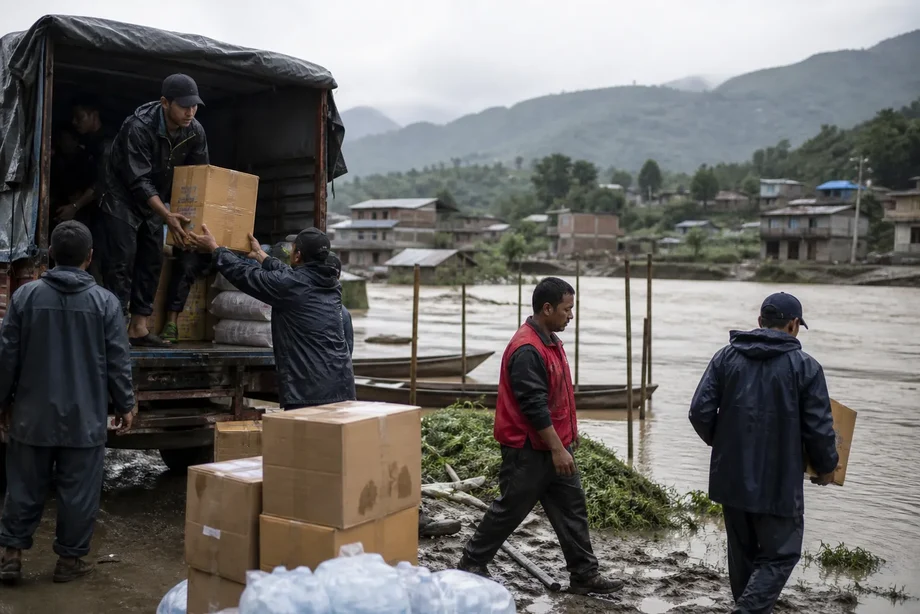
A large aid total, and a separate health investment
Kathmandu, November 27. More than $36 million in American flood assistance for Nepal covers emergency food and shelter, health services, forensic identification and plans for permanent bridges and drones. A separate $12 million investment through UNICEF will support maternal and child health and nutrition across the country. The funding was detailed as aid agencies warned that children who survived the August disaster now face freezing winter temperatures.
Contents
- A large aid total, and a separate health investment
- How the American response unfolded
- What the September package is meant to build
- What the newest health funding changes
- Why winter has become the next emergency
- The funding gap behind the aid figures
- What recovery means for families in Rasuwa
- Reconstruction diplomacy extends beyond Washington
- Preparing for the next disaster
- Key Points
The November 26 meeting in Kathmandu brought together US Chargé d'Affaires, a.i. Megan Bouldin, UNICEF Regional Director for Asia and the Pacific Sanjay Wijesekera and UNICEF Representative to Nepal Alice Akunga. Bouldin's title means she is temporarily leading the embassy. The officials discussed recovery priorities, coordination of humanitarian aid and wider health support. Bouldin thanked UNICEF for its rapid mobilisation, its work reaching affected communities and its long partnership on nutrition in Nepal.
The State Department's flood response account dates the disaster to August 26, 2026. A flash flood along the Bhote Koshi river struck Rasuwagadhi, Timure, Syafrubesi and other parts of Rasuwa District, then threatened communities along the river corridor running through the Trishuli to the Narayani. Floods and landslides destroyed buildings, damaged roads and bridges, and disrupted electricity and telecommunications. The flood did not pass through Kathmandu Valley or interrupt flights at Tribhuvan International Airport.
The latest Kathmandu statement allocated $2.5 million to UNICEF for emergency water, sanitation, hygiene and child protection, alongside $176,000 to restore immunisation services and vaccine storage in the districts hit hardest. The $36 million flood total is cumulative and was first announced in September. The $12 million health programme is separate. The November statement did not specify whether the two latest flood allocations sit within earlier funding envelopes or add to them. All dollar figures in this article are in US currency.
How the American response unfolded
The response began within hours of the flood and expanded from immediate relief into infrastructure and preparedness. The main steps show how those stages fit together.
- August 26: The State Department provided an initial $500,000 through Catholic Relief Services for food, shelter, water, sanitation and hygiene. Another $185,000 later supported mental health services and safe spaces for children in schools and evacuation centres.
- August 28: Catholic Relief Services dispatched the first shipment financed by the US government, including blankets, plastic sheets, tents and solar lights.
- August 30: Washington activated $3 million through the World Food Program for as much as three months of emergency food assistance to 10,000 households. The funding also covered road repairs and specialised transport for communities cut off by damage.
- September 2: Two US military cargo aircraft delivered 5,000 specialised disaster victim recovery supplies, 500 first aid kits, stretchers and loading machines. Three solar charging trailers were handed to Nepal's Armed Police Force to supply power in remote communities.
- September 22: Under Secretary of State for Political Affairs Allison Hooker met Foreign Minister Shisir Khanal in New York and announced plans for another $31 million. Hooker also extended sympathies to the families of approximately 70 Americans who remained unaccounted for at that time.
- October 5: Nepal's government suspended most major search and rescue operations except in urgent cases, shifting its attention to rehabilitation and reconstruction.
- November 25 and 26: UNICEF issued its winter warning, after which Bouldin and the UNICEF officials reviewed recovery and health priorities in Kathmandu.
Identification of victims became another substantial part of the American contribution. The State Department provided $1 million in rapid DNA testing and forensic supplies to Nepal Police. FBI forensic specialists worked alongside Nepali officers on disaster victim identification, helping authorities examine remains and provide answers to families. The department said its consular assistance for American citizens and their families was continuing.
What the September package is meant to build
The September 22 media note placed Hooker's meeting with Khanal within the 2026 United Nations General Assembly. Its three planned components address different weaknesses exposed by the flood.
- $10 million for permanent bridges designed for their sites and sourced from an American company. The bridges are intended to restore transport links and improve connections between affected areas and the wider region. Hooker said the United States would work with Congress on this funding.
- $8 million for water, sanitation and hygiene, shelter, protection, livelihoods and winterization. Winterization means preparing families, buildings and essential services for cold weather, rather than simply distributing blankets.
- $13 million for drones manufactured in the United States to support future disaster recovery efforts.
The published cash amounts explain the headline total. Before the September announcement, the department listed $500,000 for Catholic Relief Services, $185,000 for psychological support and spaces for children, $3 million for the World Food Program, $479,000 for health, nutrition and water services through Jhpiego, FHI 360 and UNICEF, and $1 million for forensic assistance. Those amounts total $5.164 million. Adding the planned $31 million produces $36.164 million, before assigning a cash value to aircraft cargo, solar trailers and other equipment.
The bridge appropriation still requires work with Congress. The announcements gave no delivery dates for either the bridges or the drones, so their construction and arrival schedules remain open.
What the newest health funding changes
The $2.5 million channelled through UNICEF is intended for children and other vulnerable people who still lack dependable water, sanitation and protection services. WASH, the aid sector's shorthand for water, sanitation and hygiene, covers basics such as safe drinking water, working toilets and handwashing. Those services reduce the danger of disease when families are displaced or normal infrastructure has been damaged. Child protection work addresses separation from relatives, violence, exploitation and emotional distress.
A further $176,000 targets immunisation and vaccine storage in the worst affected districts. Vaccine storage matters because many vaccines must be kept within a controlled temperature range to remain effective. Restoring that capacity allows routine vaccinations to resume closer to where families live, instead of depending on temporary campaigns or journeys to undamaged facilities.
The separate $12 million investment falls under the America First Global Health Strategy. Through UNICEF, it will strengthen health facilities that promote breastfeeding and provide infant feeding support. It will also help Nepal introduce essential vitamin and mineral supplements and fortified supplementary food. Vitamins and minerals are often called micronutrients because the body needs them in small quantities, but deficiencies can hinder growth, immunity and development.
American funding will also finance a National Micronutrient Survey. The survey is intended to measure deficiencies and guide Nepal's future nutrition programmes, giving health officials evidence about which nutrients and population groups need attention. No date was provided for the survey's completion.
Why winter has become the next emergency
UNICEF's November 25 winter appeal estimates that the Bhote Koshi floods affected 84,270 people, including 32,021 children. Thousands of homes were destroyed or damaged, while clothing, blankets and household supplies were washed away. Temperatures in Nepal's hills and mountains can fall to minus 12 degrees Celsius in some areas.
Alice Akunga, UNICEF Representative to Nepal, described why the receding water did not end the emergency for children.
Children are still living with the consequences of the floods every day. Many have lost homes, schools, belongings and a sense of normalcy. As winter sets in, the risks facing children will only increase. No child should have to endure freezing temperatures because a disaster took away everything their family owned. Urgent support is needed now to help children stay warm, healthy, protected and learning through the winter months.
UNICEF says it has worked with Nepal's government and partners to restore water, sanitation and hygiene services for more than 42,000 people. Almost 19,500 children and caregivers received mental health and psychosocial support, 66,000 people were vaccinated against cholera, and children gained access to 52 temporary learning centres and 35 safe spaces for play and protection. Approximately 30,000 children still need education support through safe learning spaces, repaired classrooms and learning materials.
Early winter distributions included warm clothing for 1,472 children and 1,337 thermal blankets. UNICEF's wider plan calls for cash assistance to 10,000 households, covering approximately 50,000 people, along with 2,000 kits containing warm clothing and essential supplies for newborns and mothers. Heating for temporary learning spaces and health facilities is also planned. These measures connect survival with daily life: keeping a newborn warm, enabling a child to attend lessons and reducing pressure on families already displaced by the flood.
The funding gap behind the aid figures
UNICEF's Humanitarian Situation Report No. 9 puts its immediate flood response requirement at $17,243,050. It had received $14.7 million, leaving $2.6 million unfunded and making the appeal approximately 85 per cent funded. The United States is listed among its governmental donors alongside France, Italy, Switzerland and the United Kingdom, with European Union humanitarian aid and several other institutional and private partners also contributing.
Water, sanitation and hygiene account for the largest immediate requirement at $5.6175 million, roughly one third of the total. Education requires $2.675 million, humanitarian cash transfers $2.4075 million, health $2.1828 million and operational support $2.14 million. Nutrition requires $963,000, child protection $909,500 and social and behaviour change activities $347,750.
The broader early recovery and rehabilitation appeal is $47 million, including the immediate humanitarian requirement and winter support. UNICEF's funding report said only 31 per cent had been financed, while its November 25 appeal put the outstanding amount at around $30 million. UNICEF had delivered supplies valued at $1.43 million and was procuring more while moving prepositioned stocks into government warehouses. Its cash programme planned transfers of NPR 15,000 to 5,200 households, with 2,021 households in seven municipalities reached at the time of the report.
The national reconstruction task is much larger. Preliminary findings cited by UNICEF estimate damage and economic losses at NPR 472.66 billion, or $3.38 billion, and recovery and reconstruction needs at NPR 706.65 billion, or $5.05 billion. Infrastructure accounts for $2.73 billion, approximately 54 per cent of those needs, while social sectors require an estimated $413 million. Emergency food, vaccines and temporary classrooms therefore sit beside a far bigger job of restoring roads, bridges, public services and economic activity.
For private donors, the State Department recommends monetary contributions to established relief organisations because local purchases can avoid transport delays, support affected economies and match goods to local needs. It warns that unsolicited clothing, food, medicine and bottled water can obstruct supply chains, and advises donors to check organisations carefully because disasters attract fraudulent appeals.
What recovery means for families in Rasuwa
Nepal's own protection system is beginning to address needs that emergency distributions cannot cover. On November 26, the government started monthly care payments with NPR 17,500 deposited for a newborn girl in Goljungbesi, Ward 5 of Aamachhodingmo Rural Municipality. Her father died in the floods, and her 29-year-old mother had recently given birth. The girl is due to receive the same amount each month while living with her mother and family until she turns 18. One year of payments totals NPR 210,000.
The programme covers children who lost both parents, children whose guardians remain missing and others assessed as needing special protection. Pregnant women and mothers who have recently given birth can also receive special assistance. Its purpose is to connect education, health, nutrition, safe accommodation and psychosocial wellbeing with care that continues throughout childhood.
Minister Sita Badi also set limits on moving children after the disaster. No individual or organisation can take an affected child elsewhere at its own discretion while claiming to help. Placement in a children's home or temporary protection centre requires a local government recommendation and coordination and consent from the National Child Rights Council. Those rules are intended to keep family care at the centre of recovery and prevent separation during displacement.
Reconstruction diplomacy extends beyond Washington
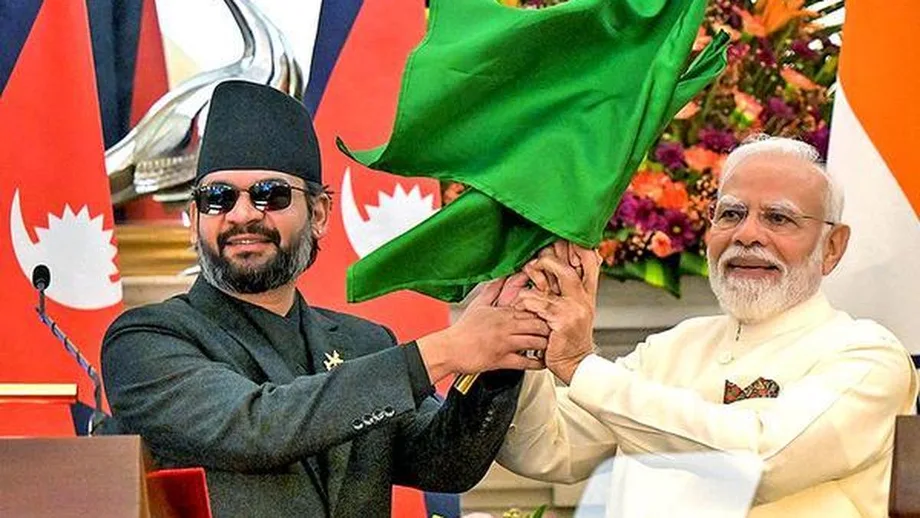
American assistance forms one part of a wider search for reconstruction finance. The agenda for Prime Minister Balendra Shah's November 22 and 23 visit to India included talks in New Delhi on trade, energy, transport and flood damaged infrastructure. A possible economic package worth almost $2 billion was under discussion, including potential loans and grants. At that stage, its final size, financial mix and project list had not been settled.
Nepal's climate diplomacy has pursued another route. Its COP31 mountain campaign sought a permanent place for mountain risks in UN climate negotiations, connecting scientific research, political discussion and access to finance. Nepal identified $20 million for recovery through the Fund for Responding to Loss and Damage, plus $1.6 million for operational costs.
Avishek Shrestha, an adviser to Agriculture, Forests and Environment Minister Gita Chaudhary, put reconstruction needs at about $4.7 billion during the climate talks. The preliminary assessment cited by UNICEF gives the higher figure of $5.05 billion for recovery and reconstruction. Both estimates far exceed the emergency appeal, explaining why Nepal is pursuing several diplomatic and financial channels at once.
Preparing for the next disaster
Future risk reduction is also receiving funding. Nepal and the United Nations Development Programme have launched the GLOF Sanjibani Project, a $49.94 million programme running from 2026 to 2033. It addresses glacial lake outburst floods, which occur when water held back by ice or loose natural material suddenly escapes and surges down a valley, often carrying mud and rock. The project combines physical work at dangerous lakes with monitoring, public warnings and protection for communities downstream.
Dona Lake, Lumding Tsho and Lower Barun Lake are each scheduled to have their water levels lowered by three metres, while the target for Hongu 2 Lake is one metre. More than 385,000 people are expected to benefit directly, nearly two million downstream residents could gain indirect protection, and women are expected to make up 55 per cent of direct beneficiaries.
The glacial lake programme is broader than the Bhote Koshi recovery, while the planned American drones are intended to support future disaster recovery. For families in Rasuwa, the immediate measures remain concrete: warm shelter, functioning vaccine storage, safe water, schooling and cash for household needs. Bridges, restored roads and better preparedness will determine how durable that recovery becomes.
Key Points
- The United States says its flood response and recovery assistance to Nepal exceeds $36 million, with a separate $12 million health and nutrition investment through UNICEF.
- The latest allocations include $2.5 million for water, sanitation, hygiene and child protection, and $176,000 for immunisation services and vaccine storage.
- September's planned $31 million package comprises $10 million for bridges, $8 million for relief and winter support, and $13 million for drones.
- The August 26 floods affected an estimated 84,270 people, including 32,021 children, according to UNICEF.
- UNICEF's immediate appeal is about 85 per cent funded, but around $30 million remains unfunded in its broader $47 million recovery and winter appeal.
- Preliminary findings put Nepal's recovery and reconstruction needs at $5.05 billion, with infrastructure accounting for approximately 54 per cent.
- Nepal has also begun monthly care payments for children affected by the floods and launched a $49.94 million programme to reduce glacial lake flood risks.