From Delhi promises to work in Kathmandu
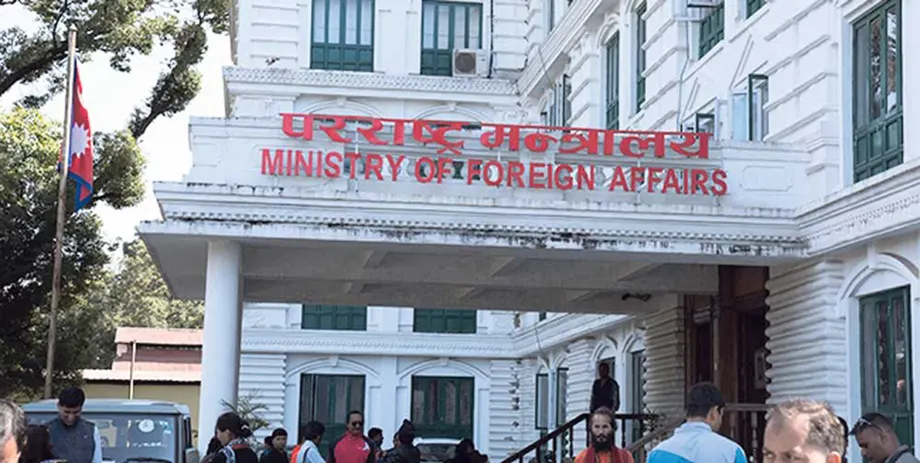
Nepal's Foreign Ministry has begun coordinating with other ministries to implement the agreements, understandings and decisions from Prime Minister Balendra Shah's state visit to India on November 22 and 23, 2026. Ministry spokesperson and joint secretary Lok Bahadur Paudel Chhetri announced the work at a press briefing on Friday, November 27, four days after Shah returned to Kathmandu.
Contents
- From Delhi promises to work in Kathmandu
- What the 240 billion rupee package contains
- Ports, a pilgrimage train and new border infrastructure
- Why the aviation announcement needs a careful reading
- Energy, rivers and the cost of rebuilding
- A ten pillar vision and a system to check delivery
- Warmth in public, silence on the border
- China remains part of the equation
- The briefing also looked beyond India
- Domestic follow through and the dates to watch
- Key Points
Chhetri said the ministry had also published 12 carousel graphics, sets of images that social media users can swipe through, to explain what the visit achieved.
We have prepared 12 'carousel graphics' about the achievements of the Prime Minister's visit to India and it has been already shared with the public on the Ministry's official social site.
The public explanations accompany a much larger administrative task. Shah and Indian Prime Minister Narendra Modi announced a development package worth 240 billion Nepali rupees, signed eight memoranda of understanding and issued a joint vision document. Their announcements also covered ports, railways, aviation, electricity, education and reconstruction after Nepal's devastating floods.
The Delhi visit lasted about 25 hours and was Shah's first bilateral foreign trip since he took office in March. He held restricted and delegation level talks with Modi at Hyderabad House on November 23, paid a courtesy call on President Droupadi Murmu and returned on a scheduled Nepal Airlines flight. Energy Minister Biraj Bhakta Shrestha received him at Tribhuvan International Airport. His delegation included Finance Minister Dr Swarnim Wagle, Foreign Minister Shisir Khanal and Foreign Secretary Amrit Bahadur Rai.
What the 240 billion rupee package contains
Modi announced 24,000 crore Nepali rupees in development assistance. A crore means 10 million, so the pledge totals 240 billion Nepali rupees, approximately 15,000 crore Indian rupees or $1.62 billion. It has two distinct parts.
- Grant assistance of 56 billion Nepali rupees, equivalent to 3,500 crore Indian rupees or about $377 million, for reconstruction after disasters and new infrastructure.
- A concessional line of credit worth 184 billion Nepali rupees, equivalent to 11,500 crore Indian rupees or about $1.24 billion, mainly for energy projects.
A line of credit does not place the entire amount in Nepal's treasury. It makes loan funds available for approved projects, withdrawing money as those projects proceed. Concessional terms generally mean lower costs or easier repayment conditions than an ordinary commercial loan. Indian Foreign Secretary Vikram Misri said this would be India's first line of credit to Nepal denominated in Indian rupees and called the package India's largest financial assistance commitment to Nepal.
Khanal disclosed that Nepal had requested 100 billion Nepali rupees in grants and another 100 billion in loans. The final offer therefore provides less grant money than requested but considerably more credit.
The need is substantial. Nepal estimates that rebuilding after the floods could cost as much as $4.8 billion. More than 1,400 people were killed and thousands remained missing in the disaster account presented during the visit. The entire Indian package equals roughly 34 percent of that reconstruction estimate, while its grant component is less than one twelfth. Most of the package is intended for energy rather than direct rebuilding.
Earlier assistance offers a warning about delivery. India announced a separate $750 million credit facility after the 2015 earthquakes. Misri said approximately $550 million had been used, leaving a substantial portion untouched. Nepali critics have pointed to conditions requiring Indian materials, equipment and services for some projects. The new credit's project selection and detailed terms still have to be settled.
Ports, a pilgrimage train and new border infrastructure
India agreed to give Nepal transit access through Deendayal Port at Kandla in Gujarat and Paradip Port in Odisha, adding to the existing routes through Kolkata and Visakhapatnam. For a country without a coastline, port access determines how goods can reach overseas markets. Nepal had sought access to Dhamra and Mundra, but India offered Kandla and Paradip instead. Kandla is expected to come first, with Paradip following once the necessary infrastructure is ready.
Traders in Birgunj say the practical value will depend on regular freight trains to the Sirsiya dry port, an inland cargo terminal, along with competitive charges and simpler transit procedures. Port permission alone will not shorten journeys if containers face delays on railways, roads or at customs.
Modi and Shah also flagged off the Sarayu-Kamala Express on November 23. The weekly service connects Ayodhya Cantt in India with Janakpur Dham in Nepal, joining two major centres of the Ramayana tradition. Ayodhya is revered by Hindus as Lord Ram's birthplace, while Janakpur is traditionally regarded as Sita's birthplace. The inaugural train reached Janakpur the following Tuesday with an estimated 1,000 or more pilgrims. Regular service was scheduled to begin on November 28.
The leaders inaugurated a motorable bridge across the Mahakali River connecting Dharchula in India with Darchula in Nepal. They also laid the foundation stone for an Integrated Check Post at Banbasa, where immigration and customs facilities can be handled together, and agreed to accelerate similar facilities at Dodhara Chandani. Work at Bhairahawa and Sunauli is also progressing.
Why the aviation announcement needs a careful reading
The joint press release states that the B345 route connecting Kathmandu, Bhairahawa and Lucknow, which currently operates in one direction, will be made available in both directions. Nepal first sought such a change 17 years ago. The announcement has sometimes been described as an entirely new air entry route through Bhairahawa, but the written commitment is narrower.
Nearly 90 percent of incoming international flights currently enter Nepal through Simara, south of Kathmandu. Aircraft approaching Bhairahawa or Pokhara from the west can be required to enter through Simara and then turn back, adding about 300 kilometres to some journeys. Extra distance burns fuel, increases airline costs and makes Nepal's newer international airports less attractive to carriers.
Opening B345 in both directions could ease access to Bhairahawa from India. It did not grant Nepal's request for a high altitude western entry point near Mahendranagar, and other civil aviation proposals remain under discussion. Technical consultations must still settle operating procedures.
Altitude is one unresolved detail. An official cautioned that a restriction at 21,000 feet could still require aircraft to circle before landing. No implementation date was announced. An official said six months might be possible if work was accelerated, although an earlier communiqué in 2014 had also raised expectations of action within six months.
Chinese involvement in Nepal's airport projects has formed part of the wider debate over Indian security concerns. Anil Trigunayat, a former Indian diplomat, explained India's caution over Pokhara in these words:
The airport in Pokhara can pose certain security challenges for India, so it is a more complicated issue to resolve.
Energy, rivers and the cost of rebuilding
The foundation stone was laid for the 669 megawatt Lower Arun hydroelectric project, valued at 92.67 billion rupees. The two sides also agreed to develop transmission lines from Inaruwa in Nepal to New Purnia in India and from Dodhara in Nepal to Bareilly in India through joint ventures.
Those lines matter because Nepal wants to sell more electricity to India. Current exports are around 1,200 megawatts, while the longer term power trade framework envisages Indian imports of up to 10,000 megawatts over 10 years. Generation projects need transmission capacity before that ambition can become trade.
The second phase of the Motihari-Amlekhgunj petroleum pipeline entered operation. Foundation stones were also laid for a petroleum terminal in Jhapa and the proposed Siliguri-Jhapa pipeline. The pipeline is costed at 11.14 billion rupees in Indian grant support, with a construction target of 54 months. Indian Oil hopes to finish 18 months earlier.
Water cooperation extends beyond power generation. The vision document proposes immediate sharing of river and weather data, monitoring of glacial lakes, warning systems for downstream communities and joint disaster relief exercises. The leaders also directed officials to finalise the Detailed Project Report for the Pancheshwar Multipurpose Project and accelerate work concerning the Saptakoshi and Sunkoshi projects. A Detailed Project Report sets out a project's engineering, costs and expected benefits. Pancheshwar has remained stalled for decades amid disagreements over precisely those issues.
Shah connected the agreements to the shared risks facing communities along Himalayan rivers.
Our Himalayas, as sources of clean water, sustain millions across this region. The pristine rivers that flow from the Himalayas into the Ganga remind us of our future and destiny.
A ten pillar vision and a system to check delivery
The vision document is titled Viksit Bharat and Samunnat Nepal, translated as Developed India and Prosperous Nepal. Its ten areas of cooperation range from infrastructure and energy to artificial intelligence, digital public services, climate resilience, disaster management, agriculture, sports, culture and tourism.
It also provides a framework for reviewing existing treaties, agreements and understandings, including the 1950 Treaty of Peace and Friendship, by mutual consent. This opens the way for discussion rather than prescribing a replacement. India's position on the Eminent Persons Group report, completed in 2018 after a review of bilateral relations, remains unresolved.
The eight memoranda cover forensic sciences, police training, civil service capacity, Ayurveda and traditional medicine, satellite communications, sustainable urban development, health, and livestock and fisheries. The education and security agreements include cooperation between India's National Forensic Sciences University and Nepal Police's criminal investigation body, and between Rashtriya Raksha University and Nepal's National Police Academy. Space cooperation involves the Indian Space Research Organisation and Nepal's use of the South Asia Satellite network.
Other commitments include an offshore campus of the Indian Institute of Technology in Nepal, meaning a branch of the Indian institution, along with an innovation hub, incubators for startups and more scholarships in law and technology. An Agro-Industrial Park in Chitwan and a cricket academy were also included in the broader plans.
A monitoring group led by Nepal's foreign secretary and India's ambassador will meet at least once every six months to review implementation. It will report to the Joint Commission between India and Nepal, whose next meeting is expected in 2027. That timetable gives ministries a recurring forum in which delays, financing disputes and technical obstacles can be raised.
Warmth in public, silence on the border
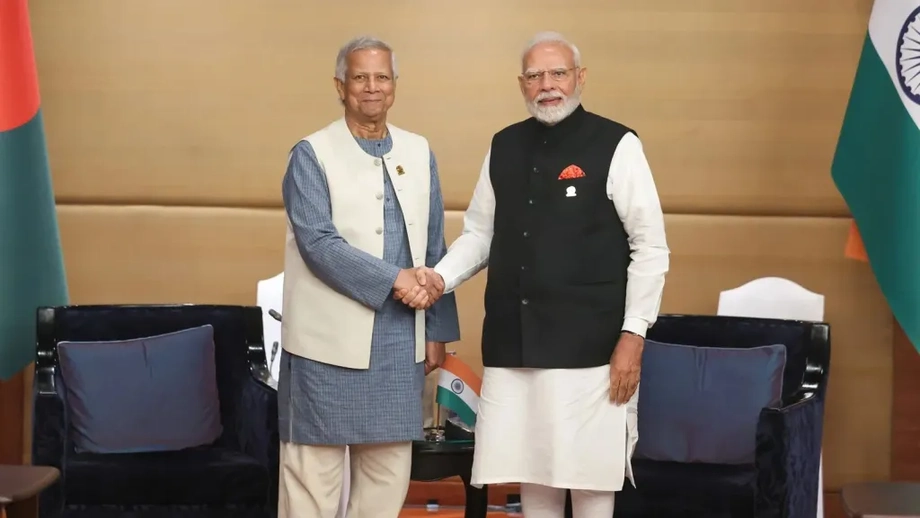
Khanal called the visit a milestone and said it had returned relations to a positive and constructive path. Modi praised Shah's vision and commitment, while Shah said he hoped the partnership would be one where trust stood as tall as the Himalayas. Their private discussion was scheduled for 30 minutes; accounts place its duration between 90 minutes and two hours.
The warmth followed a difficult opening. Shah, a 36 year old former rapper and Kathmandu mayor, came to power after the Gen Z protests of September 2025 and his party's victory in the March 2026 election. The Rastriya Swatantra Party won 182 of Parliament's 275 seats. Early in his tenure, Shah restricted meetings with visiting foreign officials. His refusal to meet Misri contributed to the cancellation of the Indian foreign secretary's proposed visit in May.
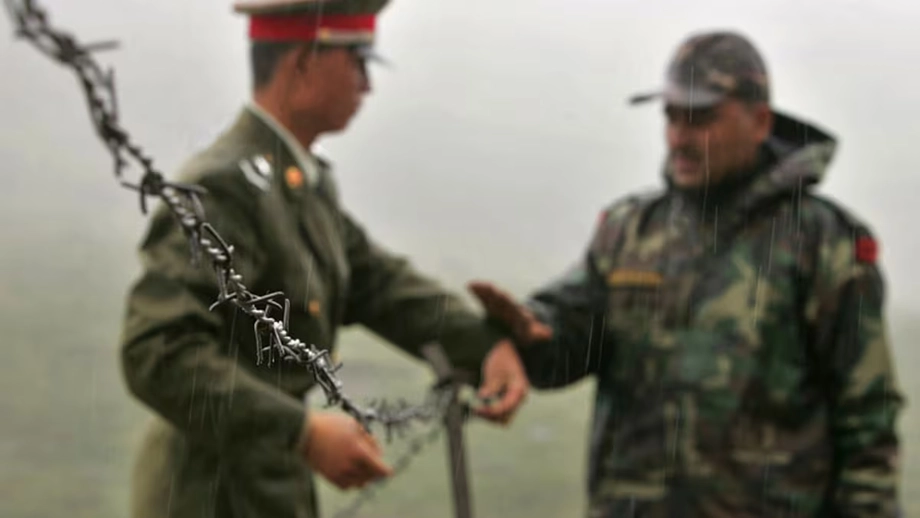
Neither leader mentioned the boundary dispute in public remarks after the Delhi talks. Their joint statement instead directed the foreign secretaries to work on boundary matters, following joint field inspections and maintenance of border pillars. Lipulekh and Gurkha recruitment under India's Agnipath system did not feature in the talks. There were also no new announcements on the Eminent Persons Group report, SAARC or the trade deficit.
Govind Pokharel, a former vice chairman of Nepal's National Planning Commission, said the government may have prioritised immediate development needs, but warned that postponement carries a political cost.
Right now you can go home and convince the young Nepalis that it will be handled later, but if they don't deal with these issues in the future, there will be criticism.
Former prime minister Pushpa Kamal Dahal Prachanda called the visit normal and routine rather than historic. He said it had produced no new substantive achievement and contrasted it with public commitments on the border during his own tenure, although he welcomed Shah's meeting with Modi. Another former prime minister, Jhala Nath Khanal, said Shah should have prepared a common national agenda before travelling.
Misri confirmed that Shah had invited Modi to Nepal and explained how the next step would be arranged.
Prime Minister Balen Shah extended an invitation to Prime Minister Modi to visit Nepal at his convenience. The dates for that visit will be tied up through diplomatic channels.
China remains part of the equation
Shah chose India rather than China for his first bilateral visit, but his party conducted parallel outreach to Beijing. A 20 member Rastriya Swatantra Party delegation led by general secretary Bipin Kumar Acharya travelled to China on November 15 at the invitation of the Communist Party of China. Before its departure, Shah advised the group to concentrate on technology, trade, tourism and agricultural modernisation.
The previous government led by K.P. Sharma Oli signed a framework arrangement with Beijing under the Belt and Road Initiative in late 2024. Nepal still has no projects on its soil under that initiative, while Beijing has expressed concern about delays in implementing pending agreements.
The Foreign Ministry's Friday briefing provided a practical example of why relations with China remain essential. It said the government was working to operate the Tatopani and Jhangmu border crossing after the August 26 Bhotekoshi flood severely disrupted the Rasuwagadhi checkpoint in Rasuwa. Restoring an alternative route would give traders another passage between Nepal and China while the damaged route is addressed.
The briefing also looked beyond India
Chhetri told journalists that four Nepali citizens were injured in two attacks involving the Public Investment Fund Tower in Riyadh's King Abdullah Financial District and Jizan in Saudi Arabia. One later died in a hospital in Riyadh, another recovered and was discharged, and two remained under treatment. The ministry did not release their names or the dates of the attacks.
The government is coordinating with the Nepali Embassy in Riyadh to repatriate the body. Nepalis in affected areas were urged to follow security instructions from local authorities and the embassy. Chhetri said protecting citizens abroad was a government priority and that officials were monitoring developments in Saudi Arabia and East Asia. He called for peaceful negotiations and diplomatic solutions, adding:
Life, private property and social infrastructures should not be made targets under any pretexts.
The ministry also announced programmes during 2026 to mark 70 years of diplomatic relations between Nepal and Japan. It described the relationship as resting on friendship, trust and bilateral cooperation. A detailed calendar of the anniversary events was not provided.
Domestic follow through and the dates to watch
Shah met President Ramchandra Paudel for about 20 minutes on the same Friday as the ministry briefing. He discussed the India visit and sought approval for three pending ordinances. The meeting followed criticism that he had left for India without first paying a customary courtesy call on the president.
The ordinances concern amendments to the Press Council Act, changes to laws including culture, tourism and civil aviation, and a commission to examine cases connected with the Gen Z movement and address compensation and reparation. The Press Council proposal was recommended on November 3. The Federation of Nepali Journalists and other groups have urged Paudel to reject it, arguing that it could restrict press freedom. Shah's government has already issued 13 ordinances, with these three awaiting a decision. No decision date was announced.
The main dates now frame the delivery process:
- August 26: The Bhotekoshi flood caused extensive damage and disrupted the Rasuwagadhi crossing.
- November 15: The Rastriya Swatantra Party delegation travelled to China.
- November 22 and 23: Shah made his state visit to India and held talks with Modi.
- November 24: Khanal presented the visit's outcomes in Kathmandu after Shah's return.
- November 27: The Foreign Ministry began ministerial coordination, and Shah briefed the president.
- November 28: Regular Sarayu-Kamala Express services were scheduled to begin.
- 2027: The next meeting of the Joint Commission between India and Nepal is expected.
The immediate test lies in technical consultations on aviation, project agreements for the energy credit and workable freight arrangements for the ports. Dates for Modi's visit to Nepal, the IIT campus and several other commitments have not been set.
Key Points
- Nepal's Foreign Ministry began coordinating implementation of Shah's India visit agreements on November 27.
- India pledged 240 billion Nepali rupees, comprising 56 billion in grants and 184 billion in energy credit.
- Nepal gained access to Kandla and Paradip ports, adding to Kolkata and Visakhapatnam.
- The B345 Kathmandu, Bhairahawa and Lucknow route will open in both directions, subject to technical consultations.
- Eight memoranda and a ten pillar vision document cover policing, health, space, education, climate and other cooperation.
- A monitoring group will review progress every six months, but no new public commitment emerged on the boundary dispute.
- One Nepali died and two remained in treatment after the Saudi incidents; arrangements are under way to repatriate the body.
- The ministry also discussed Japan anniversary programmes and efforts to reopen an alternative trade route with China.