A transit passenger loses four drones
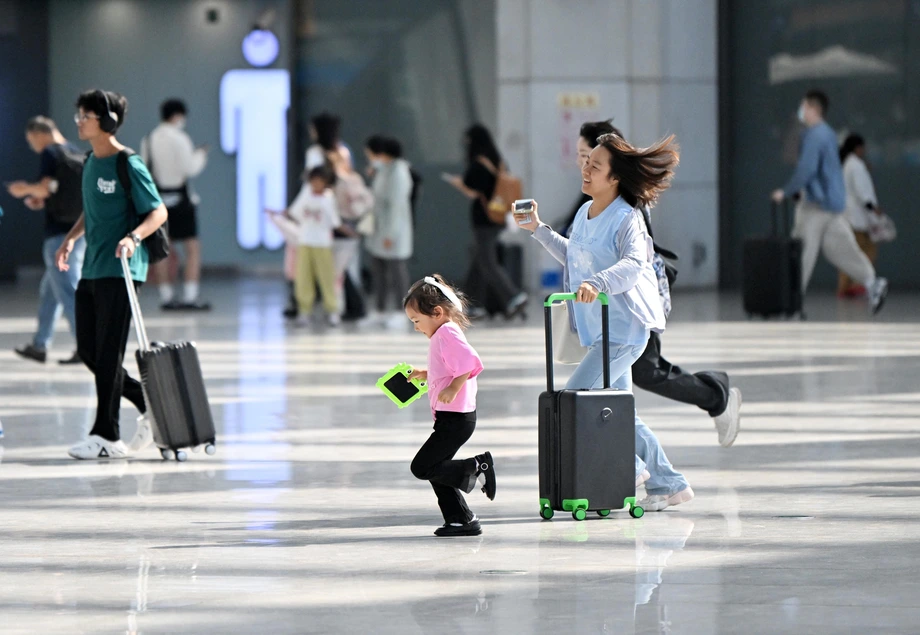
A foreign traveller carrying four drones through Beijing on the way out of China has had the aircraft confiscated and been fined, a case that shows how the capital's new ban applies even when a passenger never intended to fly there. The traveller arrived from another airport in China and planned to change planes in Beijing before leaving the country. Police at the departure airport had explained Beijing's rules and tried to dissuade the traveller from taking the drones into the capital. Capital airport police seized all four and imposed a fine after the traveller continued the journey.
Contents
The Capital Airport Public Security Bureau released the account on Friday, November 27, nearly two weeks after the revised rules took effect on November 15, 2026. It was among three typical cases published by the bureau. In another case, a traveller surnamed Lü went from central Beijing to the airport to fly out of the city. A drone was discovered while Lü was checking in. Lü said the aircraft had been given as a gift at an annual meeting, had never been unpacked and had been kept at home in Beijing. Police confiscated it and fined Lü as well.
The two cases capture the practical change. A drone can lead to punishment while it is still sealed in luggage, and a passenger cannot avoid the ban simply by holding a ticket to another destination. Police did not disclose the amount of either fine.
Checkpoints, hidden drones and the fines
Road checks have produced more cases. Officers in Fangshan and Pinggu districts recently stopped three people surnamed Hao, Dong and Zhao at checkpoints on routes into Beijing. Police said each drove into the municipality with a drone despite knowing the rules. Their equipment was confiscated and each received an administrative fine.
On November 21, Tongzhou police caught two people surnamed Yuan and Liu who had deliberately concealed several drones in a vehicle entering Beijing. Police said they were trying to evade inspection. Both had the equipment confiscated and were fined, bringing the number of people punished in the Fangshan, Pinggu and Tongzhou cases to five.
Article 3, paragraph 4 of the regulation prohibits transporting or carrying unmanned aircraft and their core components into Beijing. The stated punishment includes confiscation. Individuals can be fined between 500 and 5,000 yuan, while organisations can be fined between 5,000 and 50,000 yuan. These are administrative penalties imposed under the municipal regulation.
Police stress that the rule is not limited to journeys whose final destination is Beijing. Passing through the capital on the way to another province also counts. The ban covers travel by private car, rail and coach, as well as parcels sent by post or courier. Officers have promised continued inspections and encouraged members of the public to report violations.
What the revised regulation prohibits
The measure's full name is the Beijing Municipal Regulation on the Administration of Unmanned Aircraft. The Standing Committee of the Beijing Municipal People's Congress adopted the revised regulation on September 11 during the 26th meeting of the standing committee of the city's 16th legislature. It designates Beijing's entire administrative area as controlled airspace for unmanned aircraft.
Flights are prohibited unless permitted under the relevant rules. The regulation also bans possessing or storing drones and their core components, transporting or carrying them into Beijing, and selling or renting them. Controlled airspace means airspace where flight is subject to official restrictions. In this case, the designation covers the whole municipality, including urban districts, rural areas and mountains, rather than just the areas around airports or government buildings.
The storage clause approved by the legislature shows how far the ban reaches:
Unless otherwise provided by law or regulation, no organization or individual may establish a warehouse, temporary storage site or other storage facility for unmanned aircraft within Beijing.
For residents, that means keeping a drone at home can breach the rules even if it is never switched on. For businesses and other organisations, it means a storage room or temporary depot also requires a lawful exception.
How the rules changed during 2026
Beijing put its first drone management regulation and a companion information verification measure into force on May 1. The package was described as the strictest of its kind in China and sharply restricted private flying, sales and transport. Verification meant registering details of existing devices with the authorities so they could be checked. That work ended on July 31, and the verification measure ceased to apply when the revised regulation took effect.
- May 1: The first regulation and the information verification measure took effect.
- July 31: Verification and registration of existing devices were completed.
- September 11: Beijing's legislature adopted the revised regulation.
- September 12: Subsidised disposal and free postal shipment options opened.
- November 14: The subsidy and free postal shipment windows closed.
- November 15: The revised ban took effect and the old verification rules ceased to apply.
- November 27: Airport police publicised cases involving travellers, including the passenger carrying four drones.
The earlier version still contained several allowances. These included outdoor flights with approval, storage sites outside the Sixth Ring Road when police assessed them as safe, and permission to bring registered drones into the city. The revision removed those allowances. Registration under the previous system therefore did not preserve a right to keep a drone after November 15.
Penalties for flying have also become tougher. Under the May version, an unauthorised flight could bring a fine of up to 500 yuan, with confiscation and a fine of 1,000 to 10,000 yuan reserved for serious cases. The revision applies confiscation and that higher fine range to every unauthorised flight. These flying penalties are separate from the fines for transporting or carrying drones into Beijing.
The disposal window and its subsidies
To clear existing devices before the ban began, Beijing offered three disposal channels alongside the option of owners taking drones out of the city themselves. The Beijing Municipal Government's disposal guidance set different payments depending on the method and date.
- Buyback: From September 12 to October 31, an owner selling a drone to a company approved by a district government could receive a subsidy equal to 30 percent of the sale price, capped at 3,000 yuan per aircraft. From November 1 to 14, the rate fell to 15 percent, with a cap of 1,500 yuan. The seller also kept the proceeds from the sale.
- Recycling: Owners handing drones to government designated recycling points could receive 200 yuan per aircraft through October 31. The payment fell to 100 yuan for disposal between November 1 and 14.
- Postal removal: From September 12 through November 14, a verified drone could be sent through China Post's EMS service to an address outside Beijing without a delivery fee.
- Personal removal: Owners could take their devices out of Beijing by civil aviation, rail or road, but had to complete the move before the revised rules began.
The subsidies were limited to privately held drones that had completed police information verification. Eligible owners also had to use one of the approved disposal channels by November 14. People whose devices had not been verified remained subject to the ban but could not claim those payments.
The higher buyback subsidy ended on October 31, and every subsidy and free postal option ended before the new rules took effect. No citywide total has been released for the number of drones bought back, recycled or posted out of Beijing.
Who can still keep drones in Beijing
Limited exceptions remain for organisations with special operational needs, known as special guarantees. They cover counterterrorism, public order, emergency rescue, disaster relief and major events. A second category covers teaching, scientific research and production at schools, research institutes and manufacturers. Farming and forestry form a third category.
Organisations cannot simply claim those labels. Under trial storage rules issued by the Beijing Municipal Public Security Bureau, they must pass a police safety assessment and be placed on an approved list. The police arrangements provide no corresponding route for private individuals. Any flight for an approved purpose must still follow national regulations.
The storage conditions are extensive. Drones must be kept in a separate room or warehouse rather than a prefabricated unit. The entrance must have a security door certified to national grade 3 or above. Video recording must operate continuously, with footage retained for at least 90 days. Staff must be on duty at all times and share their records with police.
Organisations that received exemptions under earlier arrangements are being checked again. Those that no longer qualify must move their drones out of Beijing or dispose of them. The system therefore allows narrowly controlled institutional use while removing general private possession and storage.
What travellers and photographers should do
Travellers heading to or through Beijing should check their luggage before leaving home, including gifts, camera equipment and bags that have been stored for a long time. Complete drones and listed core components are covered. Leaving a drone outside Beijing or at home avoids the risk of confiscation at an airport, railway journey or road checkpoint. A connecting flight, an unopened box or a lack of plans to fly the aircraft does not provide an exemption.
The photography impact extends beyond central Beijing. Aerial views of the Great Wall at Mutianyu and Jiankou, where fortifications follow steep mountain ridges, will be harder for visiting photographers to capture. The same applies to views revealing the symmetry of the Forbidden City, the Seventeen Arch Bridge and Kunming Lake at the Summer Palace, and the circular structures and stone terraces of the Temple of Heaven. Existing aerial photographs remain available, but amateur travellers now have far fewer opportunities to create similar images within the municipality.
Beijing's drone restrictions sit alongside separate nationwide border rules. Notice No. 470, issued by the Ministry of Agriculture and Rural Affairs and the General Administration of Customs, has controlled items carried or mailed into China since late 2021. Its quarantine catalogue covers products including meat, dairy goods, eggs, fresh fruit and vegetables, plants, soil and many live animals. Passenger customs rules also require foreign currency worth more than US$5,000 to be declared on arrival and set a 20,000 yuan limit for Chinese currency carried in or out.
The wider security picture
Beijing officials say the revision is intended to address new safety demands, close security gaps and protect the capital's airspace. The original May rules cited challenges to safety at low altitudes. The broader security drive also follows a June incident in which a small aircraft crashed into the city's tallest skyscraper.
Since September 20, a separate permanent aviation restriction covering an area about 600 kilometres (370 miles) across and centred on Beijing has barred flights except for airline operations, approved official flights, military aircraft, customs, police and fire rescue flights. The municipal drone regulation adds controls on the ground as well as in the air. Its reach consequently includes homes, warehouses, luggage, parcels and vehicles, with police inspections and confiscation now providing the immediate enforcement mechanism.
Key Points
- Beijing's revised drone regulation took effect on November 15, 2026, banning flights, possession, storage and the transport of drones or their core components into the municipality unless an exception applies.
- A foreign transit passenger lost four drones and was fined after ignoring a warning at the departure airport.
- A traveller surnamed Lü was also fined after trying to leave Beijing with an unopened drone received as a gift.
- Five drivers were punished in Fangshan, Pinggu and Tongzhou, including two people accused of hiding several drones on November 21.
- Carrying violations can bring individual fines of 500 to 5,000 yuan and organisational fines of 5,000 to 50,000 yuan, plus confiscation.
- Verified owners had access to buyback, recycling and free postal disposal options, but those subsidy windows closed before the ban began.
- Limited organisational exceptions require police approval and secure storage. The trial arrangements provide no exemption route for private individuals.
- Transit by air, road, rail or coach and delivery by post or courier all count, so visitors should check their luggage before travelling to or through Beijing.