Dushanbe Talks Leave Every Major Project Question Open
Tajikistan has discussed building small nuclear power plants with Russia's state nuclear corporation Rosatom, but the talks produced no decision to construct one. The meeting took place in Dushanbe on November 26, 2026, as the country continued to face recurring electricity shortages during the colder months.
Contents
- Dushanbe Talks Leave Every Major Project Question Open
- How the Nuclear Idea Developed
- Why Winter Exposes Tajikistan's Dependence on Water
- What Makes a Reactor Small and Modular
- What Two 55 MW Units Could Add in Winter
- Uzbekistan's Plant Shows the Scale of Such Projects
- Why Uzbekistan's Price Cannot Set Tajikistan's Bill
- Rosatom's Regional Plans Face Different Conditions
- Rogun Remains Central to Current Supply Plans
- What Tajikistan Would Need Before Construction
- Key Points
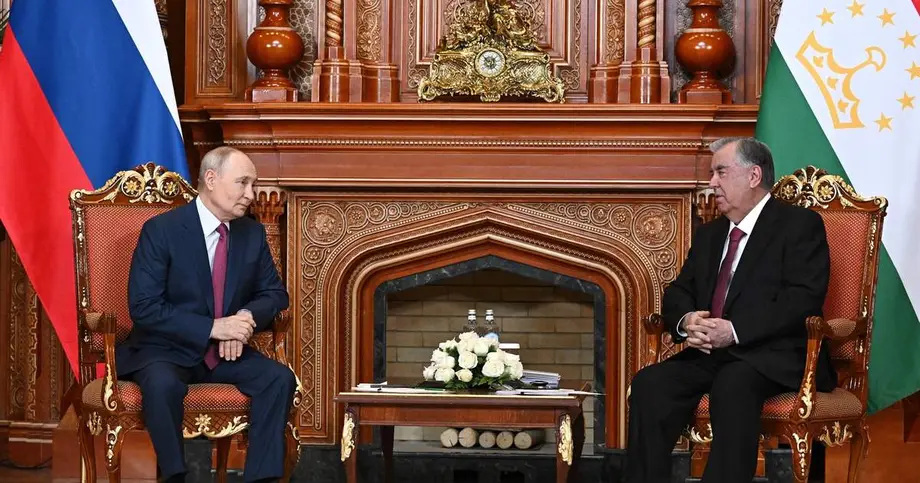
Energy and Water Resources Minister Daler Juma met Dmitry Konstantinov, deputy director general of Rosatom's representative office in Central Asia. Their agenda covered technical and economic feasibility, environmental effects, nuclear safety and the training of specialized personnel.
The Tajik Ministry of Energy and Water Resources, which announced the meeting, described the subject under discussion:
During the conversation, the parties discussed establishing bilateral cooperation in the field of energy, including studying the possibilities of building small nuclear power plants in the Republic of Tajikistan.
The two sides said they were ready to continue dialogue and consider wider cooperation in areas of mutual interest. The ministry gave no plant capacity, location, price or construction schedule. It also announced neither a feasibility study nor a construction agreement, leaving the proposal at an exploratory stage.
How the Nuclear Idea Developed
The November meeting followed earlier contacts and a changing nuclear project in neighboring Uzbekistan, where Rosatom already has a contract.
- May 2024: Uzbekistan and Russia signed a contract for six RITM-200N reactors in the Jizzakh region, with a planned combined capacity of 330 MW.
- March 2025: Rosatom head Alexei Likhachev said Tajikistan was studying a Russian nuclear proposal and that negotiations were at an initial stage.
- September 2025: Uzbekistan and Russia agreed to combine large and small reactors in a redesigned plant with a capacity of 2,110 MW.
- January 2026: Juma said Tajikistan considered nuclear energy development relevant and did not rule it out, despite the country's substantial hydropower resources.
- June 2026: Uzbekistan licensed construction of its first small power unit, and construction began on the first reactor.
- November 26, 2026: Juma and Konstantinov held the Dushanbe talks without announcing project parameters or a building decision.
Why Winter Exposes Tajikistan's Dependence on Water
Hydropower dominates Tajikistan's electricity system. The European Bank for Reconstruction and Development's country diagnostic report put hydroelectric generation at 94% of all electricity produced in 2023, while the Energy Ministry has given a figure of about 98%. The practical result is a system whose output moves closely with the availability of water.
River flows and reservoir inflows decline seasonally, while electricity consumption rises during cold weather. Tajikistan can export surplus power in warmer months yet introduce supply restrictions in winter. Nuclear generation interests policymakers because a reactor could operate throughout the year without depending on those seasonal changes in river flow.
The apparent contradiction between vast water resources and winter shortages lies in the difference between potential and production. Tajikistan's hydropower potential is estimated at more than 527 billion kWh a year, far exceeding current demand across Central Asia. That figure describes resources that could be developed, not electricity already available to households during a cold snap.
Dushanbe also plans to add solar and wind generation to diversify its supply. Its stated climate goal is to reduce greenhouse gas emissions by 15% by 2035, with the reduction rising to 40% if it receives international support.
What Makes a Reactor Small and Modular
The International Atomic Energy Agency defines small modular reactors as units with an electrical capacity of no more than 300 MW each. The word modular refers to the way much of the equipment can be manufactured in factories, transported to a site and assembled there. A station can also add capacity in stages as electricity demand and financing allow.
For a country considering its first plant, the possible attractions include a smaller initial construction bill than that of a large nuclear station, potentially shorter building periods and steady generation during winter. The 300 MW limit applies to each unit, so a site containing several modules could have a much larger total capacity.
Smaller capacity does not automatically mean cheaper electricity. The final cost per kWh depends heavily on whether reactors are produced in a series, the expense of construction and the interest and repayment conditions attached to financing. A kilowatt hour, written as kWh, is the energy consumed by a device drawing 1,000 watts for one hour.
What Two 55 MW Units Could Add in Winter
An illustrative calculation based on the RITM-200N unit being built in Uzbekistan shows both the potential contribution and the limits of the proposal. One 55 MW unit operating at an assumed capacity factor of 90% could generate about 434 million kWh annually. Capacity factor compares actual production with the maximum possible if the unit ran at full power without interruption.
If generation were spread evenly, about 217 million kWh would fall within a period of six autumn and winter months. Two such units could produce approximately 867 million kWh over a full year, including roughly 434 million kWh during that same period.
Tajikistan imported 306 million kWh from Uzbekistan during the winter of 2025 and 2026, down from 350 million kWh the previous winter, and must return an equivalent amount in summer under their seasonal exchange arrangement. One reactor's illustrative output of 217 million kWh equals about 71% of the latest import volume. Two reactors' estimated 434 million kWh would be about 1.4 times that volume.
Actual production would depend on operating conditions, maintenance and other technical factors. The lengthy preparation required for nuclear projects also means these calculations concern possible future supply, while current winter shortages require other responses.
Uzbekistan's Plant Shows the Scale of Such Projects
Uzbekistan provides the closest example of how a Rosatom project can develop. The original May 2024 contract called for six RITM-200N reactors rated at 55 MW each. The September 2025 redesign replaced that configuration with two VVER-1000 units rated at 1,000 MW each and two RITM-200N units rated at 55 MW each.
The resulting capacity is 2,110 MW. According to Uzbekistan's Agency for Nuclear Energy, known as Uzatom, the plant is expected to generate 16 billion to 17 billion kWh annually, supplying 12% to 15% of the country's energy balance. Its projected operating life is 60 years.
Uzbekistan issued a license for the first small unit in June 2026, when construction began on the first reactor in the Jizzakh region. World Nuclear Association data updated on November 24, 2026, schedules physical startup of that small reactor for late 2029. Commissioning of the two large units is expected around 2033 and 2035.
Why Uzbekistan's Price Cannot Set Tajikistan's Bill
Uzatom director Azim Akhmedkhadjayev said in June 2026 that the integrated Uzbek plant had a base contract value of $9.5 billion. That amount was described as a ceiling for the contract, with participation by local manufacturers expected to help reduce expenditure. Uzbekistan expects credit resources to cover 85% to 90% of the required financing.
The figure covers the entire 2,110 MW station, including two large reactors, two small reactors and shared infrastructure. The separate price of the two small units, which have a combined capacity of 110 MW, has not been disclosed. A Tajik station containing only small reactors would therefore require its own technical and financial estimate.
Construction of the reactors is only one part of the eventual bill. A complete budget must also include supporting infrastructure, specialist training, nuclear fuel deliveries, radioactive waste management and decommissioning after the station closes. The cost of borrowing can strongly influence what consumers ultimately pay for the electricity.
Rosatom's Regional Plans Face Different Conditions
Rosatom's activity extends beyond Uzbekistan and Tajikistan. In September 2026, its subsidiary Atomstroyexport signed a contract to design and build Kazakhstan's first large nuclear plant, called Balkhash. Its two reactors would have a combined capacity of 2,400 MW. Construction could begin in 2027, subject to regulatory approval.
Rosatom has also discussed a small nuclear plant in Kyrgyzstan and conducted feasibility studies there. Kyrgyz Energy Minister Altynbek Rysbekov said in October that the project would proceed only with public consent. The three neighboring projects consequently have different scales, approval requirements and timetables.
Rogun Remains Central to Current Supply Plans
Tajikistan's principal project for increasing electricity production remains the Rogun Hydropower Plant on the Vakhsh River. In June 2026, the World Bank approved an additional $300 million grant for Rogun, bringing its total financing for the project to $650 million.
The bank expects approximately half of Rogun's future output to serve domestic demand and help reduce winter shortages. The remainder is intended for export to Kazakhstan and Uzbekistan. Rogun will still depend on water management, but its scale makes it central to the country's current supply strategy.
Seasonal electricity exchanges with Uzbekistan, the development of Rogun and plans for more solar and wind generation therefore address needs that are already present. The Rosatom talks concern an additional form of generation whose cost, design and role have yet to be defined.
What Tajikistan Would Need Before Construction
A serious construction proposal would require assessments of seismic safety at possible sites, the availability of cooling water, connections to the existing electricity grid and economic viability. Tajikistan would also need legislation suited to nuclear power, an independent nuclear regulator, qualified personnel and a system for managing radioactive waste safely.
Russia and Tajikistan already have experience working together on environmental remediation. Likhachev has pointed to several years of cooperation addressing the legacy of Soviet uranium production, including the rehabilitation of mines and processing facilities. A power program would require additional regulatory, operational and emergency preparedness systems around an operating reactor.
Officials would also have to select funding sources and compare the expected cost of nuclear electricity with other forms of generation. No date has been given for a Tajik feasibility study or construction decision, and the Dushanbe meeting established dialogue rather than a delivery timetable.
Key Points
- Daler Juma and Rosatom official Dmitry Konstantinov discussed small nuclear plants in Dushanbe on November 26, 2026.
- No construction decision, capacity, site, price, timetable or feasibility study was announced.
- The EBRD calculated that hydropower supplied 94% of Tajikistan's electricity in 2023; the Energy Ministry has given a figure of about 98%.
- International Atomic Energy Agency rules classify small modular reactors as units producing no more than 300 MW each.
- Two illustrative 55 MW units could generate about 867 million kWh annually under an assumed capacity factor of 90%.
- Uzbekistan's redesigned 2,110 MW plant has a base contract value of $9.5 billion, with its first small reactor scheduled for physical startup in late 2029.
- Rogun received an additional $300 million World Bank grant in June 2026, taking the bank's total project financing to $650 million.
- Tajikistan would still need site studies, cooling water, grid connections, independent regulation, trained staff, waste arrangements and a financing plan.