Dushanbe Files Withdrawal Notice During Russian Presidential Visit
Tajikistan has formally notified the United Nations of its decision to withdraw from the Rome Statute, the founding treaty of the International Criminal Court (ICC). United Nations Secretary-General Antonio Guterres, who serves as the treaty depositary, received the notification on November 20, 2026, and the United Nations published the depositary document on Monday, November 23.
Contents
- Dushanbe Files Withdrawal Notice During Russian Presidential Visit
- Why Tajik Authorities Say They Are Exiting the Treaty
- How the Arrest Warrant for Vladimir Putin Sparked a Diplomatic Clash
- Key Dates in Tajikistan and the International Criminal Court
- Condemnation from Europe and Warning from Treaty Leaders
- Tajikistan Joins a Broader Wave of Treaty Withdrawals
- What the Exit Changes for Tajik Citizens and Rights Advocates
- Key Points
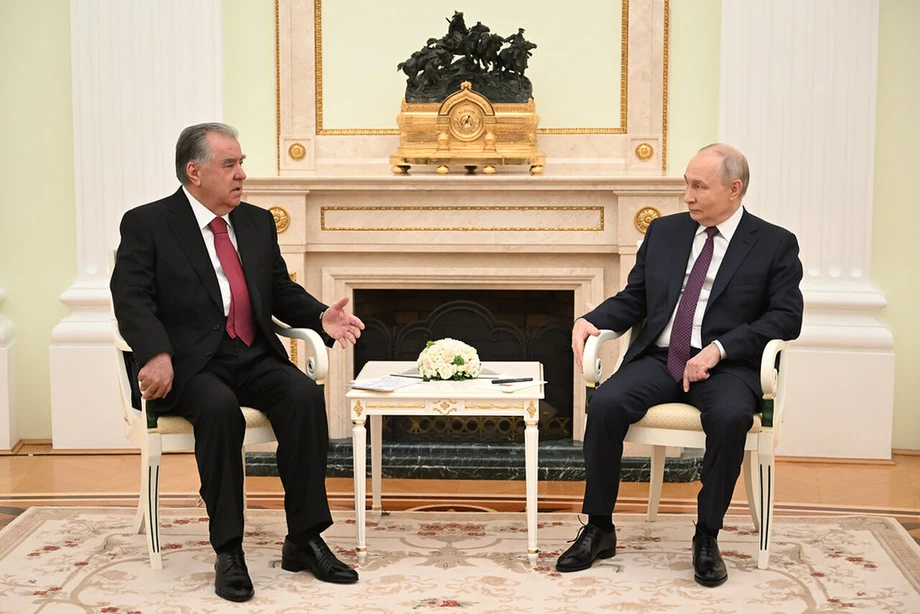
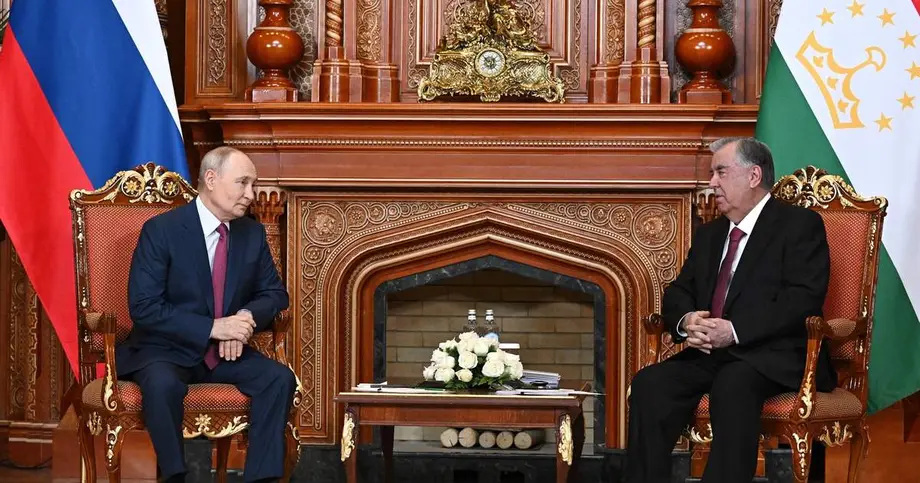
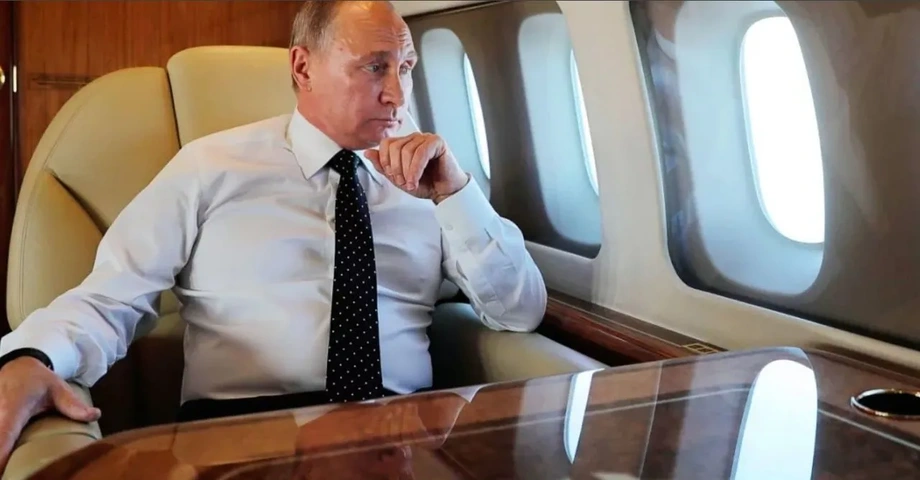
November 20 marked the second day of a visit to Dushanbe by Russian President Vladimir Putin, who arrived in the Tajik capital on November 19 after attending international summits in China where he met Chinese and United States leaders. Putin held talks with Tajik President Emomali Rahmon while an active ICC arrest warrant against the Russian leader remained unexecuted.
Under Article 127 of the Rome Statute, any member state may leave the treaty by submitting a written notice to the United Nations Secretary-General. Withdrawal does not take effect immediately, meaning Tajikistan will legally remain a party to the court until November 20, 2027, one full year after the notice was received.
Based in The Hague, the International Criminal Court is a permanent global tribunal with 125 member states. Judges there prosecute individuals accused of genocide, crimes against humanity, war crimes, and the crime of aggression when national courts are unwilling or unable to act.
Why Tajik Authorities Say They Are Exiting the Treaty
The United Nations depositary notification did not list Tajikistan's reasons for abandoning the treaty, which Dushanbe signed in 1998 and ratified in 2000. Inside Tajikistan, lawmakers had already laid the legal groundwork earlier in the autumn.
Parliament began examining the exit process in September 2026 at the initiative of President Emomali Rahmon, who submitted the draft resolution. On October 1, deputies in the lower house of parliament, the Majlisi namoyandagon, approved the termination of the Rome Statute without holding a debate.
In October remarks recorded in the parliamentary transcript, Tajik Deputy Foreign Minister Idibek Kalandar defended the withdrawal before lawmakers. Kalandar argued that the court in The Hague had strayed from its mandate by interfering in disputes between nations and ignoring established diplomatic channels, turning international criminal justice into an instrument of political pressure.
Such selectivity and bias weaken the status of the International Criminal Court as an independent institution.
Kalandar also asserted that the tribunal's recent conduct departs from recognized international standards and the core principles of judicial impartiality. Rustam Shokhmurod, who chairs the parliamentary committee on legislation and human rights, backed the exit by pointing out that Russia, China, the United States, India, Pakistan, Turkey, and most Arab nations do not recognize the court's authority, and argued that every sovereign state has the right to leave an international agreement.
How the Arrest Warrant for Vladimir Putin Sparked a Diplomatic Clash
Judges in The Hague triggered tension with Dushanbe when the court issued arrest warrants for Vladimir Putin and Russian Children's Rights Commissioner Maria Lvova-Belova on March 17, 2023. Prosecutors sought both officials on suspicion of unlawfully deporting and transferring Ukrainian children from areas of Ukraine occupied by Russia during the war.
Putin previously traveled to Dushanbe in October 2025 to attend a summit of the Commonwealth of Independent States. When Tajik authorities declined to arrest him during that trip, they told the court that a bilateral treaty with Moscow protects senior officials of both governments from detention and argued that Putin also holds immunity as a head of state.
Judges at the International Criminal Court rejected Dushanbe's legal arguments in March 2026, formally ruling that Tajikistan had violated its treaty obligations by failing to execute the arrest request. In May 2026, the court's leadership referred the breach to the Assembly of States Parties, the treaty's governing oversight body.
Mongolia faced a similar situation on September 2, 2024, when Putin visited Ulaanbaatar without being detained despite Mongolia's membership in the court. Judges ruled in October 2024 that Mongolia had breached its obligations and referred the matter to member states, yet Mongolia chose to remain inside the Rome Statute rather than follow the path Tajikistan later took.
Outside Central Asia, the warrant has limited Putin's attendance at international summits. The Russian president stayed away from the BRICS summit in Brazil in July 2025 and skipped the G20 summit in South Africa in November 2025 due to concerns that host authorities could be pressured to arrest him.
Key Dates in Tajikistan and the International Criminal Court
Tajikistan's relationship with the tribunal spans nearly three decades, moving from early participation to formal rupture during a period of intense geopolitical tension.
- 1998: Tajikistan signs the Rome Statute, signaling its intent to join the permanent war crimes court.
- 2000: Tajik lawmakers ratify the treaty, making the country a full state party.
- March 17, 2023: Judges in The Hague issue arrest warrants for Russian President Vladimir Putin and Maria Lvova-Belova.
- October 2025: Putin visits Dushanbe for a regional summit, and Tajik authorities decline to detain him.
- March 2026: The court rules that Tajikistan broke its treaty obligations, referring the matter to member states in May.
- September to October 1, 2026: Parliament begins reviewing withdrawal in September, and the lower house approves it without debate on October 1.
- November 19 to 20, 2026: Putin visits Dushanbe again, and the United Nations receives Tajikistan's formal withdrawal notice on November 20.
- November 23, 2026: The United Nations publishes the withdrawal notification, prompting immediate condemnation from the European Union and treaty officials.
- November 20, 2027: Tajikistan's withdrawal legally takes effect after the mandatory waiting period of one year.
Until November 20, 2027, Tajikistan remains bound by the Rome Statute, meaning any failure to cooperate with active requests from The Hague during the next twelve months still constitutes a treaty violation.
Condemnation from Europe and Warning from Treaty Leaders
European Union diplomats criticized Dushanbe on November 22 and in subsequent statements from the European External Action Service, expressing regret that Tajikistan once again hosted Putin while ignoring the arrest warrant. Officials in Brussels stressed that the International Criminal Court poses no threat to national sovereignty and urged Tajik leaders to uphold international law.
On November 23, the Presidency of the Assembly of States Parties issued an official statement voicing deep concern over Tajikistan's notification and urging the government to reconsider its decision while raising any grievances inside the Assembly forum.
The Presidency regrets the situation. Decisions by States Parties to withdraw from the Rome Statute risk undermining the collective pursuit of justice and weakening global efforts to end impunity. The ICC is at the very heart of the international system of accountability, and its effectiveness depends on the continuous and unconditional support of the international community.
Treaty officials also reminded Dushanbe that leaving the Rome Statute does not erase obligations incurred while Tajikistan was a member, nor does it automatically halt investigations or legal proceedings that fell under the court's authority prior to the effective exit date.
Moscow, by contrast, has consistently dismissed the tribunal's legitimacy. Russia signed the Rome Statute in 2000 but never ratified it, formally notifying the United Nations in 2016 that it would not join, and the Kremlin maintains that the arrest warrant for Putin is legally void.
Following his recent meetings in China with Chinese and United States leaders, Putin stated that participants shared his assessment that the court's rulings are political in nature. Russian Foreign Ministry spokesperson Maria Zakharova has likewise accused the tribunal of executing orders for Western nations and applying judicial pressure against states and individuals they oppose.
Tajikistan Joins a Broader Wave of Treaty Withdrawals
Only two countries had completed exits from the International Criminal Court before this year, with Burundi departing in 2017 and the Philippines leaving in 2019. Recent months have brought a sharp rise in withdrawal notices from several regions.
In June 2026, three West African nations, Niger, Burkina Faso, and Mali, submitted formal notifications to the United Nations to leave the Rome Statute. Tajikistan's move also unfolded alongside a diplomatic campaign led by the administration of United States President Donald Trump aimed at weakening the tribunal.
Tajikistan became the fourth country, after Chad, Venezuela, and Nauru, to initiate withdrawal procedures since Washington launched that campaign. No direct evidence has emerged showing that Dushanbe acted under pressure from the United States rather than out of alignment with Moscow and domestic calculations.
Across the former Soviet region, Tajikistan stands out as the first former Soviet republic to leave the treaty. Armenia and Ukraine moved in the opposite direction by joining the court, creating a stark divide that highlights where Russian diplomatic influence remains strongest.
What the Exit Changes for Tajik Citizens and Rights Advocates
Human rights lawyers warn that leaving the tribunal removes an external legal safeguard for ordinary people inside Tajikistan. Tajik lawyer Dilrabo Samadova described the October parliamentary vote as a troubling step, noting that once withdrawal takes effect, the court's power to investigate future crimes committed on Tajik territory will be sharply restricted.
Leila Nazgul Seyitbek, a human rights defender and founder of the organization Freedom for Eurasia, pointed directly to the date of Dushanbe's filing to explain the political calculation behind the move.
The timing itself is already a message: President Rahmon chose his patron rather than the treaty that Tajikistan signed in 1998. The step was prepared in advance: parliament began the process in September. Tajikistan became the first former Soviet republic to leave the ICC, while Armenia and Ukraine, by contrast, joined it. This contrast shows where exactly Moscow's influence extends.
Human rights monitors have documented several incidents inside the country and across its borders that could draw scrutiny from international prosecutors. Human Rights Watch recorded alleged war crimes during Tajikistan's brief armed conflict with neighboring Kyrgyzstan in 2022, while Tajik security forces harshly suppressed protests in the Gorno-Badakhshan Autonomous Region between 2021 and 2022, and United Nations bodies have documented widespread repression targeting critics even after they flee abroad.
Seyitbek explained why losing access to The Hague leaves Tajik victims with few alternatives once the waiting period expires on November 20, 2027.
After November 2027, crimes committed inside Tajikistan will fall beyond the reach of the ICC unless the UN Security Council directly refers a specific case to the Court, which Russia will block. Victims are losing their last judicial instance.
Russia holds a permanent seat and veto power on the United Nations Security Council, allowing Moscow to block any future referral involving Tajikistan. Seyitbek urged victims, legal advocates, and European governments to act within the remaining twelve months before jurisdiction lapses.
That is why the next twelve months are critically important: victims, lawyers, and human rights organizations must submit thoroughly documented communications to the Office of the Prosecutor right now, rather than next autumn. EU member states should also consider referring cases of Tajik transnational repression on their territory, as Lithuania did regarding Belarus. The door is closing, but it is not closed yet.
Key Points
- United Nations Secretary-General Antonio Guterres received Tajikistan's formal notice to leave the Rome Statute on November 20, 2026, coinciding with Russian President Vladimir Putin's visit to Dushanbe.
- Under Article 127 of the treaty, Tajikistan's withdrawal takes effect on November 20, 2027, leaving the country bound by court obligations for one more year.
- Tajik Deputy Foreign Minister Idibek Kalandar cited growing politicization at the court, while parliament's lower house approved the exit on October 1 without debate.
- In March 2026, judges in The Hague ruled that Tajikistan violated its obligations by failing to arrest Putin during an earlier visit in October 2025.
- The European Union and the Assembly of States Parties condemned the withdrawal, warning that exiting does not erase prior legal duties.
- Human rights advocates note that Tajikistan is the first former Soviet republic to leave the court, urging victims to submit evidence before jurisdiction ends in November 2027.