Moscow Talks Connect Trade Goals With Regional Security
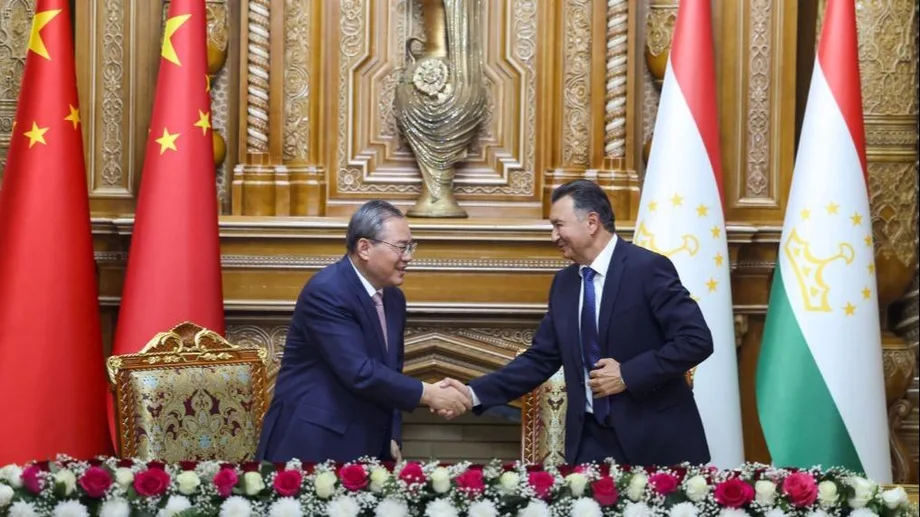
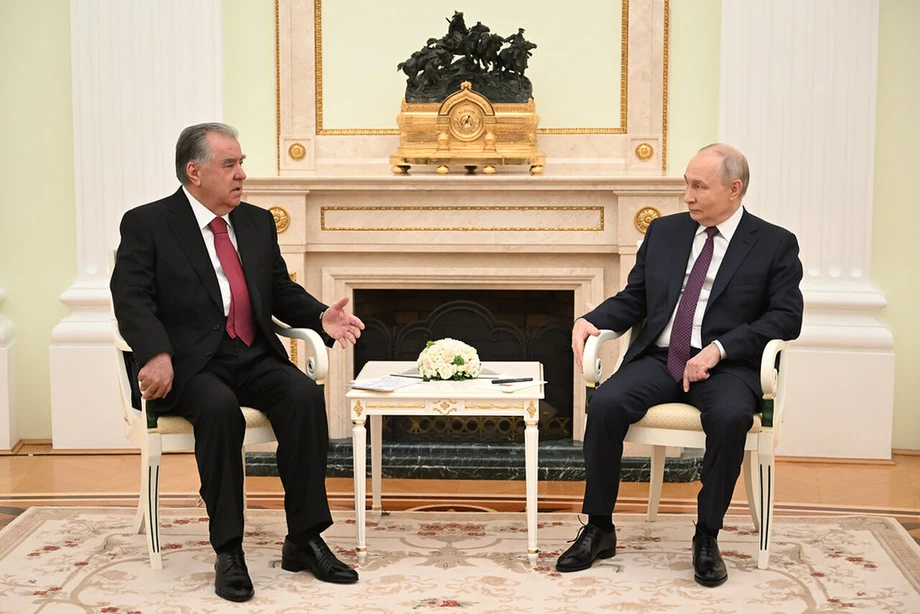
Tajik President Emomali Rahmon and Russian President Vladimir Putin met at the Kremlin on November 12, 2026, to discuss regional security, expanding trade and labour migration, a day after a Moscow security summit that prepared the way for Tajikistan to chair the Collective Security Treaty Organization (CSTO) in 2027.
Contents
- Moscow Talks Connect Trade Goals With Regional Security
- What the Presidents Said
- A Sequence of Meetings Before the Chairmanship Change
- What the Security Summit Produced
- Trade Growth Meets a Larger Target
- Energy, Farming and Infrastructure Lead the Economic Agenda
- Digital Government Joins the Agenda
- Migration, Education and Construction in Dushanbe
- Key Points
The Kremlin meeting record places the talks at 12:55 in Moscow. The agenda connected security cooperation with practical economic priorities, including energy, agriculture, transport, public infrastructure and digital government services.
The meeting also put earlier economic ambitions back in focus. Russia and Tajikistan are implementing a cooperation programme covering 2024 to 2027 and aim to increase mutual trade to 2.5 times its starting level by 2030. At a September meeting, Putin said 320 enterprises with Russian participation were operating in Tajikistan and more than 96% of transactions between the countries used their national currencies.
Rahmon praised the results of Russia's CSTO chairmanship and called for consistent implementation of agreements already reached. The practical agenda therefore stretches beyond new proposals: it includes carrying out existing commitments while preparing Dushanbe to take over leadership of the security organisation from Moscow.
What the Presidents Said
Putin described the relationship as strategically important and pointed to progress in economic and humanitarian affairs. In the Kremlin's published transcript, the Russian president also assessed the security discussions held with other CSTO leaders:
Yesterday with our colleagues, we talked about security in the CSTO region, and I believe those discussions produced a positive result. We reaffirmed our intention to work together on this crucial matter.
Rahmon, speaking as Tajikistan's president, stressed that cooperation extended across commerce, culture and security:
I would like to specify that our mutual trade grows every year, and our cultural and humanitarian cooperation is on the rise. Our security cooperation also progresses steadily.
The presidents' remarks presented the bilateral relationship as a continuing partnership rather than a single transaction. Their wider discussions covered both the international agenda and issues that affect businesses, students and people moving between the two countries for work.
A Sequence of Meetings Before the Chairmanship Change
The November talks followed contacts in September and October. Together, those meetings connect the current discussions with economic targets already announced and with Tajikistan's approaching responsibility for guiding the CSTO's work.
- September 1, 2026: Putin and Rahmon met in Bishkek, where Putin outlined trade growth, business participation and the widespread use of national currencies.
- October 5, 2026: The presidents spoke by telephone and reaffirmed their intention to develop their strategic partnership and alliance.
- November 11, 2026: Rahmon attended the CSTO Collective Security Council session in Moscow, chaired by Putin.
- November 12, 2026: The presidents held their bilateral meeting at the Kremlin.
- 2027: Tajikistan is due to take over the CSTO chairmanship from Russia.
The summit is dated November 11 in the Tajik account, while the introductory sentence on the Kremlin's English page gives October 11; Putin's remarks in that same transcript place the summit "Yesterday," relative to the November 12 meeting.
What the Security Summit Produced
The CSTO summit brought together the leaders of Russia, Tajikistan, Belarus, Kazakhstan and Kyrgyzstan. They adopted a declaration of the Collective Security Council and signed a package of 18 documents covering military cooperation, cooperation between parliaments, coordination against terrorism and collective security.
The declaration supported strengthening the United Nations' role in international security. It also opposed placing weapons in space and called for countries to work together against terrorism and transnational crime, meaning criminal activity that crosses national borders.
The leaders identified the need for a CSTO strategy against terrorism running to 2030. That gives the security agenda a longer horizon than the annual chairmanship: Tajikistan will inherit work intended to continue beyond its year at the helm.
Rahmon presented regional security and better readiness to respond to modern threats as priorities for the Tajik chairmanship. Its stated motto links three objectives: stronger borders, regional stability and shared responsibility. For Dushanbe, the chairmanship will provide a platform to put those priorities before the other participating governments.
Trade Growth Meets a Larger Target
Putin's figures from the September 1 meeting in Bishkek provide a numerical backdrop to the November discussions. He said bilateral trade rose by 25.1% in 2025 and increased by 25% in the first half of 2026.
The two figures describe growth over different reporting periods, so each needs to be understood within its own timeframe. Rahmon's November statement that trade grows every year continued the same positive assessment, while the talks focused on increasing the volume and variety of goods exchanged.
The 2030 ambition is larger than a doubling. A target of 2.5 times the starting level means a 150% increase above that level: trade worth 100 units at the beginning would need to reach 250 units. The economic cooperation programme for 2024 to 2027 provides an existing framework for work toward that goal.
Putin's statement that more than 96% of mutual transactions use national currencies also describes how much of the commercial relationship operates. In practical terms, payments are overwhelmingly being conducted in currencies used by the two countries, rather than through another country's currency. The 320 enterprises with Russian participation represent an established business presence alongside the plans for further growth.
Energy, Farming and Infrastructure Lead the Economic Agenda
Russia and Tajikistan identified energy, industry and agriculture as areas with room for expanded cooperation. They also highlighted transport, logistics and municipal infrastructure, which includes the systems and services used by towns and cities.
Transport and logistics concern how goods move, where they are stored and how they reach buyers. Their inclusion connects the trade targets with the practical networks businesses depend on. Expanding the range of products traded requires both goods to sell and workable ways to deliver them.
The presidents also stressed implementation of earlier bilateral agreements. That puts existing commitments alongside potential new activity in the sectors discussed. For companies considering investments or sales, the concrete agenda is therefore about both market opportunities and the infrastructure needed to support them.
Digital Government Joins the Agenda
The talks identified digitalisation, artificial intelligence, electronic public services and cybersecurity as further areas for cooperation. These subjects extend the relationship beyond the movement of physical goods to the systems governments and businesses use to manage information.
Electronic public services allow people to complete administrative tasks through digital systems. Artificial intelligence refers to computer systems that can perform tasks such as recognising patterns or processing language. Cybersecurity concerns protecting systems and information against unauthorised access and disruption.
The subjects are closely connected in practical use. When public services move online, their reliability and the protection of personal information become part of delivering those services. The November discussion placed both the development of digital tools and their protection on the bilateral agenda.
Migration, Education and Construction in Dushanbe
Labour migration received separate attention during the meeting. The presidents discussed particular aspects of cooperation concerning people who travel between countries for employment, an issue with direct consequences for workers and their families.
The public descriptions gave no details of new migration rules or worker arrangements, and no budgets or completion dates for the economic and digital proposals. The immediate outcome was an agenda for cooperation rather than a published set of operational changes.
Education, science and culture formed another part of the talks. The presidents discussed continued support for cultural, educational and academic exchanges, while Putin thanked Tajikistan for the attention given to the Russian language.
Rahmon also named two physical projects under construction in Dushanbe: a centre for gifted children and a drama theatre named after Vladimir Mayakovsky. The Tajik president described their progress in the Kremlin transcript:
A centre for gifted children and a Mayakovsky drama theatre are under construction in Dushanbe, both projects proceeding at an excellent pace.
The projects give a concrete local dimension to the broader cultural relationship. Alongside the security documents and trade targets, they place educational facilities and cultural venues in Tajikistan's capital within the discussion of ties between the two governments.
Key Points
- Rahmon and Putin met at the Kremlin on November 12, 2026, to discuss security, trade, technology, culture and labour migration.
- Tajikistan is due to take over the CSTO chairmanship from Russia in 2027.
- The Moscow security summit adopted a declaration and a package of 18 documents.
- The countries aim to increase mutual trade to 2.5 times its starting level by 2030.
- Putin previously cited 320 enterprises with Russian participation in Tajikistan and national currency use in more than 96% of mutual transactions.
- A centre for gifted children and a Mayakovsky drama theatre are under construction in Dushanbe.