Seoul seeks a wider naval mission as Tehran warns against involvement
South Korea's Cabinet approved a plan on November 10, 2026, to expand its Cheonghae naval unit's operations to waters south of Oman, about 650 kilometers from the Strait of Hormuz, despite an Iranian warning against helping military efforts to reopen the waterway. The proposal would add a P-8A Poseidon patrol aircraft, specialists in explosive disposal and unmanned minesweeping equipment.
Contents
- Seoul seeks a wider naval mission as Tehran warns against involvement
- What would change for the Cheonghae Unit?
- Why the aircraft and mine equipment matter
- Iran frames the decision as a test of relations
- Seoul promises an independent command
- How the proposal reached parliament
- An established antipiracy force faces a different task
- Opposition grows as Lee stresses economic interests
- Hormuz security is also part of Iran's diplomatic demands
- Key Points
The deployment would grow by 75 personnel to 395, an increase of about 23 percent from the existing 320. National Assembly approval is still required. Seoul says the mission would protect South Korean citizens and economic interests under an independent command, while avoiding participation in the war involving the United States, Israel and Iran.
Iranian Foreign Ministry spokesperson Esmaeil Baqaei delivered Tehran's warning at a regular briefing on November 9. He argued that sending forces to help reopen Hormuz would place South Korea alongside countries Iran accuses of military aggression.
The dispute turns on the purpose of the expanded mission as much as its location. South Korea says its forces would operate south of Oman rather than inside the strait itself. Iran objects to military involvement connected with reopening the passage, including operations in the surrounding region.
For South Korean lawmakers, the decision therefore involves more than extending an existing deployment. They must consider a larger force, equipment suited to detecting maritime threats and a proposed mission statement that reaches beyond protecting merchant ships from piracy.
What would change for the Cheonghae Unit?
The Cheonghae Unit currently protects commercial shipping in the Gulf of Aden, off Somalia. Under the Cabinet proposal, its operating area would extend to Arabian Sea waters south of Oman, bringing it closer to the disrupted route through Hormuz.
The unit's mission statement would also gain a new purpose: supporting the restoration of freedom of navigation along international maritime routes. In ordinary terms, that means helping ships travel through waterways without being prevented or threatened.
South Korea's Defense Ministry has linked the geographical expansion to increased piracy in nearby waters. The broader mission language also comes after months of pressure from Washington for allies to help secure Hormuz, an important energy shipping route effectively blocked during the war.
Those two objectives explain much of the argument in Seoul. Protecting vessels against pirates is the unit's established task. Supporting the restoration of navigation near a waterway disrupted by war could bring different demands, particularly when the proposed equipment includes tools for dealing with naval mines.
Why the aircraft and mine equipment matter
The proposed P-8A Poseidon would give the deployment a dedicated maritime patrol aircraft. Such aircraft survey large areas of sea and help identify vessels and possible threats, extending observation beyond what a ship can see from its immediate surroundings.
An explosive ordnance disposal team, commonly called an EOD team, would bring specialists trained to deal with dangerous explosive devices. Unmanned minesweeping equipment would add tools designed to address mines at sea while reducing the need to put personnel directly beside an explosive threat.
The personnel plan assigns 45 of the additional service members to operating the patrol aircraft and 30 to the EOD team. Together, those groups account for all 75 proposed additions.
South Korea's defense minister told lawmakers on November 9 that minesweeping capabilities could enable participation in exercises with Britain, France, Italy and other countries. He described the purpose as preparing for threats that could not be ruled out.
The equipment could also prepare South Korea for an international effort to clear mines from Hormuz after the war ends. The immediate proposal, however, concerns the Cheonghae Unit's expanded area and capabilities, with Seoul maintaining that its forces would stay outside the strait itself.
Iran frames the decision as a test of relations
Baqaei linked his objection to a diplomatic relationship lasting more than 60 years. He said ties between Iran and South Korea had rested on mutual respect and consideration for both countries' interests.
At his November 9 briefing, the Iranian Foreign Ministry spokesperson urged Seoul to avoid becoming involved in an already volatile situation:
The best help South Korea can offer is to avoid interfering in an already complicated situation.
Baqaei said Iran did not want other countries to align themselves with the United States, Israel or allies that had directly or indirectly supported what he described as military aggression. He urged South Korea and other governments to consider the harmful consequences of those actions and avoid further military involvement.
Tehran had delivered a similar warning earlier. In a statement posted in Korean on his X account on September 7, Baqaei referred to more than 64 years of relations and warned about foreign operations in the Persian Gulf and Hormuz:
However, any operational participation or military deployment by another country in the Persian Gulf and the Strait of Hormuz will be regarded as direct support for the aggressor and is sure to have serious consequences.
The November warning carries the same central message: Iran is judging the proposed deployment by its connection to military efforts around Hormuz, while Seoul is stressing its separate command and protective purpose.
Seoul promises an independent command
South Korea's Foreign Ministry responded on November 10 by repeating that the government would avoid involvement in the war. An unnamed ministry official said the mission was being strengthened to protect citizens and economic interests, under principles of noninvolvement and nonintervention.
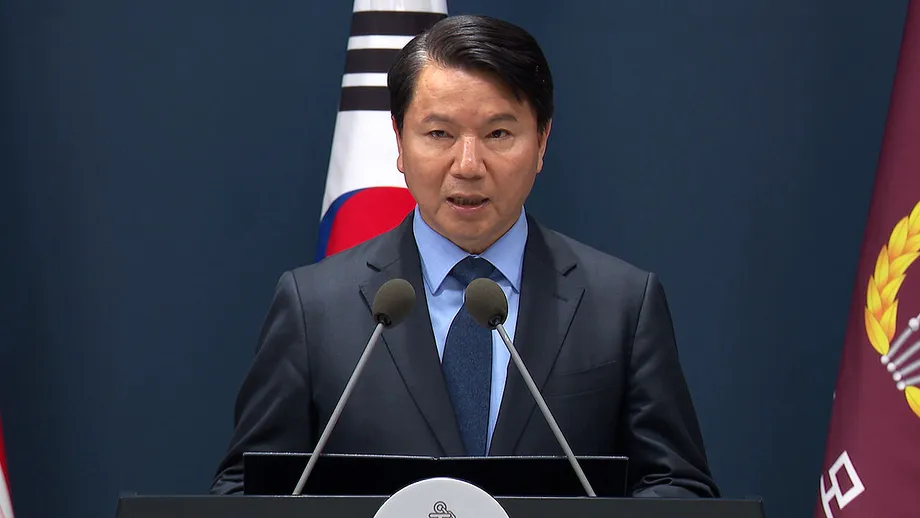
The Defense Ministry also said the force would operate under an independent command structure and would not participate or intervene in any war. Independent command means South Korea would retain authority over its deployment rather than place it under another country's military command.
Seoul says it has been communicating with Iran and other countries concerned about the proposal. That diplomatic contact is taking place alongside preparations to seek parliamentary consent.
The geographical boundary is central to the government's explanation. The expanded operating area would reach waters south of Oman, roughly 650 kilometers from Hormuz, rather than the strait. Tehran's warning addresses the wider purpose of naval activity connected with reopening the passage, leaving the two governments with different descriptions of the same proposed expansion.
How the proposal reached parliament
President Lee Jae Myung chaired the Cabinet meeting that approved the motion on Tuesday, November 10. The approval followed government moves the previous week to seek a broader operating area and additional military assets.
The main steps span both the unit's established history and the recent diplomatic exchange:
- March 2009: South Korea first deployed the Cheonghae Unit to combat piracy off Somalia and protect Korean vessels.
- January 2011: The unit rescued the hijacked South Korean tanker Samho Jewelry during Operation Dawn in the Gulf of Aden.
- September 7: Baqaei posted a warning in Korean against foreign military involvement in the Persian Gulf and Hormuz.
- The Thursday before the Cabinet decision: Seoul moved to seek parliamentary approval for expanding the unit's operations and adding assets.
- November 9, 2026: Baqaei renewed Iran's warning at a press briefing, while South Korea's defense minister discussed minesweeping capabilities with lawmakers.
- November 10, 2026: The Cabinet approved the revised deployment motion, leaving parliamentary review and consent as the next steps.
The National Assembly's National Defense Committee must review the motion before it goes to a plenary vote. Passage requires a majority of Assembly members to be present and approval from a majority of those attending.
If lawmakers approve it, the deployment would run through December 31, 2027. No date has been announced for the parliamentary vote or for the arrival of the additional personnel and equipment.
An established antipiracy force faces a different task
The Cheonghae Unit already has substantial military capabilities. Its deployment consists of a warship of about 4,400 tons, an armed Super Lynx helicopter, speedboats and personnel including naval commandos.
Its best known operation came in January 2011, when it rescued the Samho Jewelry after Somali pirates hijacked the tanker. That history helps explain why the government is proposing to expand an existing overseas force rather than establish an entirely new mission.
The proposed changes would nevertheless alter both what the unit can do and the waters it can cover. A maritime patrol aircraft provides wider surveillance. Explosive disposal specialists and unmanned mine equipment prepare it for hazards that require different skills from boarding a ship or escorting a merchant vessel.
For commercial crews, the practical question is how those capabilities would be used to keep shipping routes safe. For the personnel deployed, the parliamentary decision would set the authorized area and mission within which their expanded capabilities could operate.
Opposition grows as Lee stresses economic interests
Civic groups and progressive activists protested near Gyeongbok Palace in central Seoul on November 10, demanding withdrawal of the proposal. They argued that the expansion amounted to participation in the war under another description and was a means of sending forces toward Hormuz.
The government's stated position is that a larger deployment would safeguard citizens and economic interests without entering the conflict. The protests show that this assurance has not settled the domestic argument over what the new mission could require.
Lee placed economic protection at the center of his Cabinet remarks. Speaking about uncertainty following the United States midterm elections, the president instructed ministries and agencies to prepare for changing conditions:
Every effort must be made to minimize any negative impact that external uncertainties might have on the domestic economy.
Lee also called for continued coordination with the United States administration and broader engagement with Congress, state governments and businesses. Seoul is pursuing the naval proposal while managing pressure from Washington, warnings from Tehran and opposition at home.
Hormuz security is also part of Iran's diplomatic demands
Baqaei's briefing placed the South Korean proposal within a wider dispute over how security should return to Hormuz. Alongside his warning to Seoul, he discussed an Iranian proposal tied to demands on Washington.
He said Iran wanted the United States to end sanctions Tehran considers illegal, stop its naval blockade and halt the war on all fronts before a negotiating process began. He argued that meeting Iran's demands could bring positive developments and restore security to Hormuz within two days.
Those comments explain why Tehran is pressing countries beyond the immediate combatants to stay out of military efforts around the passage. Iran is presenting changes in United States policy as the route to maritime security, while South Korea is seeking authority for a protective naval mission near the affected waters.
The next concrete decision rests with South Korea's National Assembly. Its review will determine whether the Cheonghae Unit receives a wider operating area, 75 additional personnel and equipment that would expand its role beyond its existing antipiracy deployment.
Key Points
- South Korea's Cabinet approved the Cheonghae Unit expansion on November 10, 2026. Parliamentary consent is still required.
- The proposed operating area reaches waters south of Oman, about 650 kilometers from the Strait of Hormuz.
- The force would grow from 320 to 395 personnel and gain a P-8A patrol aircraft, an explosive disposal team and unmanned minesweeping equipment.
- Iran warned that military involvement connected with reopening Hormuz could deepen the conflict.
- Seoul says the unit would retain independent command, remain outside the strait and avoid participation in the war.
- If approved, the deployment would continue through December 31, 2027.