A report eight years in limbo is pushed aside
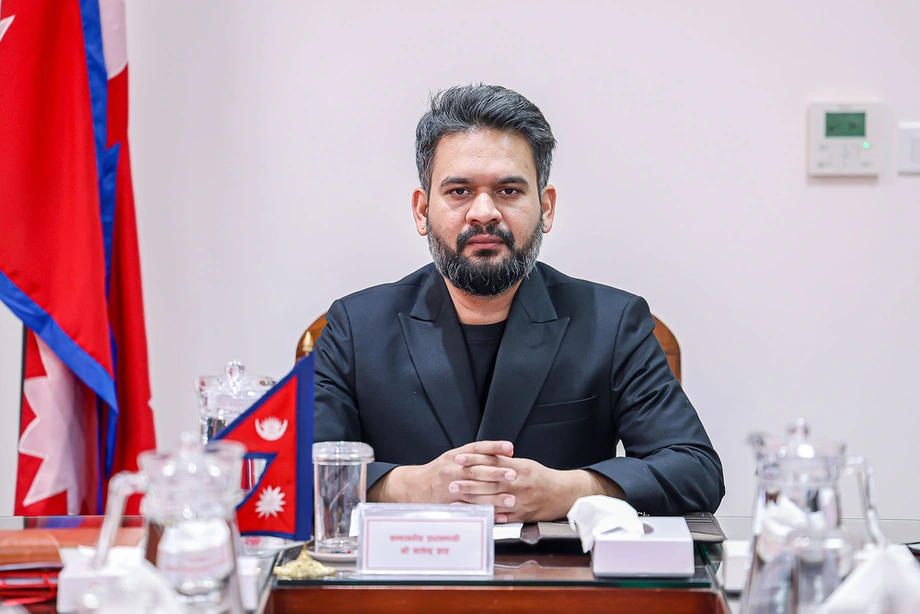
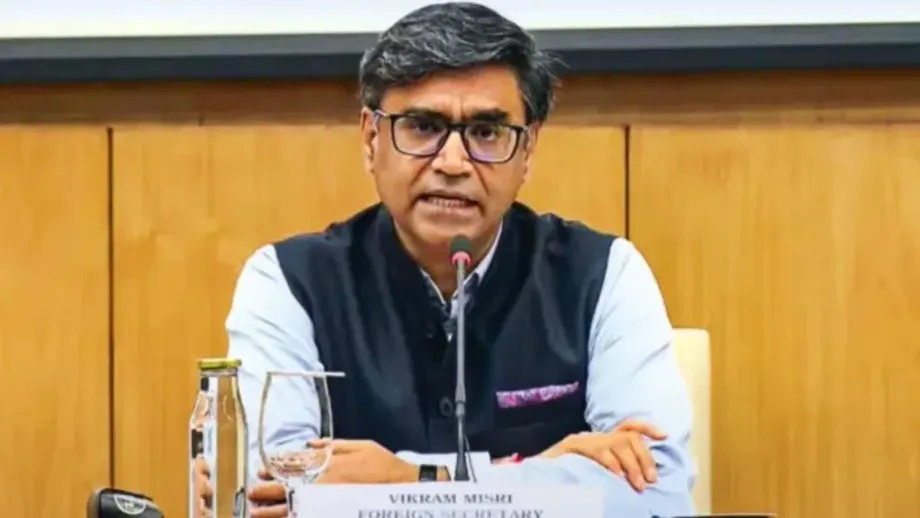
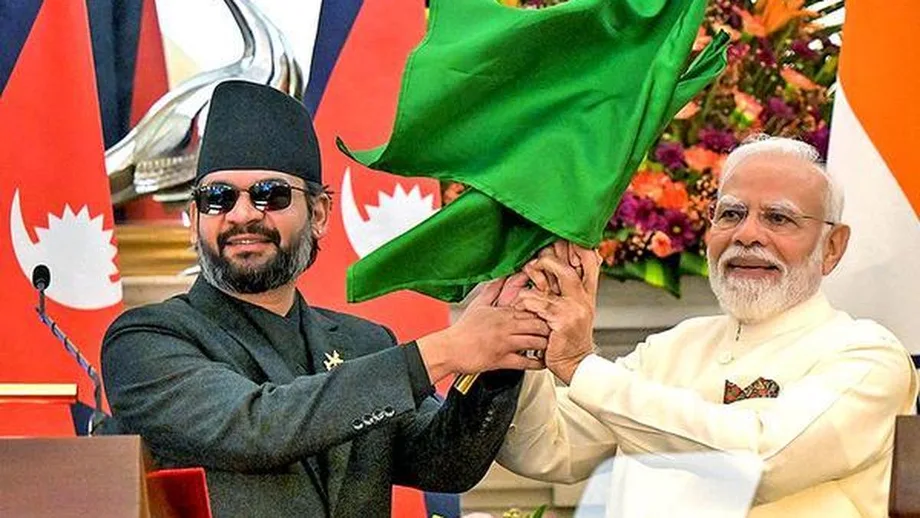
India has said it will not use a joint report prepared over two years by eight eminent persons as the basis for resolving its oldest disputes with Nepal. Foreign Secretary Vikram Misri declared the 2018 document irrelevant after Nepali Prime Minister Balendra Shah visited New Delhi on 22 and 23 November 2026. The report has never been formally received by India's prime minister or made public, despite repeated requests from Kathmandu.
Contents
- A report eight years in limbo is pushed aside
- What does the new vision actually change?
- Why do the report's authors say it still matters?
- How did two decades of review promises stall?
- What does the 1950 treaty actually say?
- Can border mechanisms settle the disputes Shah left aside?
- What does India's INR 15,000 crore package really provide?
- Which projects will test whether the reset works?
- Can economic promises overcome political doubts?
- The Bottom Line
Misri was asked about the Eminent Persons Group (EPG), which India and Nepal created to review their treaties, boundary disputes and wider relationship. He said both countries should instead concentrate on the framework adopted during Shah's visit.
We are looking forward, so the report you mentioned is irrelevant to me. It pertains to the past.
Nepali Foreign Minister Shishir Khanal presented the visit differently when he returned to Tribhuvan International Airport. He said Prime Minister Shah and Indian Prime Minister Narendra Modi had opened a formal path to review old agreements, including the 1950 Treaty of Peace and Friendship. Khanal argued that the new joint vision covered the subjects that the EPG had been appointed to address.
After the Indian side agreed to review various treaties and agreements between Nepal and India, including the 1950 treaty, the joint vision has been brought to address the issues covered within the EPG.
A joint secretary in Nepal's foreign ministry who travelled with the delegation said the visit had increased trust and could allow the two countries to create a treaty review mechanism. That mechanism has not yet been agreed.
What does the new vision actually change?
Shah and Modi issued the vision document, Viksit Bharat and Samunnat Nepal: Re-imagining the Partnership, after talks lasting more than two hours at Hyderabad House. Its title means Developed India and Prosperous Nepal. The document says existing bilateral agreements, including the 1950 treaty, could be reviewed by mutual consent so that the legal framework reflects present political, economic and technological conditions. It also calls for disputes involving water, energy, trade and the boundary to be addressed through discussion.
Misri acknowledged that similar review promises had appeared in earlier bilateral documents. He said the mechanics had still to be decided. The available forums include consultations led by the two foreign secretaries and a joint ministerial commission led by the foreign ministers. Each government must first decide its priorities and complete its internal preparation. No date has been set for treaty negotiations, and no replacement for the EPG has been announced.
Former Nepali foreign secretary Madan Bhattarai said naming the 1950 treaty in the vision was positive, but he assigned responsibility for the long delay to both capitals. He said Nepal had often stopped after formal discussions instead of sustaining diplomatic initiatives and working through the necessary mechanisms. He also cautioned that a short visit could not settle historical and sensitive questions.
Why do the report's authors say it still matters?
The EPG report goes beyond a general recommendation to revise the treaty, according to Nepali member Surya Nath Upadhyay. He said it contains a draft showing how the treaty could be revised and even proposes an alternative. Because the document remains unpublished, its complete recommendations cannot be examined publicly.
Upadhyay said Shah had made a major mistake by embracing the vision without first examining the work produced by experts selected by both governments.
That report was prepared with the consensus of experts selected by the governments of both countries. It does not merely talk about revisions; it even provides a draft on how the 1950 treaty could be revised, including an alternative to the treaty.
Nilamber Acharya, another Nepali member, said a joint document could not be shelved unilaterally by India. He argued that instructions to foreign secretaries were not new and that the vision could supplement the EPG work but could not become its substitute. Rajan Bhattarai said discussions led by secretaries had repeatedly begun without reaching a conclusion, which was why the EPG had been created.
Mahendra P. Lama, an Indian member and former professor at Jawaharlal Nehru University, said the group conducted extensive research, visited Visakhapatnam and other ports of interest to Nepal, and consulted numerous stakeholders. He described its findings as highly positive for both countries and said it was odd that the members were never allowed to present the report to the Indian government.
The South Asia Subregional Economic Cooperation programme's final report notice says the consensus recommendations covered trade, commerce, water resources, cultural ties and contact between people. Pradeep Kumar Gyawali, Nepal's foreign minister when the work was completed, said at the time that the report could help reset relations. On 4 June, before Shah's visit, Nepali EPG coordinator Bhesh Bahadur Thapa also handed Khanal the key to a cabinet containing the report.
How did two decades of review promises stall?
Nepal's campaign to revise the treaty has continued through governments of sharply different political colours. The repeated commitments help explain why EPG members distrust another instruction to officials without a timetable.
- In 2006, interim prime minister Girija Prasad Koirala discussed the treaty in India after democracy was restored. The two sides agreed to review it at an appropriate time.
- In 2009, talks during Prime Minister Madhav Kumar Nepal's visit produced an agreement to advance the review through the foreign secretaries. No concrete mechanism followed.
- In 2011, Prime Minister Baburam Bhattarai and Indian Prime Minister Manmohan Singh agreed to create a group of eminent persons to examine the treaty and the entire relationship.
- In 2014, Modi and Nepali Prime Minister Sushil Koirala advanced that agreement. Their understanding also covered review, revision and updating of other bilateral arrangements.
- In 2016, during KP Sharma Oli's premiership, the EPG was formed with four members from each country and a mandate lasting two years.
- The group's ninth and final meeting ended in Kathmandu on 29 June 2018. Nepali members date the consensus text to 30 June, while the institutional announcement described the report as finalized in July.
- India never formally received the document. No official reason for that decision has been given, although an academic account recorded speculation that Indian elections contributed to the hesitation.
Thapa coordinated Nepal's team, with Acharya, Upadhyay and Rajan Bhattarai. Bhagat Singh Koshyari coordinated the Indian side, whose other members were Jayant Prasad, Lama and B. C. Upreti.
An academic study of the review effort records that the fourth EPG meeting, held in Dehradun from 29 to 31 May 2017, discussed the treaty, trade, transit and water resources. The seventh meeting took place in Kathmandu on 25 February 2018, the eighth opened in New Delhi on 12 April, and the ninth concluded in Kathmandu. The study says both sides agreed to update old agreements in line with present global political realities. Rajan Bhattarai also said then that the Indian team was ready to consider proposals tabled by Nepal.
What does the 1950 treaty actually say?
The Treaty of Peace and Friendship was signed in Kathmandu on 31 July 1950. Indian Ambassador Chandreshwar Prasad Narayan Singh signed for India, while Prime Minister and Supreme Commander in Chief Mohan Shamsher Jang Bahadur Rana signed for Nepal. It remains the legal foundation for many aspects of the relationship, including the open border and extensive rights enjoyed by each other's citizens.
- Article 1 promises permanent peace and friendship and mutual recognition of sovereignty, territorial integrity and independence.
- Article 2 requires each government to inform the other promptly about a serious dispute or misunderstanding with a neighbouring country that could damage their friendly relations.
- Articles 3 and 4 provide for continuing diplomatic relations and the appointment of consular and commercial representatives.
- Article 5 says Nepal may import arms, ammunition and military equipment needed for its security through Indian territory, with implementation procedures decided through mutual consultation.
- Article 6 promises citizens of the other country treatment equal to that given to national citizens in industrial and economic development, including concessions and contracts.
- Article 7 extends equal facilities concerning residence, property ownership, trade, industry, movement and similar privileges. These provisions underpin the ability of Indians and Nepalis to live and work across the open border.
- Article 8 cancels earlier agreements between Nepal and the British government acting for India on matters covered by the treaty.
- Article 10 keeps the treaty continuously in force unless either party terminates it through written notice given one year in advance.
The academic study identifies Articles 2, 4, 5, 6 and 7 as priorities in Nepal's demands for amendment or repeal. It also lists concerns about defence purchases, Gurkha recruitment and preference for India in developing Nepal's natural resources. It describes a strand of Nepali criticism that views the agreement as a product of unequal signatory status, invoking the Versailles Treaty as a historical comparison. Supporters of revision argue that later international and regional agreements must also be considered.
Can border mechanisms settle the disputes Shah left aside?
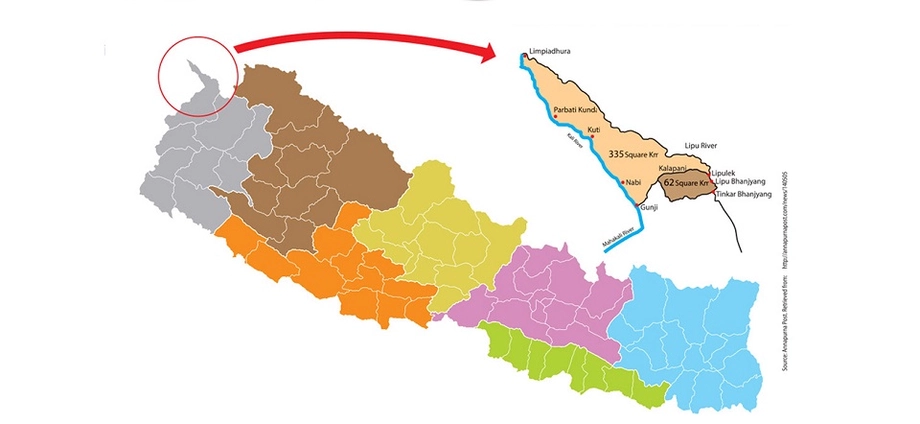
Misri said Shah did not raise Lipulekh in his talks with Modi, six months after Nepal formally objected to the use of the pass for the Kailash Mansarovar pilgrimage. In April, Nepal sent a six point diplomatic note after India invited applications for the 2026 pilgrimage. Kathmandu maintains that Limpiyadhura, Lipulekh and Kalapani, east of the Mahakali River, belong to Nepal under the 1816 Treaty of Sugauli. India says it and China have long conducted trade and other activities through Lipulekh.
The territorial questions also include Susta in the south. Nepal's 2020 political map placed Kalapani, Lipulekh and Limpiyadhura inside Nepal, while India dismissed the claims as lacking historical facts and evidence.
Misri pointed instead to the Boundary Working Group, senior official committees and field survey teams. The working group, created in 2014, deals with technical matters such as repairing boundary pillars and investigating encroachment complaints. He said technical work on agreed stretches had progressed smoothly and that the prime ministers had directed their foreign secretaries to accelerate the wider process. The mechanism tasked with the remaining territorial disputes in 2014 has not met during the intervening 12 years.
India's Agnipath military recruitment scheme was also absent from the Modi and Shah talks. Nepal stopped sending Gurkha recruits to the Indian Army after India introduced the scheme in 2022 without prior discussions with Kathmandu. Misri referred policy questions about Agnipath to India's defence ministry.
What does India's INR 15,000 crore package really provide?
The visit produced India's largest financial assistance commitment to Nepal: INR 15,000 crore, equivalent to NPR 24,000 crore or about $1.6 billion. Only INR 3,500 crore is a grant for reconstruction and new infrastructure. The remaining INR 11,500 crore is a line of credit in Indian rupees for energy projects. This means about 77 percent of the package, calculated as 11,500 of the 15,000 crore, is money Nepal can borrow and must repay under agreed terms.
Modi linked the package to devastating floods in August. He cited more than 1,000 deaths and losses estimated at about $5 billion. A higher toll of about 1,500 deaths was also published, while Nepal estimated its rebuilding costs at $4.8 billion. The floods damaged more than a dozen hydroelectric stations, removed roughly 10 percent of generating capacity and halted electricity exports.
A High-Level Monitoring Group, led by Nepal's foreign secretary and India's ambassador in Kathmandu, will screen projects and monitor implementation. It is expected to meet at least every six months. The foreign offices will first negotiate the credit terms. Misri said the facility was separate from the $750 million credit line offered after Nepal's 2015 earthquake, of which $550 million had been used.
Which projects will test whether the reset works?
Energy will provide the clearest test because Nepal's ability to repay the new credit depends largely on selling electricity. The leaders laid the foundation stone for the Lower Arun project, designed to generate 669 megawatts in Sankhuwasabha and Bhojpur districts. India's SJVN is developing it downstream of Arun-3. Yet transmission lines intended to carry power from Inaruwa to New Purnea and from Dodhara to Bareilly remain stalled at the joint venture stage. Generating stations without adequate transmission could leave Nepal paying interest on electricity it cannot export.
A Long-Term Power Trade Agreement lasting 25 years, signed in January 2024, formalized a target of exporting 10,000 megawatts from Nepal to India over 10 years. The new energy credit could support that target, but the vision supplies no completion schedule for the stalled transmission connections.
Nepal also secured cargo transit through Deendayal Port at Kandla in Gujarat. Access through Paradip in Odisha is expected after the necessary infrastructure is completed. These routes add to existing rights at Kolkata, Haldia and Visakhapatnam, giving the landlocked country more options for trade with other countries.
Aviation produced a narrower gain. India agreed to make the B345 route connecting Kathmandu, Bhairahawa and Lucknow bidirectional, subject to technical consultations. It did not grant the wider airspace access Nepal wants for international flights to Bhairahawa and Pokhara. Those airports were built by Chinese state contractors and have incurred heavy losses.
The two leaders virtually flagged off the Sarayu-Kamala Express between Ayodhya and Janakpur. They also announced completion of the final location survey for the proposed electrified railway from Raxaul to Kathmandu, first agreed in 2018. Other announcements included a bridge over the Mahakali River, work on integrated check posts, expansion of petroleum infrastructure and faster links between Indian and Nepali digital payment systems.
Can economic promises overcome political doubts?
The vision extends beyond conventional infrastructure. Its ten areas of cooperation include artificial intelligence, digital public infrastructure, education, climate resilience and youth entrepreneurship. Proposals include an Indian Institute of Technology presence in Kathmandu, vocational training, more scholarships, a startup incubator and a Nepali language large language model, meaning an artificial intelligence system trained to work with text in Nepali. Eight additional agreements covered forensic science, policing, civil service training, Ayurveda and space cooperation.
Sangeeta Thapliyal, professor of Inner Asian Studies at Jawaharlal Nehru University, said these economic and educational priorities matched the aspirations of younger Nepalis who form an important part of Shah's support. She said Shah had concentrated on tangible outcomes rather than allowing old differences to dominate the visit. Her caution was that projects must be completed on time if the vision is to become more than aspirational language.
Nepali politician Gokul Baskota argued that Shah had failed to raise business concerns involving tea and plywood exports, had not built sufficient domestic agreement before addressing the boundary question, and had accepted announcements without firm delivery dates. He also stressed that most of the financial package was repayable credit.
Indian members of the old strategic establishment were more supportive of moving beyond the EPG. Former ambassador Manjeev Puri said there was little value in revisiting the past, while former ambassador Rakesh Sood said there was no obligation for a prime minister to receive such a report and act on it. Jayant Prasad, a former Indian ambassador to Nepal and an EPG member, said the report was not sacrosanct. He pointed out that India had revised friendship treaties with Russia and Bhutan and said there was no reason the Nepal treaty could not be updated for the present century.
Past delivery remains the practical warning. The Nepal Police Academy took 20 years to develop, while three integrated check posts took at least a decade. Similar Chinese projects have been delivered in three to four years. Nepali columnist Brabim Karki has urged India to publish named reconstruction projects, deadlines and progress statements twice a year, while calling on Nepal to accelerate approvals and prioritize power projects with secured buyers.
Kathmandu had issued no formal response specifically addressing Misri's dismissal of the EPG report by 26 November. The next measurable steps are therefore the promised activation of diplomatic mechanisms, selection of projects for the financial package and publication of a treaty review process. Until those steps occur, Shah has secured substantial economic commitments, while the report's fate, the territorial disputes and the final form of any treaty revision remain unresolved.
The Bottom Line
- Indian Foreign Secretary Vikram Misri said the EPG report finalized in 2018 was irrelevant and belonged to the past.
- The report was never formally received by India's prime minister or made public, despite repeated Nepali requests.
- Nepali EPG members say it contains a draft revision of the 1950 treaty and an alternative, and argue that India cannot shelve it unilaterally.
- Shah and Modi's new vision allows old agreements, including the 1950 treaty, to be reviewed by mutual consent, but sets no mechanism or timetable.
- India committed INR 15,000 crore, comprising INR 3,500 crore in grants and INR 11,500 crore in repayable energy credit.
- Nepal gained new port and aviation options, while major power transmission lines and wider airspace access remain unsettled.
- Lipulekh and Agnipath were not raised in the talks between Shah and Modi, according to Misri.
- The immediate tests are whether the border mechanisms meet, reconstruction projects acquire deadlines and treaty talks move beyond another general promise.