A US$5 million line behind a US$10 million energy loan
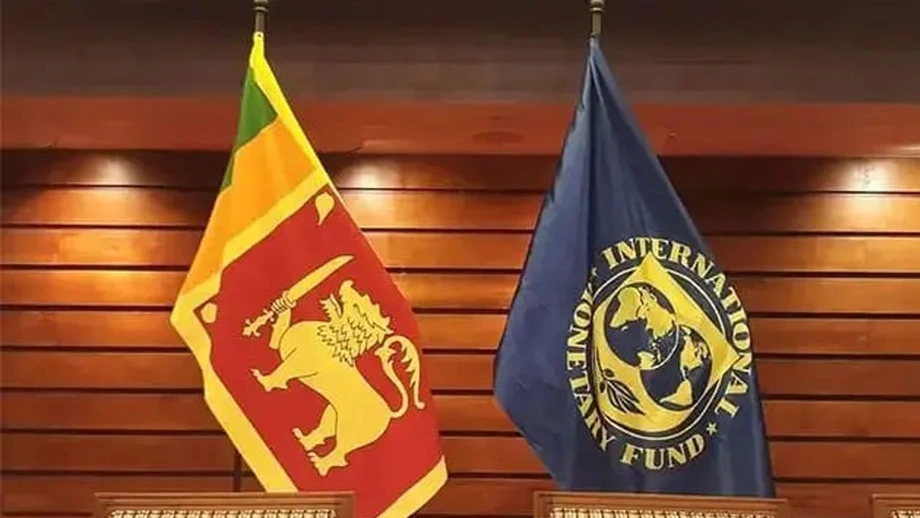
The World Bank Group announced in Washington and Colombo on November 26, 2026, that its Treasury had arranged a Sri Lankan rupee (LKR) borrowing line between the International Finance Corporation (IFC) and HSBC Sri Lanka. The line runs for six years, carries a fixed interest rate and is equivalent to US$5 million. It is IFC's first borrowing line in Sri Lanka and the first transaction of its kind in Asia. IFC is the World Bank Group member that finances private sector development in emerging markets.
Contents
- A US$5 million line behind a US$10 million energy loan
- How the two agreements fit together
- Why earning and borrowing in rupees matters
- What the three IFC milestones mean
- Why officials see a model for more investment
- A financing approach used in Africa before Asia
- The partnership and institutions behind the deal
- What happens next for Sri Lankan businesses
- What to Know
The facility is already supporting renewable energy financing. Combined with additional rupee funding arranged by the World Bank Group Treasury, it backs an IFC loan equivalent to US$10 million to one of Sri Lanka's largest renewable energy companies. That loan runs for 10 years and is denominated in rupees, allowing the borrower to repay in the currency used by businesses in the domestic economy. The World Bank Group announcement says the arrangement is intended to reduce foreign exchange risk and enable new private investment in renewable energy and infrastructure.
The investment carries three landmarks for IFC. It is the corporation's longest rupee loan by duration, its first infrastructure loan denominated in rupees and its first infrastructure investment in Sri Lanka since the country's recent economic crisis. Renewable energy is therefore the entry point for a broader financing ambition: giving Sri Lankan businesses access to rupee funding over longer periods without requiring them to carry a currency mismatch between their income and their debt.
How the two agreements fit together
Two agreements with different borrowers sit behind the headline figures. HSBC Sri Lanka provides the borrowing line to IFC, while IFC provides the separate loan to the renewable energy company. IFC sits between the transactions, borrowing through one agreement and lending through the other. HSBC is not identified as the direct lender to the energy company, and the six year and 10 year periods belong to the respective agreements.
At the disclosed dollar equivalents, the HSBC line is half the size of IFC's energy loan. The additional local currency funding arranged by the World Bank Group Treasury explains how a US$5 million facility can form part of the support for a US$10 million loan. The dollar figures express the values for an international audience; the energy loan itself is denominated in LKR. A fixed interest rate is a stated feature of the HSBC facility, but its numerical level was not disclosed. The interest rate on IFC's loan to the energy company was also not disclosed.
The World Bank Group puts the energy loan's value at the equivalent of US$10 million, while a figure of 10 million Sri Lankan rupees was also published as the loan amount. The group did not name the borrower, describing it only as one of the country's largest renewable energy companies. Those limitations leave the disclosed essentials clear: the currencies, the dollar equivalents, the separate durations and the institutions participating in each agreement.
Why earning and borrowing in rupees matters
An energy company can collect its bills on time and still face an unexpected financing strain if its income is in rupees but its debt is in dollars. When the rupee weakens, the company needs more rupees to buy each dollar required for a payment. The dollar balance owed to the lender may remain unchanged, yet the payment consumes a larger share of the company's local earnings. That can tighten the cash available for operations and investment even when the underlying business is performing steadily.
A rupee loan removes that currency mismatch from the financing. Managers can compare revenue and debt in the same unit instead of estimating how many rupees will be needed to purchase dollars at future repayment dates. This is especially useful for infrastructure, where money is committed before a project begins and earnings are expected to accumulate over years of operation. IFC's 10 year loan brings together two practical features for the borrower: repayment in the currency it earns and a decade over which to manage that repayment.
IFC also needs suitable funding before it can offer such a loan. An international lender cannot simply create the rupees required by a Sri Lankan borrower. HSBC Sri Lanka supplies one part of the local currency funding through its borrowing line, while the World Bank Group Treasury arranged additional resources. The structure connects a local bank's access to rupees with IFC's development lending, creating a working example of how domestic funding can support infrastructure investment.
What the three IFC milestones mean
Each of IFC's three milestones describes a different aspect of the investment. Duration concerns how long the financing remains in place. Denomination concerns the currency in which the loan is expressed and repaid. The return to infrastructure investment concerns IFC's activity in Sri Lanka after the recent economic crisis. Bringing those elements together makes the transaction more specific than a general commitment to support renewable energy.
Tenor, the term commonly used by lenders, means the period until a loan matures. IFC's description of this as its longest rupee loan by tenor therefore refers to time, not to the loan being its largest in value. The 10 year duration also distinguishes the energy company's financing from HSBC's six year line to IFC. For Sri Lanka, the immediate result is a renewable energy investment financed in rupees; for IFC, it is a demonstration that its local currency lending can be applied to infrastructure in the country.
Why officials see a model for more investment
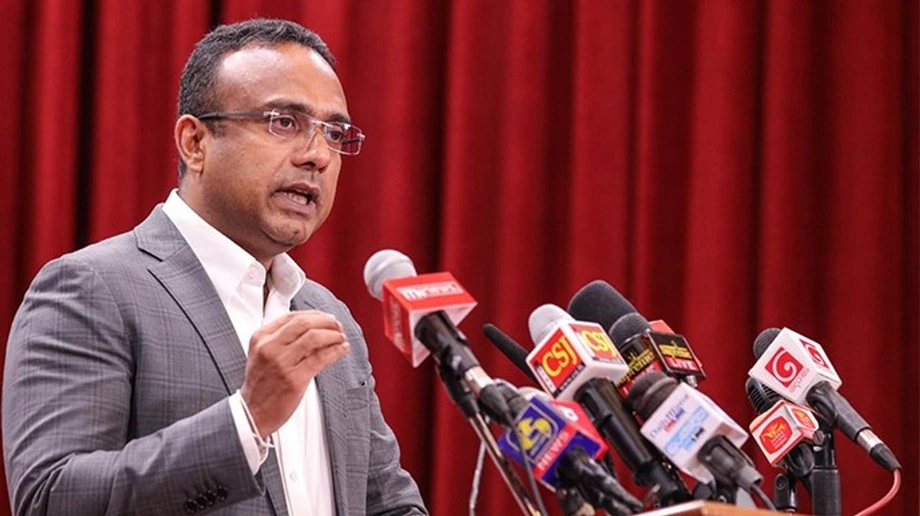
Keshav Gaur, Director of Treasury Client Solutions and Structuring at the World Bank Group, connected the financing structure with business investment, employment and the institution's wider work in emerging markets. He said:
Access to long-term local currency financing can help businesses invest, grow and create jobs without taking on foreign exchange risk they may not be able to manage. This first local currency borrowing line in Asia expands the financing solutions we can bring to emerging markets, helping channel private investment to sectors that can drive growth and economic opportunity.
IFC's position in the structure is central to that argument. Local funding gives it another way to finance companies whose revenues and investment needs are domestic, while the energy loan provides a concrete use for the money. Gaur's comments also place Sri Lanka within a wider effort to make financing available in markets where borrowing for extended periods can be difficult to obtain.
Mark Surgenor, CEO of HSBC Sri Lanka, described the agreement as a milestone and set out how the bank expects to build on its partnership with IFC. He said:
We are proud to support this milestone partnership with IFC, which expands access to longer-term Sri Lankan rupee financing for companies and helps them manage foreign-exchange risk. By combining HSBC's local expertise and global capabilities with IFC's development mandate, we look forward to exploring further practical solutions that support Sri Lankan businesses and the country's longer-term priorities.
HSBC Sri Lanka's role combines domestic market knowledge with access to its parent's international network. Surgenor's reference to further practical solutions points toward additional financing work with IFC, although the announcement did not attach an amount or date to that ambition.
A financing approach used in Africa before Asia
Sri Lanka joins two African countries where IFC has already used comparable borrowing lines. The sequence shows how the approach has moved through partnerships with international banks before reaching Asia through HSBC Sri Lanka.
- 2024: IFC and Citi established a local currency borrowing line in Kenya.
- 2026: IFC and Citi established another borrowing line in South Africa.
- November 26, 2026: The World Bank Group announced the Sri Lankan rupee line between IFC and HSBC Sri Lanka, describing it as the first transaction of its kind in Asia.
Citi was the banking partner for the Kenyan and South African lines, while HSBC Sri Lanka provides the rupee facility in the new transaction. The partner changes, but the underlying purpose remains consistent: obtain funding in a local currency so IFC can lend without pushing the exchange rate exposure onto businesses whose earnings are in that currency.
IFC's wider record gives the initial Sri Lankan facility a broader context. Over the past decade, it has committed more than US$33 billion in local currency financing across 71 currencies. The World Bank Group says this work helps businesses obtain financing over longer periods in markets where it is often limited. Sri Lanka adds another currency and country to that record, with renewable energy providing the first disclosed use of the new funding route.
The partnership and institutions behind the deal
HSBC's involvement extends beyond this single borrowing line. The transaction forms part of its broader partnership with the World Bank Group in Sri Lanka and across the bank's global network. HSBC also participates in the group's Private Sector Investment Lab, which identifies new avenues for collaboration between public and private bodies and seeks to mobilize private capital for sustainable development.
IFC describes itself as the largest global development institution focused on the private sector in emerging markets. It works in more than 100 countries and uses capital, expertise and influence to create markets and opportunities in developing countries. In the Sri Lankan transaction, that role takes a practical form: IFC raises rupee funding and then supplies financing to a private renewable energy company.
HSBC serves customers from offices in 56 countries and territories and reported assets of US$3.445 trillion at September 30, 2026. The Hongkong and Shanghai Banking Corporation Limited is the founding member of the HSBC Group. The initial US$5 million Sri Lankan line is small beside those global totals, but its stated importance lies in the mechanism it establishes. It links a bank with local currency capabilities to an international development lender and an infrastructure borrower with rupee earnings.
What happens next for Sri Lankan businesses
The World Bank Group intends to build on the first facility by expanding access to rupee financing over longer periods in Sri Lanka, with the aim of supporting private investment and economic growth. No timetable or target amount was given for that expansion, and no further borrowers were identified. The announcement also did not provide the energy project's location, generating capacity, construction schedule or an estimate of employment, leaving the disclosed focus on the financing terms.
For the current borrower, the concrete change is access to an IFC loan running for 10 years and repayable in rupees. For other Sri Lankan companies, the announced opportunity is the possible extension of similar financing through future facilities and loans. Such funding would be particularly relevant to businesses that must spend heavily at the start of a project and then earn revenue gradually. For now, the completed step is specific: IFC has its first Sri Lankan borrowing line, HSBC Sri Lanka is its banking partner, and one major renewable energy company has financing aligned with the currency in which it earns.
What to Know
- The World Bank Group Treasury arranged a six year LKR borrowing line with a fixed interest rate between IFC and HSBC Sri Lanka, equivalent to US$5 million.
- The facility is IFC's first borrowing line in Sri Lanka and the first transaction of its kind in Asia.
- Together with additional rupee funding, it supports an IFC loan equivalent to US$10 million, lasting 10 years, to a major Sri Lankan renewable energy company.
- The loan is IFC's longest rupee loan by duration, its first infrastructure loan denominated in rupees and its first infrastructure investment in Sri Lanka since the recent economic crisis.
- Borrowing and repaying in rupees reduces the risk that exchange rate movements will raise the local cost of serving debt.
- The borrower and numerical interest rates were not disclosed, and no timetable or funding target was given for expansion.
- The Sri Lankan deal follows IFC and Citi borrowing lines in Kenya in 2024 and South Africa in 2026; IFC has committed more than US$33 billion across 71 currencies over the past decade.