A 38 Percent Staff Fall at the State Fuel Supplier
Ceylon Petroleum Corporation reduced its staff from 3,292 people in 2024 to 2,031 now, a fall of 1,261 workers, according to Dr. Mayura Neththikumarage, managing director of CPC and Ceylon Petroleum Storage Terminals Limited. He said artificial intelligence and enterprise software now handle office administration, payment records, invoicing and the queue that decides which fuel tanker is dispatched first.
Contents
- A 38 Percent Staff Fall at the State Fuel Supplier
- What the Mobile App Changed at Filling Stations
- Fuel Transport Bowsers Now Follow an AI Queue
- How Paper Notes, Translators and Stock Records Changed
- What 1,261 Workers Means in Numbers
- Fuel Prices and Household Pressure Form the Backdrop
- Why Fuel Costs Reach Kitchens, Buses and Shops
- The Regional Energy Shock Behind Fuel Pressures
- What Changes for Station Owners, Drivers and Workers
- A Short Timeline of CPC's Automation
- What Remains Open
- Key Points
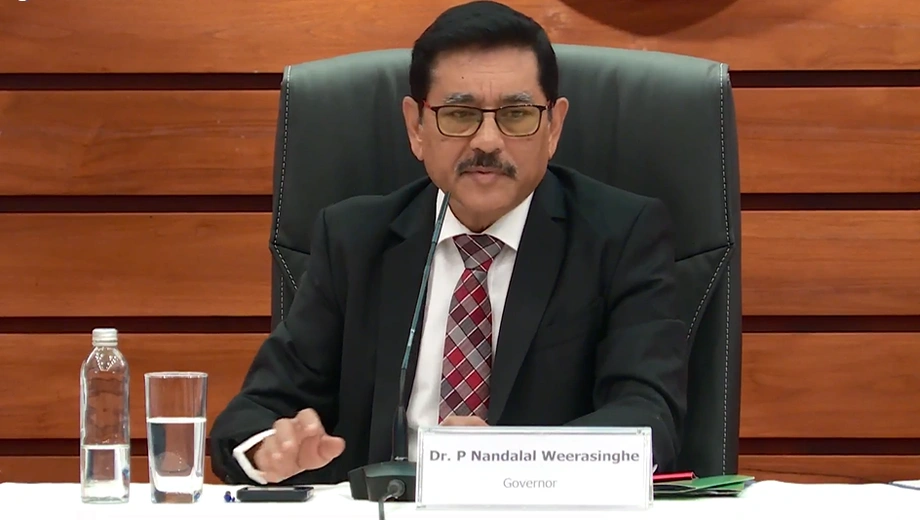
Neththikumarage, who also works with state gas distributor Litro Gas, made the remarks at the WION digital Sri Lanka summit 2026 in Colombo on Friday, November 27, 2026. He gave the workforce figure in his own words:
In 2024, when I started in this organization, we had a headcount of 3,292. Now we have only 2031,
The reduction equals about 38.3 percent of the 2024 headcount. At 2,031 workers, the current staff is about 61.7 percent of the earlier figure. The change puts a human number on a digital shift that has reached both the back office and the dispatch yard of one of Sri Lanka's most important fuel bodies.
What the Mobile App Changed at Filling Stations
Under the digitized system, owners of fuel filling stations place orders and transfer payments through a mobile app linked directly to CPC's SAP enterprise system. Once the operator transfers funds, the linked platform processes the payment and generates the invoice automatically.
CPC processes incoming fuel orders at 6:00 a.m. each day. Neththikumarage said the company switched to a fully paperless operation three months before the November 27 remarks, with no physical invoices printed. For a station owner, the visible change is that ordering, paying and invoicing sit in one digital chain. For CPC, the change removes typing, paper handling and manual matching from each transaction.
SAP is enterprise software, a set of programs that lets one company manage finance, orders, stock and records in a shared system. CPC first adopted SAP in 2010. It is now upgrading to a cloud version called SAP S/4HANA RISE, where software and data are hosted on remote servers and accessed through networks rather than kept only on the company's own machines.
Fuel Transport Bowsers Now Follow an AI Queue
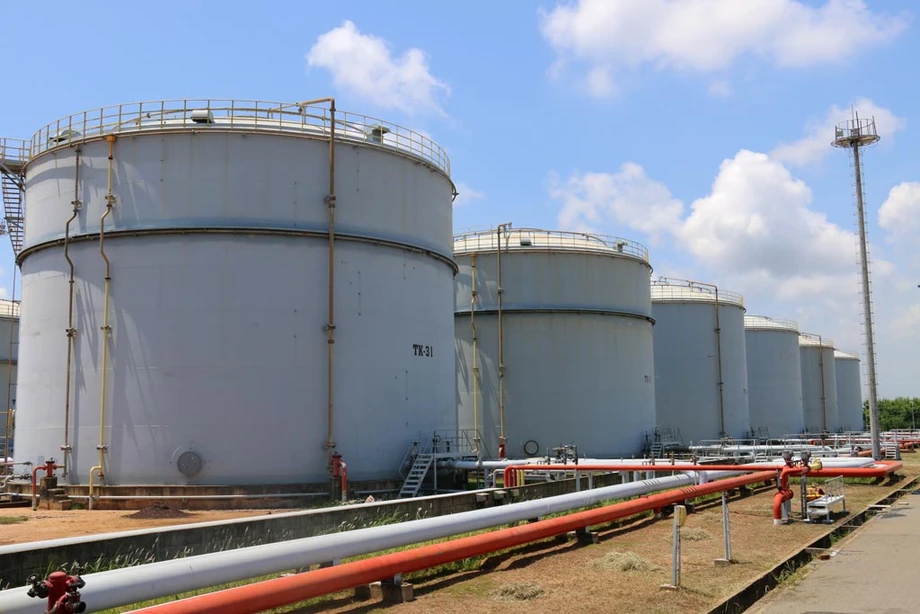
Fuel transport bowsers, the tankers that carry fuel from storage terminals to stations, were once scheduled manually at CPC. Neththikumarage said the company replaced that process with an automated AI queue that assigns dispatch priority according to the time an order is placed.
That matters because the order of delivery can affect a station's ability to sell fuel. He said influential callers once pressured staff to move lorries up the list, a practice that drew public criticism. The new system, he said, takes the decision away from that personal channel.
The managing director described the rule in direct terms:
Nobody who is powerful can talk to somebody and get this change because it is AI. If you place your order first, it will count the time of your order and nothing else,
An AI queue is not a robot driving the tanker. It is software that applies a rule to a waiting list. In this case, the rule is order time. The system records when a request arrives and uses that time stamp to place it in line, leaving less room for phone calls or personal influence.
How Paper Notes, Translators and Stock Records Changed
Department heads once wrote notes on paper for secretaries to type and English translators to process, Neththikumarage said. AI tools have now replaced much of that manual typing and translation work. These are ordinary office tasks, but in a large fuel supplier they repeat across departments, orders and records every day.
Spare parts records also caused delays when the recorded stock did not match what was physically held. In a fuel supply operation, such mismatches can slow repair work and dispatch. Digital records make it easier for staff to check stock against the system and keep the flow of vehicles and paperwork aligned.
CPC's administrative changes explain how a fuel company can reduce headcount while keeping its supply operations running. Work that once passed through several desks now moves through linked software. In Neththikumarage's account, fewer people are needed to process the same kinds of records.
What 1,261 Workers Means in Numbers
The scale is large in percentage terms. CPC had 3,292 employees when Neththikumarage joined in 2024. The current figure of 2,031 is lower by 1,261 workers. Dividing 1,261 by 3,292 gives about 0.383, or 38.3 percent.
A 10 percent reduction from the 2024 headcount would have removed about 329 workers. The announced fall is about 3.8 times that size. That comparison helps show why the change is being discussed as a major workforce reduction, not a small efficiency drive.
Neththikumarage did not provide a role by role breakdown, the date when the workforce reached 2,031 or a cost figure for the technology. He also did not say how many people left through retirements, resignations, redeployment or job cuts. Arithmetic can show the net fall, but those details determine what happened to individual workers.
Fuel Prices and Household Pressure Form the Backdrop
CPC's digital shift comes after a period of sharp pressure on Sri Lanka's fuel market. The fuel price increase from November 2, 2026 raised 92 Octane Petrol from Rs. 414 to Rs. 424 per litre, 95 Octane Petrol from Rs. 475 to Rs. 490, Auto Diesel from Rs. 392 to Rs. 397 and Super Diesel from Rs. 528 to Rs. 543. Kerosene stayed at Rs. 285.
Those changes affect daily budgets in direct ways. A motorist buying 20 litres of 92 Octane Petrol pays Rs. 200 more, taking the bill to Rs. 8,480. A business buying 100 litres of Auto Diesel pays Rs. 500 more, taking the bill to Rs. 39,700.
Government figures cited at the time attributed the price rise to higher import costs and tension in the Middle East. Energy Minister Anura Karunathilaka said fuel import expenditure was about 50 percent higher than the previous year. Sri Lanka's energy import bill had reached about US$4.5 billion by September.
On November 4, Parliament approved a fuel relief package worth Rs. 47 billion, with Rs. 41 billion going to the Ministry of Energy and Rs. 6 billion to Aswesuma welfare assistance. The energy share is about 87.2 percent of the total, while the welfare share is about 12.8 percent. The energy allocation was intended to cover October, November and December.
People receiving Aswesuma support were also included in the package. Those classified as extremely poor were set to receive Rs. 6,250, while those in the poor category were set to receive Rs. 4,000. The first amount is Rs. 2,250 higher, a gap of 56.25 percent when measured against the poor category payment.
Why Fuel Costs Reach Kitchens, Buses and Shops
Fuel prices reach beyond the pump. They feed into transport, deliveries and restaurant costs. Sri Lanka's October inflation reached 8.3 percent, the highest in more than three years and above the Central Bank's upper target of 7 percent for a fourth consecutive month. Transport, restaurants and hotels accounted for 87 percent of the monthly rise in the price index.
Inflation means prices are rising, so the same amount of money buys less. The Colombo Consumer Price Index measures the cost of a basket of goods and services in the capital. A basket is a fixed set of items used to track price changes over time. The October index rose from 209.1 in September to 209.9, an increase of 0.8 index points, or about 0.4 percent in one month.
Food inflation reached 8.8 percent in October, its highest since May 2023. The Central Bank expects inflation to remain in the higher single digits through the first quarter of 2027 before moving toward its 5 percent target. That setting explains why a state fuel supplier's effort to control costs and dispatch priorities draws attention beyond its own workforce.
The Regional Energy Shock Behind Fuel Pressures
Sri Lanka's fuel system operates inside a regional energy squeeze. The Asia energy emergency after the war in Iran reduced tanker traffic through the Strait of Hormuz to single digits on some days from roughly 100 to 150 vessels a day. The strait is about 33 kilometres wide at its narrowest point and normally handles around 20 percent of world oil consumption.
Brent crude rose from about US$71 a barrel before the conflict to more than US$100 in the following weeks. About 80 percent of oil and petroleum products and nearly 90 percent of liquefied natural gas passing through the strait went to Asian markets in 2025. Countries with large foreign exchange reserves and strategic stockpiles could cushion the shock. Importers with limited budgets and heavy dependence on fossil fuels had less room.
Foreign exchange reserves are funds held in other currencies that help a country pay for imports. Sri Lanka was described as more exposed because it depends heavily on imported energy and has limited fiscal space. Fiscal space means the room a government has to spend without putting debt sustainability under pressure. That background explains why CPC's automation programme is being discussed at a business summit, not simply as an office management story.
What Changes for Station Owners, Drivers and Workers
Station owners will deal with a system in which orders, payments and invoices are tied together. A transfer on the mobile app starts the automatic invoice process. Orders are handled at 6:00 a.m. each day, and the AI queue uses order time for dispatch. Fuel deliveries affect whether stations can sell fuel, so the queue has practical importance.
Workers face a harder transition. The company has moved from typing, translation and paper notes to software workflows. People who once processed documents or managed paper records now work in a smaller organization built around digital records and automated decisions.
For consumers, the announced change is operational, not a new pump price. The changes described so far are fewer workers, no printed invoices, automated payments and a dispatch queue governed by order time.
A Short Timeline of CPC's Automation
The change did not happen in a single day. The sequence below uses the dates and intervals given in the remarks.
- 2010: CPC first adopted SAP software.
- 2024: Neththikumarage started at the organization, when the headcount stood at 3,292.
- Three months before November 27, 2026: CPC moved to fully paperless operations with no physical invoices printed.
- 6:00 a.m. each day: CPC processes incoming fuel orders.
- November 27, 2026: Neththikumarage described the AI queue, the mobile app and the staff reduction at the Colombo summit.
- Now: CPC is upgrading to the cloud version of SAP called S/4HANA RISE to support automated fuel supply operations.
The timeline shows a company building on more than a decade of SAP use. The newest step joins ordering, payment, invoicing and transport dispatch into one automated chain.
What Remains Open
No date was given for completing the move to SAP S/4HANA RISE. No figure was given for annual savings, service changes or effects on pump prices. Those details would show the full fiscal and employment impact of the digital shift.
The core facts are clear. CPC's workforce is down by 1,261, paper invoices have been removed, payments and invoices are generated automatically, and tanker dispatch now follows an AI queue based on order time. The open questions concern how the savings are used, how affected workers were treated and when the cloud upgrade will be finished.
Key Points
- CPC reduced its workforce from 3,292 in 2024 to 2,031, a fall of 1,261 workers or about 38.3 percent.
- Dr. Mayura Neththikumarage said AI tools replaced manual typing and translation work.
- Fuel station owners now place orders and transfer payments through a mobile app linked to CPC's SAP system.
- Payments and invoices are generated automatically, and CPC has operated without printed invoices for three months.
- The company processes incoming fuel orders at 6:00 a.m. each day.
- An AI queue now assigns fuel tanker dispatch priority by order time, replacing manual scheduling that allowed outside influence.
- CPC first adopted SAP in 2010 and is now upgrading to SAP S/4HANA RISE.
- The automation push comes amid high fuel prices, import costs and inflation pressure in Sri Lanka.