Prices are rising faster than the Central Bank expected
Sri Lanka's Central Bank expects annual inflation to reach about 9% by the end of November 2026, as higher energy and food costs continue to push prices upward. The forecast came as the Central Bank of Sri Lanka (CBSL) raised its main policy rate from 8.75% to 9% and increased the share of deposits commercial banks must hold at the Central Bank.
Contents
- Prices are rising faster than the Central Bank expected
- Why did the Central Bank tighten policy?
- What changed in interest rates?
- How does the reserve increase affect lending?
- What is driving the build up of cash in banks?
- What do fuel support and IMF funding mean?
- How does this compare with the earlier forecast?
- Key dates and developments
- What to Know
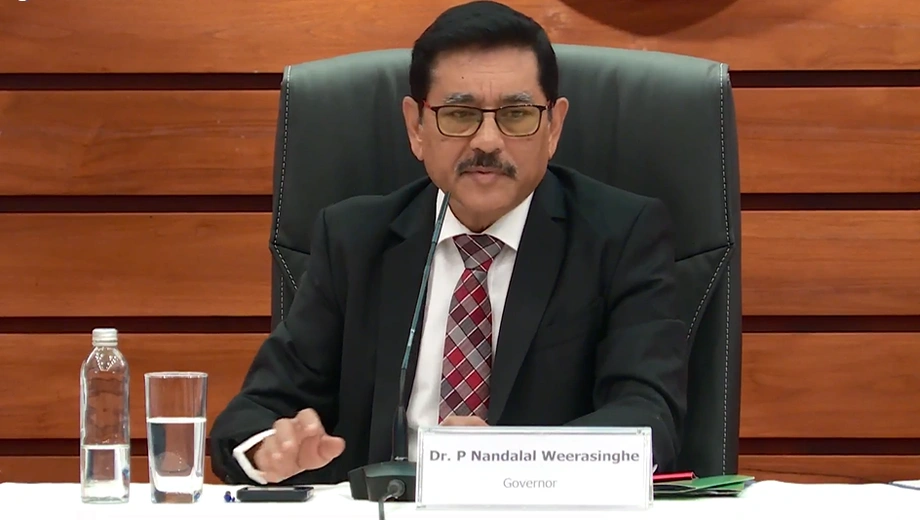
The Monetary Policy Board made the rate decision at its November 19 meeting, announced on November 20. Governor Dr. Nandalal Weerasinghe said inflation was running higher than officials had expected when they tightened policy in May. The CBSL expects inflation to return to its 5% target in the second half of 2027, later than it had previously forecast.
October's Colombo Consumer Price Index (CCPI), which tracks changes in the prices households pay in the Colombo area, showed inflation of 8.3%, up from 8.0% in September. The rate had been above the Central Bank's 7% upper limit for four months. The 5% target is the midpoint, while 7% marks the top of the permitted range.
Weerasinghe said the Central Bank's forecast chart placed inflation close to 9% at November's end, with some movement above or below that level possible in the near term. He also said short term inflation expectations had edged upward, making it harder to keep future price increases within the target range.
Inflation is going to remain elevated in the near term, at higher than expected levels compared to the last review.
Why did the Central Bank tighten policy?
The CBSL linked the pressure on prices to a prolonged conflict in the Middle East and elevated global energy costs, alongside rising food prices. Even though global energy prices had eased somewhat in recent weeks, officials expected earlier increases to keep affecting the costs of goods and services.
Core inflation, a measure that leaves out items with especially changeable prices, reached 5.6% in October. CBSL Economic Research Department Director Dr. Lasitha Pathberiya said food and non alcoholic drinks were a particular concern, as higher energy costs were feeding into food and service prices. Headline inflation, which includes the full basket of items, had risen from 2.2% in March.
The Central Bank's reasoning is that borrowing costs and bank lending can influence demand and expectations, even when interest rates cannot quickly lower the price of imported fuel. A rate increase can signal that officials intend to prevent temporary cost increases from turning into continuing price rises. Businesses may otherwise set prices and workers may seek pay increases on the assumption that inflation will stay high.
Weerasinghe acknowledged that higher rates may have little immediate effect on imported energy prices. He said their near term value was partly in signalling the Central Bank's stance and helping keep expectations anchored. He also said the board would consider new economic data and could start lowering rates again once inflation was clearly moving down.
What changed in interest rates?
The Overnight Policy Rate (OPR), the CBSL's main signal for its monetary policy stance, rose by 0.25 percentage points, or 25 basis points, to 9%. The Standing Deposit Facility Rate rose to 8.50%, while the Standing Lending Facility Rate rose to 9.50%. Those two rates form the lower and upper limits for banks' overnight borrowing and deposit arrangements with the Central Bank.
The November move was the second increase in the policy rate in 2026. In May, the Monetary Policy Board raised it by 1 percentage point. The CBSL said market interest rates had adjusted after the May tightening, while its latest inflation outlook had worsened.
The Central Bank also raised the Statutory Reserve Requirement (SRR) from 2% to 3%. The SRR is the portion of customer deposits that banks must keep with the Central Bank rather than lend. The increase applies from the reserve maintenance period beginning December 9 and is expected to remove about 150 billion rupees from the banking system.
Weerasinghe said the SRR is not a tool the Central Bank uses regularly for monetary policy. He described the increase as a way to absorb excess money already in the banking system on a lasting basis, rather than relying only on temporary operations.
How does the reserve increase affect lending?
When banks have more money available to lend, credit can expand more quickly. The CBSL said it wanted to moderate that expansion as inflation climbed. Requiring banks to hold a larger share of deposits reduces the funds immediately available for new loans, although it does not prevent banks from lending altogether.
The Central Bank said excess structural liquidity in the market was about 460 billion rupees, while an estimate cited by its Economic Research Department placed outstanding liquidity at around 450 billion rupees. Structural liquidity refers to a lasting surplus of money in the banking system, rather than a brief daily imbalance. The CBSL had been using regular auctions to absorb some of that surplus temporarily.
Weerasinghe estimated that the one percentage point SRR rise would return close to 150 billion rupees to the Central Bank. He said the remaining liquidity would leave the CBSL room to manage money in the market and keep short term interest rates in line with its policy stance.
Senior Deputy Governor Dr. Chandranath Amarasekara said the SRR had been reduced to 2% in 2023 to support bank liquidity. He described restoring it to 3% as a step toward normalising the reserve level. The earlier 2% rate had been the lowest in Sri Lanka's history, according to the Central Bank officials quoted at the review.
What is driving the build up of cash in banks?
Pathberiya said the surplus was largely linked to the CBSL buying foreign currency. The Central Bank had bought about US$1.7 billion from the market through October and continued to make substantial purchases in November, according to the figures discussed at the review. When the CBSL buys dollars, it pays rupees into the local banking system, adding liquidity unless it later absorbs that money.
Before the SRR increase, the Central Bank had been taking surplus funds out through overnight, short term and longer term auctions. The new reserve rule is intended to remove part of the surplus more permanently. The CBSL said it still had flexibility to add liquidity again if needed to keep market rates consistent with its policy decisions.
The Central Bank also said its gross official reserves stood at about US$7.1 billion at the end of October. That total included a swap facility from the People's Bank of China. A swap is an arrangement that gives access to foreign currency under agreed terms, so the reserve figure includes that facility rather than representing only cash freely held without conditions.
What do fuel support and IMF funding mean?
A diesel subsidy worth 40.65 billion rupees was due to run through the end of December, Weerasinghe said. He said the CBSL could not confirm what fuel prices it had assumed from January in its forecasts. Instead, its projections used broad assumptions, with inflation expected to stay around 9% for several months.
The governor was also reported as expecting about US$345 million in funding under the International Monetary Fund's Extended Fund Facility (EFF) to arrive by the end of November, following the programme's seventh review. The EFF is a lending arrangement intended to support a country's economic programme over time. The expected payment was a separate development from the Central Bank's interest rate and reserve decisions.
The CBSL said Sri Lanka's external position had held up amid global uncertainty. Its currency purchases were made while the government was servicing debt, and the rupee had remained broadly stable. Weerasinghe said the Central Bank was committed to selling dollars to the government when needed, arguing that government purchases directly from the market could add a large buyer and create volatility. He cited petroleum imports of about US$4 billion in the previous year.
How does this compare with the earlier forecast?
When the Central Bank tightened policy in May, it expected inflation to remain below 8% and return to target in the first half of 2027. The latest projection is for a longer period of higher inflation, with a return to the 5% target in the second half of 2027. That change in timing helps explain why the board acted again even after earlier rate increases.
Higher interest rates can make borrowing more expensive for households and businesses, which may slow credit and spending. The reserve increase also limits how much of banks' deposits can be used for loans. Those steps are meant to restrain price pressure and inflation expectations, while the Central Bank has said it will continue assessing whether the economy needs tighter or looser policy.
The available information does not give a precise month for inflation to begin falling or a date for another policy review. The immediate dates are clearer: the SRR increase starts with the reserve period beginning December 9, and the diesel subsidy is due to continue through December.
Key dates and developments
May 2026: The CBSL raised its main policy rate by 1 percentage point.
October 2026: CCPI inflation reached 8.3%, and core inflation reached 5.6%.
November 19 and 20, 2026: The Monetary Policy Board met, and the Central Bank announced the rate increase to 9%.
End of November: Inflation is projected to approach 9%, and about US$345 million in EFF funding was expected after the programme's seventh review.
December 9: The SRR increase to 3% is due to take effect.
Second half of 2027: The CBSL expects inflation to return to its 5% target.
What to Know
The CBSL raised its main policy rate from 8.75% to 9% as inflation rose faster than expected.
October inflation was 8.3%, and the Central Bank forecast about 9% by the end of November.
The SRR will rise from 2% to 3% from December 9, removing an estimated 150 billion rupees from available bank liquidity.
The CBSL expects inflation to return to its 5% target in the second half of 2027.