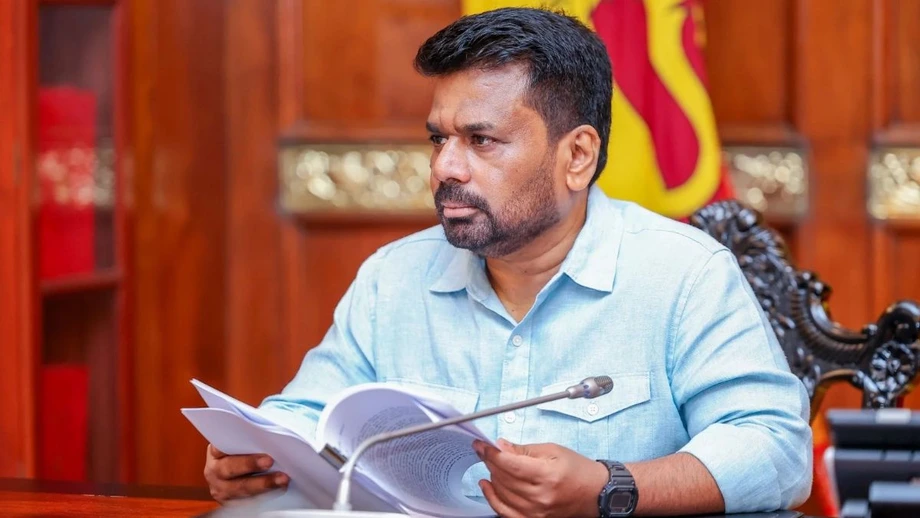
Dissanayake Reviews Final Draft Before November 12 Speech
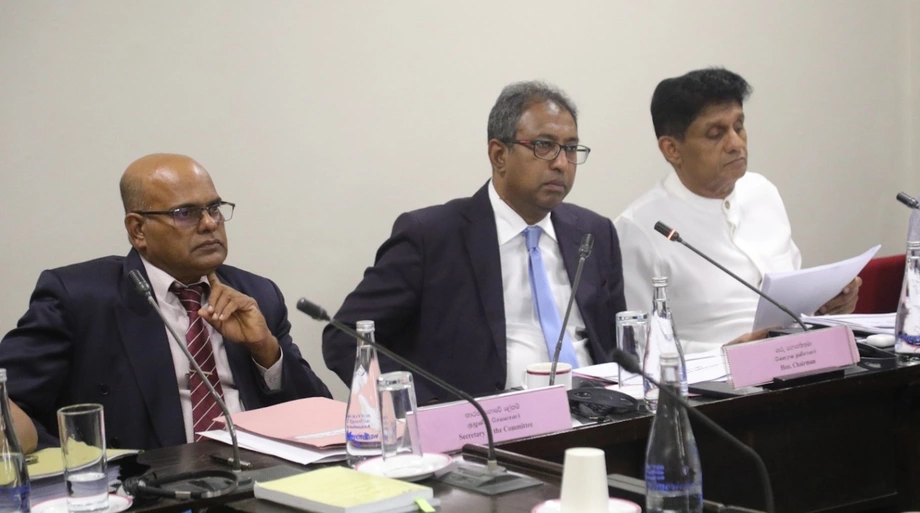
Sri Lanka's proposed 2027 Budget includes Rs. 2,000 billion in capital spending, placing investment at the centre of the government's planned shift from economic stabilisation to expansion. President Anura Kumara Dissanayake reviewed the final proposals at the Presidential Secretariat on November 11, 2026, ahead of their scheduled presentation to Parliament on Thursday, November 12, at 1:30 p.m.
Contents
- Dissanayake Reviews Final Draft Before November 12 Speech
- What the Capital Allocation Means
- Where Ministry Funding Is Directed
- Smaller Allocations Show Different Types of Spending
- Fernando Sets Out the Government's Growth Goals
- Fiscal Discipline and Household Expectations
- The Dates From Introduction to Final Vote
- How Parliament Will Examine the Proposals
- Key Points
Dissanayake will deliver the budget in his capacity as Minister of Finance, Planning and Economic Development. The ministry's secretary, Dr. Harshana Suriyapperuma, attended the review, according to the President's Media Division.
The proposed capital allocation amounts to Rs. 2 trillion. Set against estimated government expenditure of Rs. 4,992.77 billion for 2027, it is equivalent to about 40.1% of that figure. Capital expenditure generally pays for assets and improvements used over several years, rather than the regular costs of running public services.
The presentation will be Sri Lanka's 81st budget and the third under the National People's Power government. Deputy Finance Minister Dr. Anil Jayantha Fernando says the administration's first two budgets concentrated on stabilising the economy, while this proposal is intended to expand investment, production, exports and employment.
Parliament's scrutiny will continue well beyond the speech. A schedule of 26 debate days runs from November 13 to December 14, with votes on the budget's second reading on November 20 and its third reading on December 14.
What the Capital Allocation Means
The President's Media Division described the Rs. 2,000 billion allocation as part of a move beyond stabilisation towards economic expansion and transformative development. In everyday terms, the government wants to move from keeping the economy steady to increasing what it can produce and the opportunities it can provide.
Capital spending can finance construction, equipment and other lasting public assets. Recurrent expenditure covers continuing expenses, such as salaries and the everyday operation of government. Both affect public services: an asset needs funding to be built, while staff and maintenance need funding to keep it useful.
The distinction matters when reading the budget's figures. The Rs. 2,000 billion describes spending by its economic purpose, while ministry allocations describe which institutions receive funds. Readers should therefore examine capital spending alongside ministry totals, rather than add the two sets of figures together.
The November 11 announcement gave no breakdown of the Rs. 2,000 billion by project, location or completion date. The full presentation and subsequent scrutiny will provide the next opportunity to examine how the proposed investment is distributed.
Where Ministry Funding Is Directed
The expenditure proposals in the 2027 Appropriation Bill put the Ministry of Finance, Planning and Economic Development first among ministries, with Rs. 856.86 billion. The Ministry of Public Administration, Provincial Councils and Local Government follows with Rs. 651 billion.
The Ministry of Health and Mass Media is allocated Rs. 590.5 billion, while the Ministry of Transport, Highways, Ports and Civil Aviation receives Rs. 500 billion. Defence is allocated Rs. 458 billion.
The listed ministry allocations are:
- Finance, Planning and Economic Development: Rs. 856.86 billion.
- Public Administration, Provincial Councils and Local Government: Rs. 651 billion.
- Health and Mass Media: Rs. 590.5 billion.
- Transport, Highways, Ports and Civil Aviation: Rs. 500 billion.
- Defence: Rs. 458 billion.
- Education, Higher Education and Vocational Education: Rs. 328 billion.
- Public Security and Parliamentary Affairs: Rs. 230.5 billion.
- Agriculture, Livestock, Land and Irrigation: Rs. 218 billion.
- Justice and National Integration: Rs. 66 billion.
- Foreign Affairs, Foreign Employment and Tourism: Rs. 24.7 billion.
These 10 allocations total Rs. 3,923.56 billion, equivalent to about 78.6% of the stated expenditure estimate. Several ministries combine different responsibilities, so their totals cover more than the single service that readers may associate with their names.
Smaller Allocations Show Different Types of Spending
The Special Expenditure Unit provides a more detailed example of the distinction between running costs and investment. The President's operational programme has proposed recurrent expenditure of Rs. 2.7 billion and capital expenditure of Rs. 366 million.
A further Rs. 8.1 billion is earmarked for development programmes. The operational programmes of the Prime Minister's Office are allocated Rs. 1.02 billion.
For readers comparing these entries, Rs. 366 million equals Rs. 0.366 billion. Keeping the units consistent makes it easier to understand the relative size of allocations that otherwise appear in the same budget discussion.
Fernando Sets Out the Government's Growth Goals
Deputy Finance Minister Anil Jayantha Fernando has urged the public to assess the budget through its economic objectives, rather than focus solely on which ministry receives the largest allocation. He says the government's next phase centres on quality investment, more jobs, greater production and expansion into export markets.
Fernando described the proposal in these words:
budget of hope
Fernando's stated aim is to connect economic growth with higher incomes and better living standards. His priorities include giving more people opportunities to take part in economic activity and ensuring that the benefits reach them.
For households, those objectives concern access to work and earnings. For businesses, they concern opportunities to invest, produce goods and sell them, including to customers abroad. The budget speech is the next step in setting out the measures behind those goals.
Fiscal Discipline and Household Expectations
The President's Media Division said the government had achieved progress in key economic sectors despite domestic and external challenges, including the Ditwah disaster and the Middle East crisis. It attributed that progress to sound management and strict fiscal discipline.
Fernando says financial discipline will continue in 2027, alongside efforts to reduce waste and corruption in public spending. Fiscal discipline means managing government income and expenditure within the limits it has set, even while choosing new spending priorities.
Government sources have indicated that the budget may include public sector salary increases and tax concessions. These remain possibilities ahead of the speech, with no confirmed amounts or eligibility rules announced. Fernando has also discussed welfare, assistance programmes and potential tax concessions as parts of a broader economic programme.
Salary measures and tax changes would affect household finances more directly than many capital projects. Investment programmes work through a different route, by creating or improving assets and supporting economic activity over time. The budget brings those immediate and longer term priorities into the same spending debate.
The Dates From Introduction to Final Vote
Deputy Finance Minister Fernando presented the 2027 Appropriation Bill for its first reading on October 7, 2026. An appropriation bill is the legislation through which Parliament considers authorisation for government spending.
The November 12 budget speech forms the second reading stage. MPs will then debate the government's broad proposals before moving to detailed examination during the committee stage. The schedule separates those discussions into seven days for the second reading and 19 days for the committee stage.
- October 7, 2026: The 2027 Appropriation Bill was presented for its first reading.
- November 11: Dissanayake reviewed the final budget proposals at the Presidential Secretariat.
- November 12, at 1:30 p.m.: The president is scheduled to present the budget to Parliament.
- November 13 to November 20: Seven days are allocated to the second reading debate.
- November 20, at 6 p.m.: MPs are scheduled to vote on the second reading.
- November 21 to December 14: The committee stage is scheduled for 19 days, including four Saturdays.
- December 14, at 6 p.m.: The third reading vote is scheduled.
The 26 debate days are parliamentary sitting days spread across the period from November 13 to December 14. The two scheduled votes mark separate decisions as the bill moves through Parliament.
How Parliament Will Examine the Proposals
Parliament's daily budget schedule reserves 11 a.m. to 6 p.m. for debate. Across 26 scheduled days, that amounts to 182 hours of planned budget debate, providing time to examine both the government's direction and individual expenditure proposals.
Each sitting begins with parliamentary business from 9:30 a.m. to 10 a.m. under Standing Orders 22(1) to 22(6). Five questions for oral answers follow between 10 a.m. and 10:30 a.m., with one question under Standing Order 27(2) scheduled from 10:30 a.m. to 11 a.m.
On days other than the November 20 and December 14 voting days, a further half hour from 6 p.m. to 6:30 p.m. is reserved for debate on motions at adjournment time. Parliamentary questions therefore remain part of the daily programme alongside the budget proceedings.
The committee stage gives MPs time to examine spending in greater detail after the debate on the budget's broad direction. For the government's proposed investment programme, that examination will be the next formal setting for discussing how public money is allocated across its priorities.
Key Points
- Dissanayake reviewed the final 2027 Budget proposals on November 11, 2026.
- The budget speech is scheduled for November 12 at 1:30 p.m.
- The proposed capital allocation is Rs. 2,000 billion, against estimated expenditure of Rs. 4,992.77 billion.
- Finance has the largest listed ministry allocation, at Rs. 856.86 billion.
- The government says its focus is shifting towards investment, production, exports and employment.
- Possible salary increases and tax concessions await details in the budget presentation.
- Parliament has scheduled 26 debate days, with votes on November 20 and December 14 at 6 p.m.